Old Paris and Notre Dame walking tour
This is blog post #5 from our tour of Europe. After 7.4 km of walking to experience a bit of the Louvre Museum the morning of Thursday, June 26th, we had a walking tour of Île de la Cité, where Paris began, booked for that afternoon.
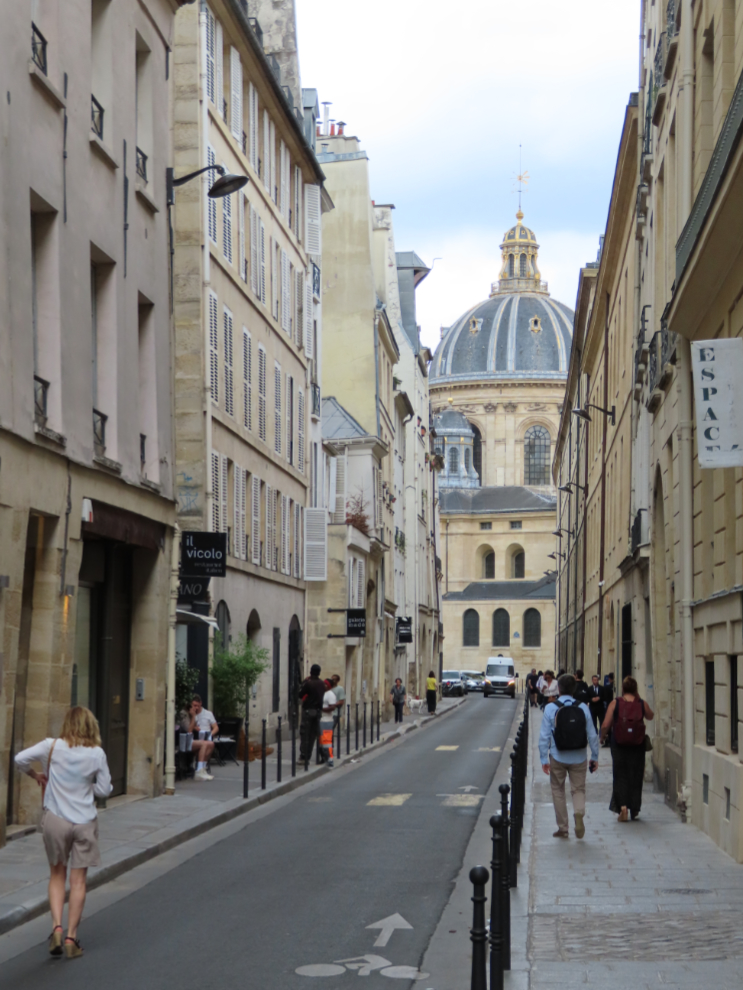
It was a lovely walk from Hotel de Seine to Pont Neuf, where we would meet our guide. Among the sights along the way was the baroque Institut de France, which is headquarters of 5 French intellectual academies.
Pont Neuf, though it dates to the 17th century, was the start of a new way of thinking about bridges. The norm had been to build houses on them, but now the views available from them were seen as important.
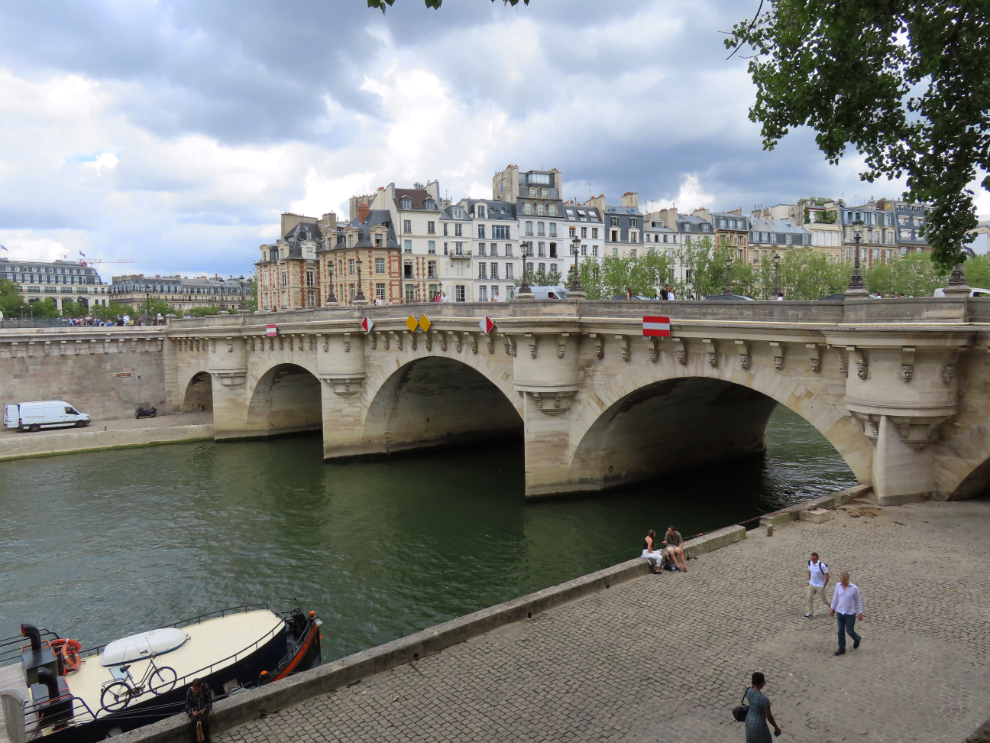
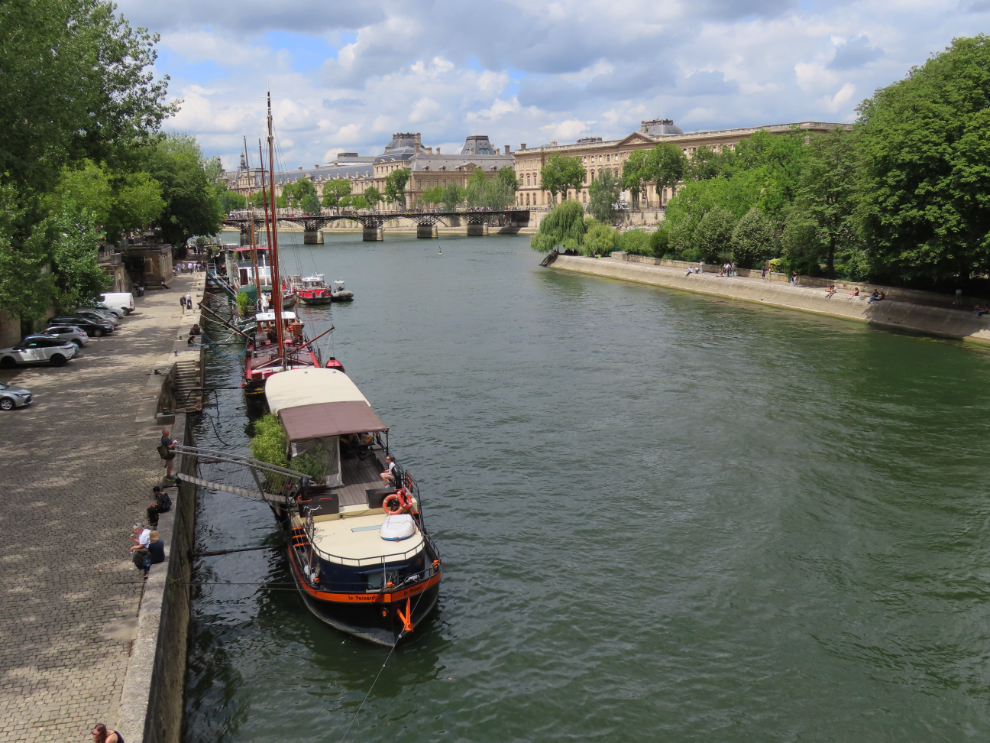
Views such as this one 🙂
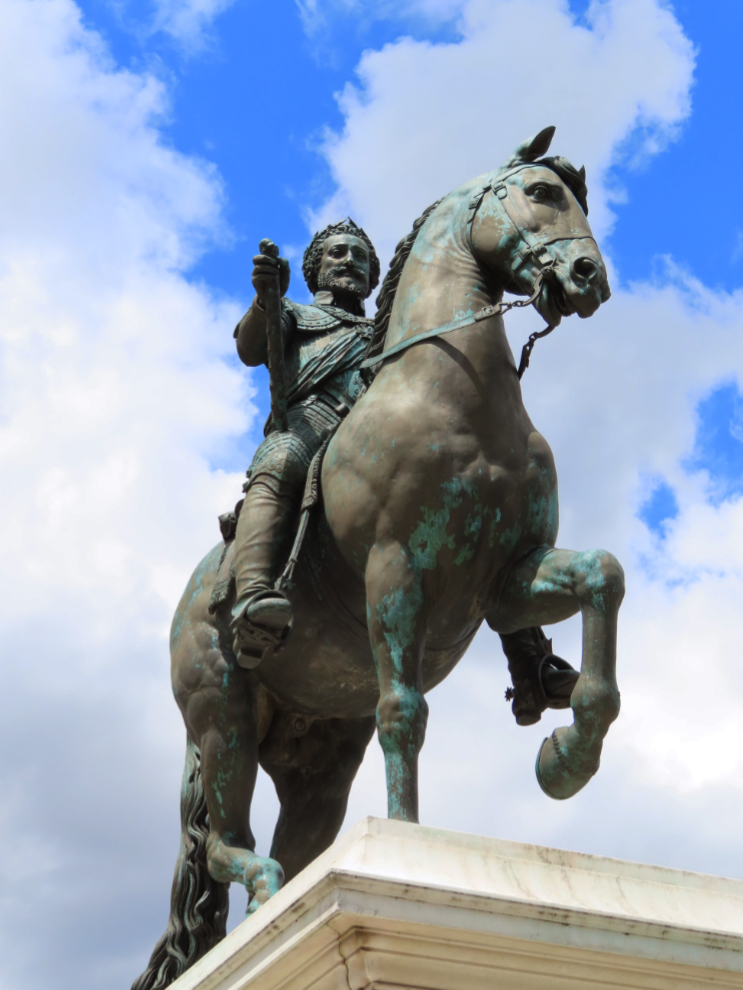
At the Pont Neuf is this imposing statue of Henry IV, the king of France from 1589 to 1610. The original statue was was erected in 1614,but it was destroyed in 1792 during the French Revolution. This copy by François-Frédéric Lemot was created in about 1818. Guided by Henry’s vision, between 1605 and 1610 Paris was transformed from a medieval city decimated by war and neglect into the city we see today.
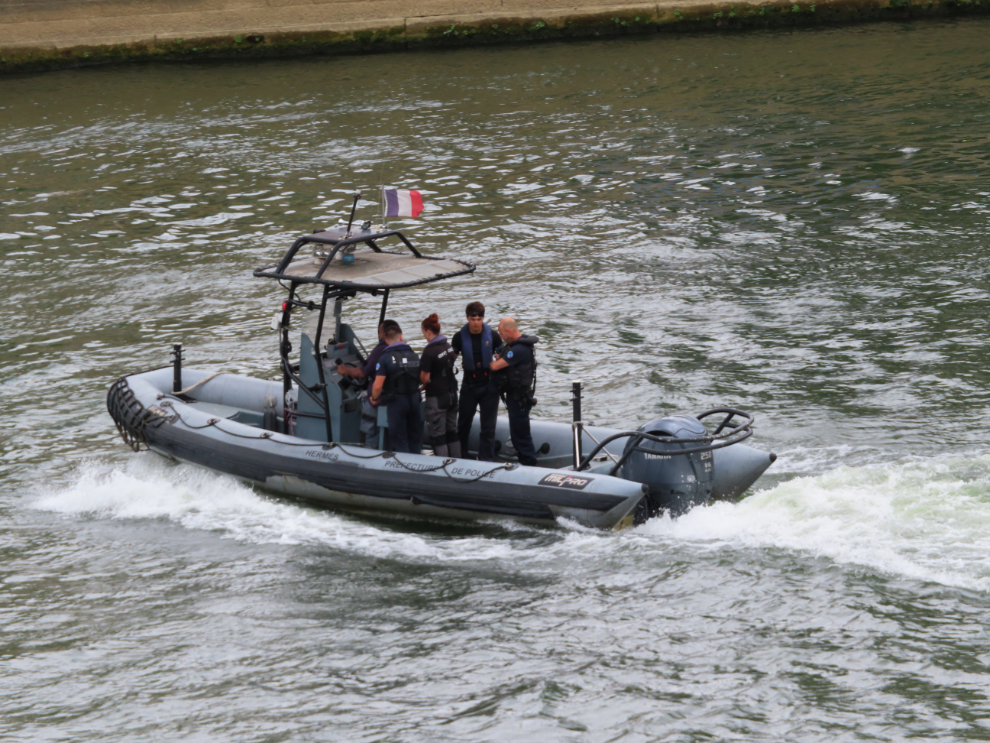
Police are highly visible in Paris, on the streets and the rivers – we saw a few of these high-speed boats during our visit.
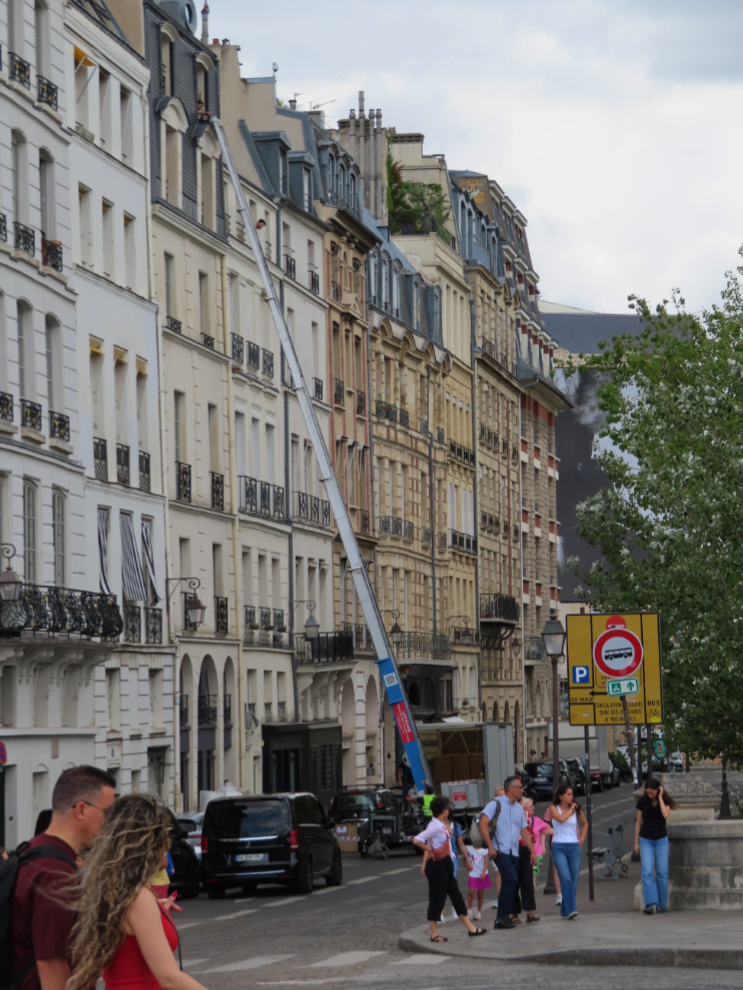
For many people, the way to move is to have a crane like this take your stuff out the main window of your apartment that overlooks the street.
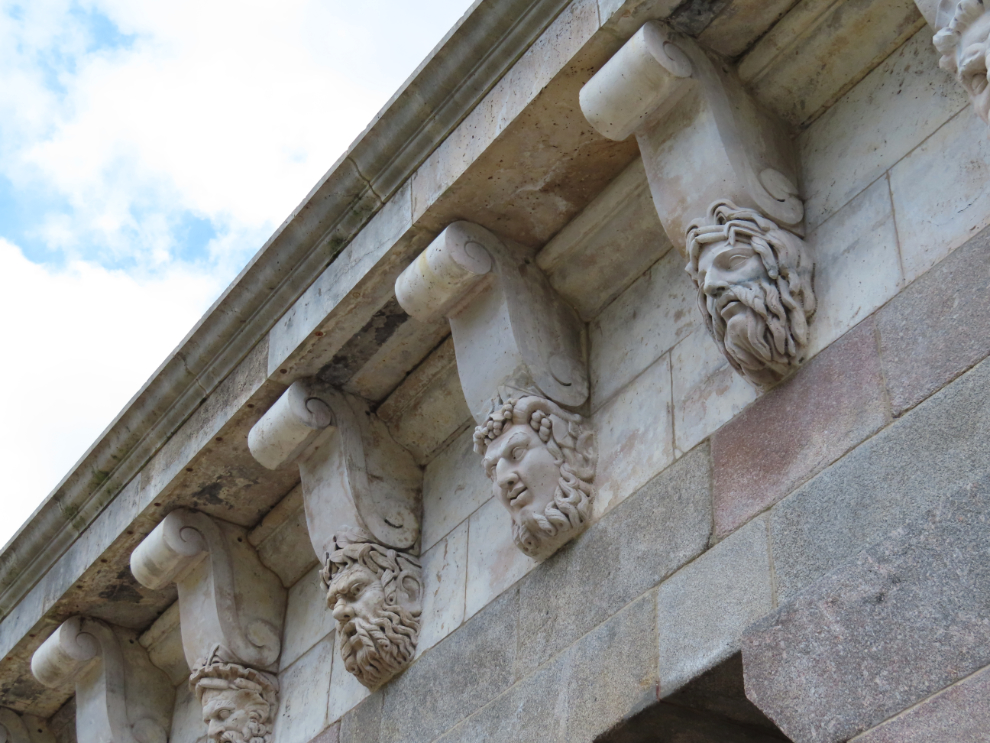
The original mascarons of Pont Neuf, 381 of them, each different, are attributed to French Renaissance sculptor Germain Pilon, dating back to the late 16th century.
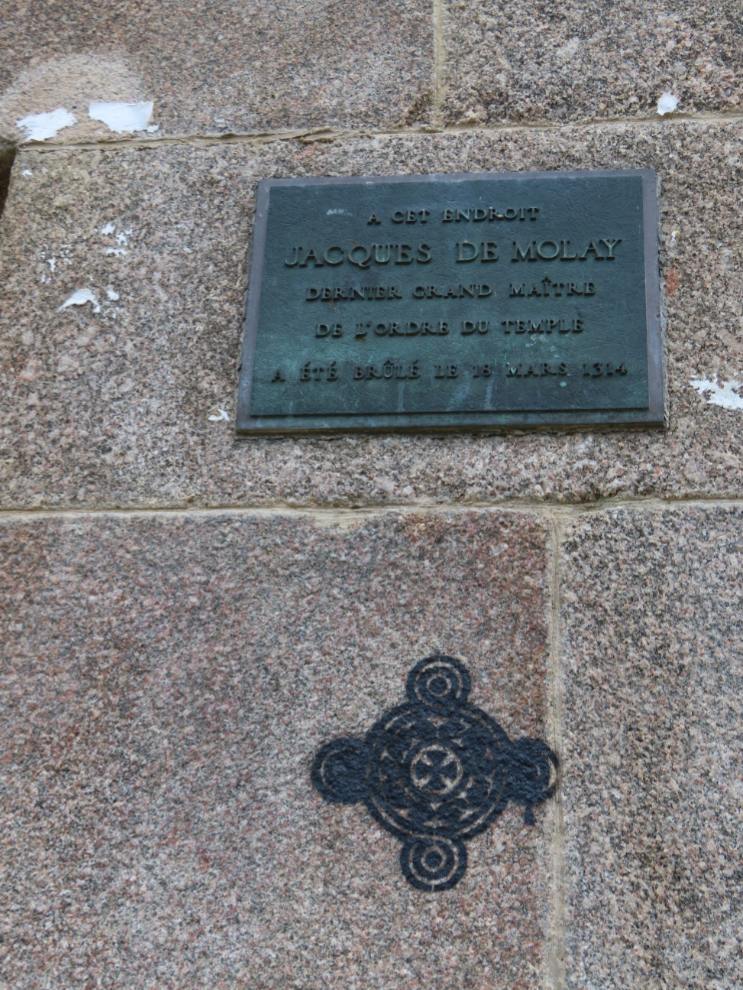
On March 18, 1314, Jacques de Molay was burnt at the stake on Île de la Cité near what became the site of Pont Neuf. He was the last Grand Master of the Knights Templar, a powerful religious organization established during the Crusades that King Philip IV and the Catholic Church headed by Pope Clement V set out to destroy.
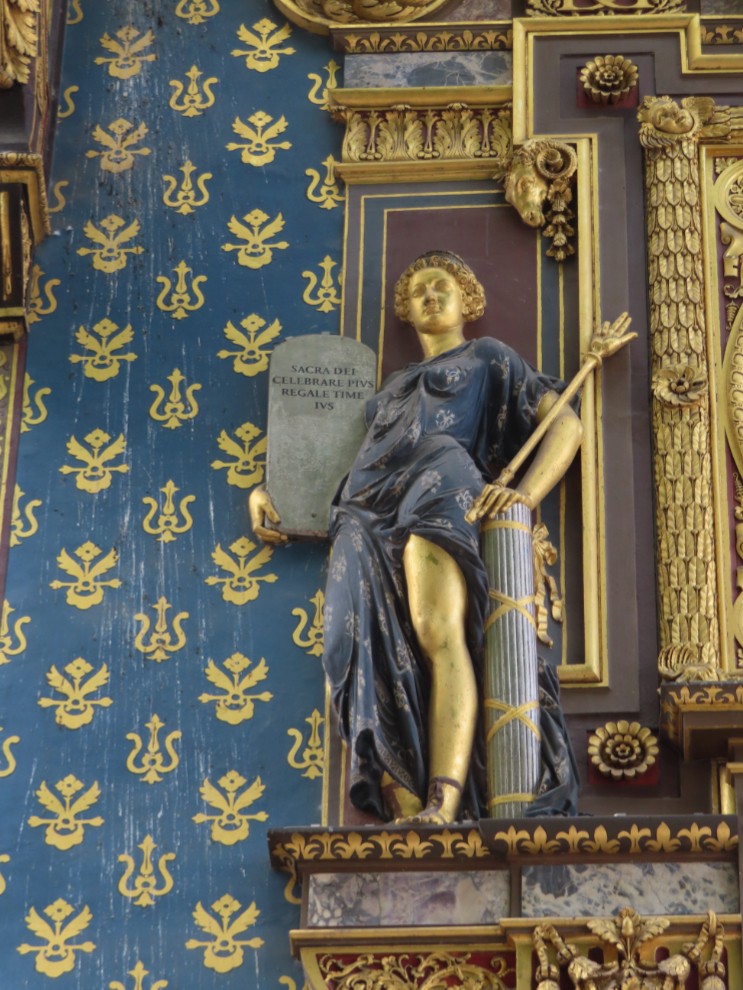
Mounted on the walls of the Conciergerie in the heart of the Ile de la Cité, this clock, commissioned by Charles V, has been telling people the time since 1371.
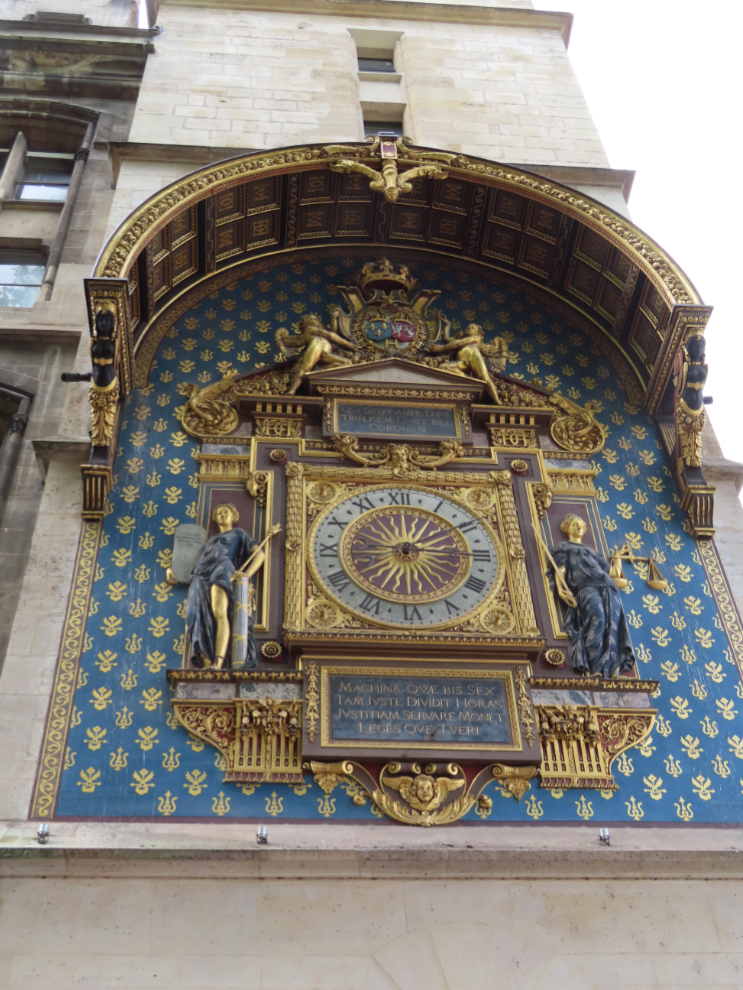
The detailing on the clock is, of course, wonderful.
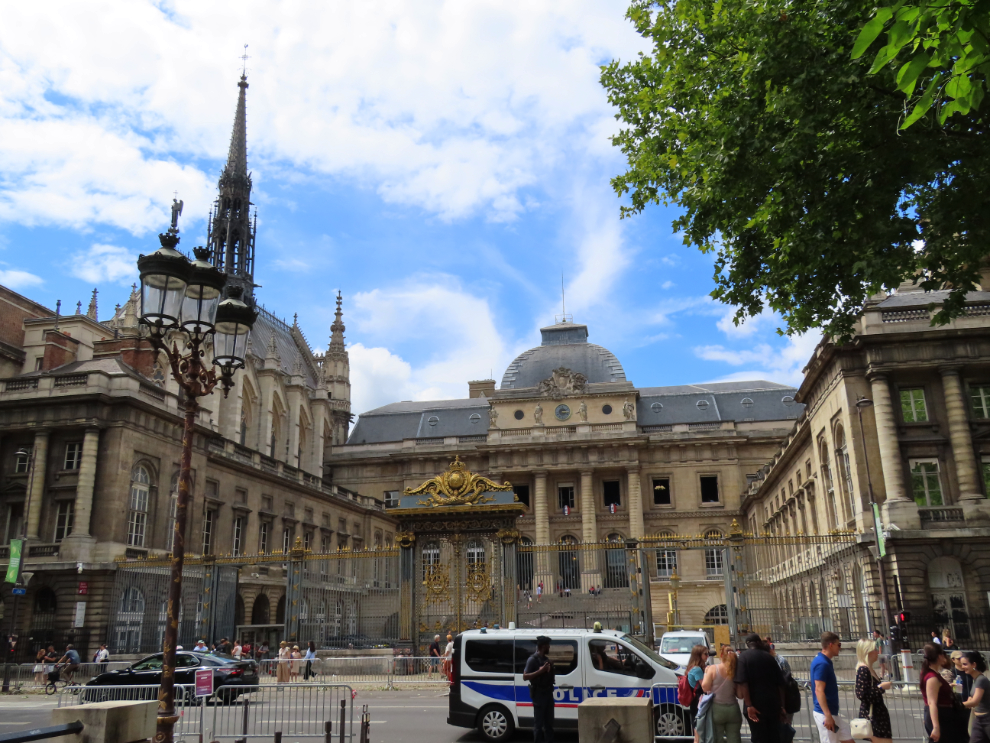
The Palais de Justice, opened in 1843.
Beside the Palais de Justice, the incredibly ornate 13th-century Gothic Sainte-Chapelle, which we would visit after our official tour.
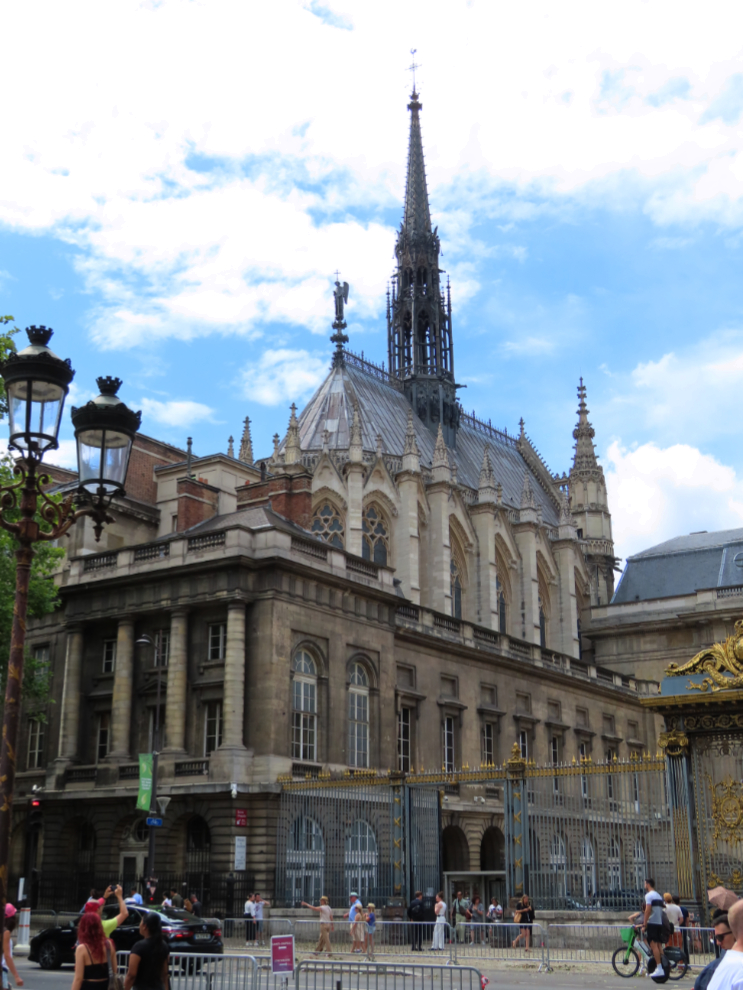
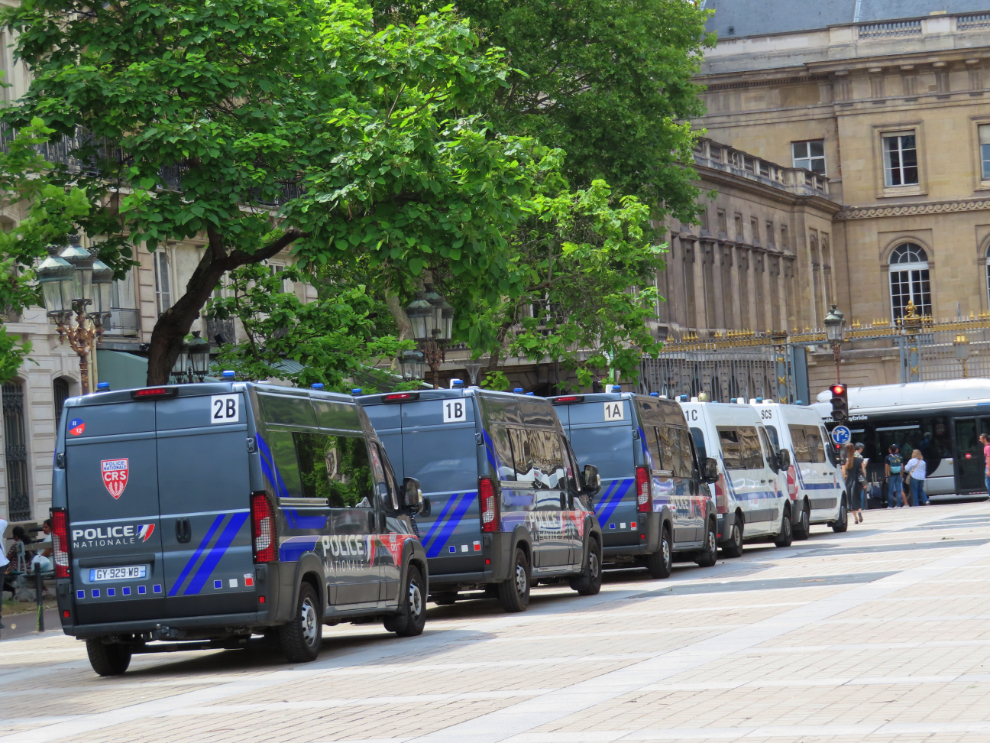
There are a lot of police in the Palais de Justice area!
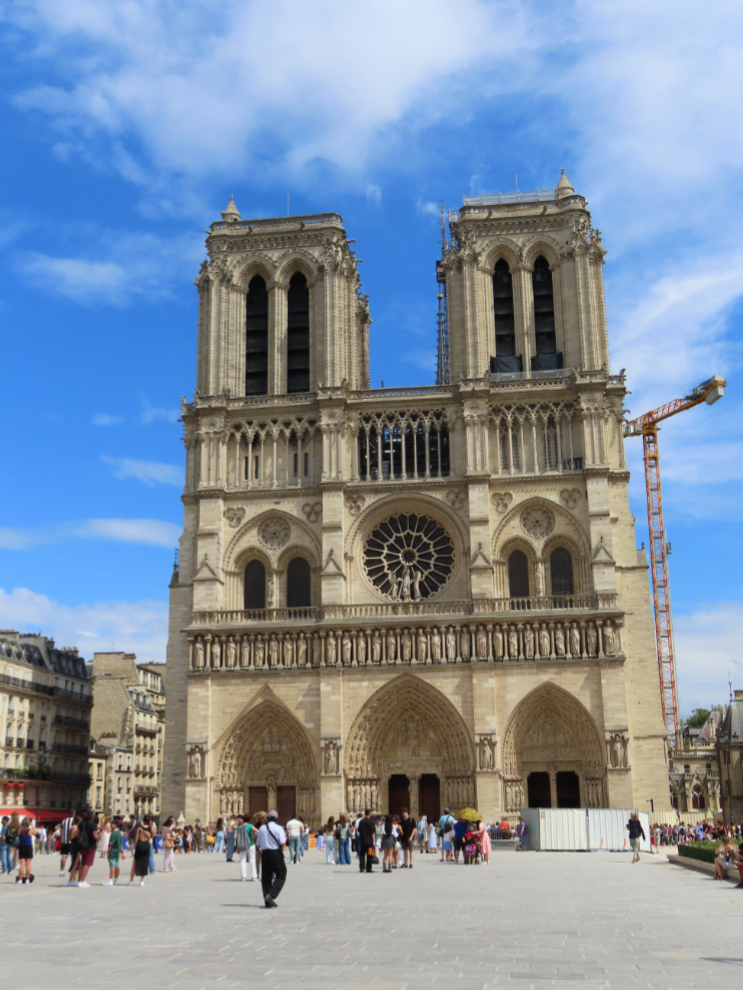
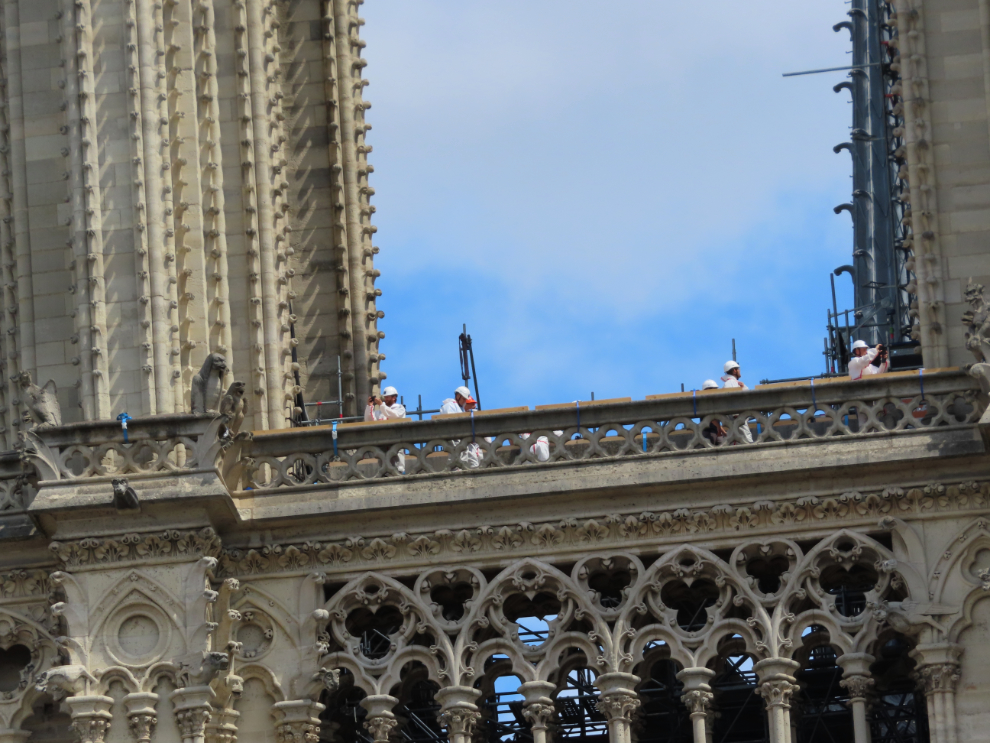
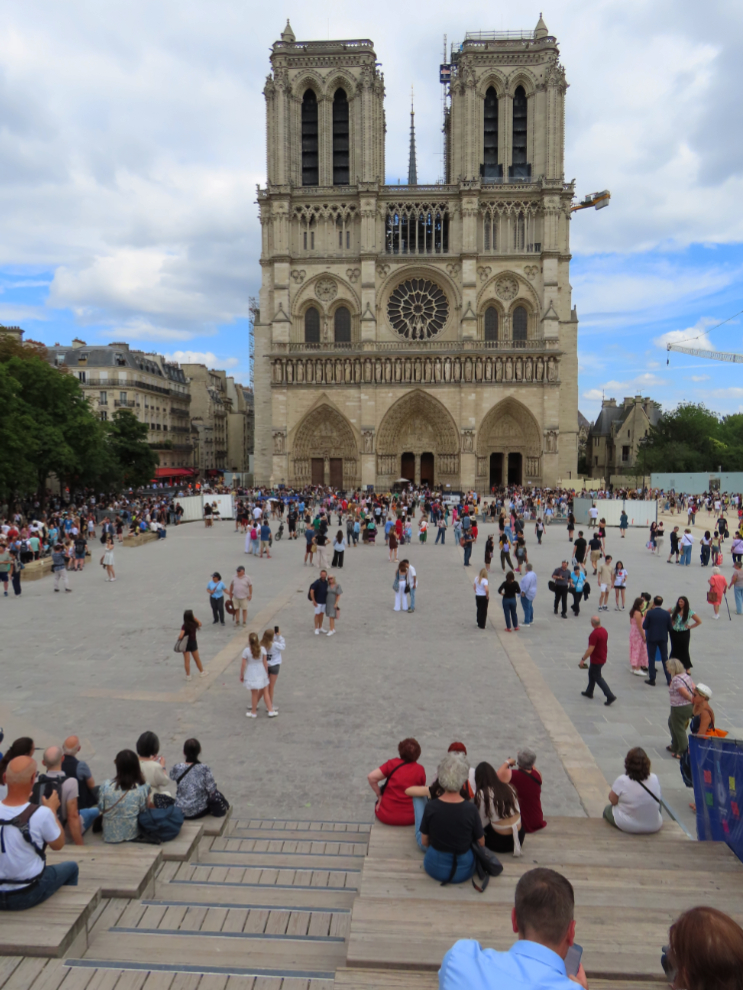
Notre Dame was an outside look only, with a lot of explanation about the fire of April 15, 2019, that heavily damaged it, about the ongoing restoration, and about people’s reaction to the bright and shiny restored parts of a building that had gathered a great deal of dirt that darkened and dulled every surface.
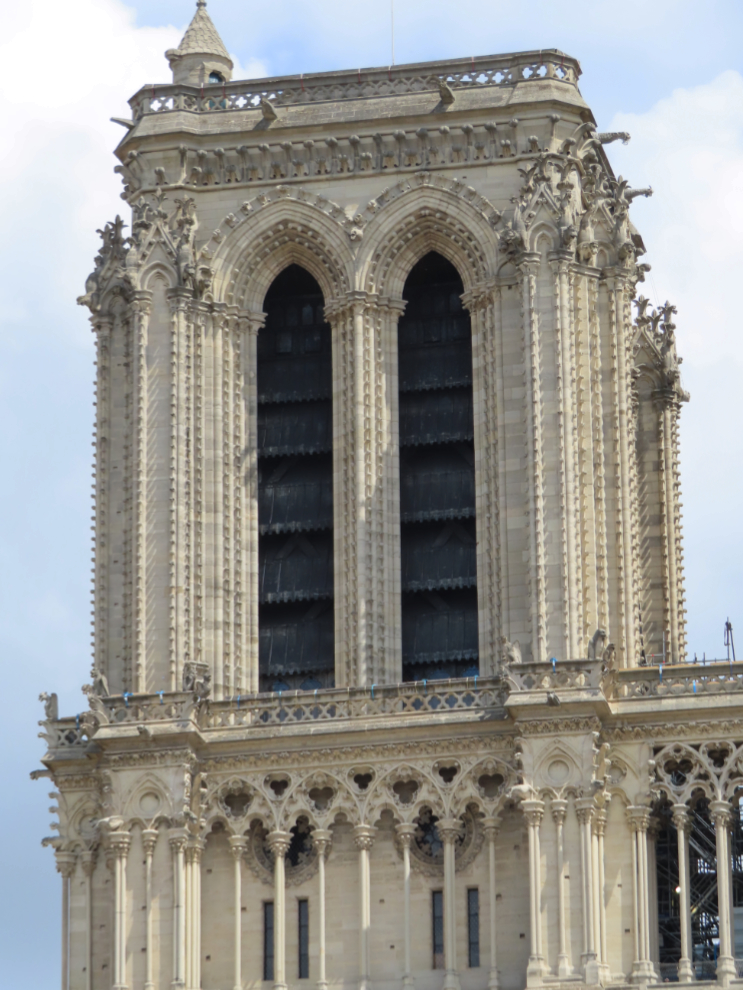
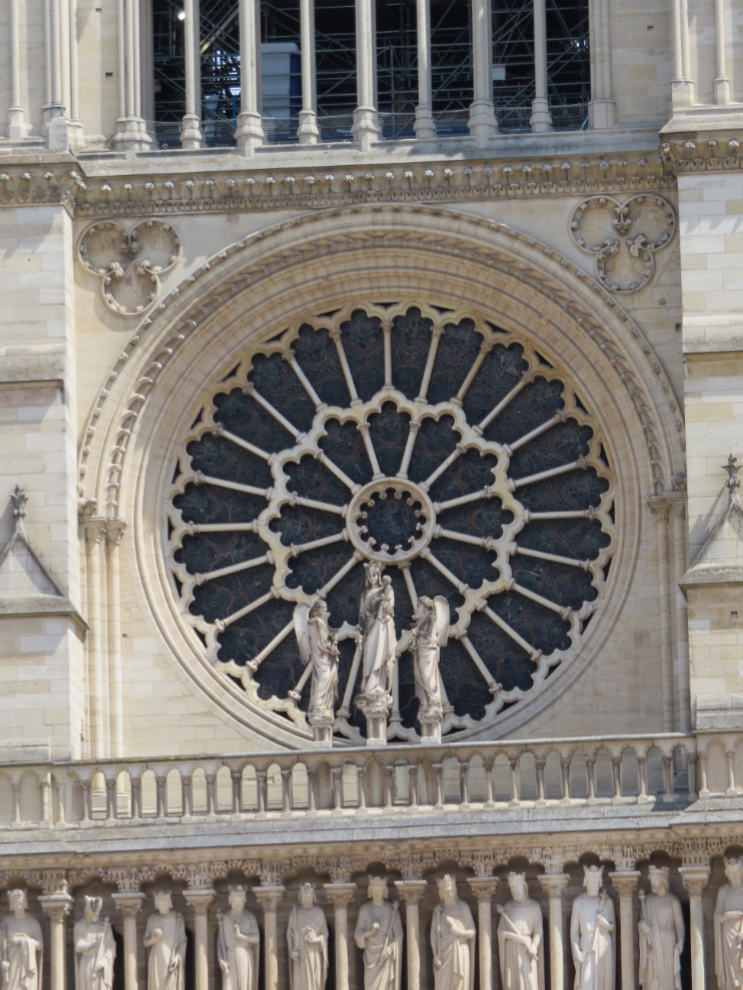
The next 3 photos give a closer look, including some restoration workers.
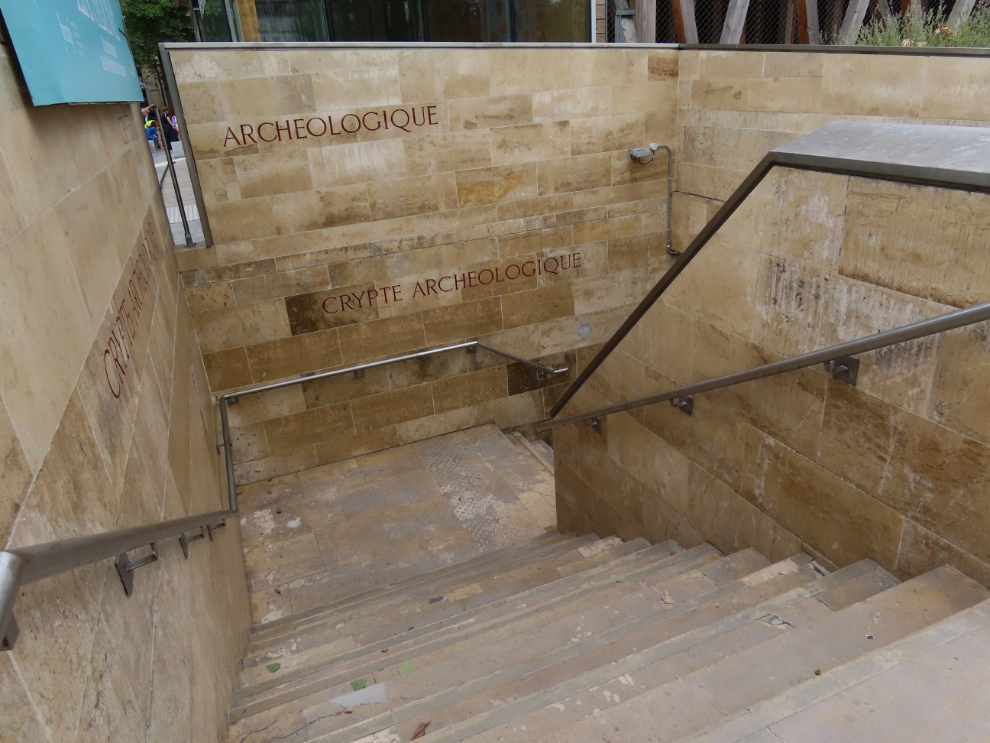
We did, however, get to tour the Notre Dame de Paris Archaeological Crypt. Uncovered between 1965 and 1972, it includes buildings which occupied the site at various times from antiquity to the 20th century, and the interpretation in the underground crypt is very good – it would be easy to spend close to an hour there.
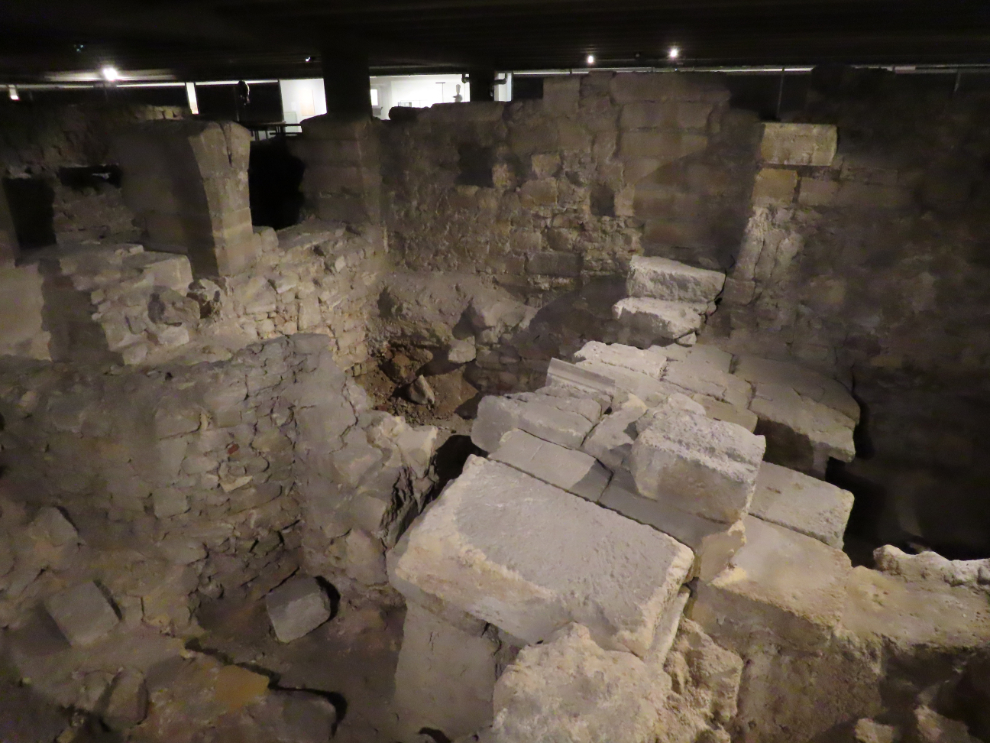
A glimpse at a small part of the excavation.
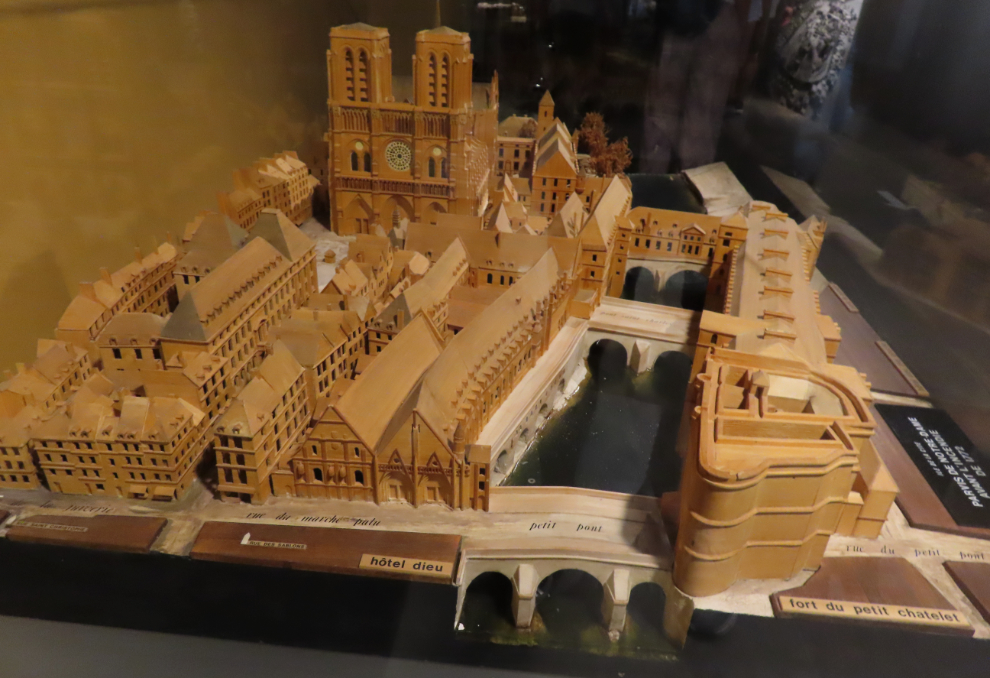
A look back to Île de la Cité in the 17th century when Pont Neuf was under construction.
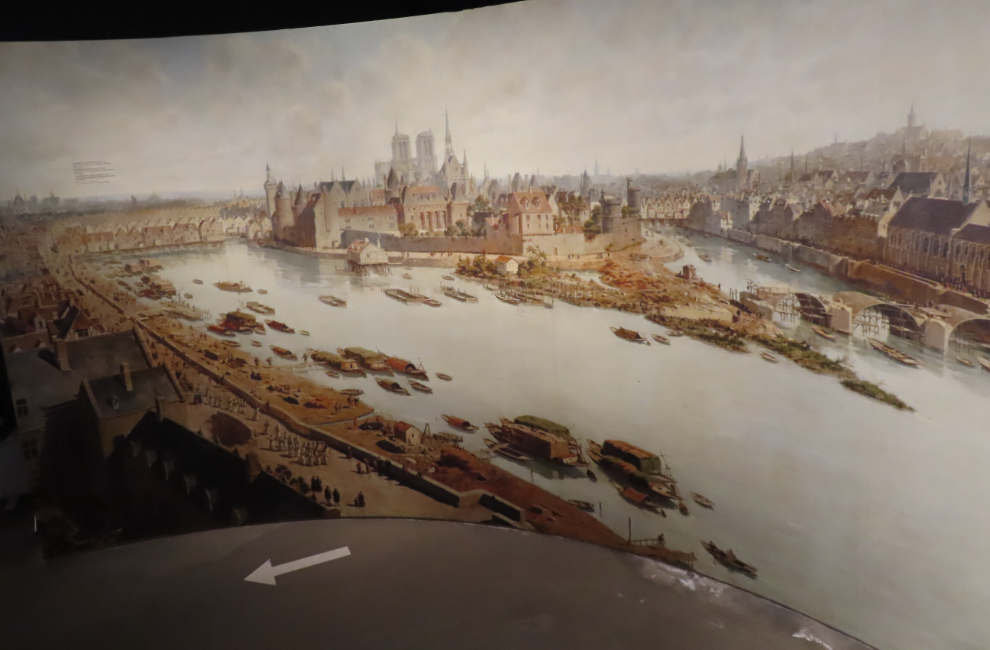
Among many other things, this model shows the houses built on bridges prior to the 17th century.
Back above ground, I climbed to the top of a large set of wooden bleachers to get a clearer view of the cathedral.
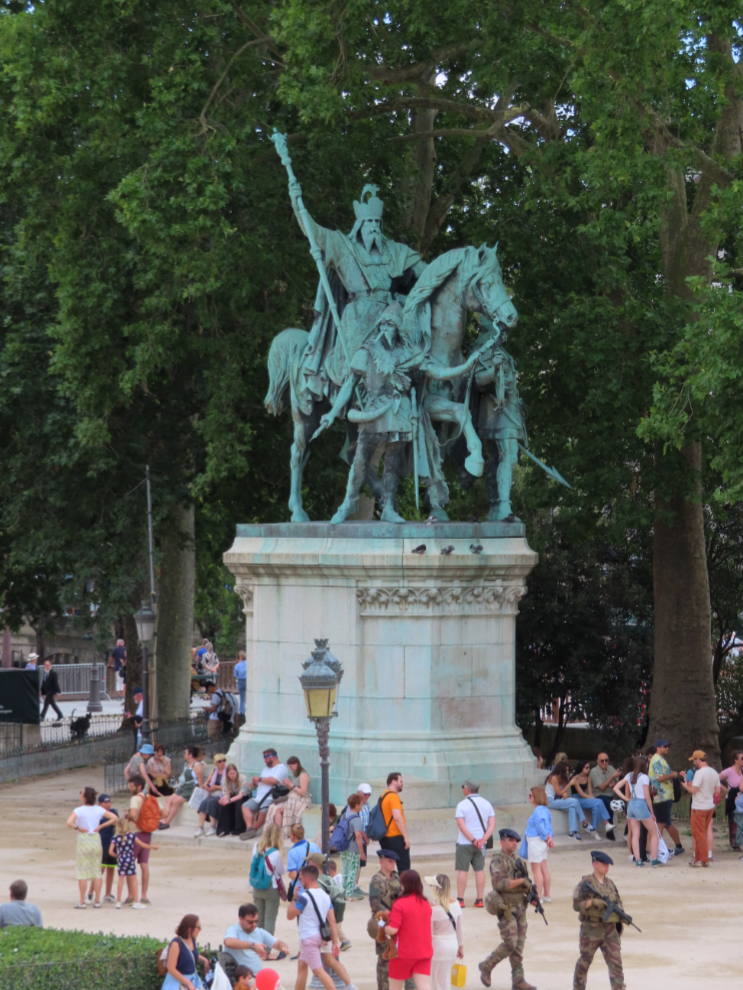
The large statue Charlemagne et ses Leudes, generally translated as Charlemagne and His Guards, stands beside the cathedral. Notice the three heavily-armed soldiers in front, patrolling the grounds.
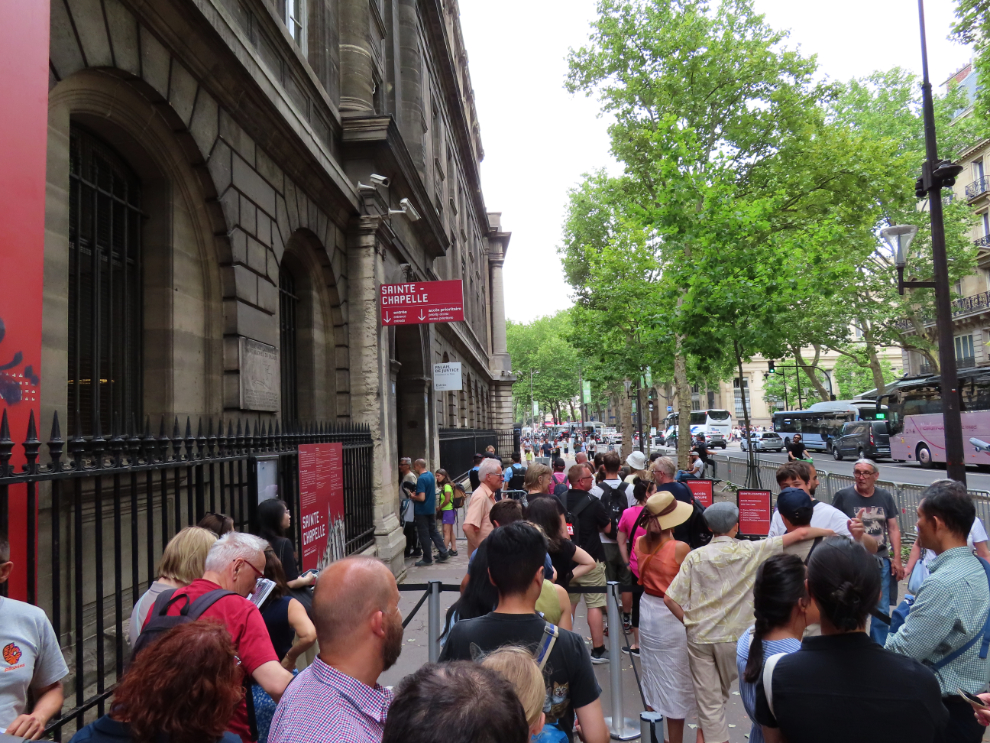
We thought about getting into the block-long lineup to get inside Notre Dame, but decided we only had energy for one more church, so returned to Sainte-Chapelle and got in the short lineup for our reserved time, getting checked by heavily-armed police to start.
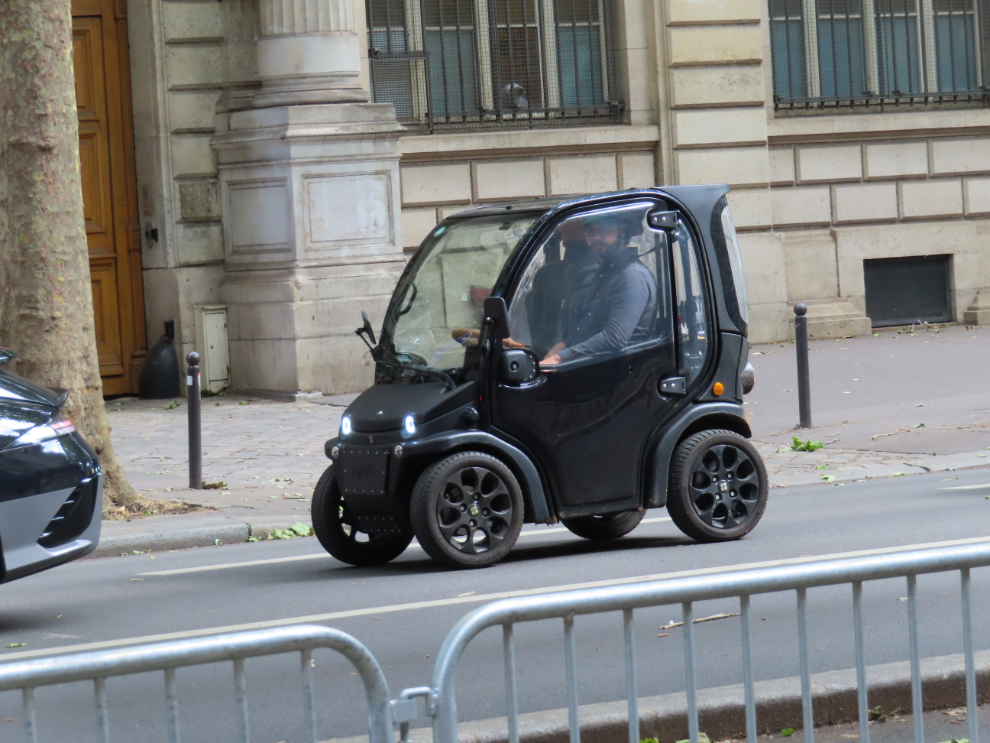
While we were in line, this interesting tiny vehicle drove by – it makes a Smart car look large 🙂
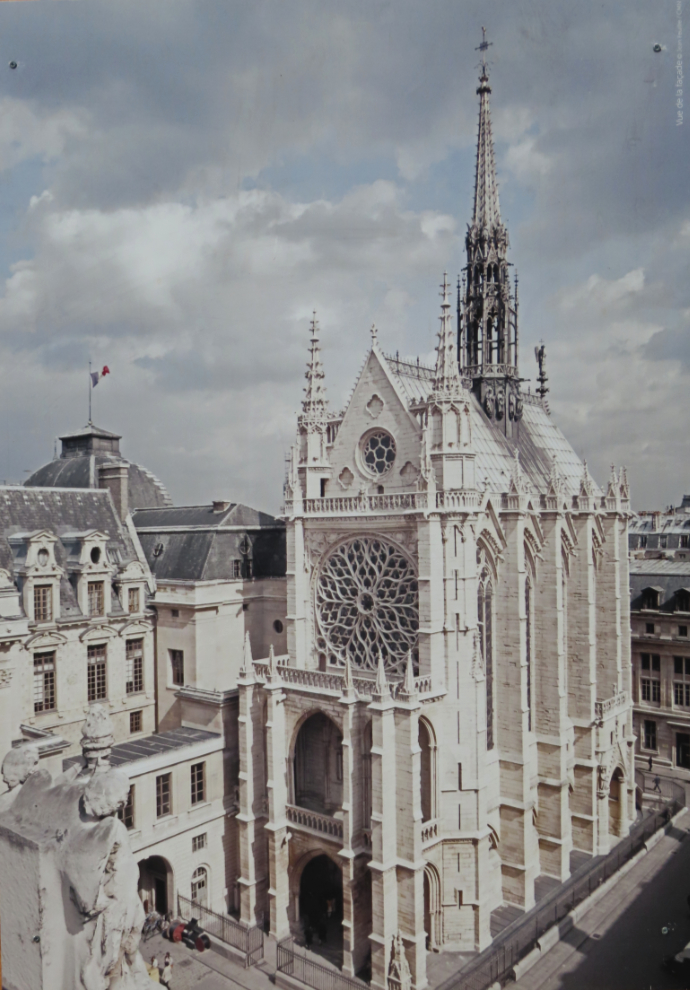
The next photo was in a display showing the restoration of the church, on a wall as we walked toward the entrance once the gate was opened for our group. It shows the door we used to enter the church.
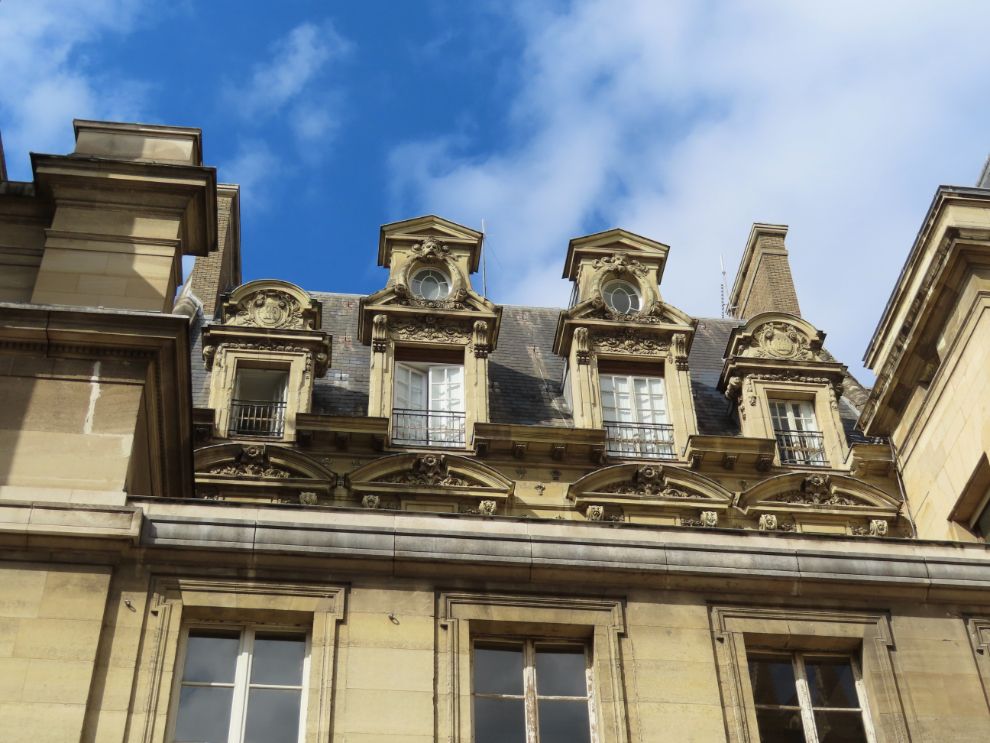
A look at the upper floor of what I assume was the manse.
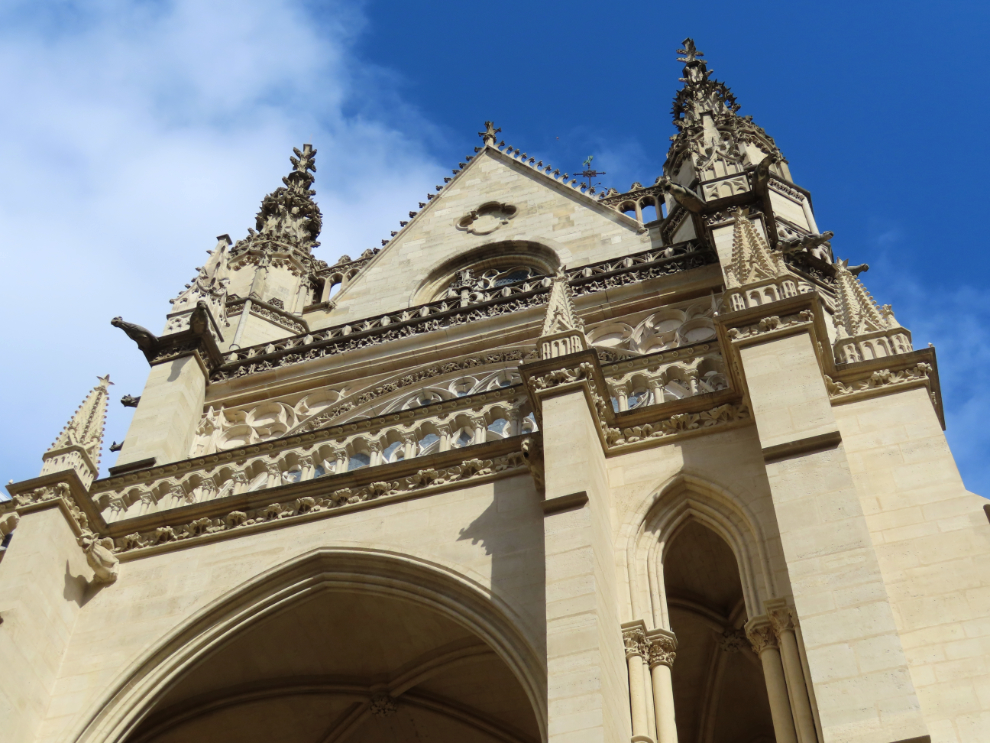
Looking up before entering.
The church has two levels – the next two photos were shot on the lower level.
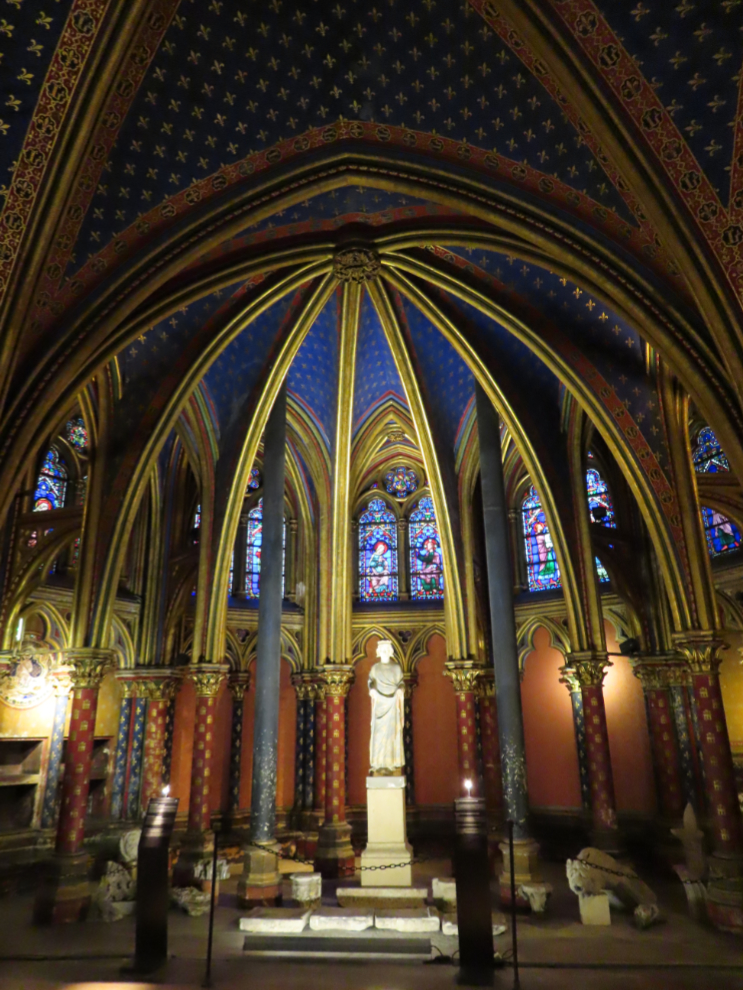
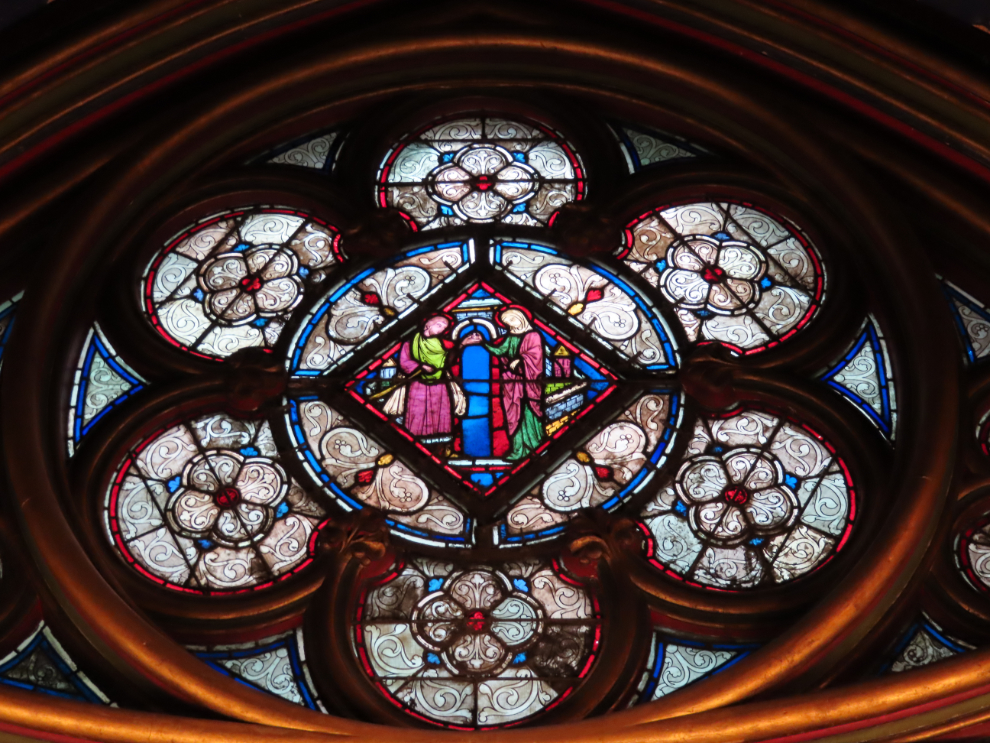
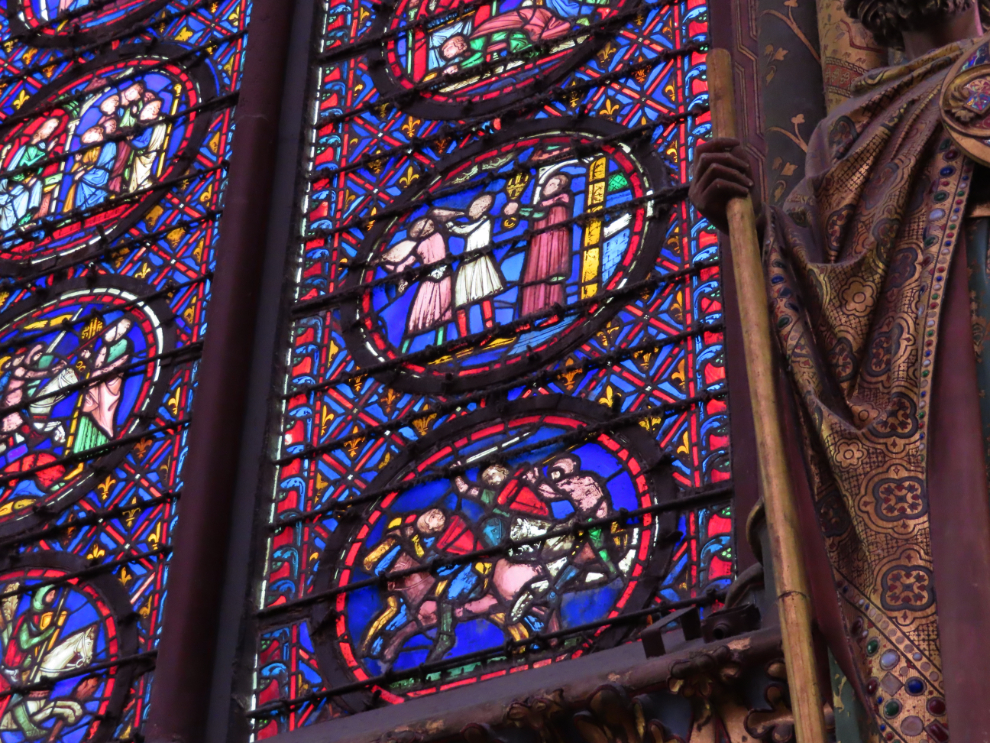
While that is beautiful, it didn’t match what I expected. Then we went up a narrow stone staircase to the upper level, and I was speechless. And still am – I have no words to describe this stunning creation.
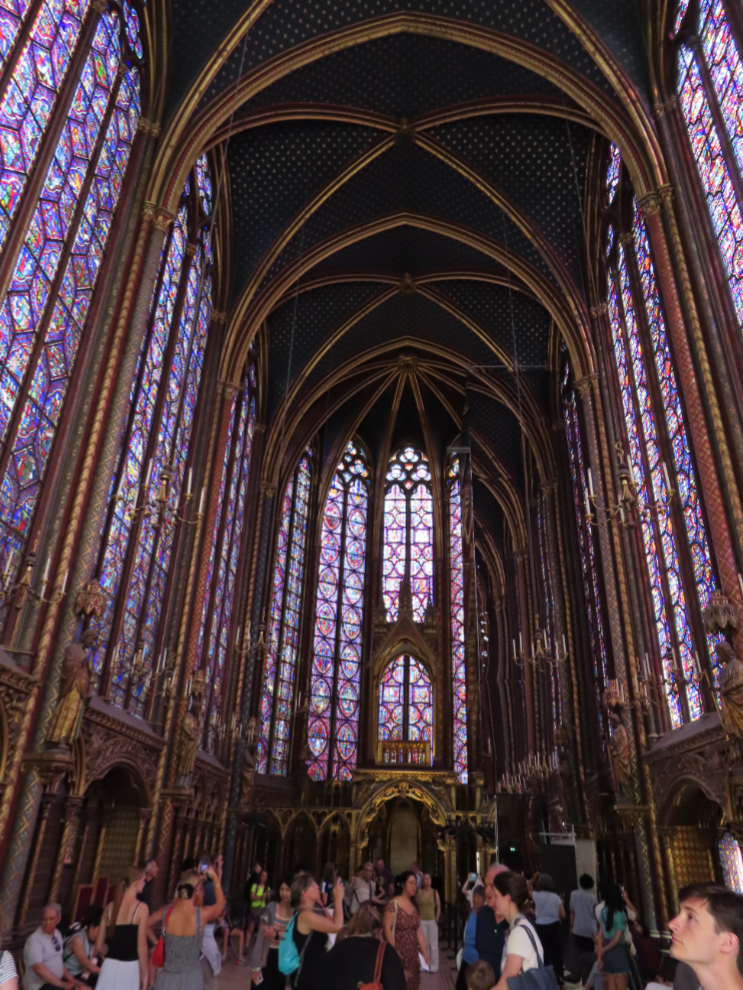
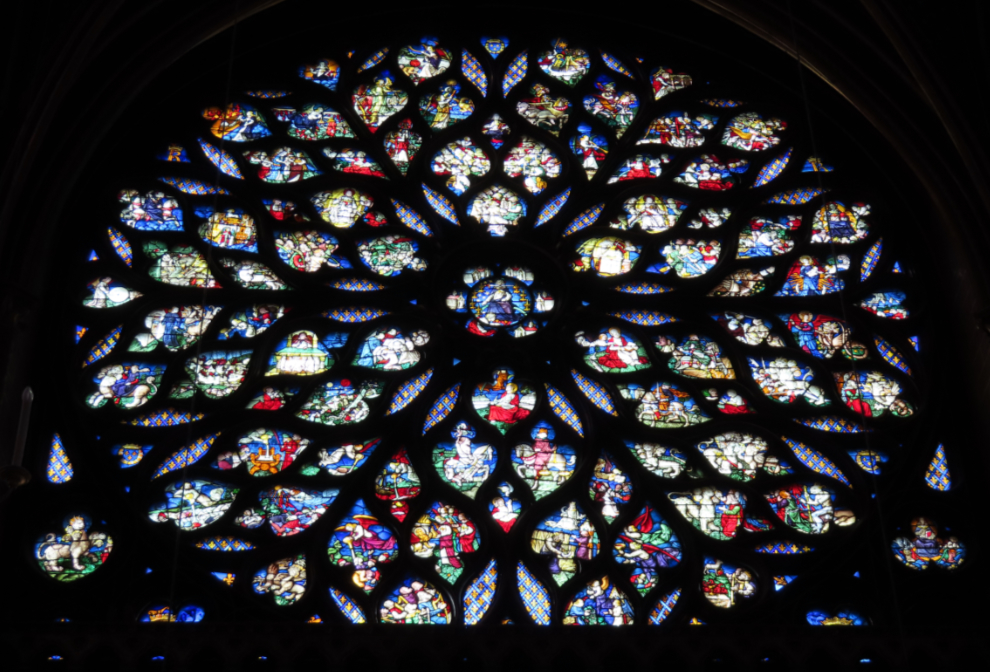
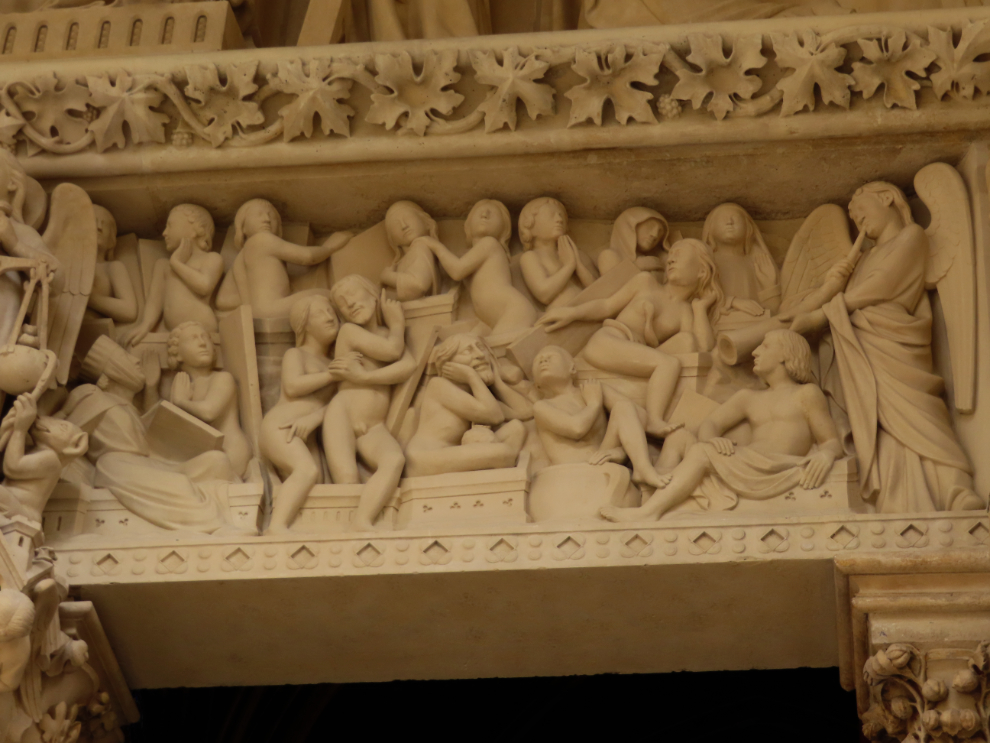
Back outside, the lower parts of the walls are covered with story panels.
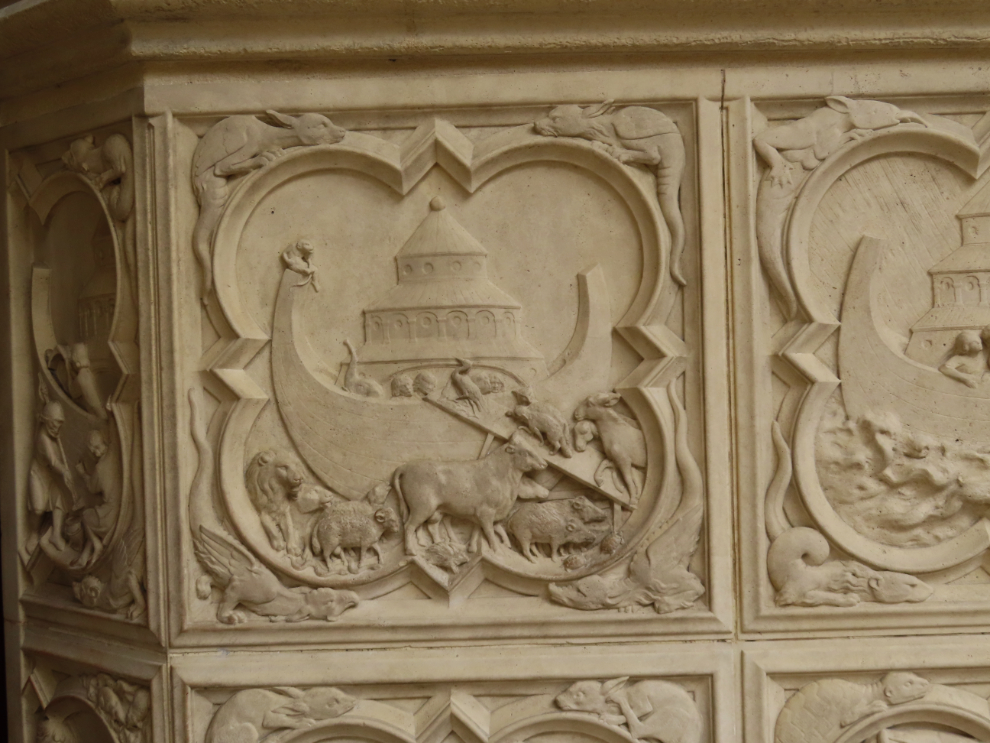
The story of Noah’s Ark. These panels may show why many people aren’t entirely happy with the restorations here and at Notre Dame in particular – they look new, like reproductions, though they’re hundreds of years old.
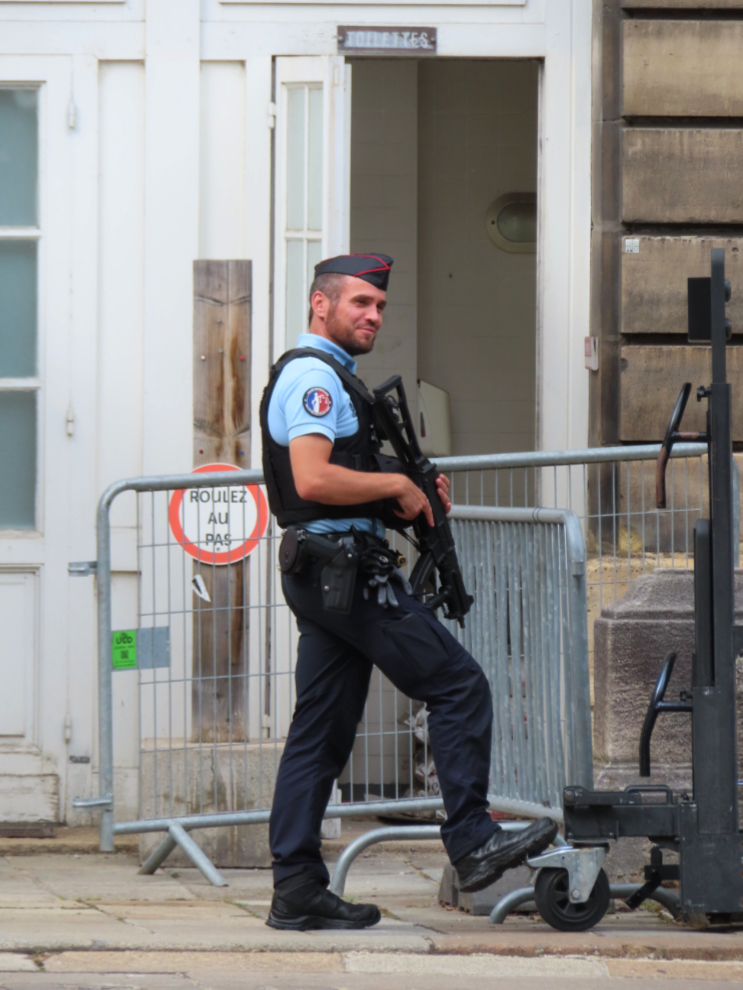
Even our departure was watched closely, though seeing a smile on this handsome young officer was nice.
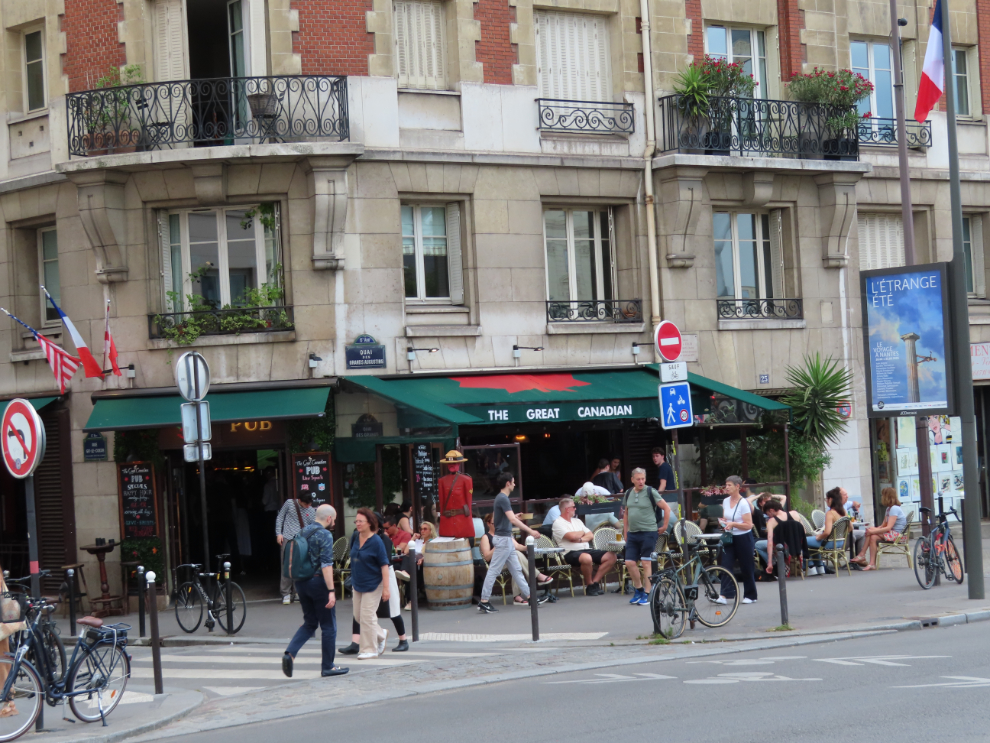
On the walk back to our hotel, if we hadn’t been exhausted we would have popped in for pint at The Great Canadian Pub 🙂
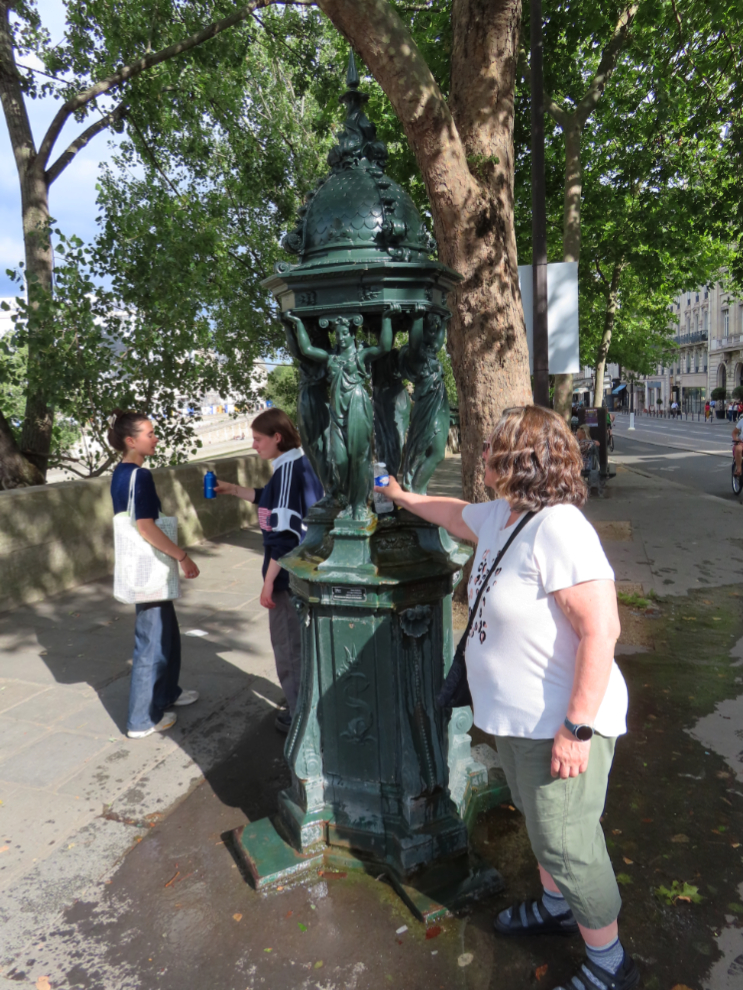
Cathy filled her water bottle from one of the famous Wallace water fountains. They were named for a wealthy and generous Englishman, Sir Richard Wallace, who offered them to the city in 1872, and there are now over 100 of them.
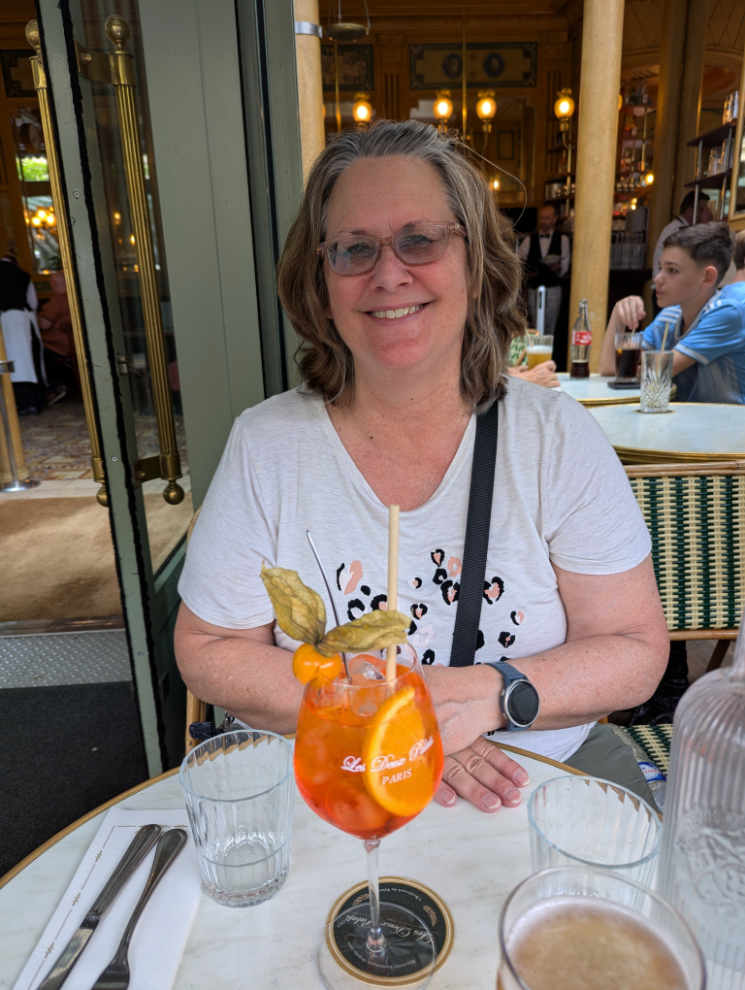
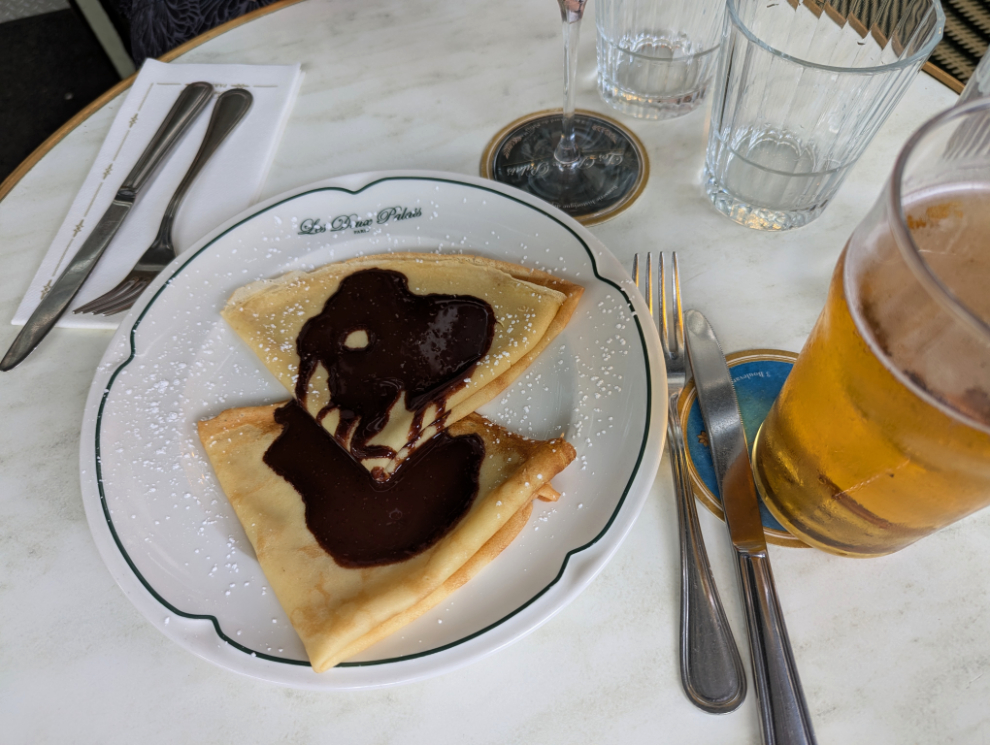
But then we decided we needed a treat, so stopped in at Les Deux Palais for crepes and a drink 🙂
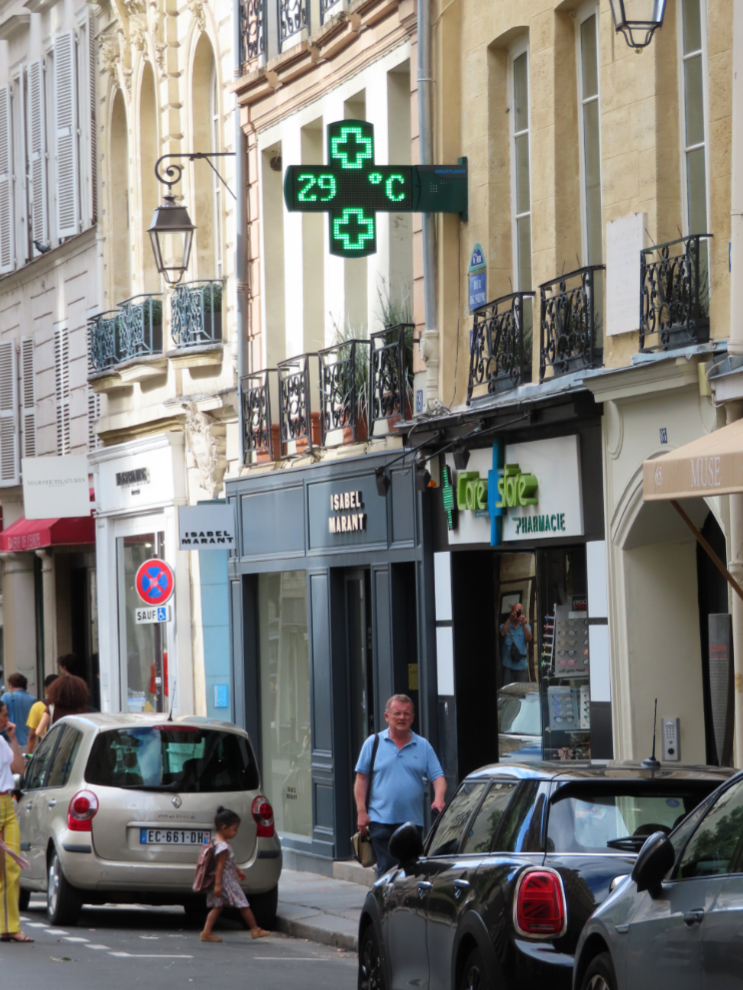
A final photo shot from the front door of our hotel. Drug stores all display this standardized and brilliant sign when they’re open. They include the time and temperature. Yes, 29°C – a nice change from 38 the day before!
This afternoon’s walk was 6.8 km – a healthy addition to the morning’s 7.4 km. The next day, we would take it much easier, with only a walking tour of our neighbourhood, Saint-Germain-des-Prés, and an evening concert.
About The Author
