Exploring Honningsvag and Nordkapp, Norway
This is now Day 16 of our 38-day tour of Europe, and this is blog post #12 from it. On Thursday, July 3rd, we crossed the Arctic Circle as we spent the day at sea sailing north, then on July 4th we docked at Honningsvag and took a bus tour to Nordkapp (North Cape).
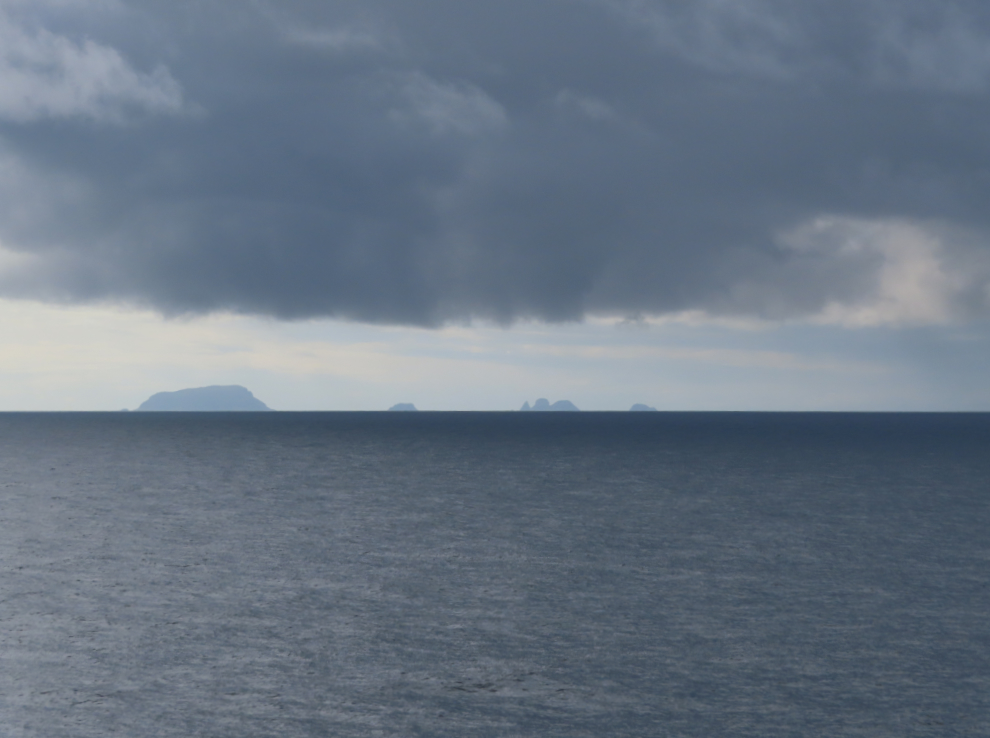
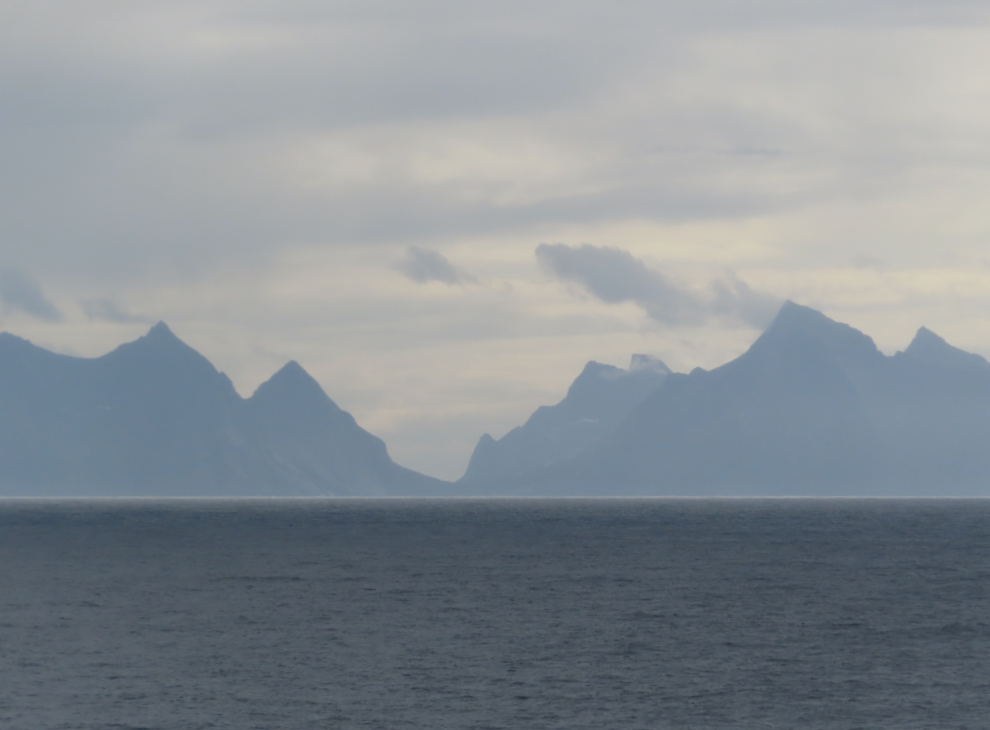
As we sailed along the coast in the 24-hour daylight, the mountains were usually visible, at varying distances. Enticing but unreachable.
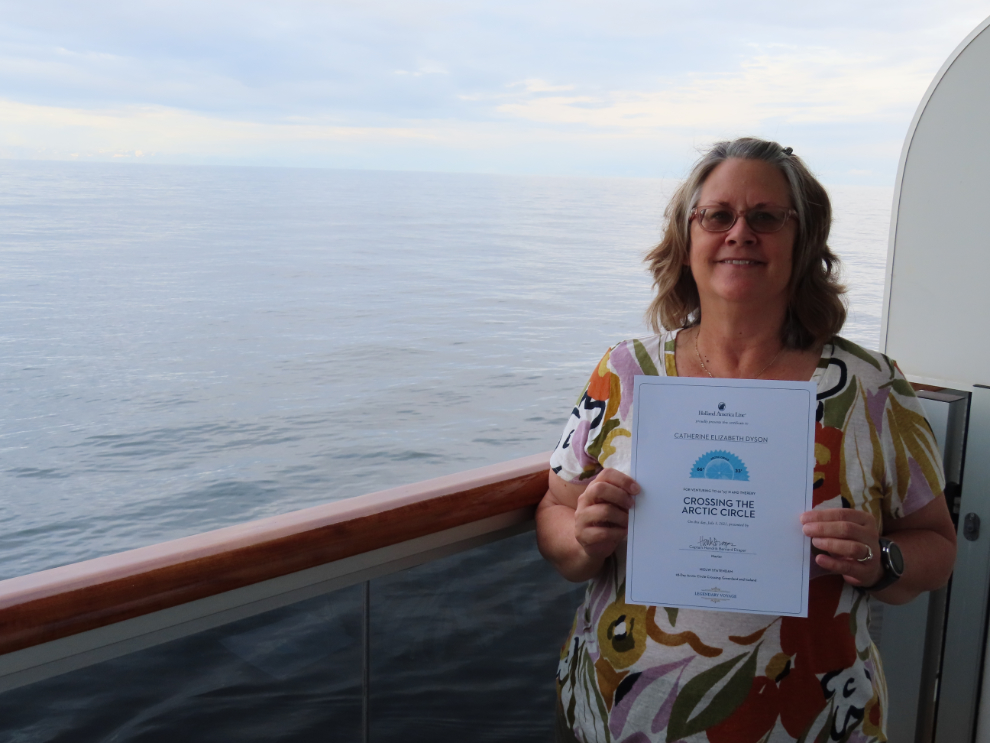
The only event worth noting on this sea day was the crossing of the Arctic Circle, commemorated with a very nice certificate. While I’ve crossed that invisible line at 66° 33′ 50″ North Latitude many times both for my driving job and for fun, this was Cathy’s first, so it was an important milestone in our Adventures.
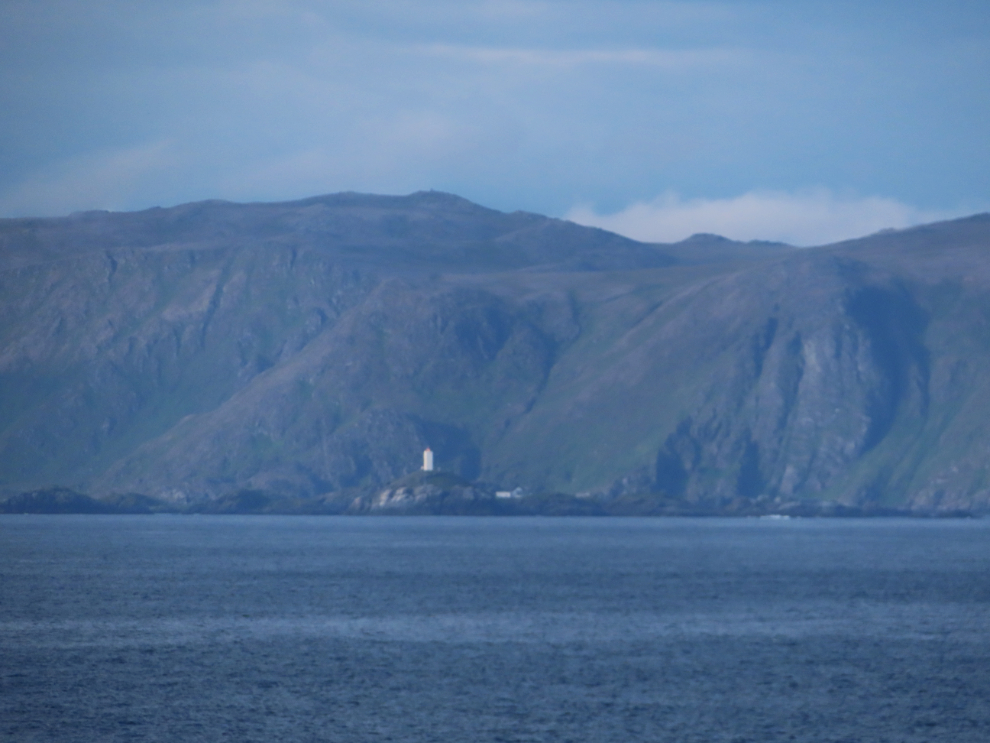
On July 4th I shot the first photo at 05:10, then 7 minutes later I spotted a very distant lighthouse, but with about 550mm of zoom the little Powershot brought it closer 🙂
The coast of Norway is fascinating in its complexity, and geological features certainly added substantially to the 324 photos I shot this day.
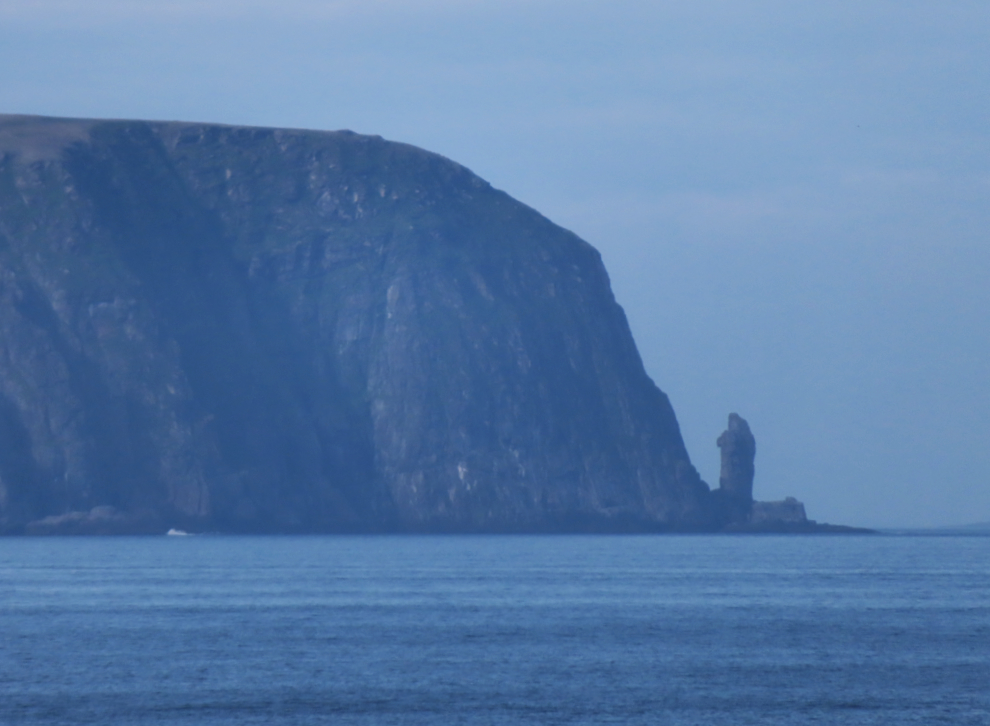
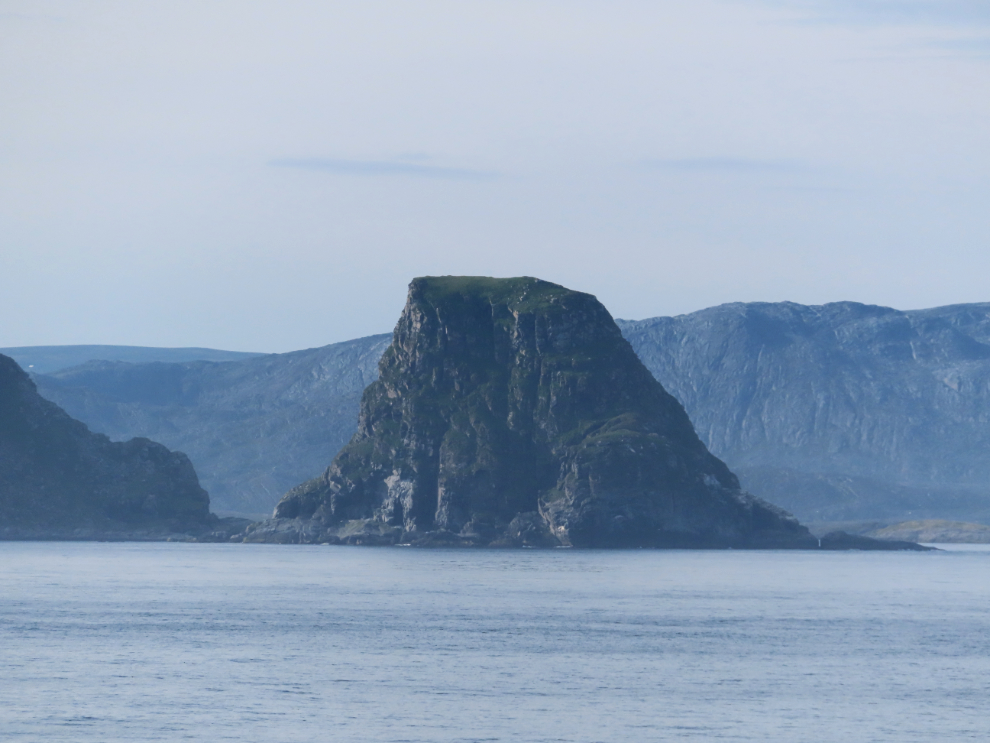
Though this is my first visit, I feel like I know this land, understand this land. I feel like I could live here now – and I believe that I have lived here in a past life. Edit: in Paamiut, Greenland, I would again get that feeling deeply.
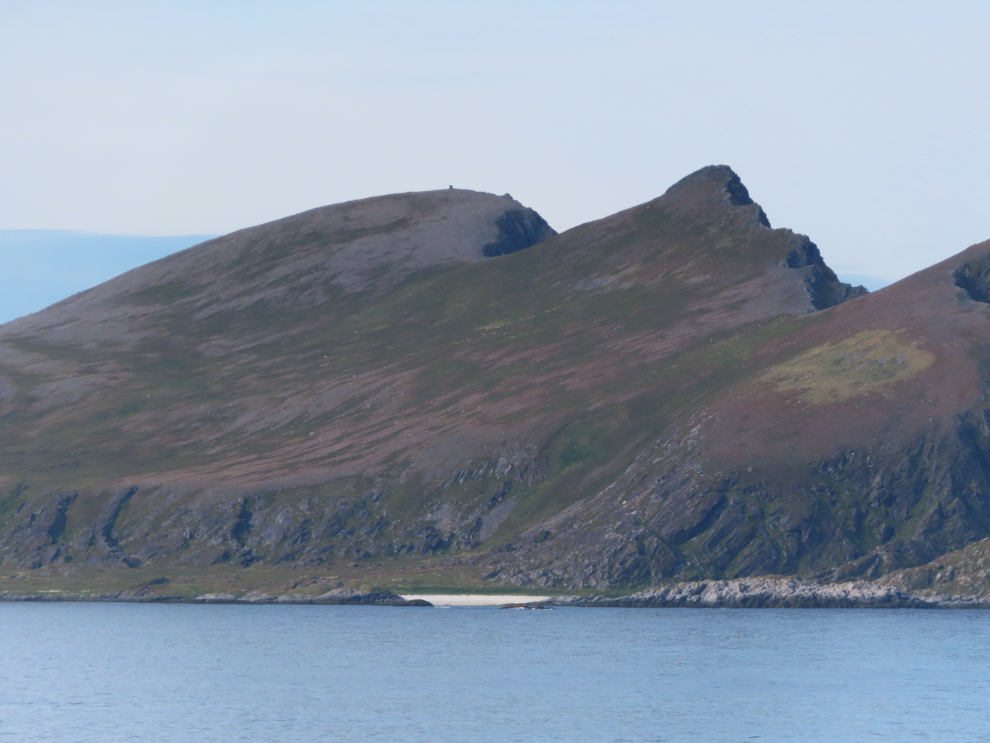
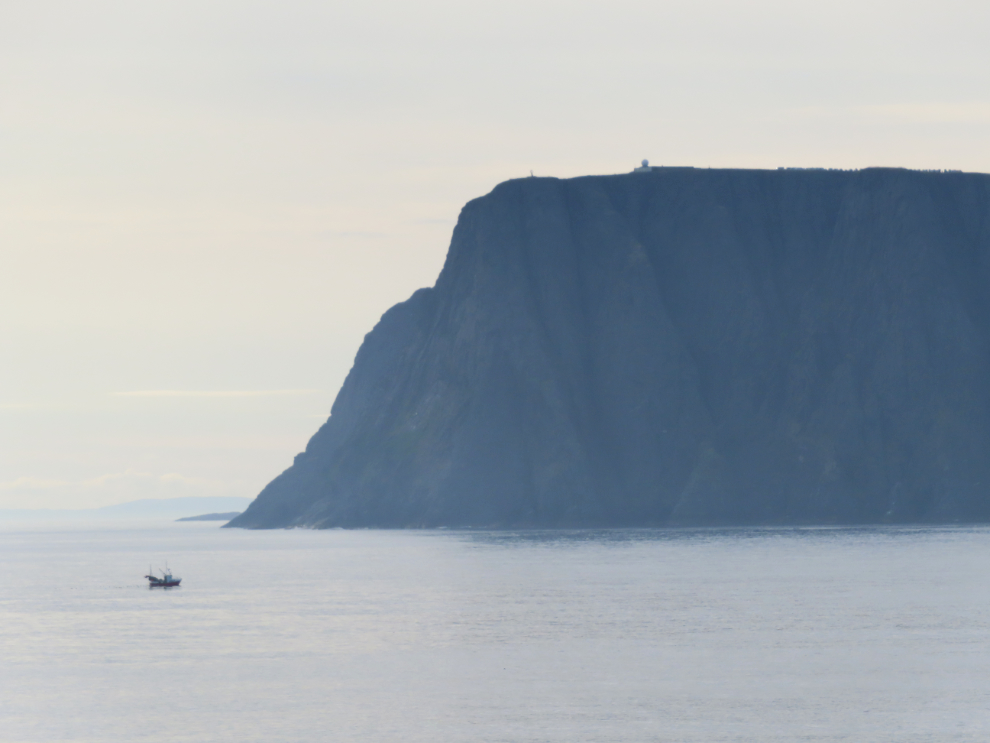
We were scheduled to sail past Nordkapp (North Cape) at 07:15, and by 07:08 I was getting photos of the very distinctive feature and its man-made additions.
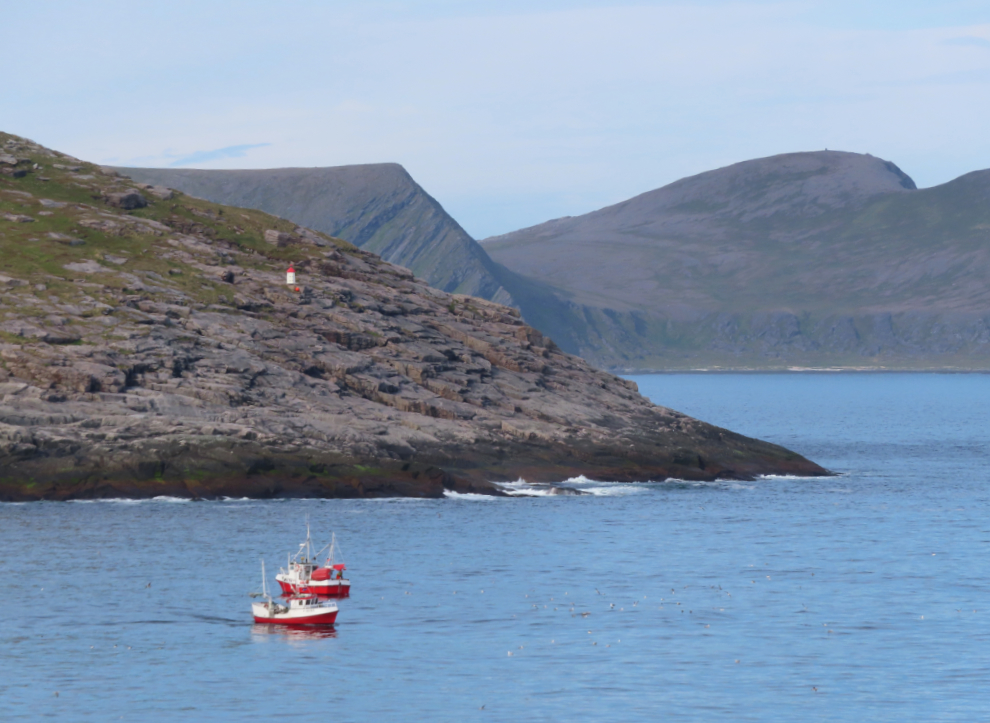
I got a few photos of this little light – this one looking back to the south is the best one.
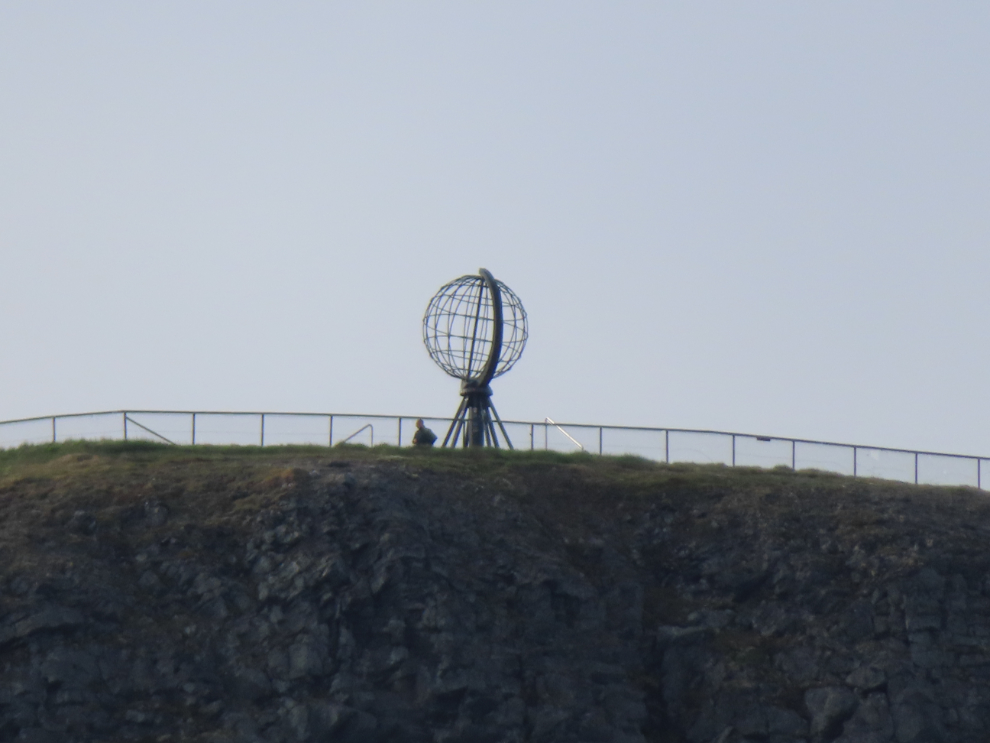
The famous Nordkapp globe with a full 960mm of zoom. In a few hours we’d get a close look, though at this point we hadn’t yet decided to take the very expensive excursion.
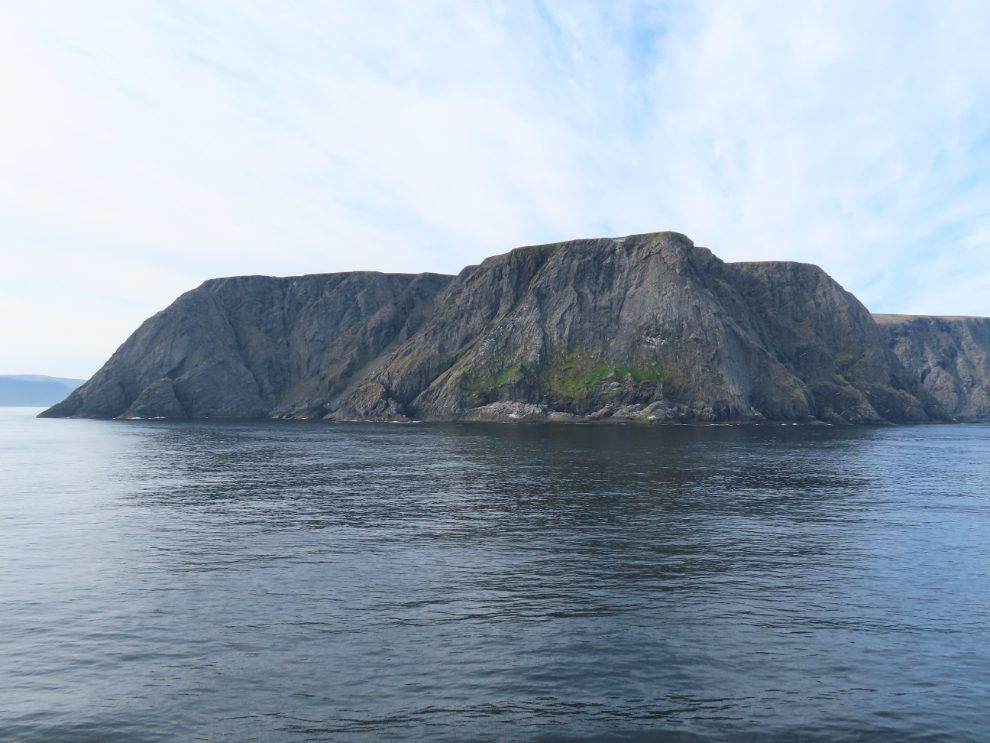
A broad view looking back at Nordkapp from the north.
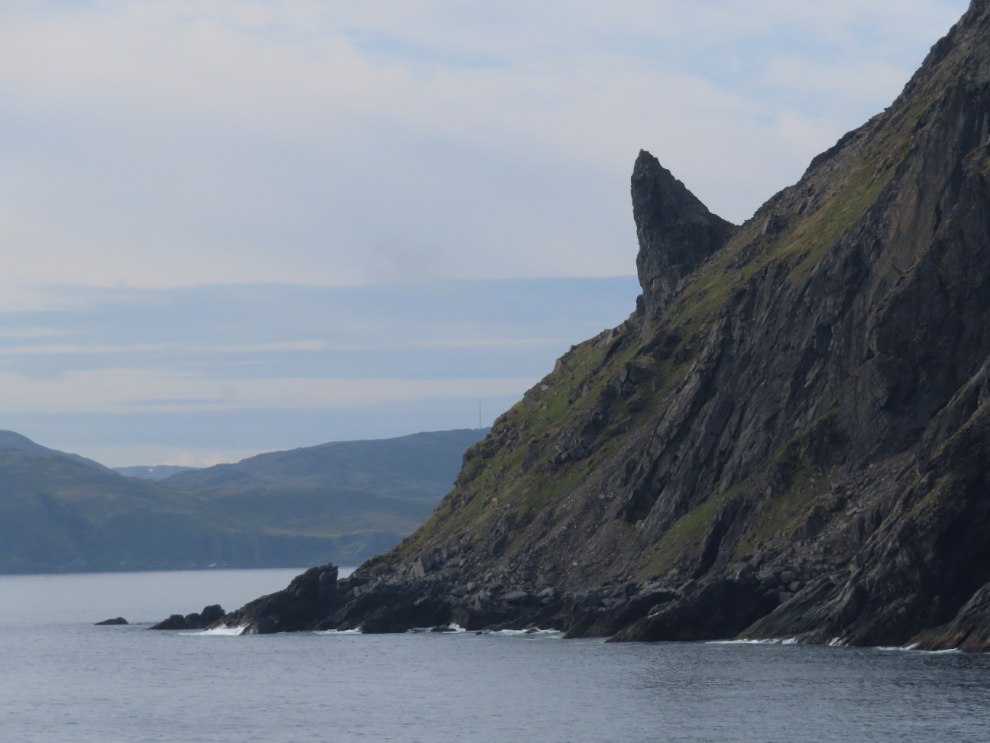
Another one. Cool. Very old volcanic plugs?
A particularly fine lighthouse. If I had unlimited time I could probably find the name of this one, but a brief look produced nothing. Edit, August 7: this is the Helnes Lighthouse (Helnes fyrstasjon), on the northeastern coast of the island of Mageroya.
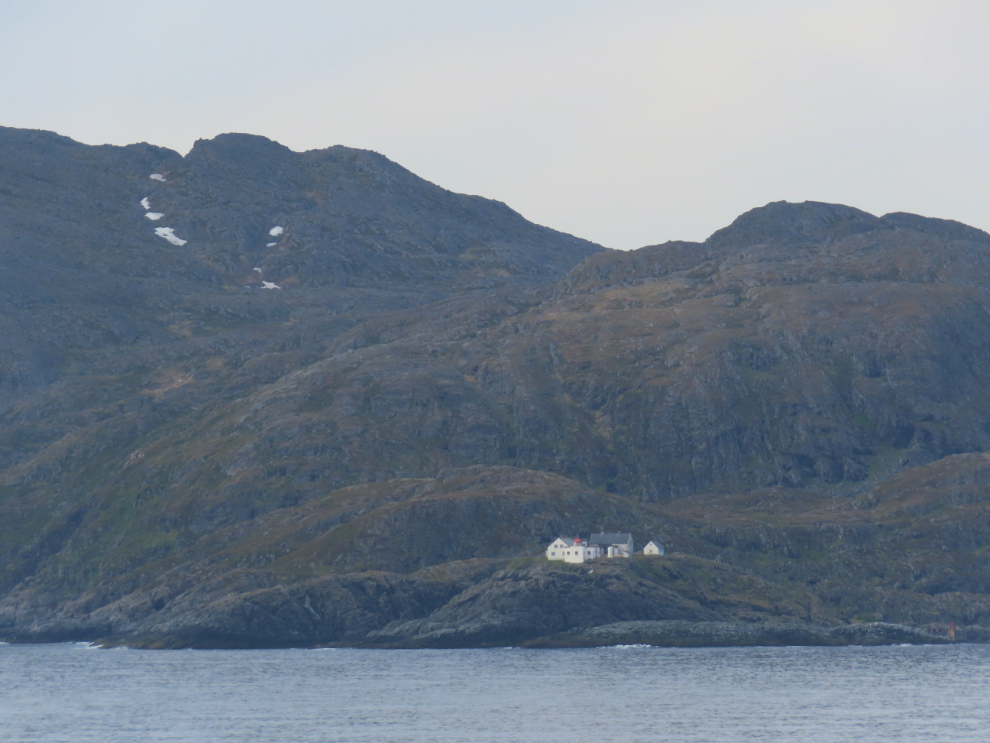
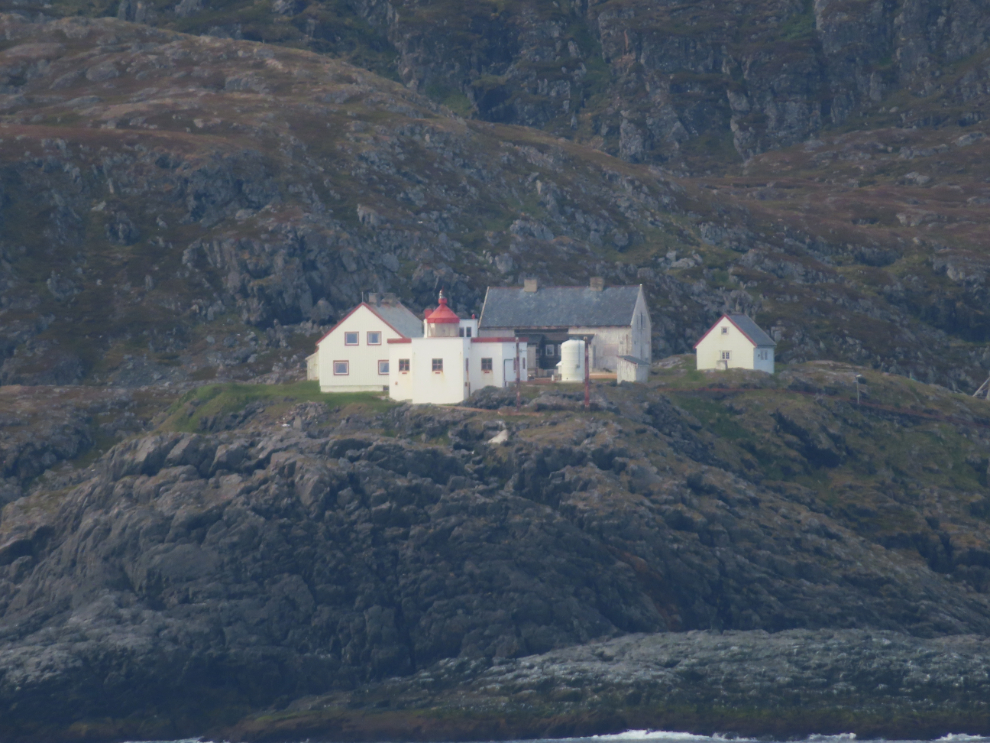
The village of Nordvågen, in the next bay east of our destination.
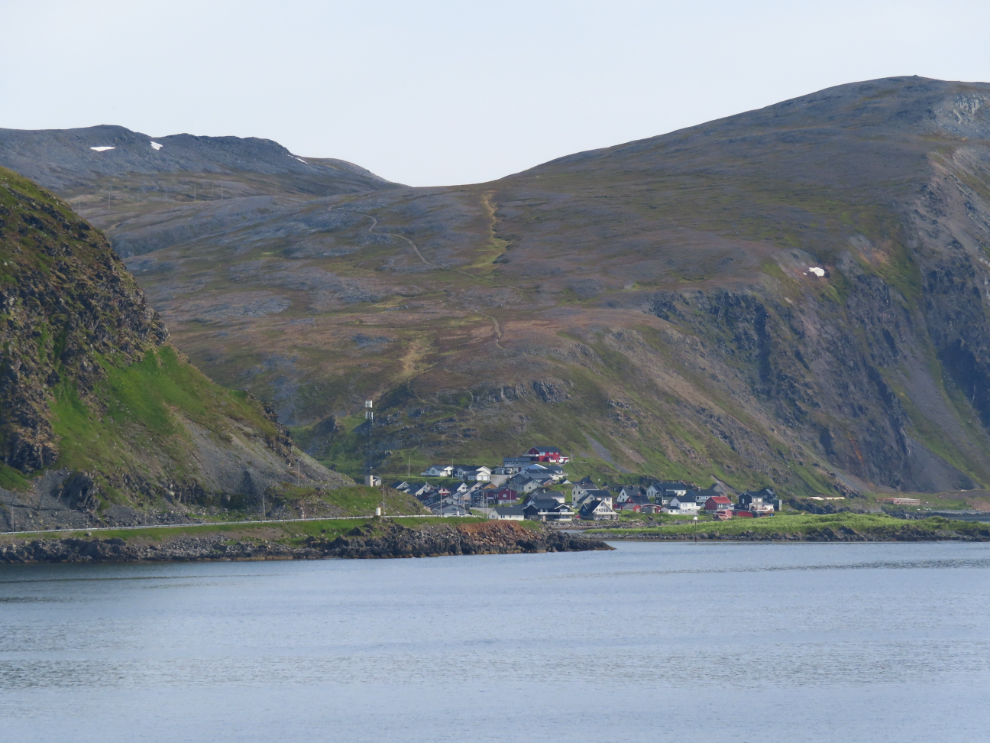
My first look at a feature I’d see a lot of in the coming days. Though I thought at this time they were snow guards, they’re actually massive steel grates to keep large rocks off the road below – avalanche guards.
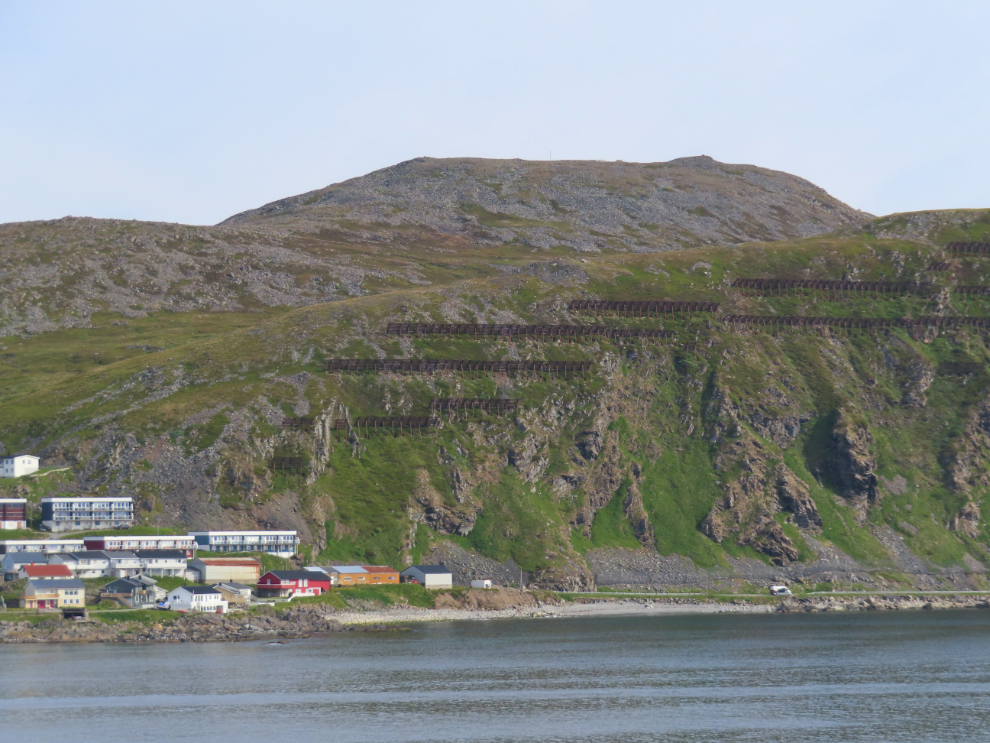
Honningsvåg, population about 2,250. At 70.6° North Latitude, it’s said to be the northernmost city in Norway.
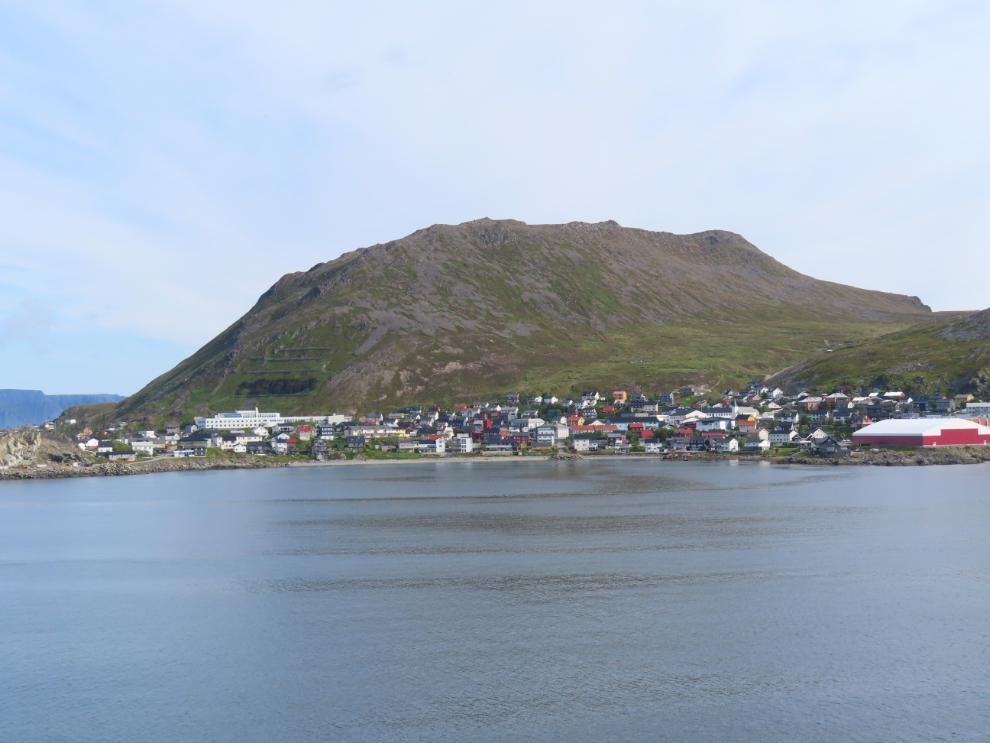
Google has been no help in identifying this industry on the other side of the bay.
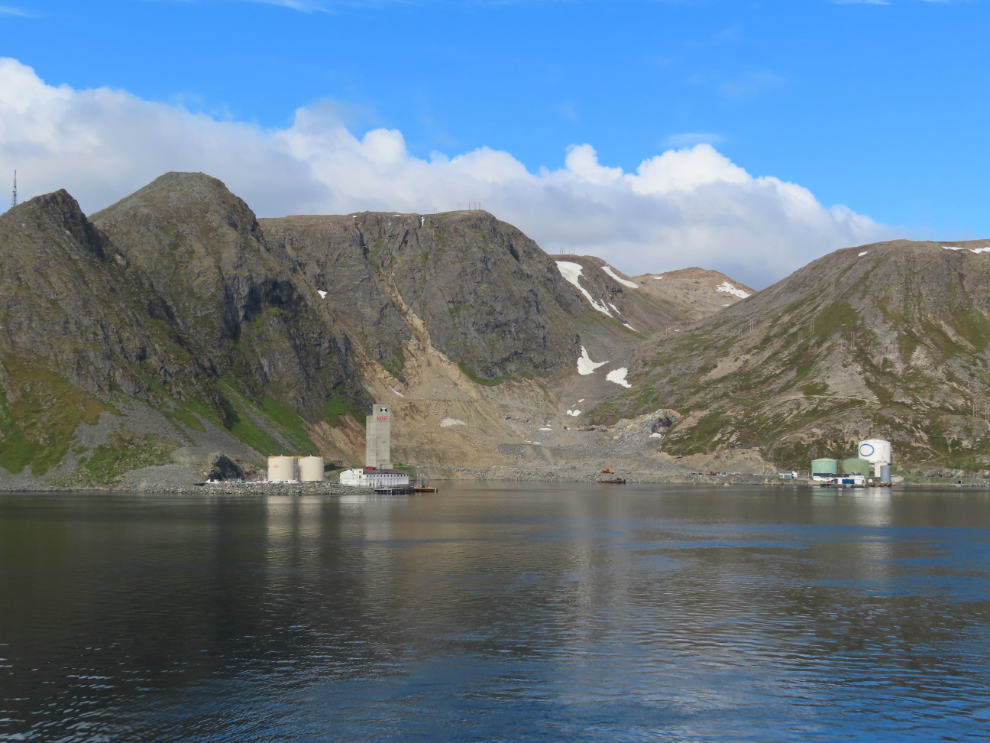
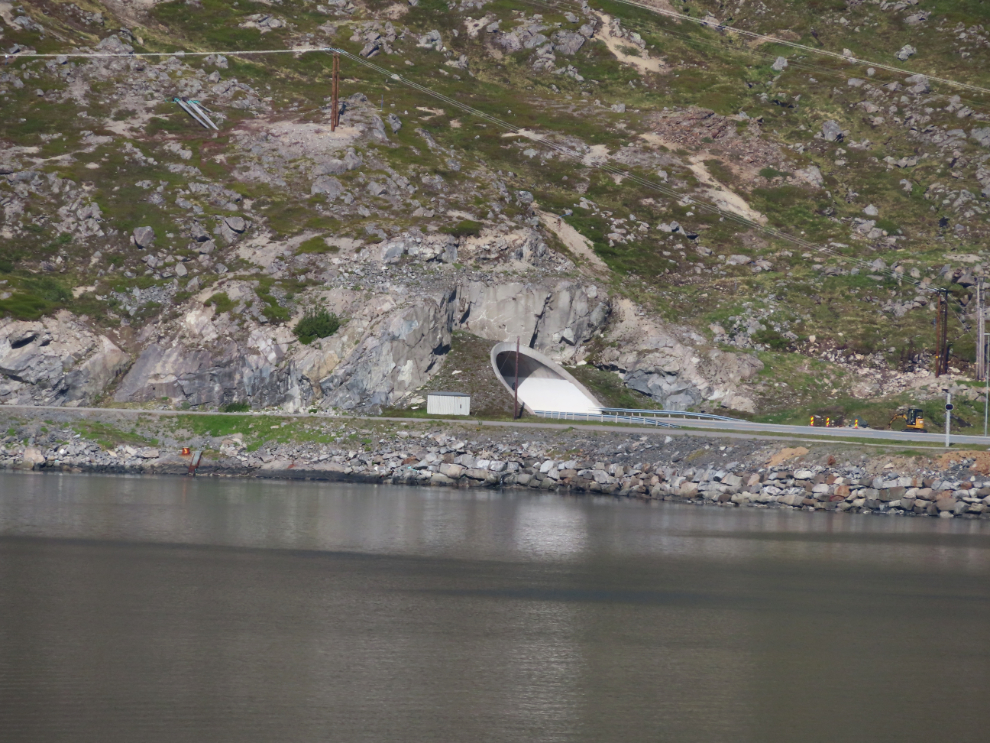
This is the north entrance to the Honningsvåg Tunnel, which carries Highway E69 over 4.4 kilometers through a Mount Honningsvåg (Honningsvågfjellet) west of town. Built as part of a large project to connect the mainland of Norway to North Cape, it is the northernmost public road tunnel in the world. It opened in 1999.
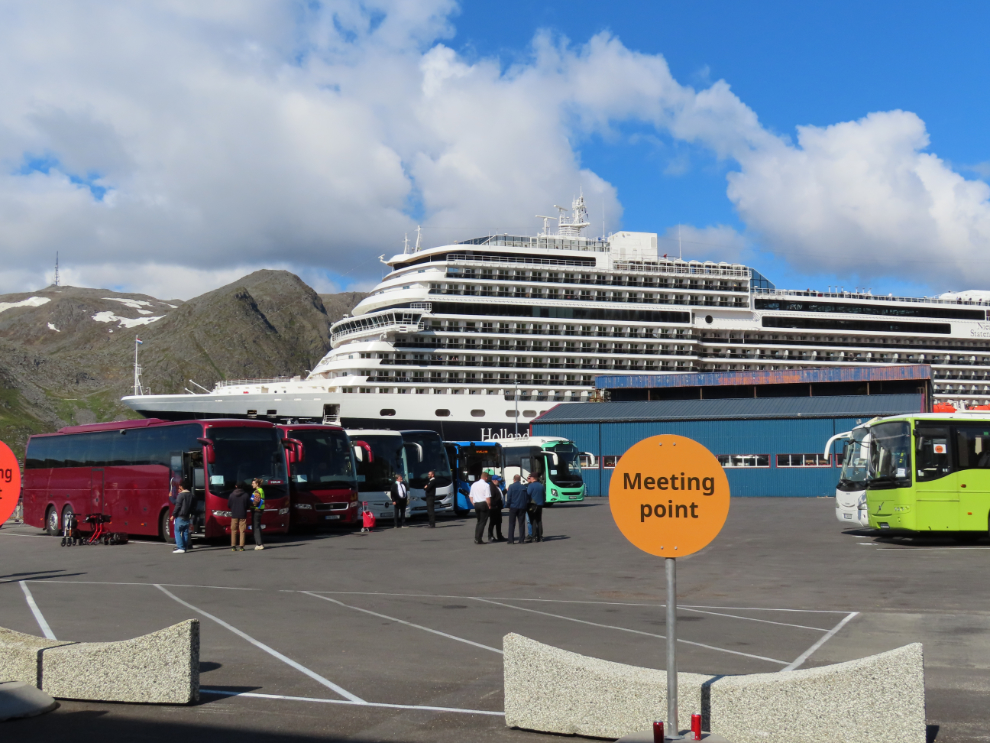
Cathy and I decided over breakfast that we really should see Nordkapp regardless of the cost, and she booked an independent tour (that is, not booked through the ship). We verified where to meet the bus, then went for a bit of a wander.
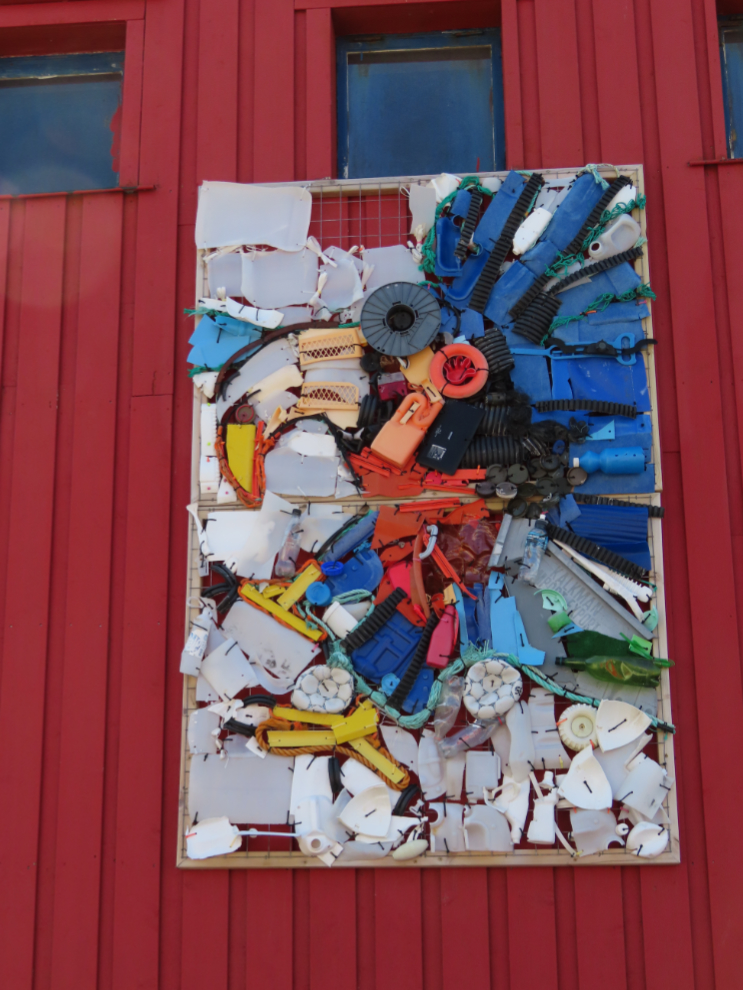
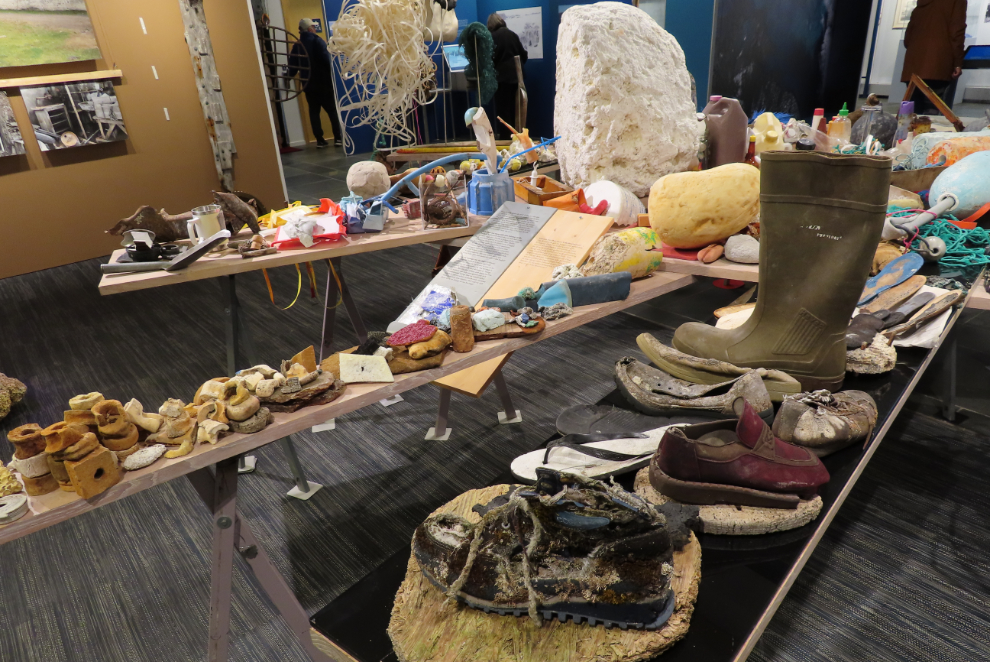
A large piece of art created from trash, an idea we would learn much more about later that day.
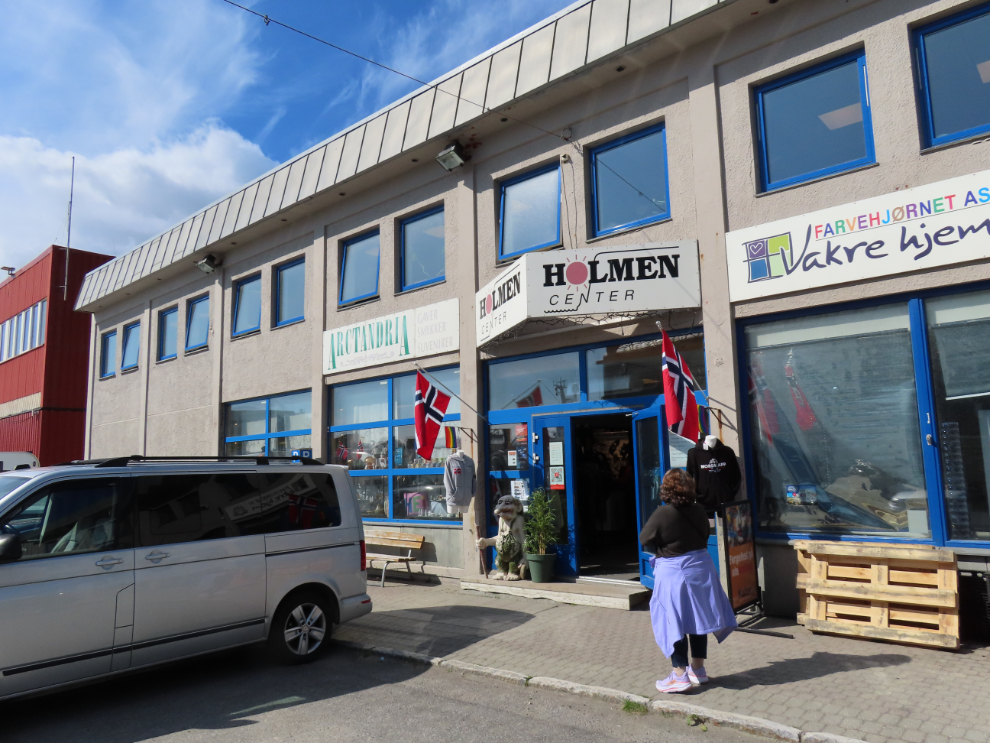
A few blocks away, across the street from the museum, we found a great little gift shop, Arctandria, and bought a few things.
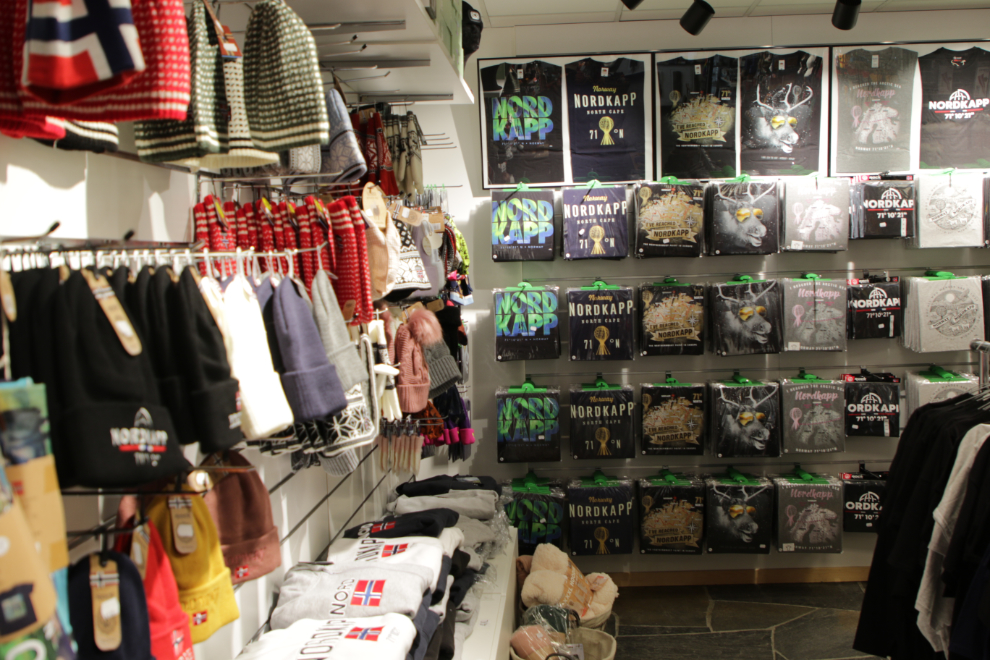
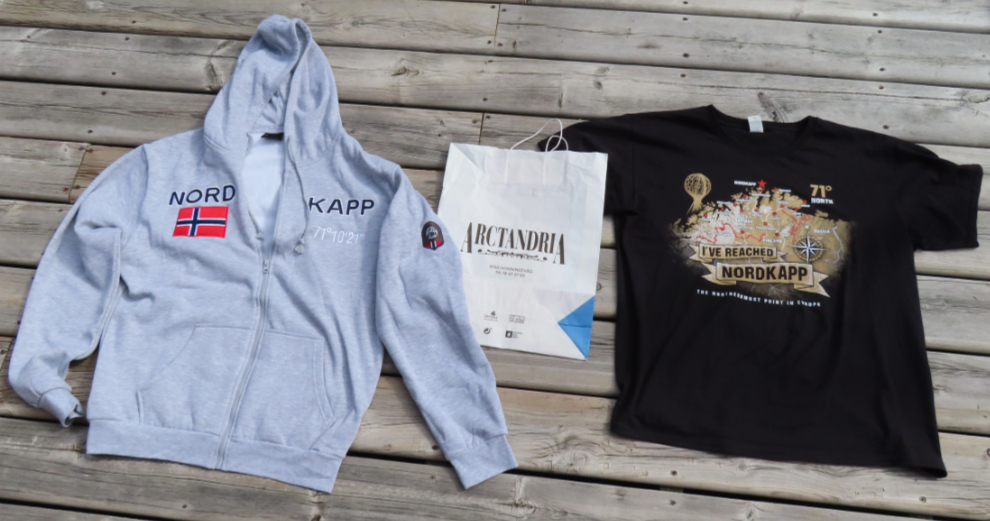
Edit, August 7: Here’s the sweatshirt and tshirt I bought at Arctandria 🙂 I hadn’t brought my packpack, so they held onto the bag while we continued our wander for a while.
We boarded our bus at 11:00, and were soon on our way – it’s only 33 km to Nordkapp, which is at the north end of Highway E69. The route is incredibly scenic. Since a photo is worth a thousand words, I’ll let these 4,000 words describe the first part of the drive 🙂
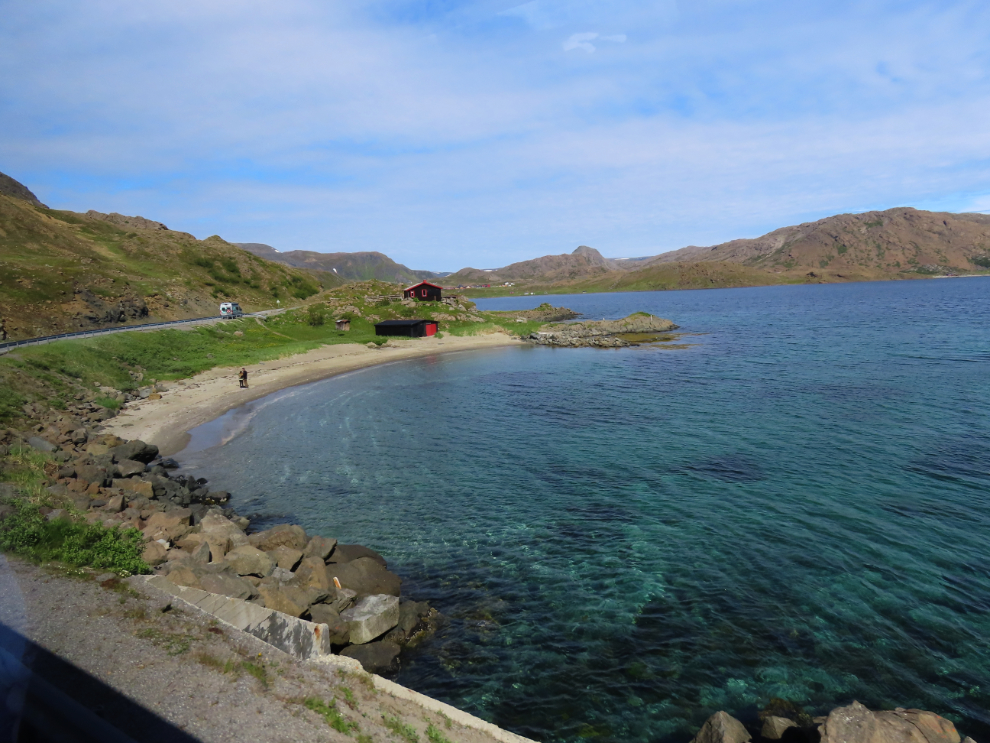
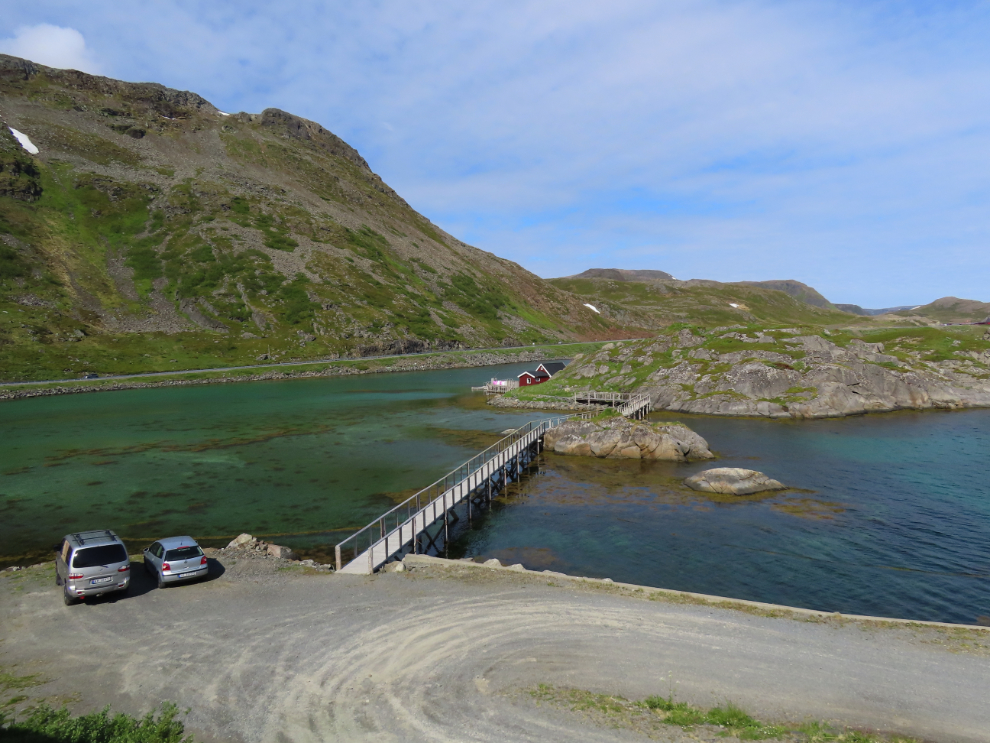
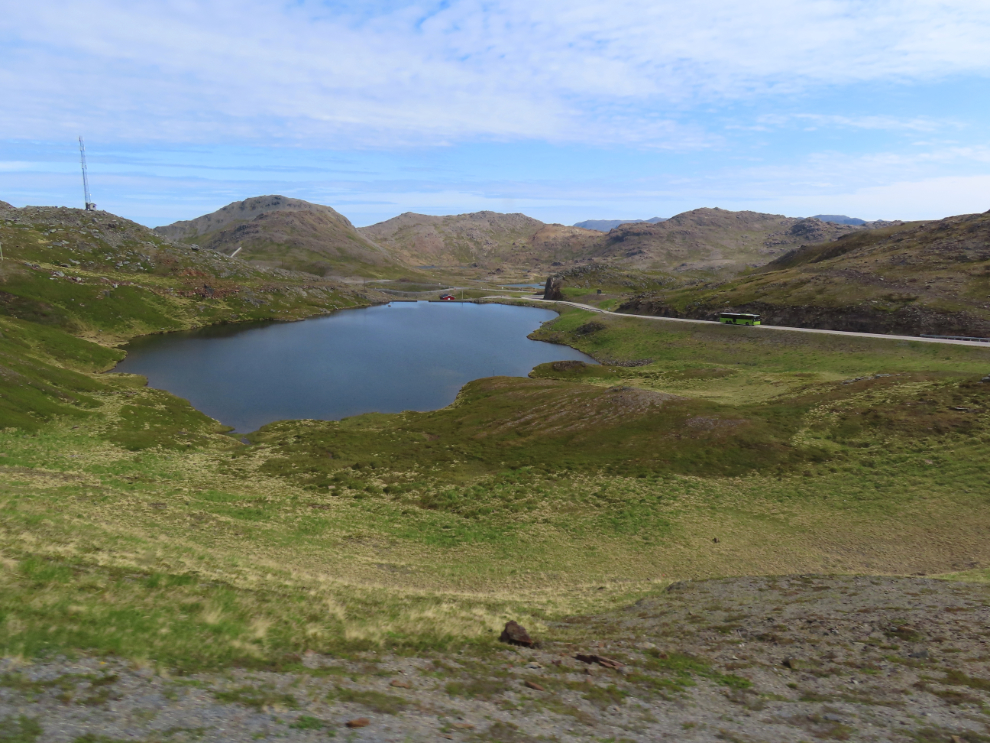
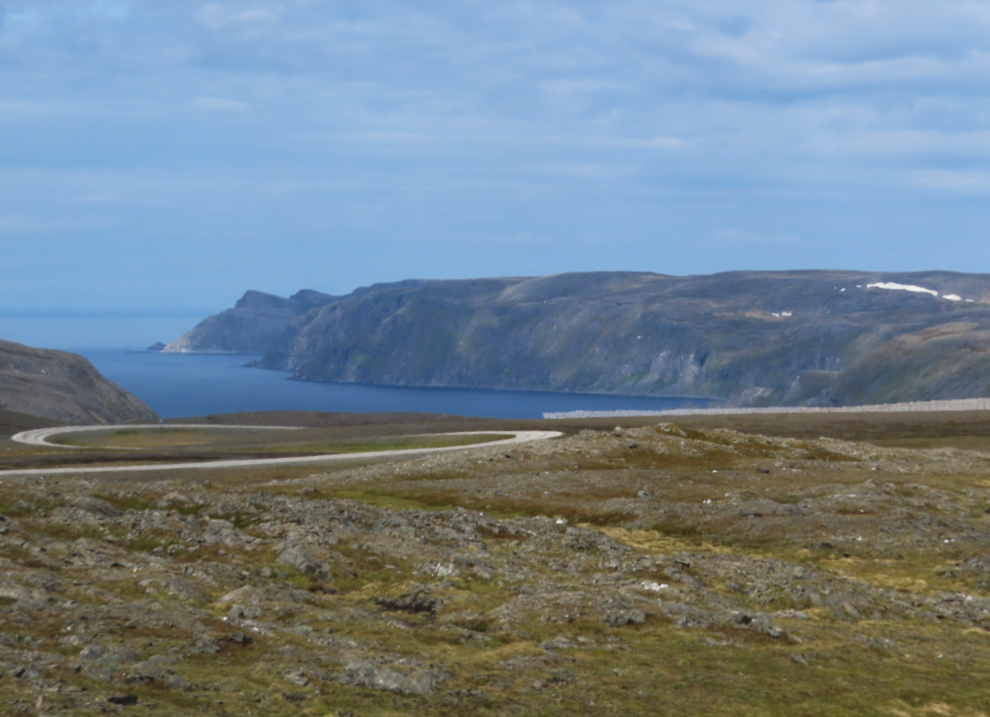
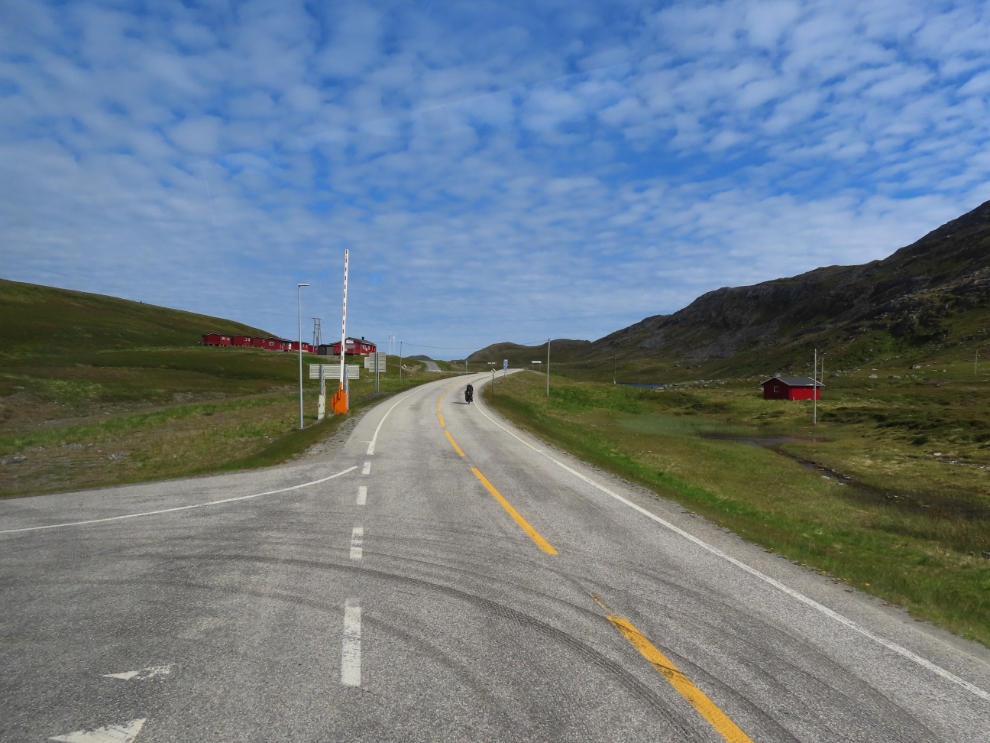
Highway E69 to Nordkapp goes left, while the road ahead leads to the coastal village of Skarsvåg.
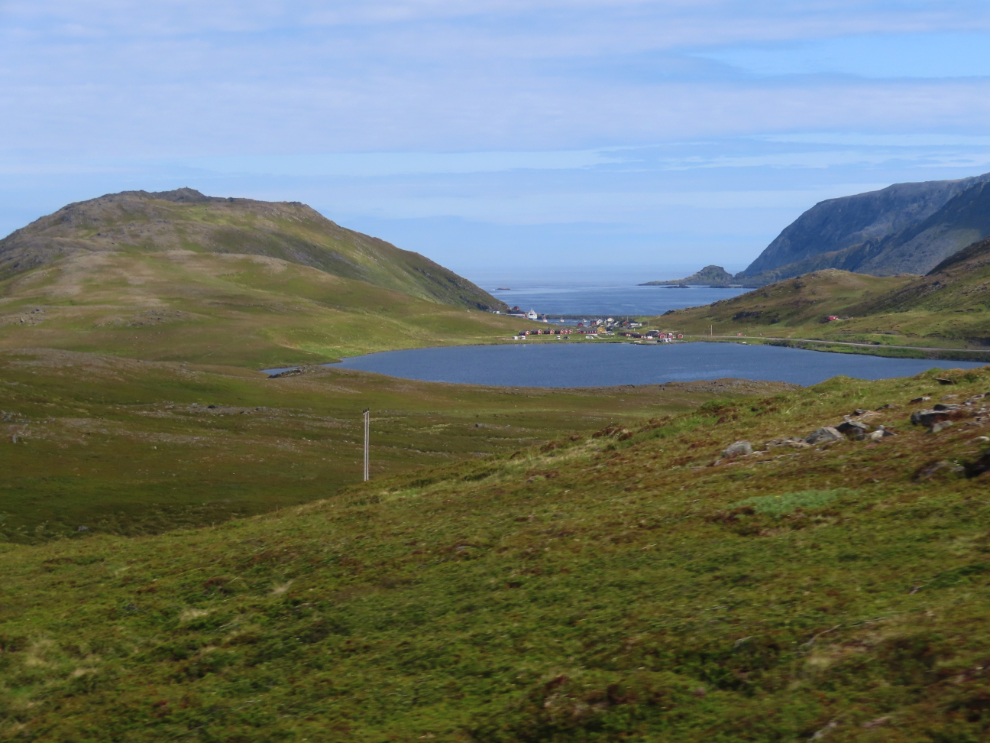
A distant view of Skarsvåg.
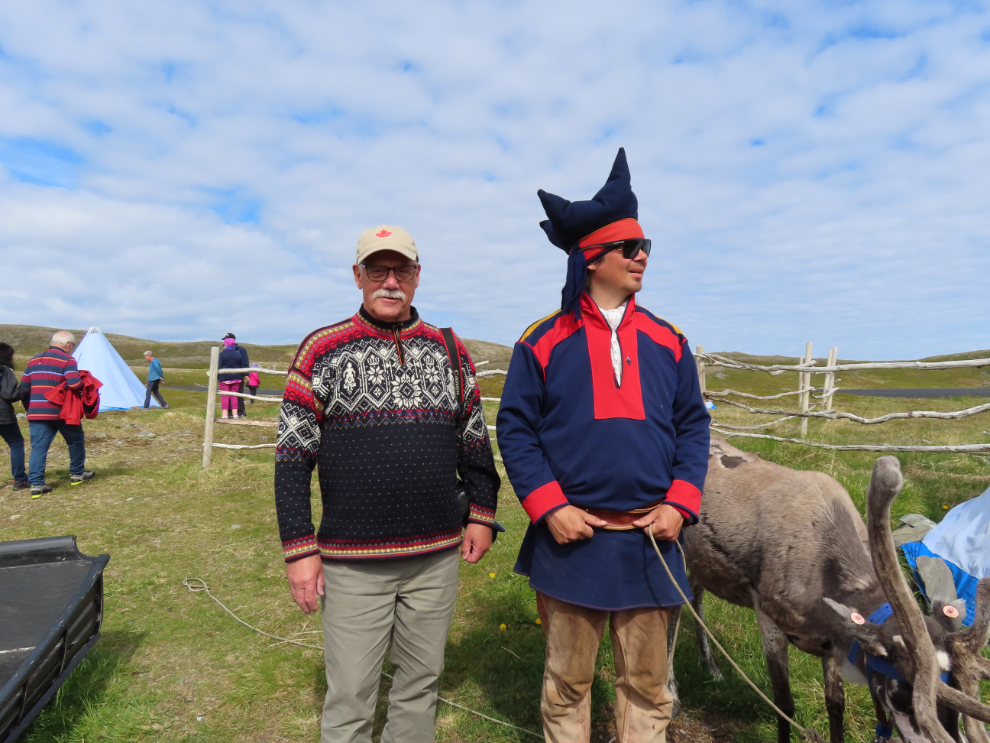
The tour promised a visit with a Sami family – this is what that entailed. Dude was wearing a pair of traditional Sami crocs 🙂
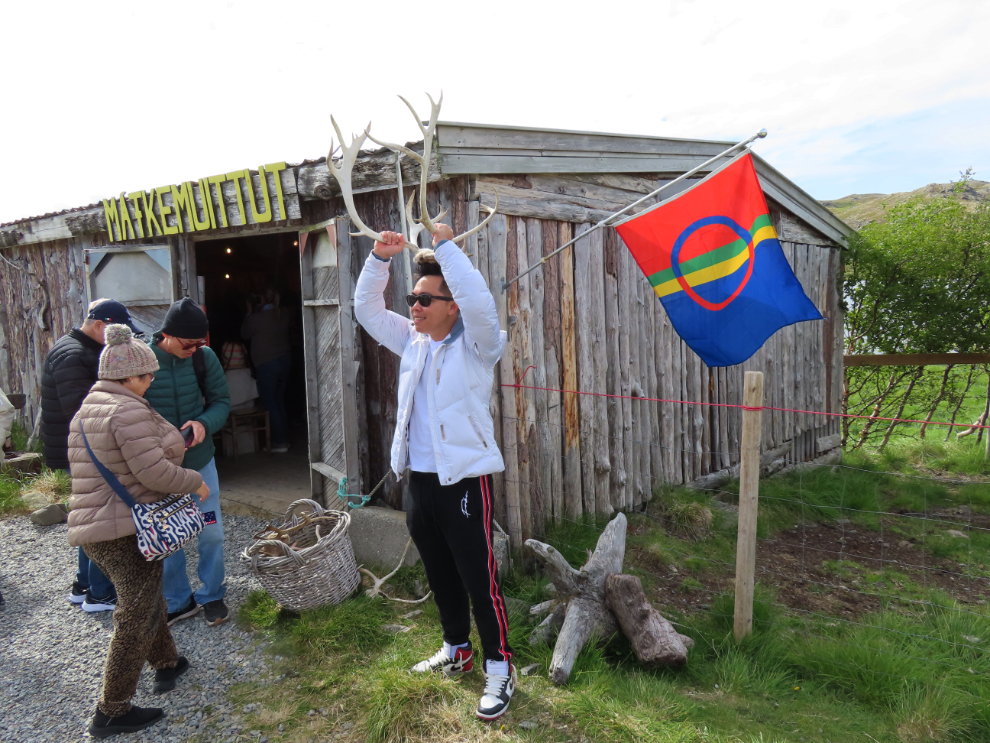
The Sami family had a gift shop with a lot of shelf space but limited stock.
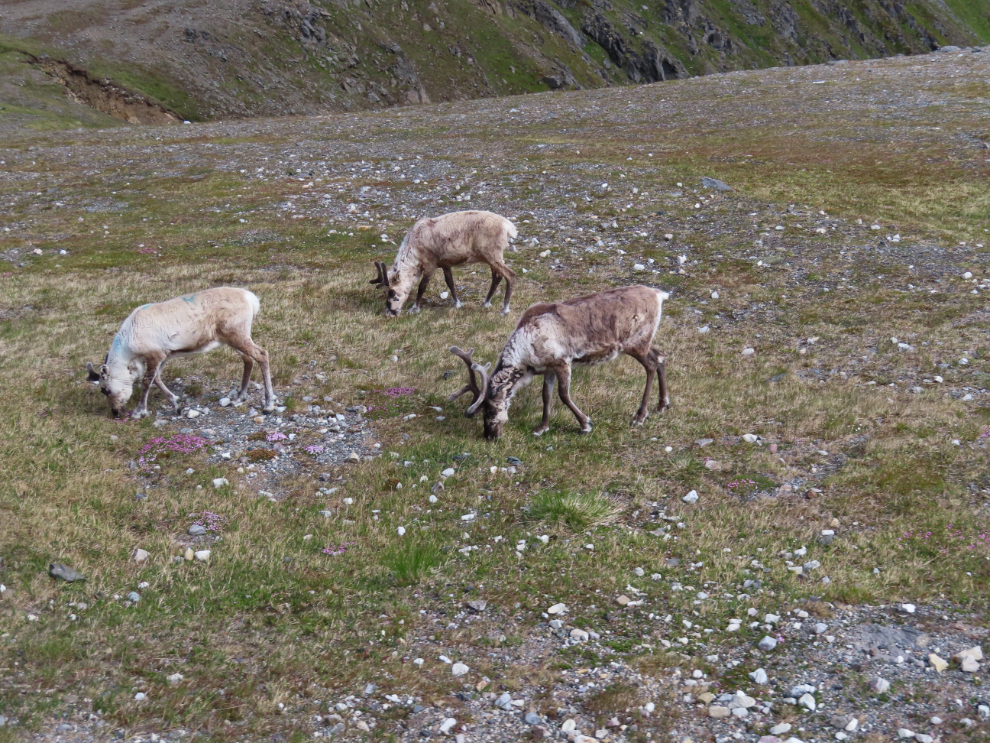
We saw a few reindeer along the highway. Reindeer and caribou are the same animal, Rangifer tarandus.
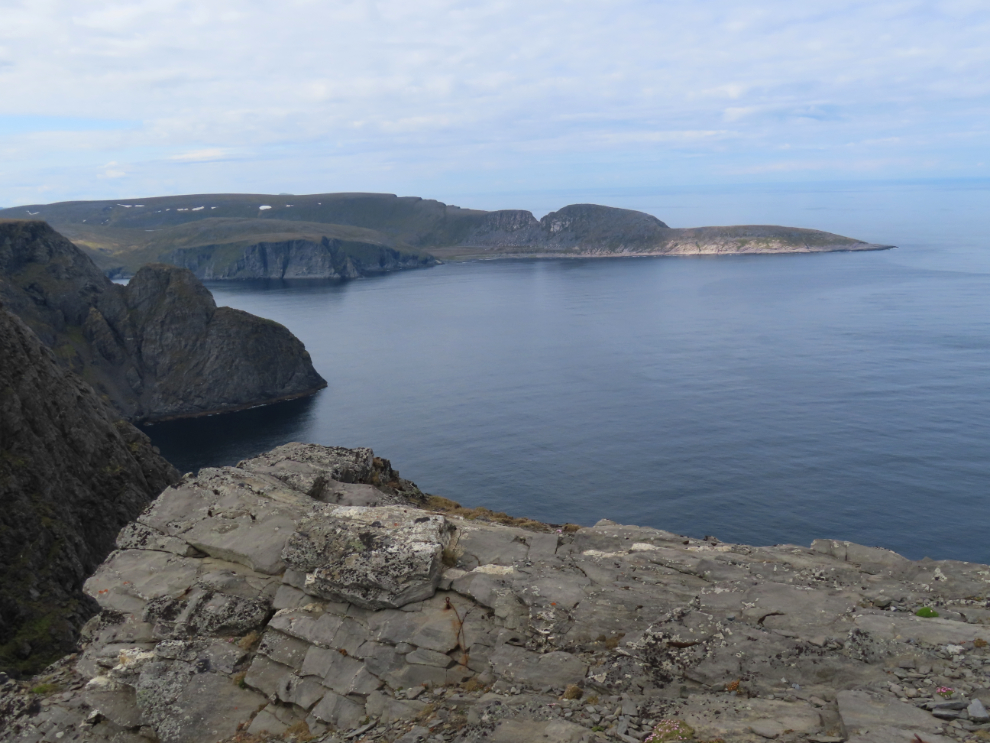
My first look at Nordkapp. Bloody impressive. Yes, seeing it up close was a good choice.
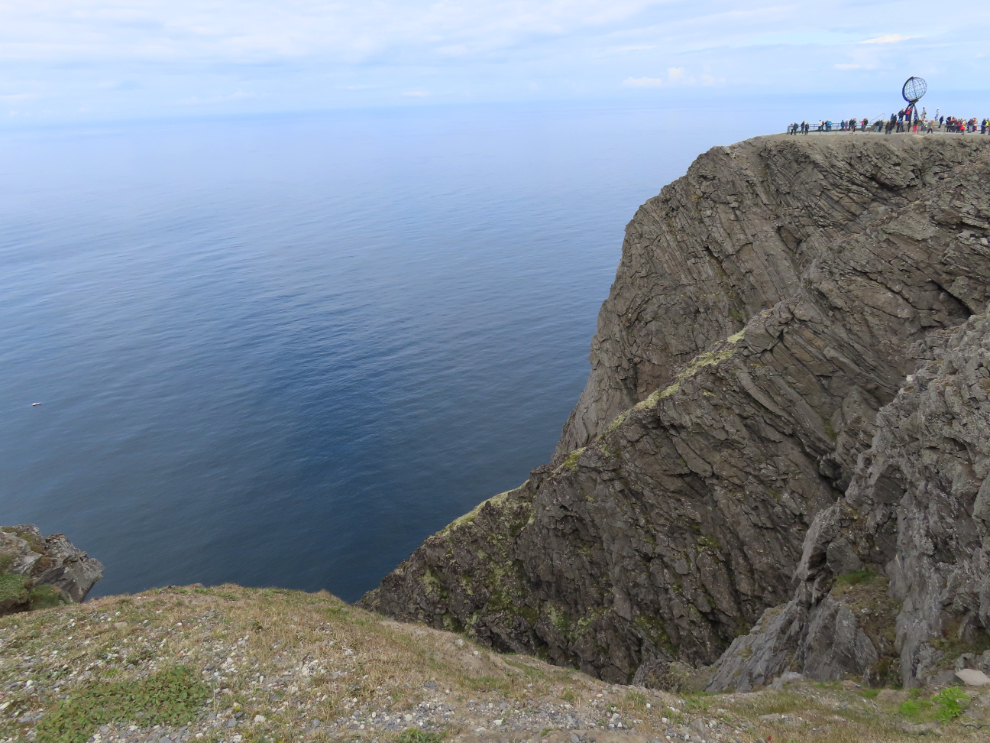
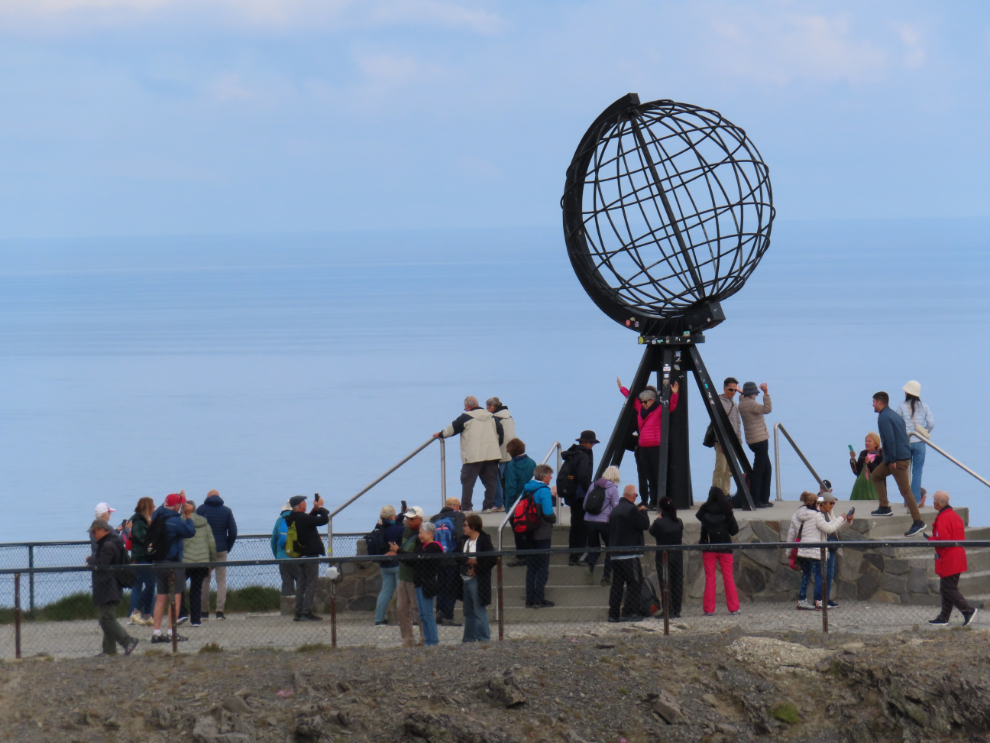
Some people say that having a lot of people there ruins the experience, but I didn’t find that – I can ignore the crowds and just focus on what I came for.
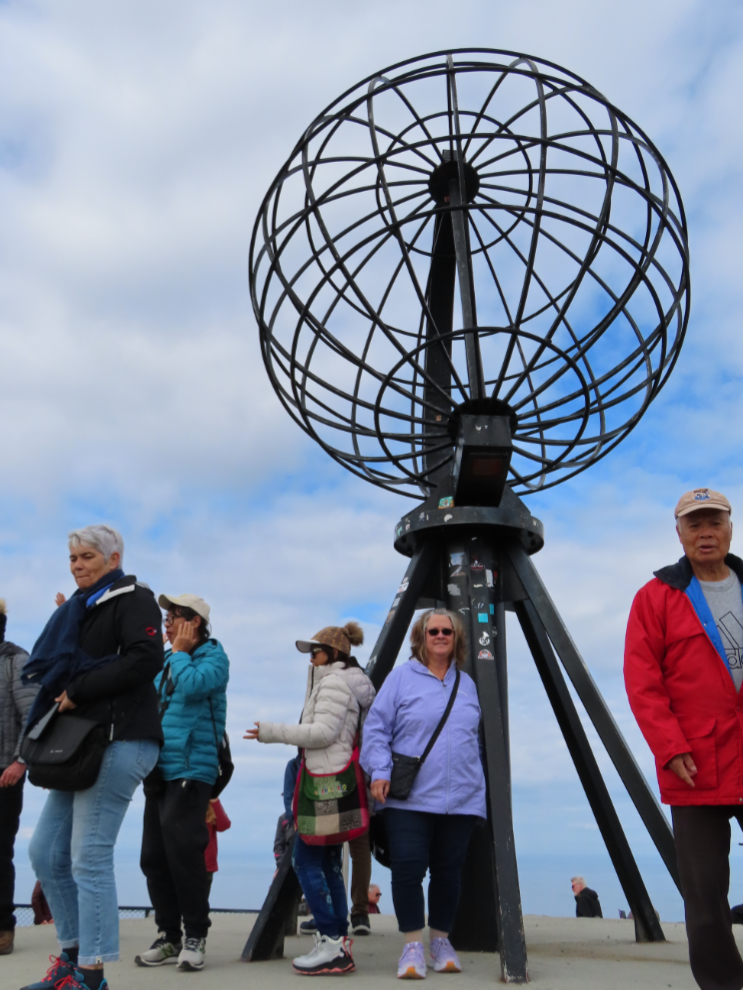
Cathy’s “been-there-done-that” photo 🙂
It’s quite a view from up there.
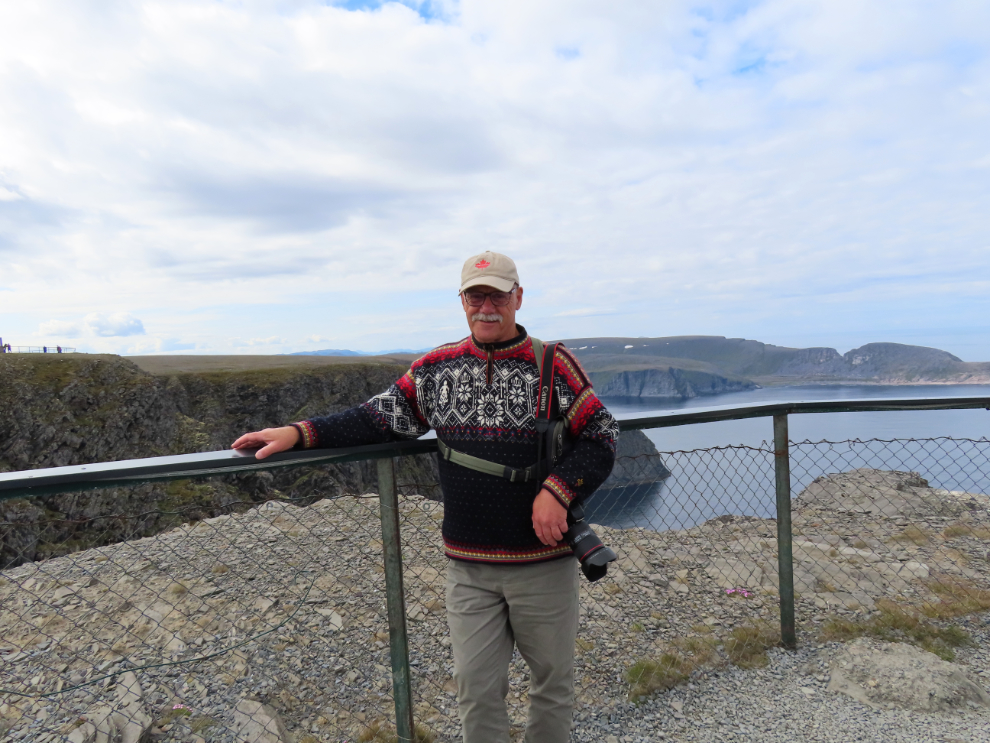
I congratulated this fellow on his excellent branding (I was wearing my “I am Canadian hat) and we had a chat. He was a brakeman on the White Pass & Yukon Route railway for a short while just before they closed in the ’80s, and she lived in Whitehorse for a short while, too.
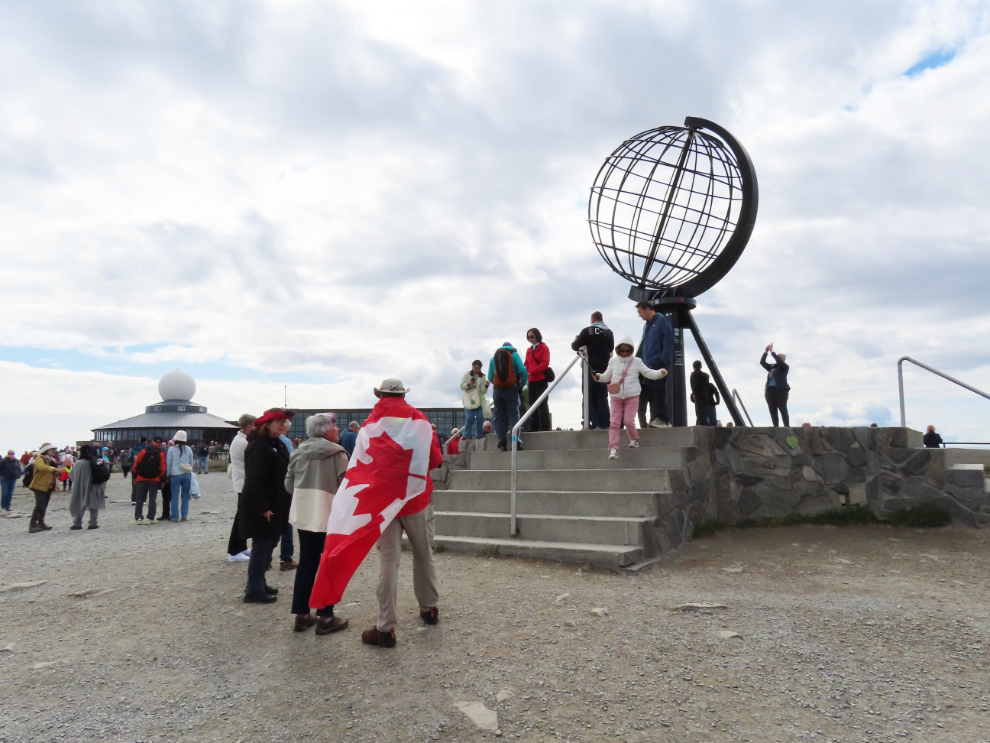
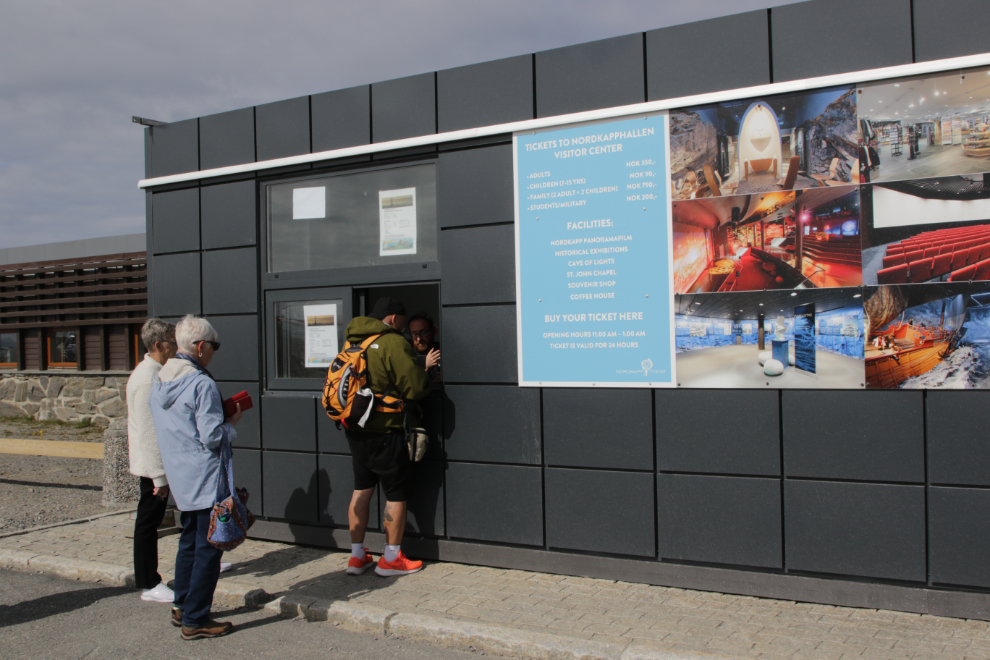
We chose to not go into Nordkapphallen, the visitor centre – admission is NOK 350, a shocking $47.32 Canadian. Ship excursions include admission, which partly explained why our independent excursion was much cheaper – it didn’t.
One of the disks explains: “In June 1988 seven children from different corners of the world were gathered at the North Cape. They stayed here for one week and created together the monument Barn av Jorden, ‘Children of the Earth,’ a symbol of cooperation, friendship, hope and joy.”
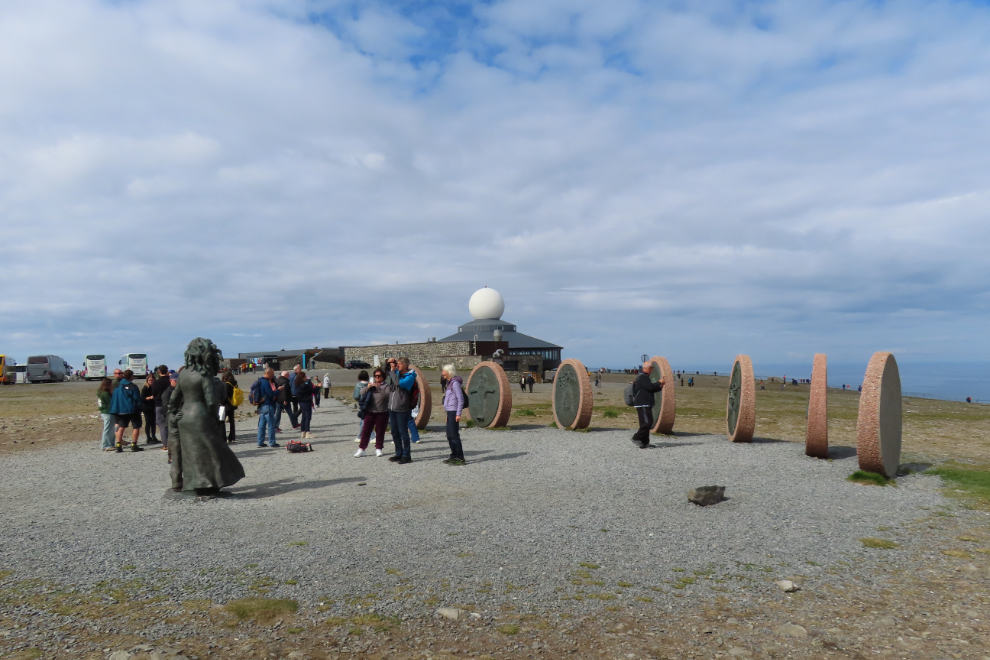
Alone in a crowd…
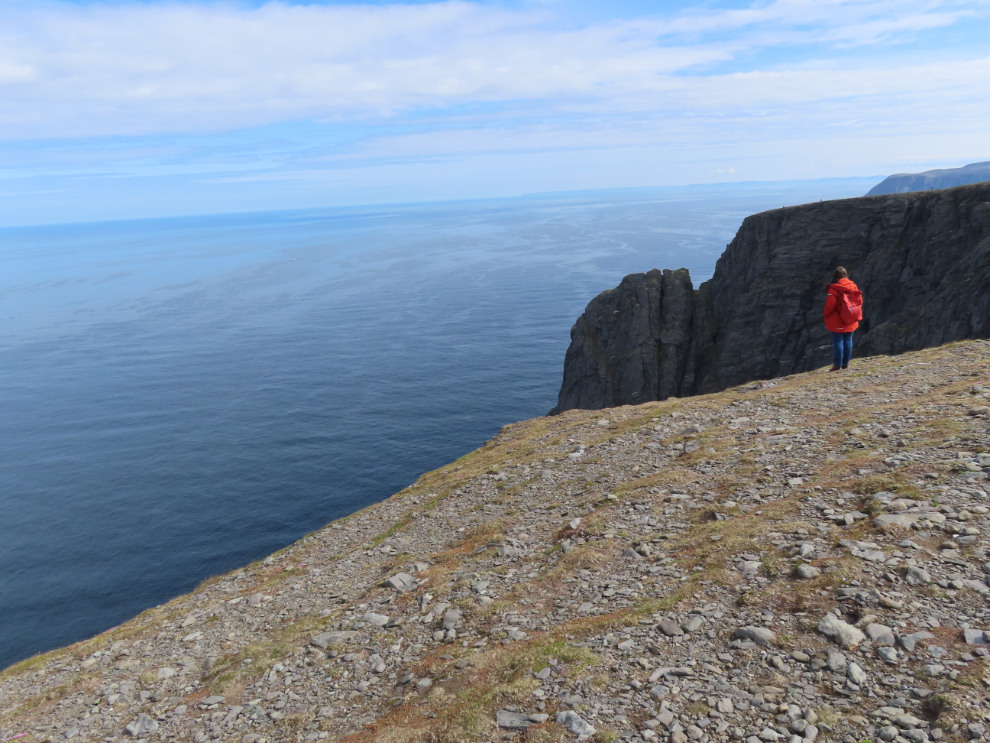
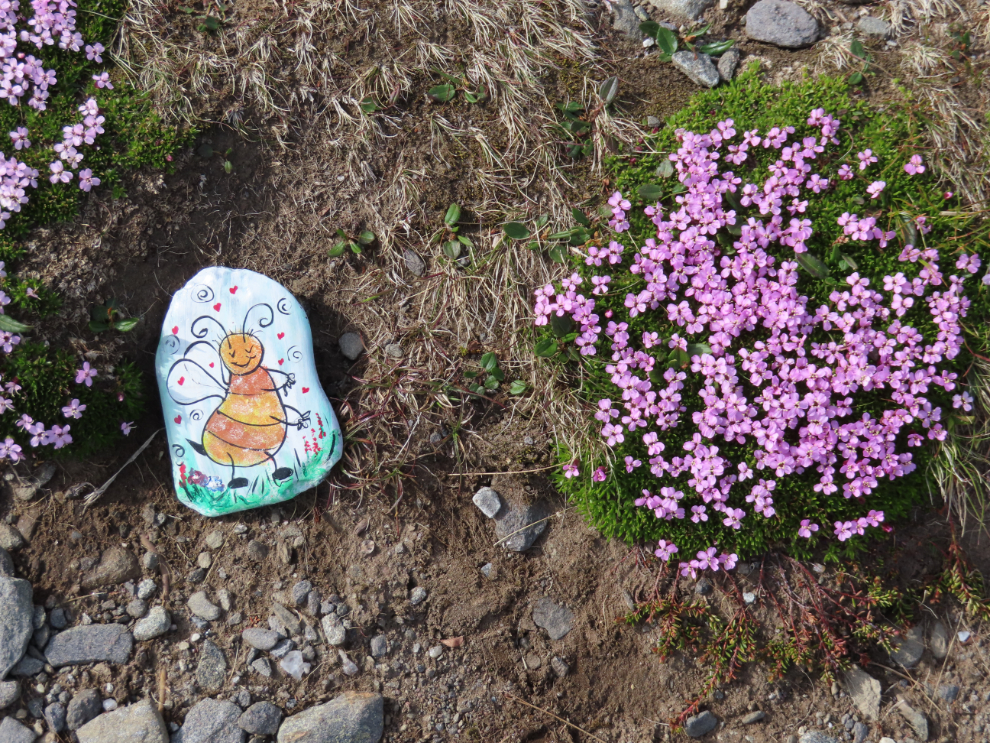
I really enjoy finding these little statements of happiness and love.
We stayed for about 90 minutes, and started the drive back to Honningsvåg at 1:30.
There were a lot of RVs of all types in the area, as well as motorcycles and bicycles
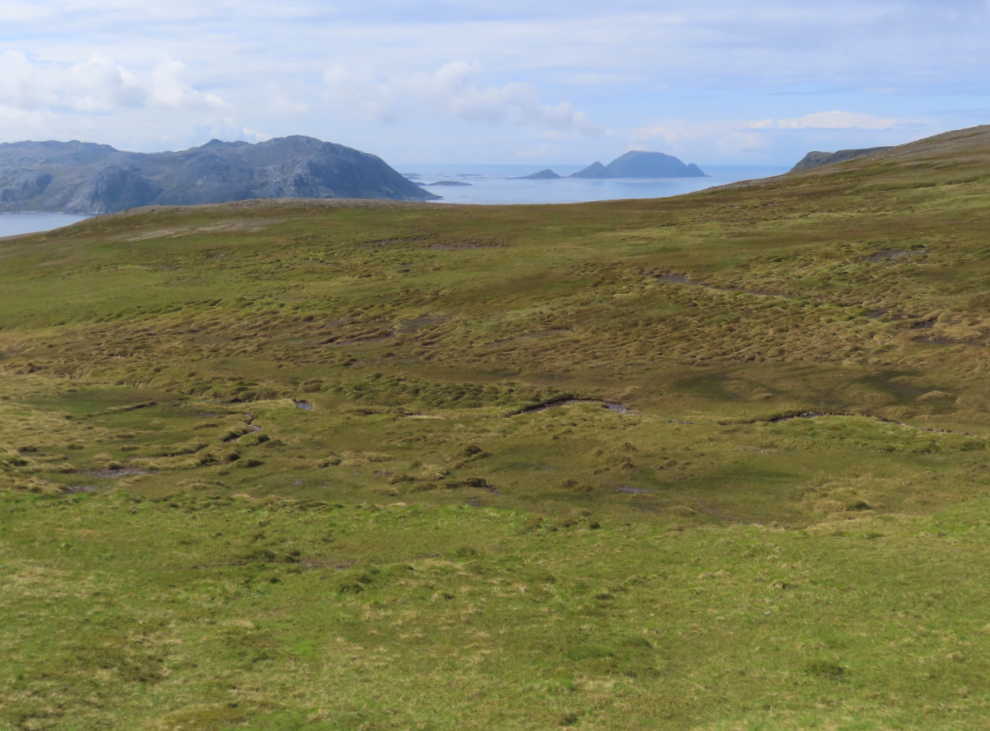
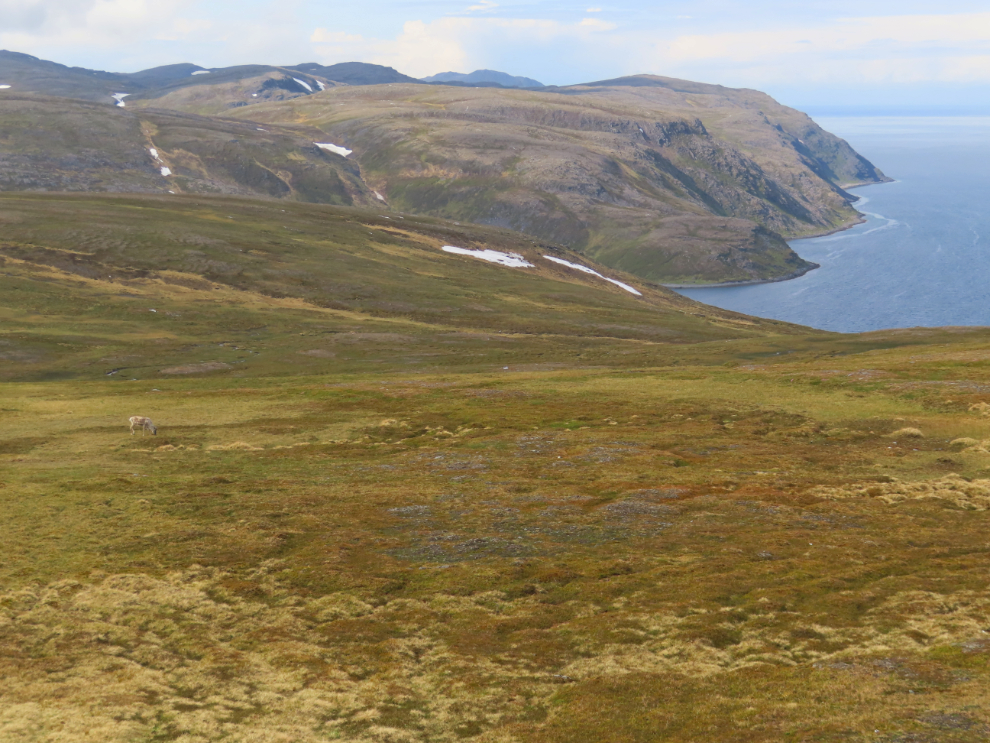
There’s a reindeer at centre left. This is the un-zoomed look at the scene.
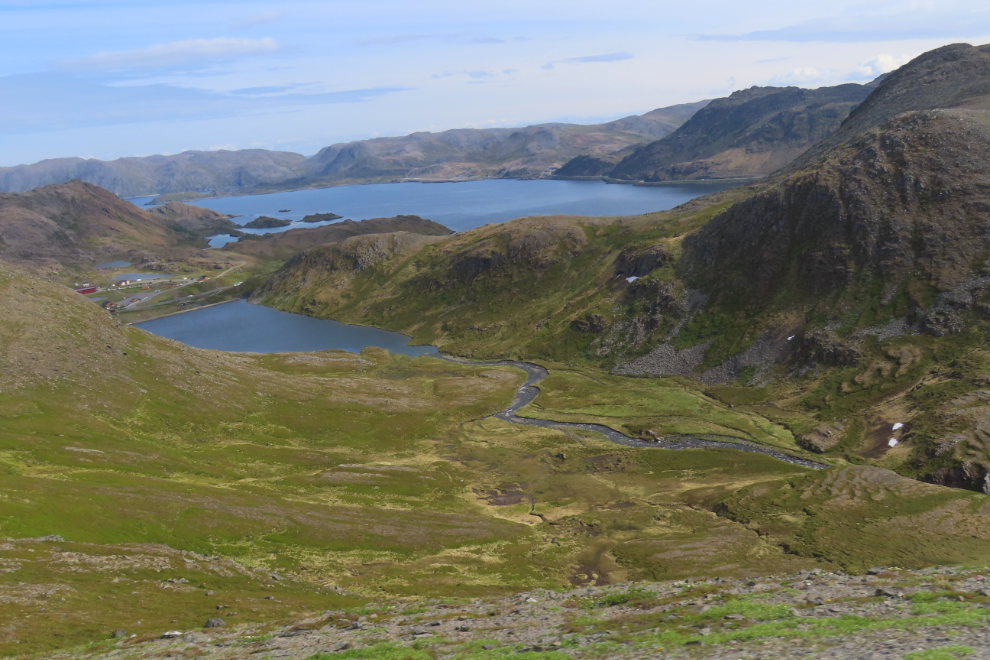
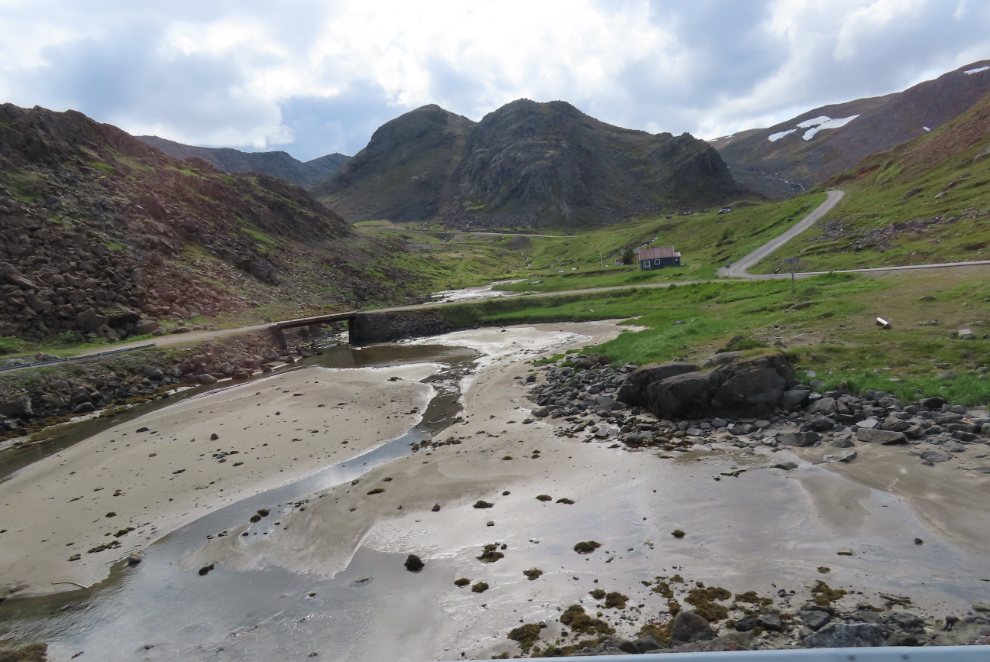
The little valley and canyon coming in from the lower left looked like a wonderful place to explore.
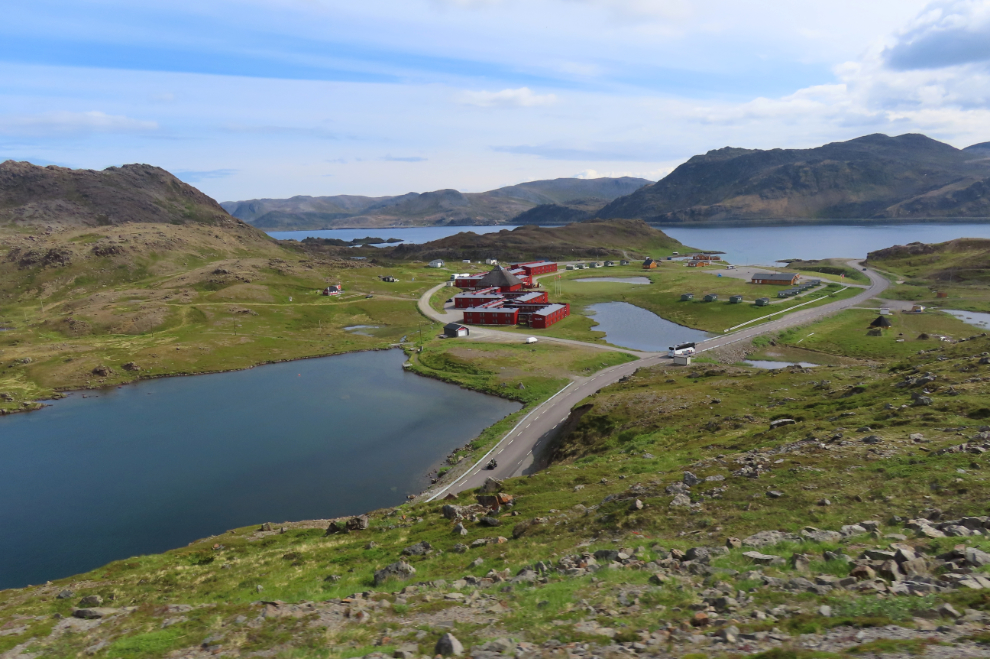
The Scandic Nordkapp hotel.
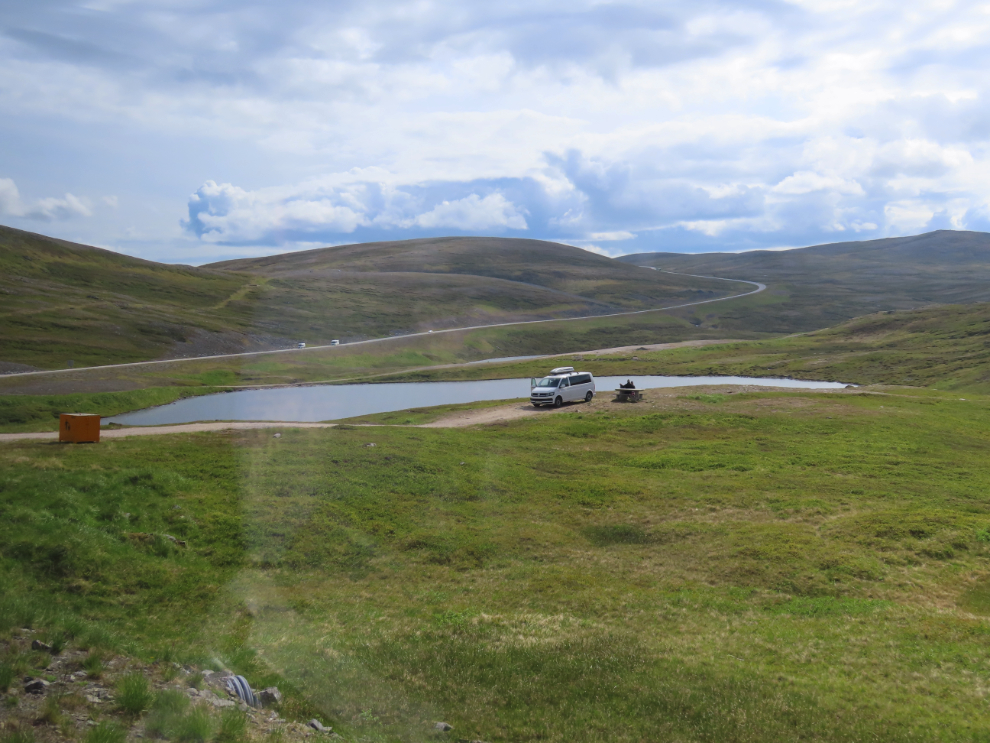
So much exploring to do!! 🙂
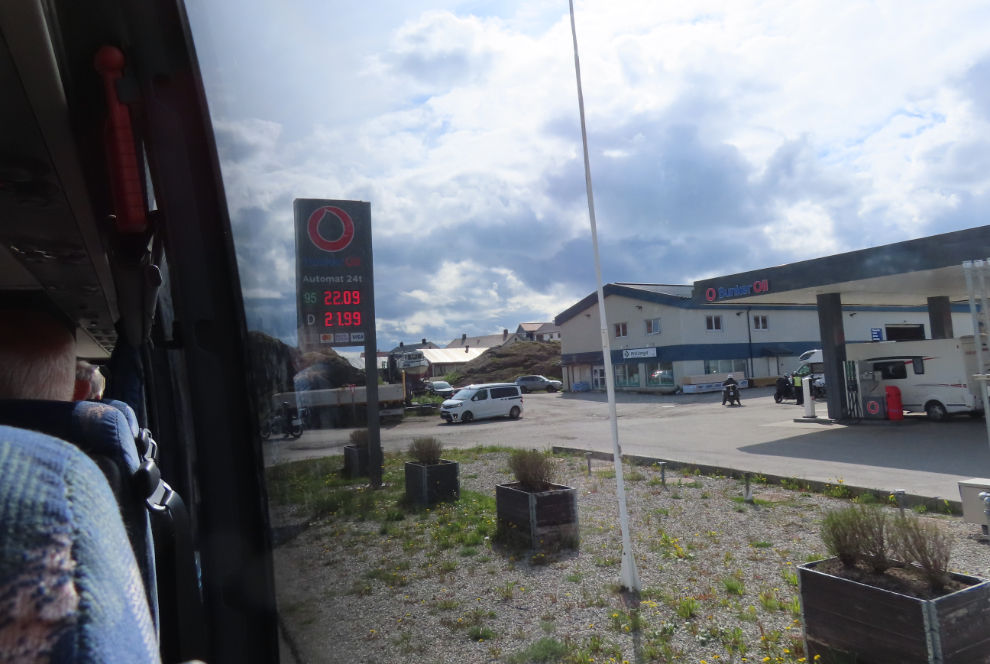
Gas, NOK 22.09 / $2.99 Canadian per liter.
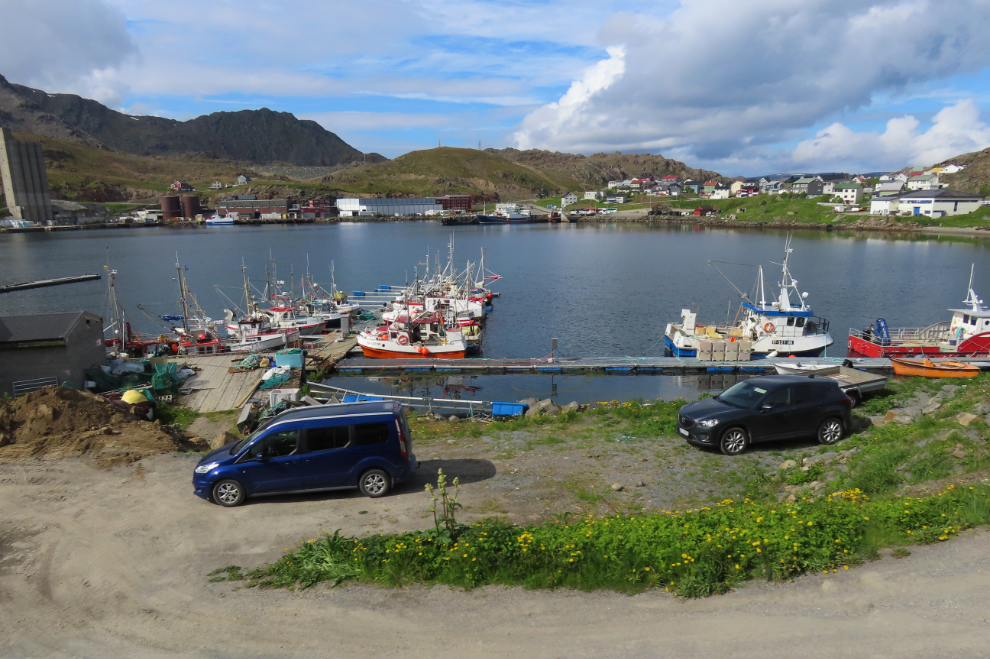
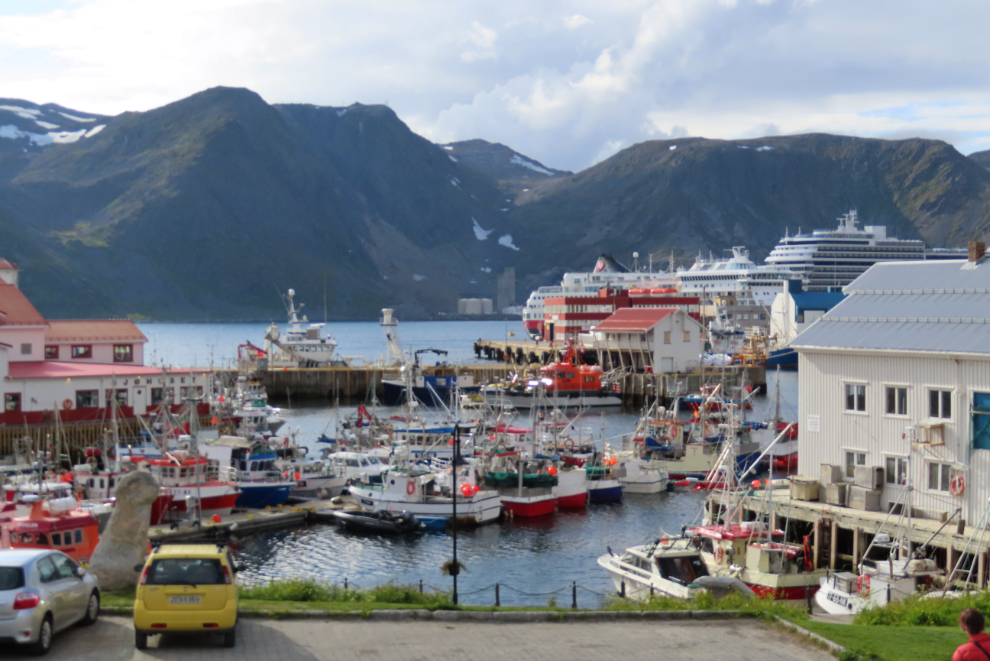
Back at Honningsvåg with lots of time to explore the town.
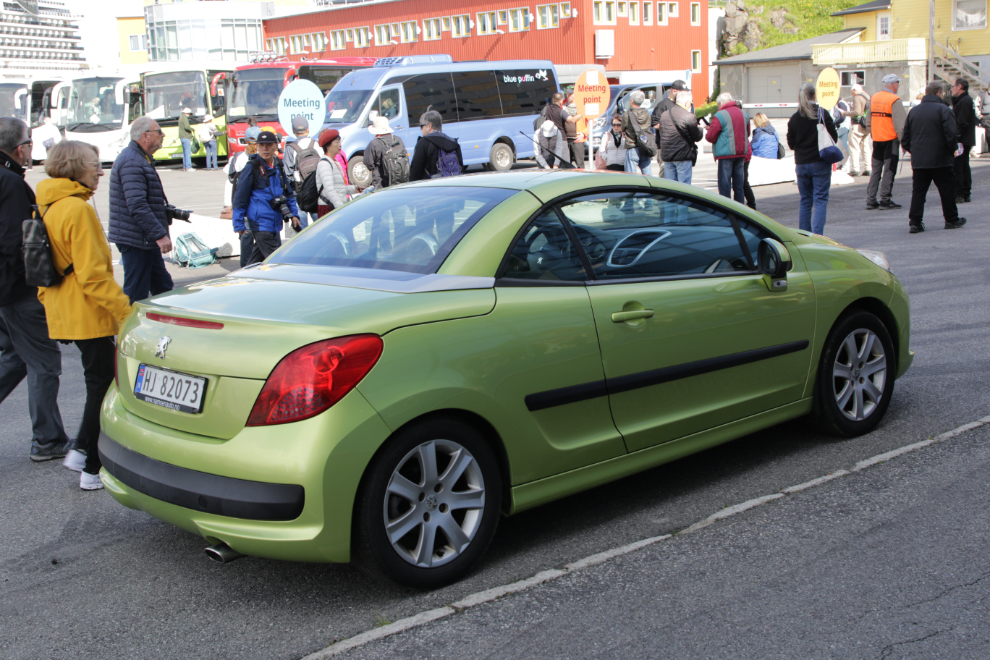
What a cute little car – a hardtop convertible Peugeot.
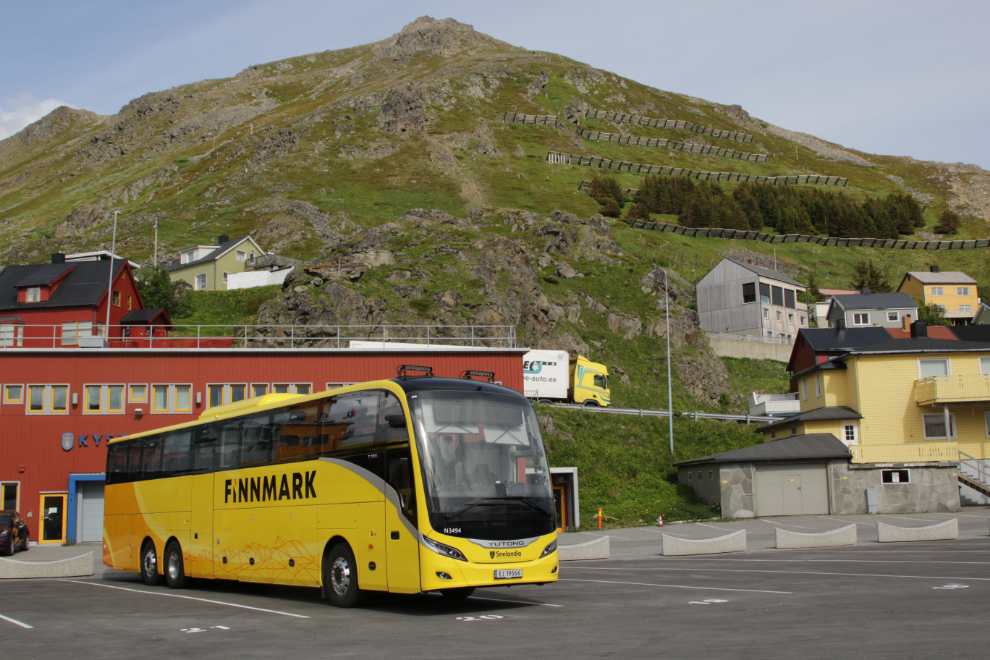
The newest buses operated by Finnmark county are electric, made by Yutong, a Chinese company I had never heard of but that is one of the largest bus manufacturers in the world.
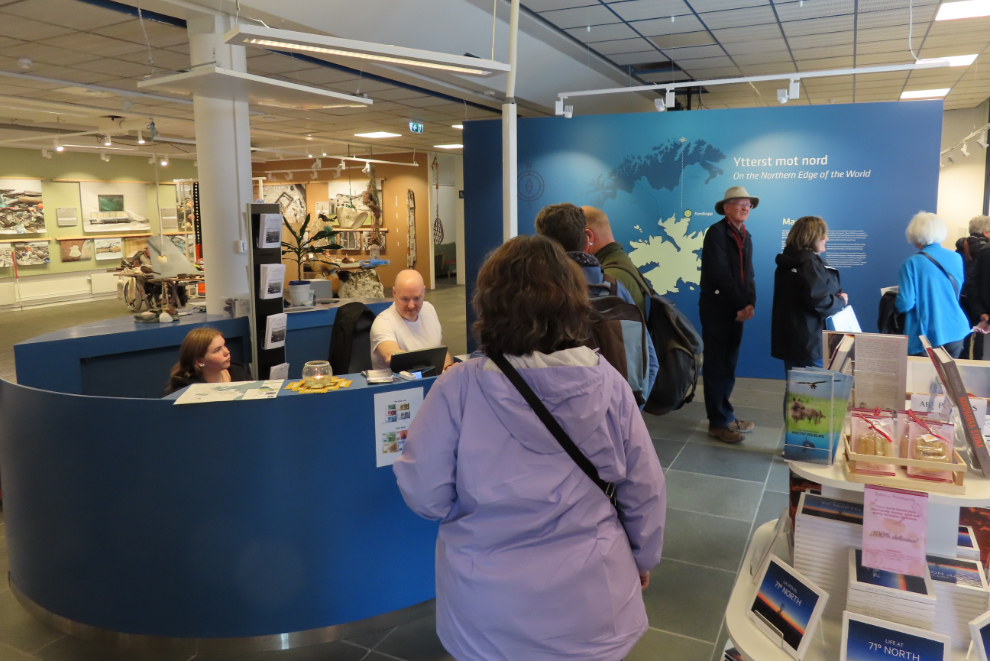
Cathy’s choice to start our exploring was the museum, and it is excellent.
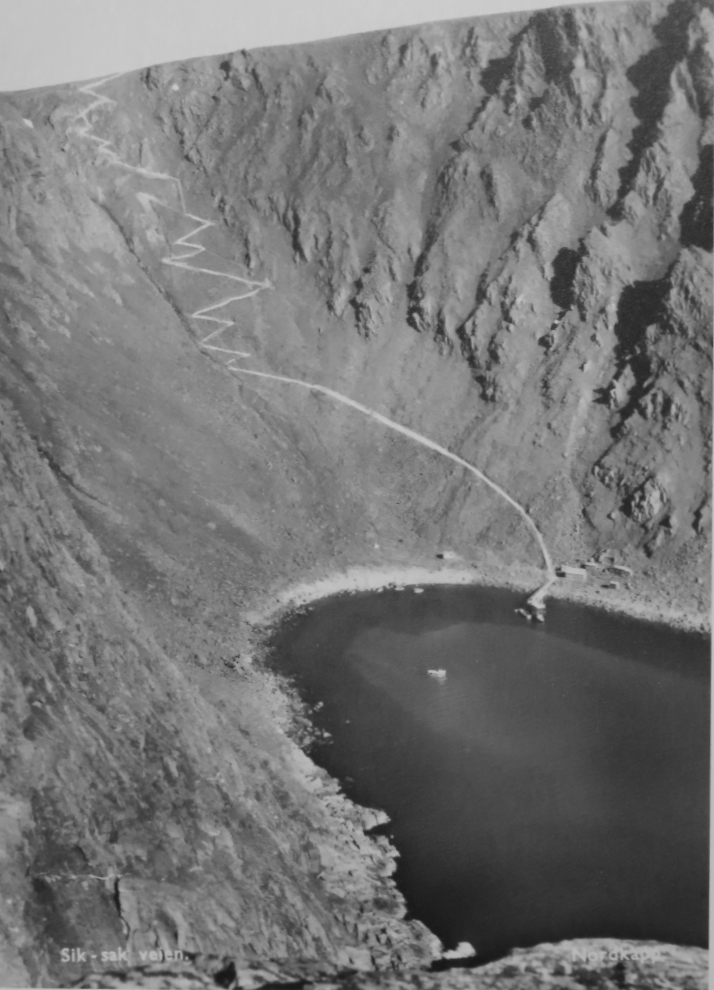
Before the road to Nordkapp was opened in 1956, ships would anchor, take their guests ashore by small boat, and to get up top required climbing 1,000 vertical feet!
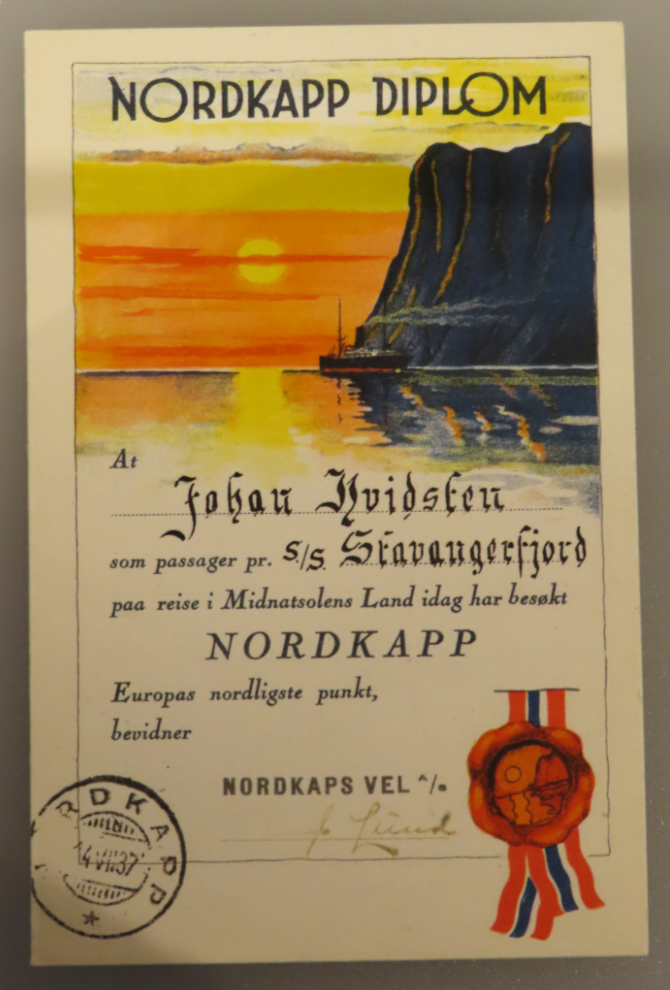
Making that effort got you a very nice certificate 🙂
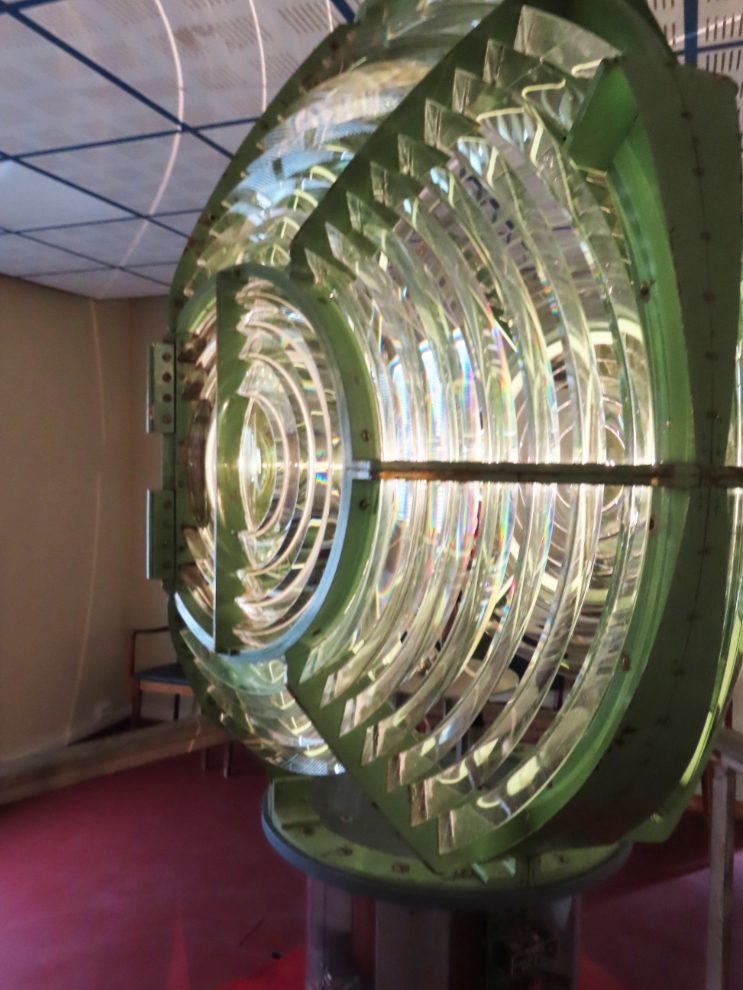
A Fresnel lens from a lighthouse is lit and turning – very cool.
What is heritage? Is garbage part of our heritage? The discussion is extremely well done.
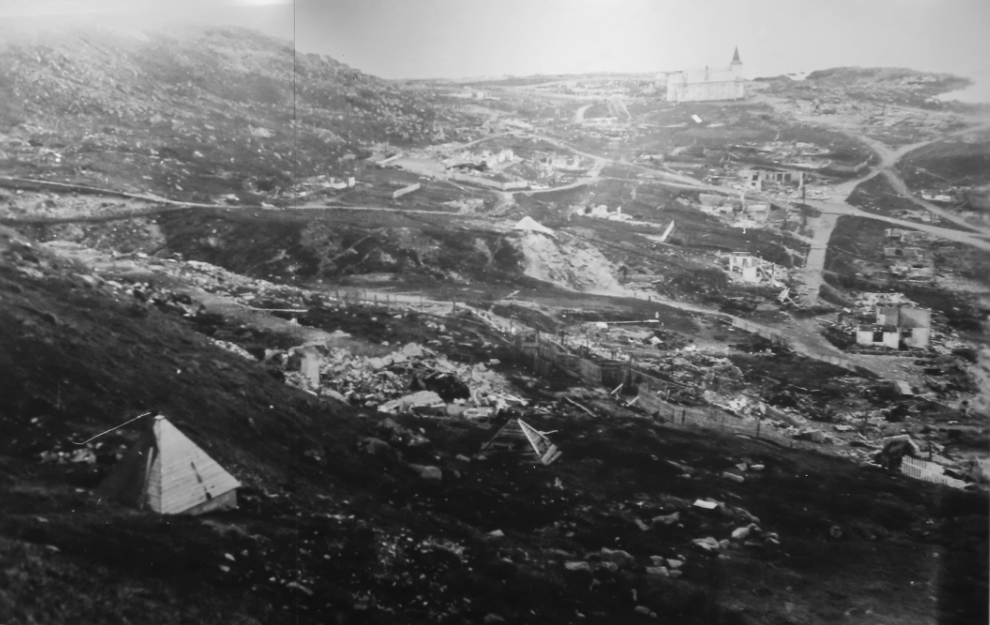
Towards the end of World War II, the Nazis evacuated residents and the town was burned. Except the church. With all the other atrocities they were committing, burning a church was going too far??
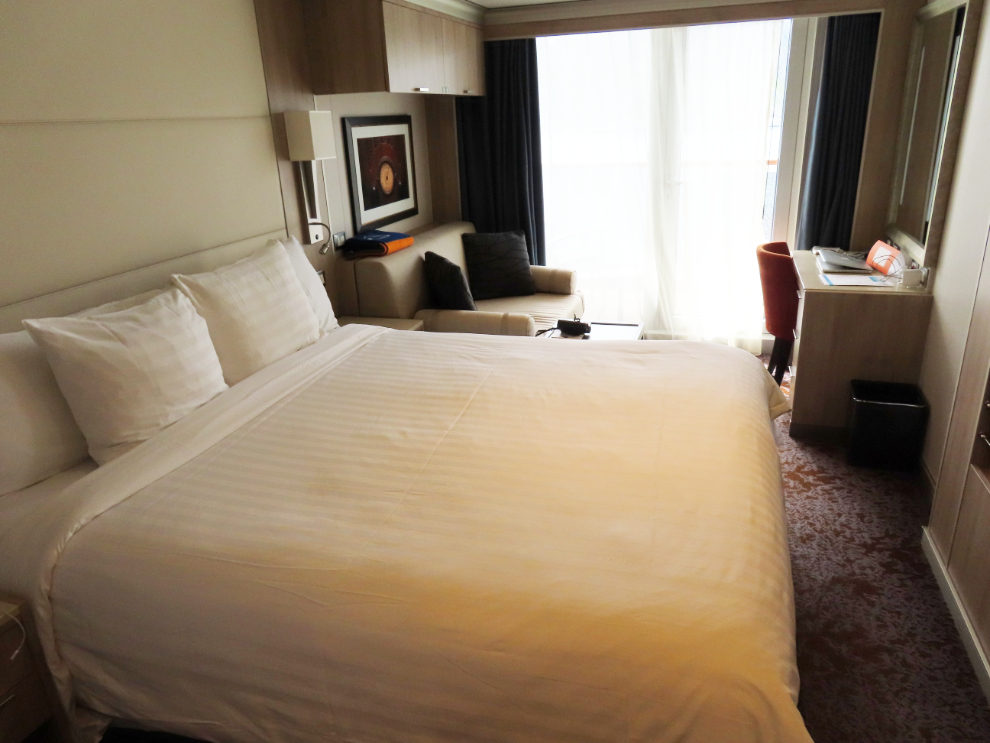
We went back to the ship at 3:30 – our cabin, as always, looked like we had never been there. Except for my desk.
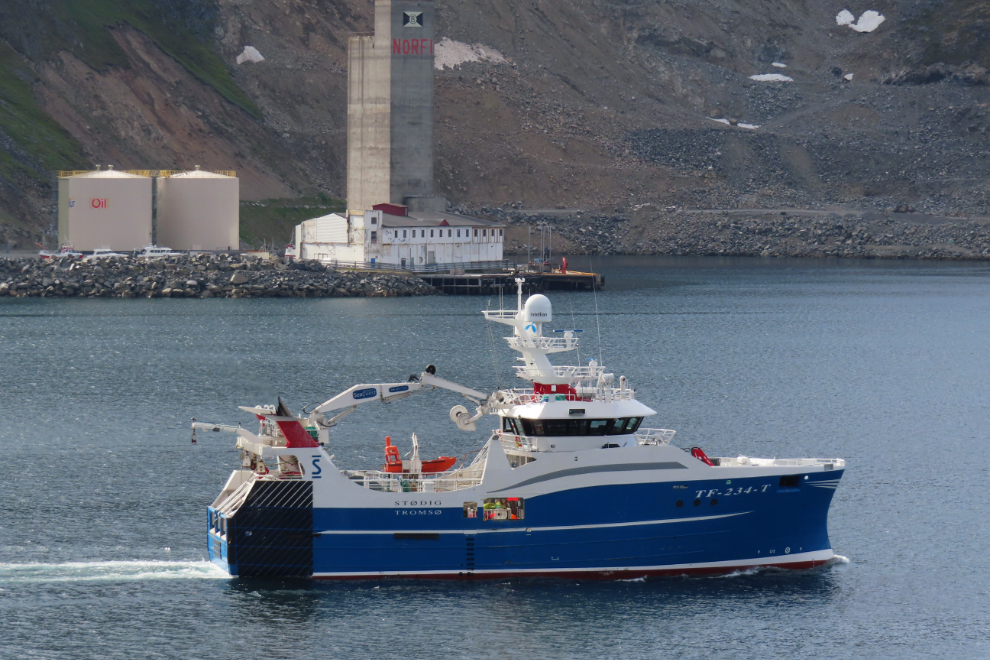
There are always interesting boats going by. MS Stødig is a new (May 2023) state-of-the-art vessel, 39.3 meters long, equipped for seine, trawl and crab fishing. She is based at Tromsø.
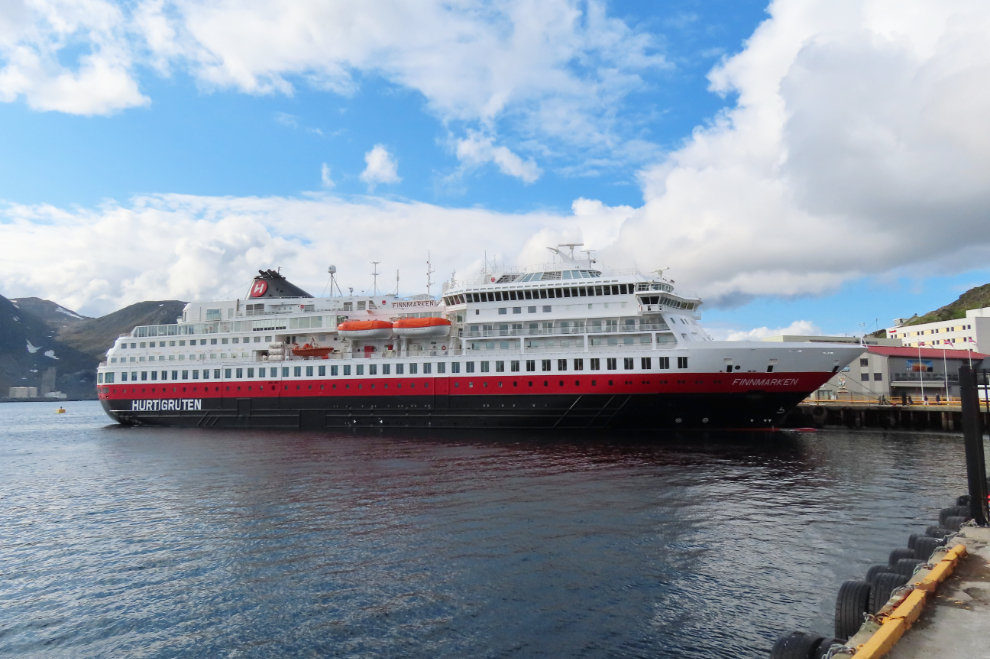
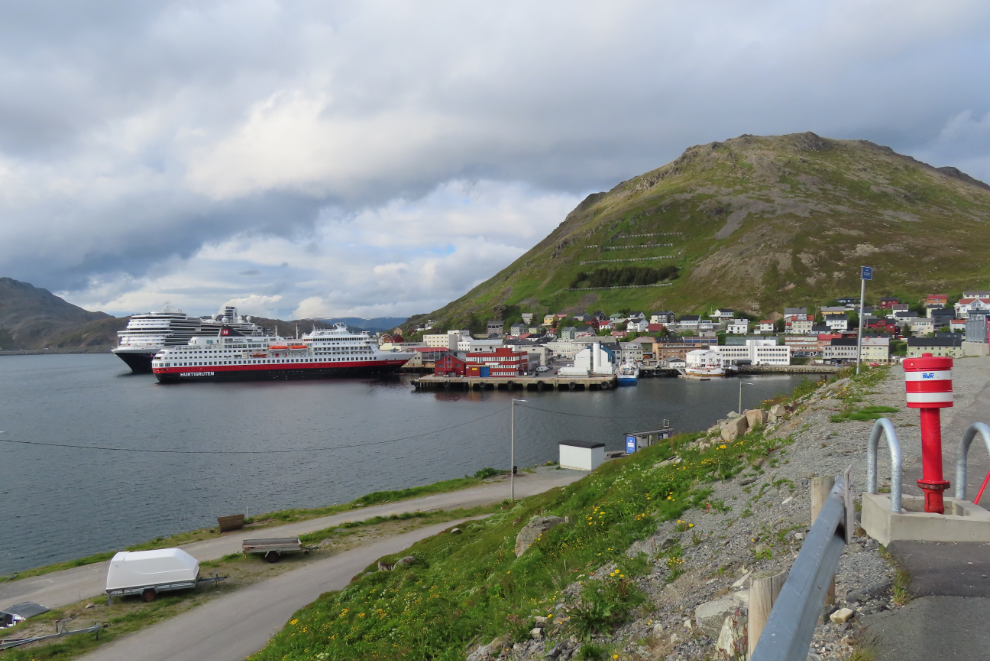
I wasn’t finished with Honningsvåg yet, so went back into town. We may yet take a Hurtigruten cruise. This is the Finnmarken.
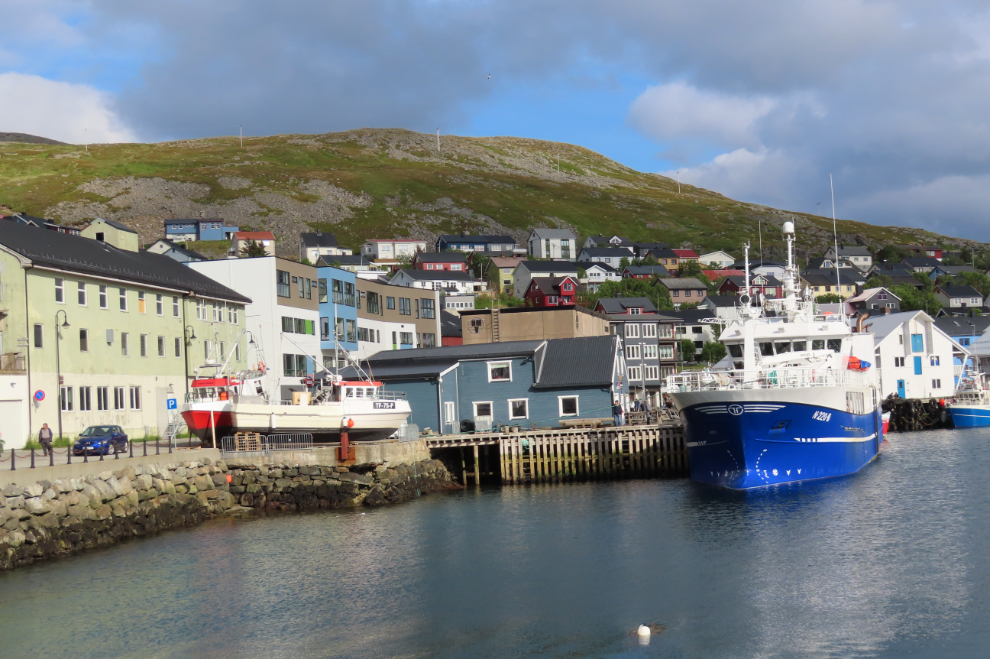
It’s a very scenic town to wander around. At least it is when the weather cooperates like this.
This is one of the three Fisherman’s Service Station buildings, dating back to the town’s reconstruction in the 1950s.
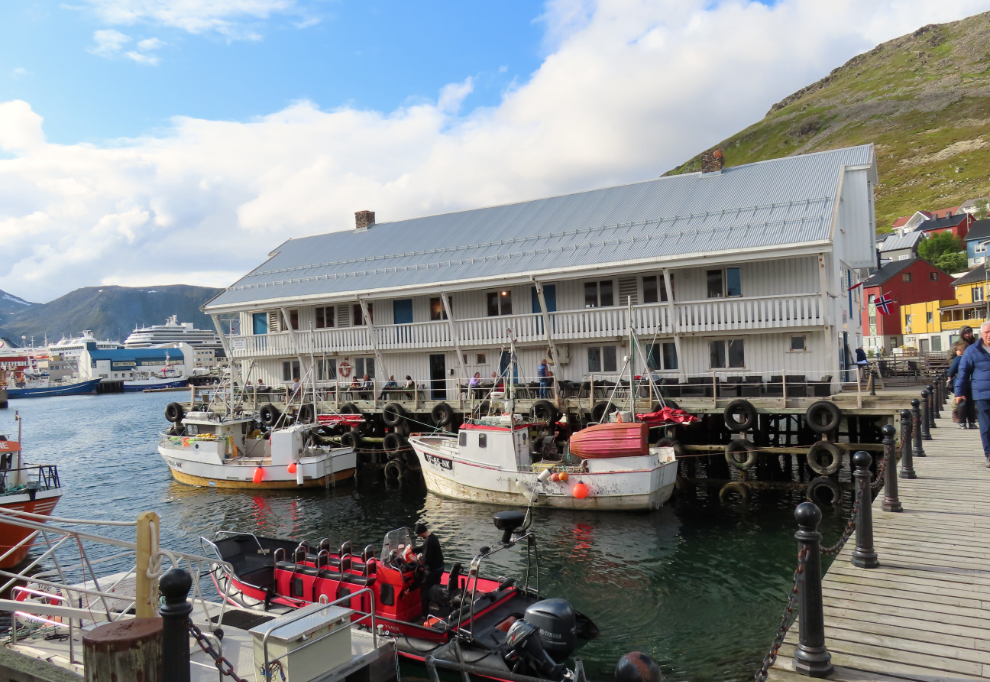
In looking for a single definitive photo of Honningsvåg, I felt I was close here, but this wasn’t quite it.
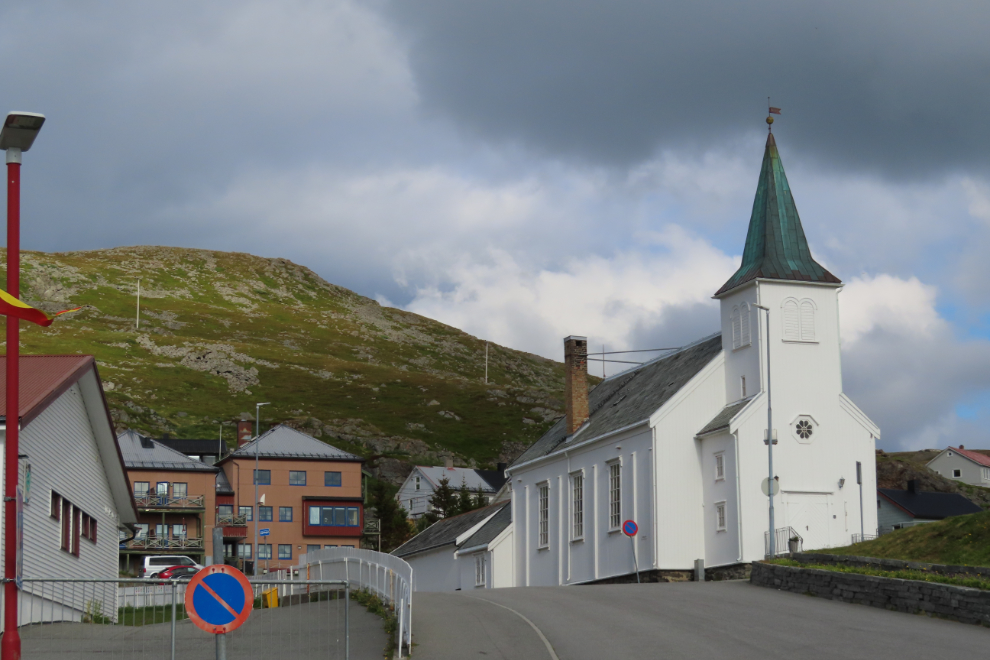
Honningsvåg church, consecrated on October 22, 1885, was built in a neo-Gothic style and seats 255.
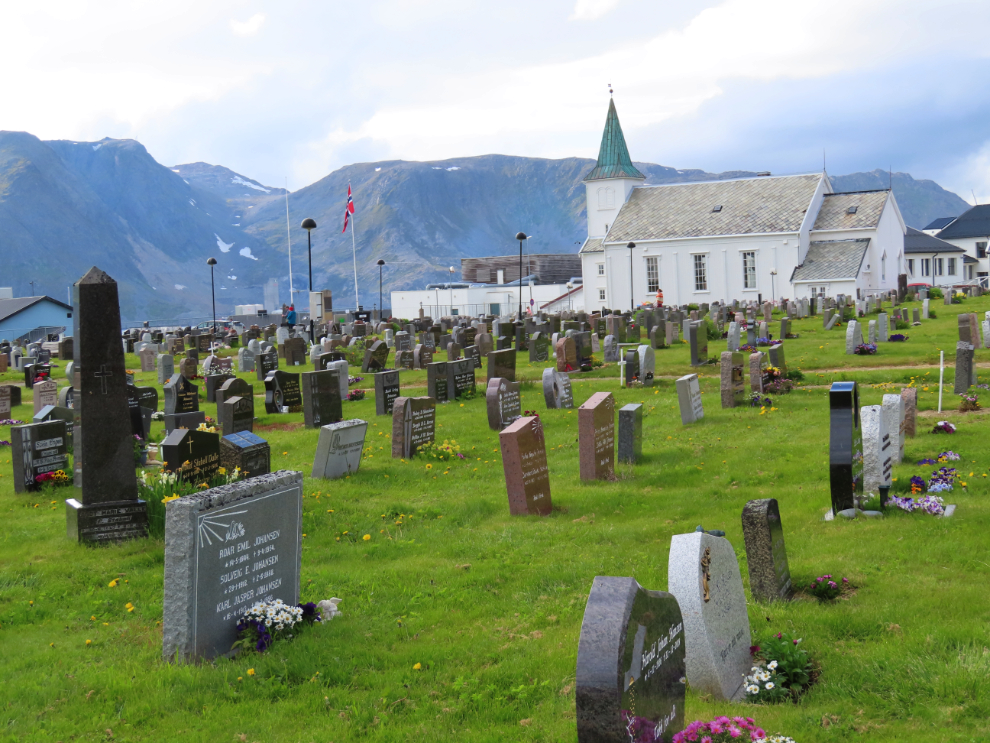
The church’s graveyard was consecrated in 1910 and subsequently expanded in 1930.
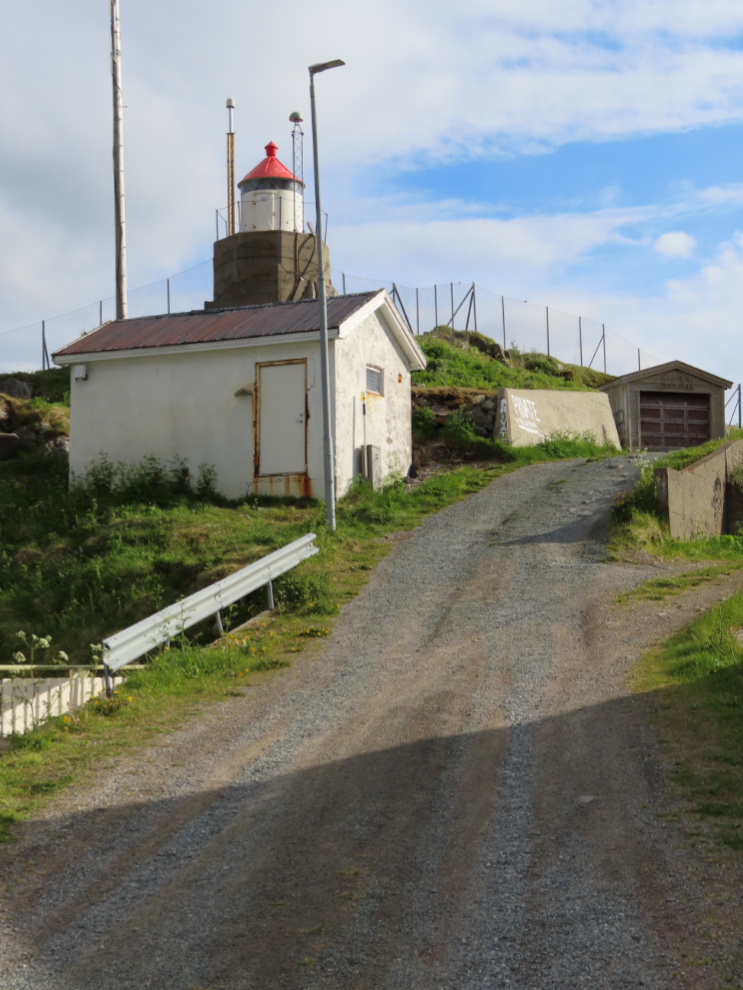
I thought I could get a look at this light, but it has a high wire fence around it and large “No Trespassing” sign – in English, so aimed at folks like me 🙂
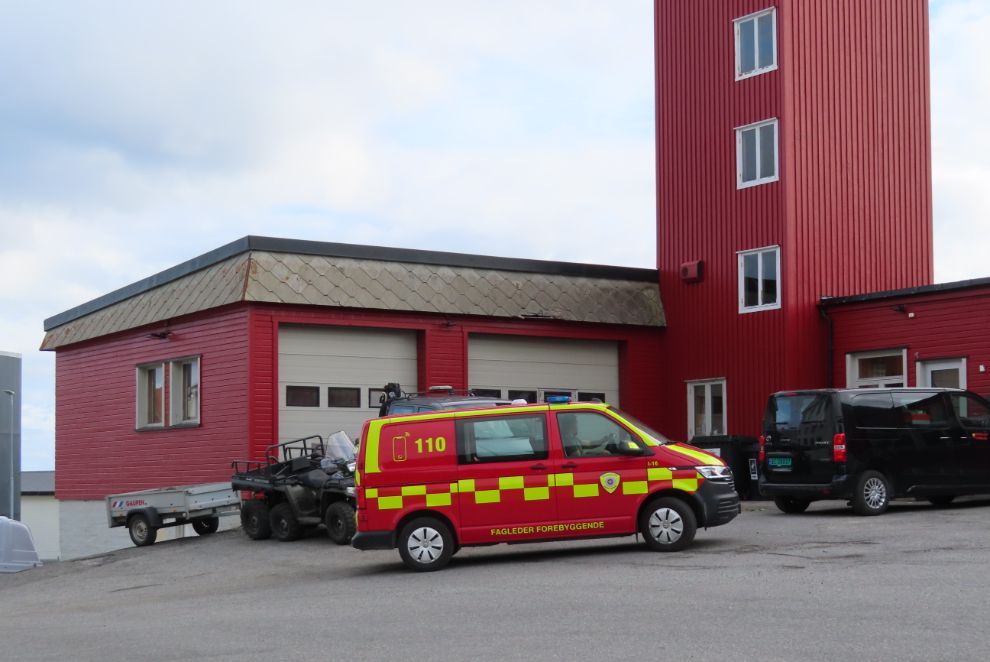
The fire hall.
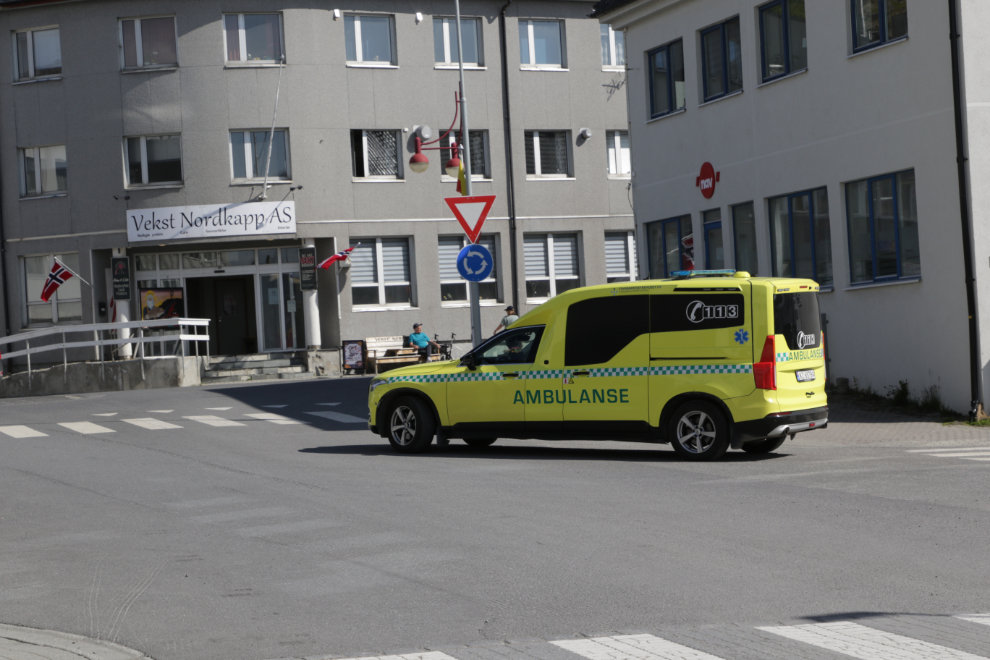
Another important part of the emergency services. Police are pretty much invisible – what a difference from Paris!
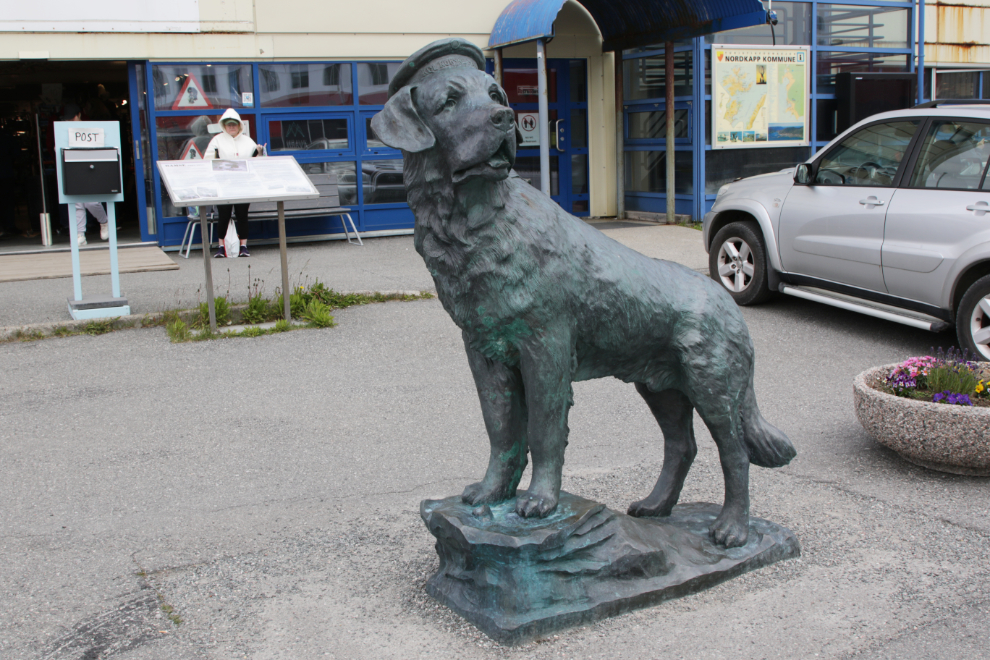
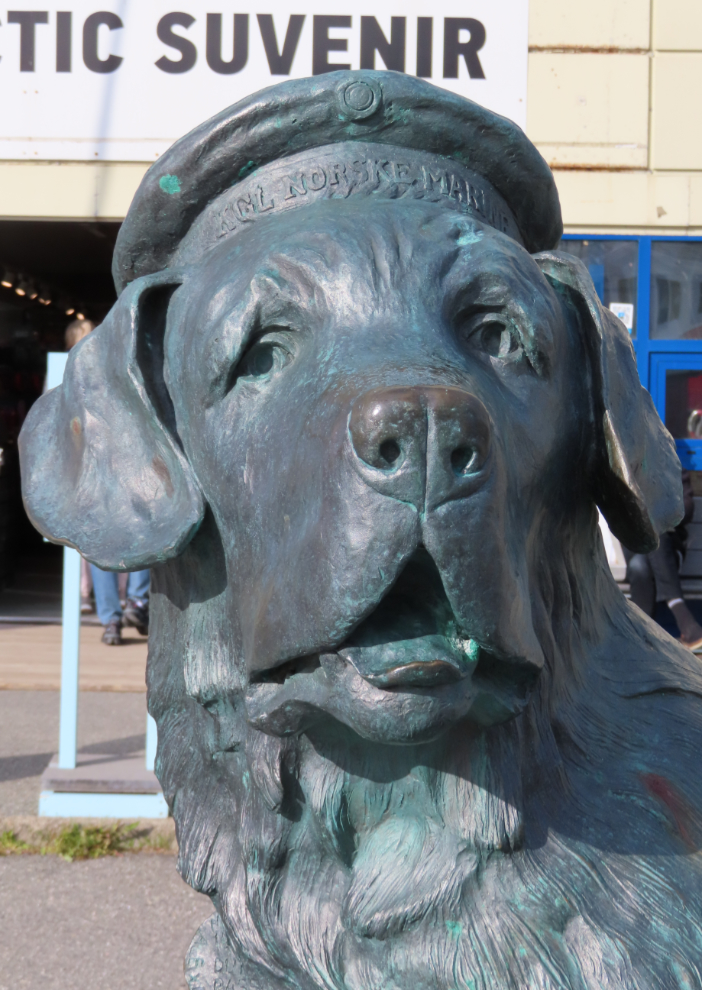
Bamse (the Norwegian word for a male bear) was a St. Bernard dog that became the heroic mascot of the Free Norwegian Forces during the Second World War. He was bought by Captain Erling Hafto, master of the Norwegian whale-catcher Thorodd, drafted into the Royal Norwegian Navy as a coastal patrol vessel, based in Hammerfest. Bamse was enrolled as an official crew member in 1940.
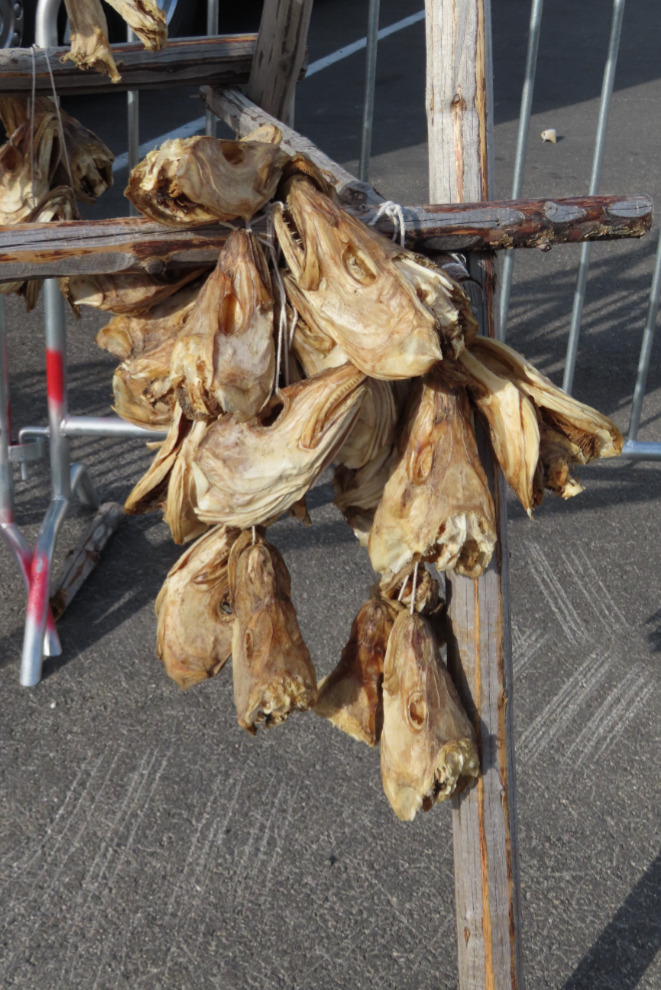
A bundle of dried fish heads hanging on a fence back at our dock.
We sailed at 6:00 pm but I don’t seem to have shot any photos as we left for some reason.
The next day, we would be docked at Hammerfest from 08:00 until 23:00 – it would be my major exploring day so far.

About The Author
