A brief look at the Louvre Museum
The Louvre Museum is overwhelming. Unless you’ve led a very different life than I have, nothing you see or read with prepare you for it. The onslaught of information, the sight of some of the world’s finest and most famous works of art, is an experience I can’t yet describe. Perhaps the Louvre would be best experienced 2 hours per day for a week. We lasted 3 hours, and walked 7.4 km including the walk from our hotel (about 1 km each way). We expected to last 2-3 hours, so did well. I shot 93 photos, and am using 53 of them to give you some idea of what it was like. This is the first of 2 posts about this day – the afternoon walking tour needs to be separate.
The day began with this Facebook post: “Life’s little challenges. We have a half-hour walk to the Louvre in a few minutes and it just started raining hard. And taxis or Ubers are impossible to get this time of day. Oh well..” This was the view from our room at the Hôtel de Seine as I wrote that. But, the hotel has loaner umbrellas so Cathy took one and off we went at 08:30 for our 09:00 reservation.
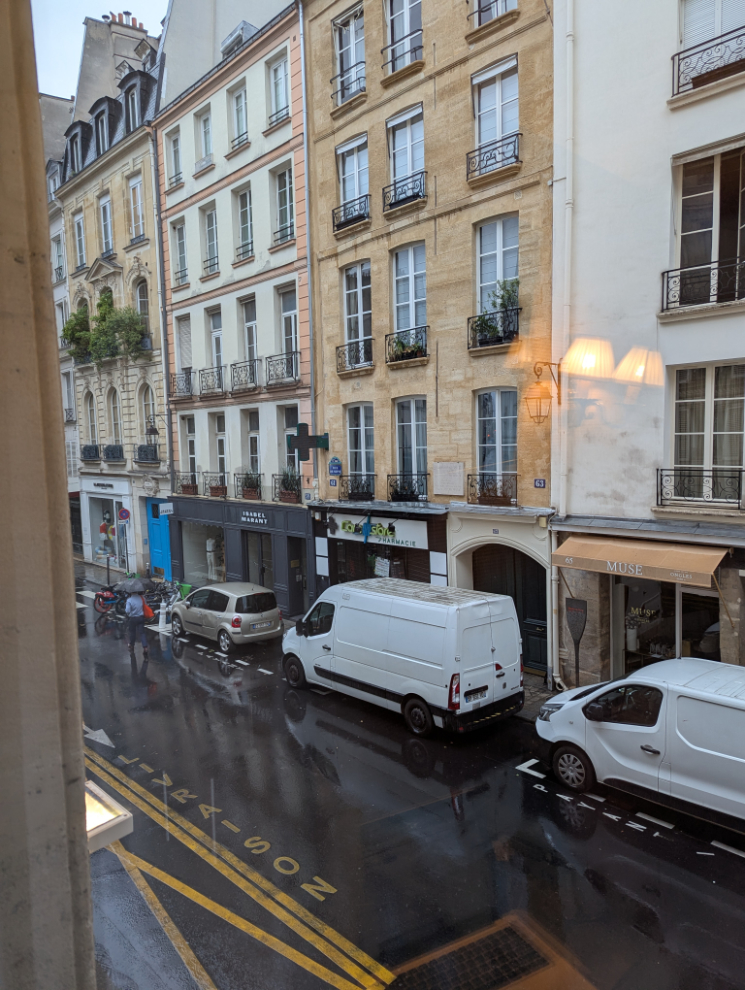
The rain almost quit as we started out – just a little misty wet. The building is the baroque style Institut de France, headquarters of five French intellectual academies.

The route from the hotel is simple and only 1.1 km – walk down Rue de Seine to the river, cross on the Pont des Arts, then on the Voie Georges Pompidou along the river palace walls to the museum entrance.
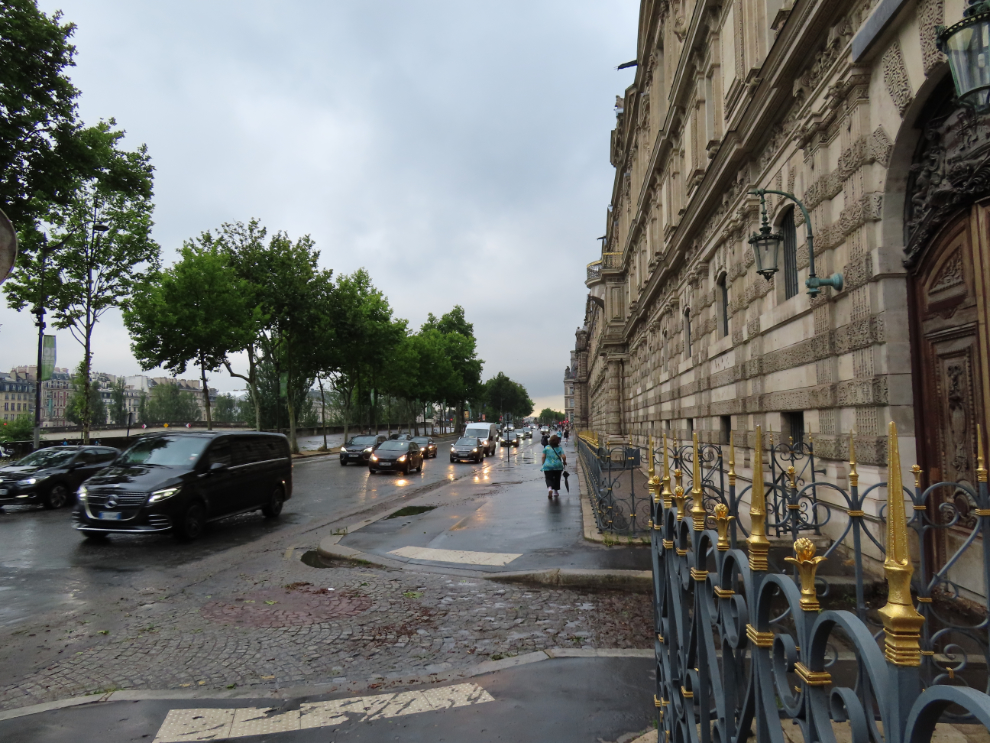
Some wonderful textiles were carved into the palace walls.

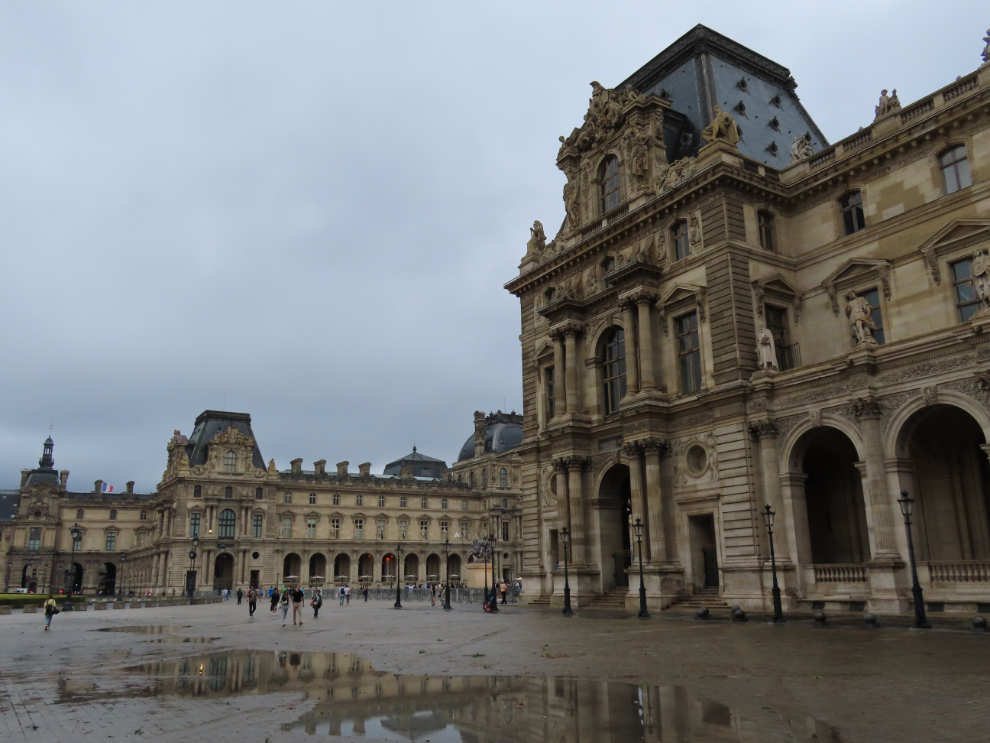
We were soon in the courtyard of the Louvre, which was still fairly quiet.
The first step in getting inside the museum was finding the correct line to be in, but that was easy.
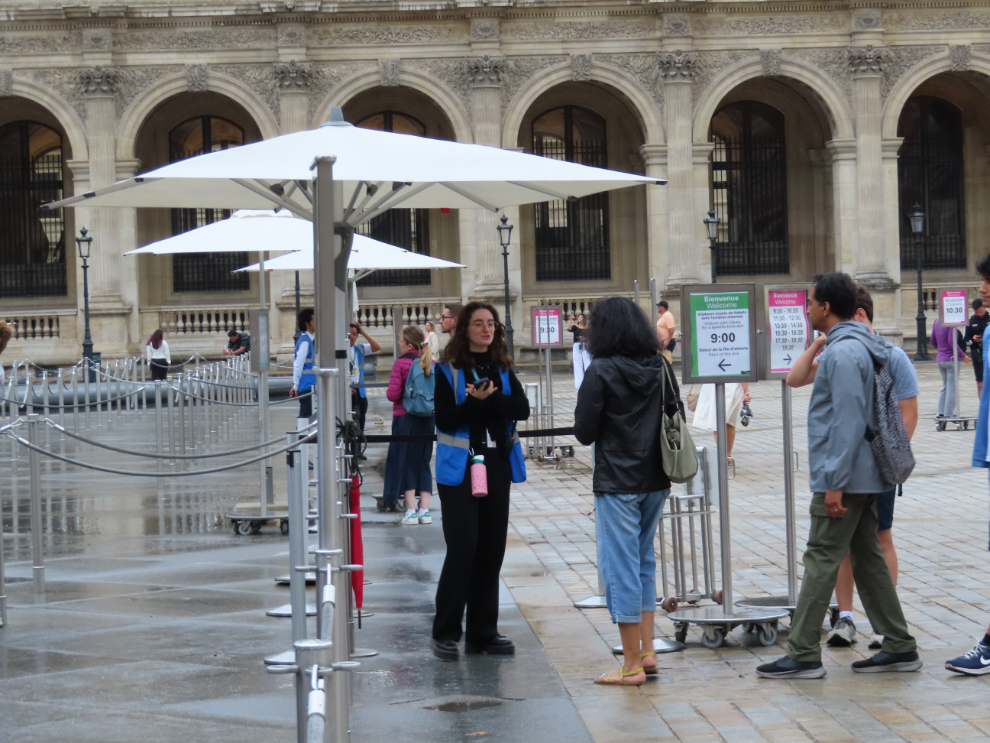
Priority entrance to the Louvre Museum gets you in a lineup of only 600 or so people 🙂
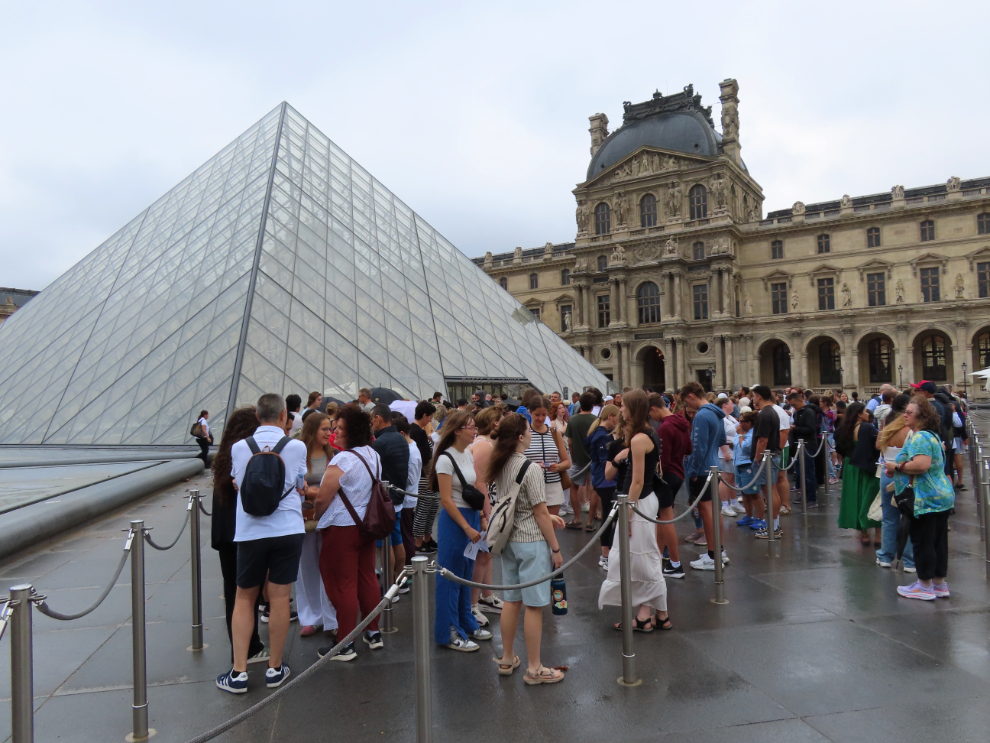
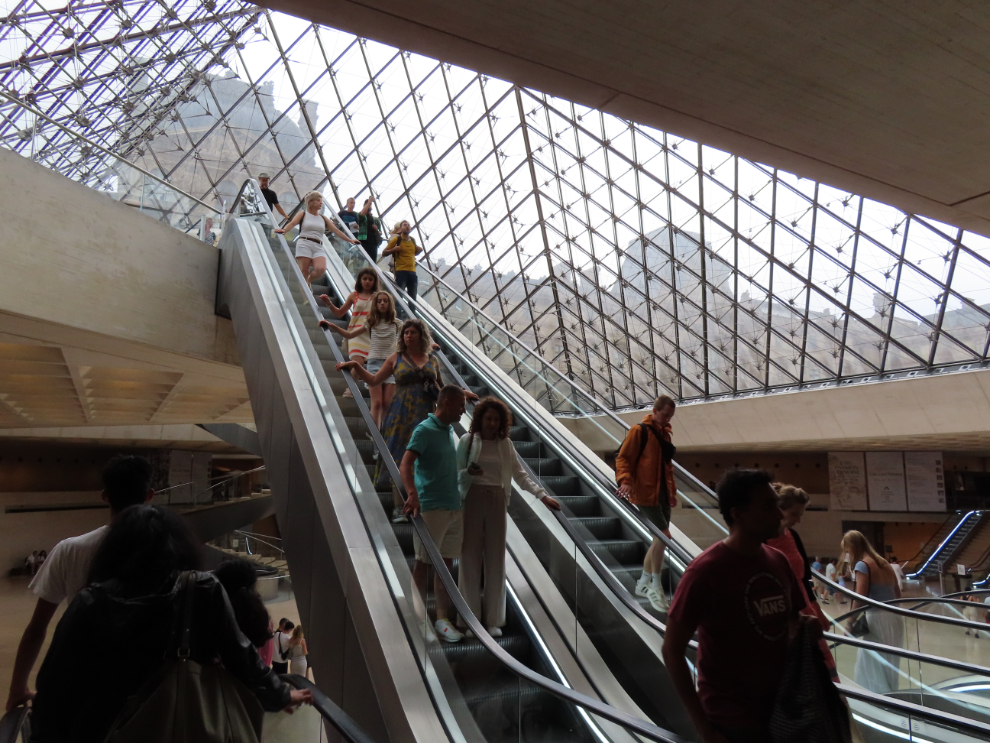
Once the doors opened, the line moved very quickly, and we were soon heading underground to get started.
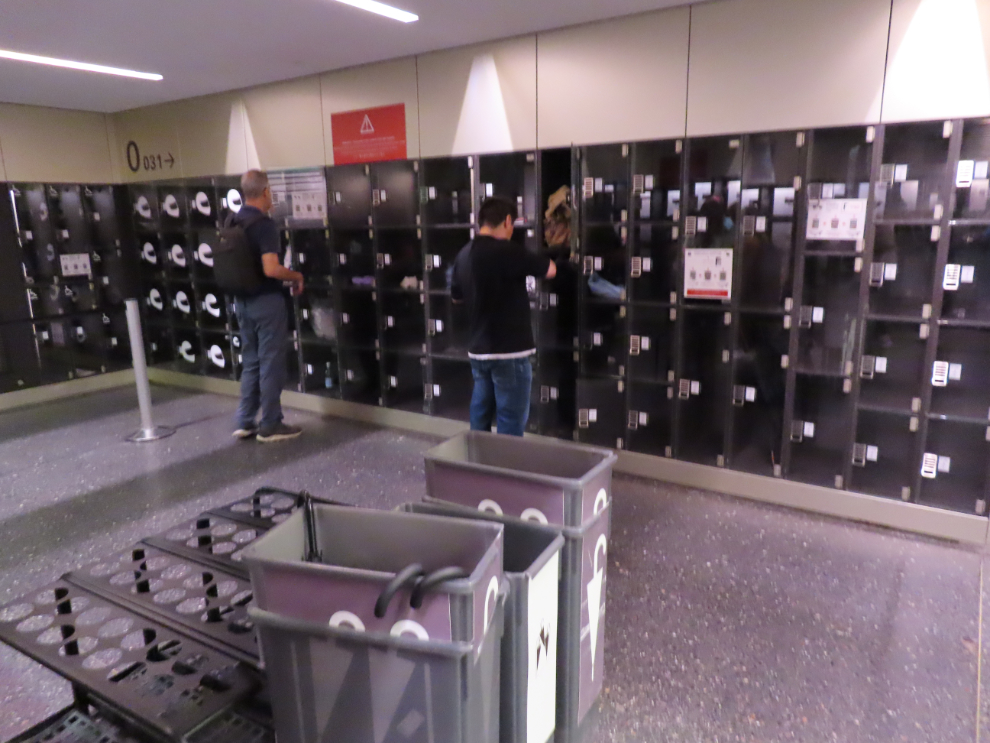
The next step was to get rid of the umbrella. There’s a massive cloak room with free lockers or various sizes and shapes – including tall skinny ones for umbrellas, and even some for motorcycle/bike helmets.
Next, we needed to find the audio guide Cathy had rented. That turned out to be very difficult and frustrating. I think we had actually given up, then found it when we reached the first exhibition wing. I just went to the Louvre map, and it made my head hurt just to look at it.
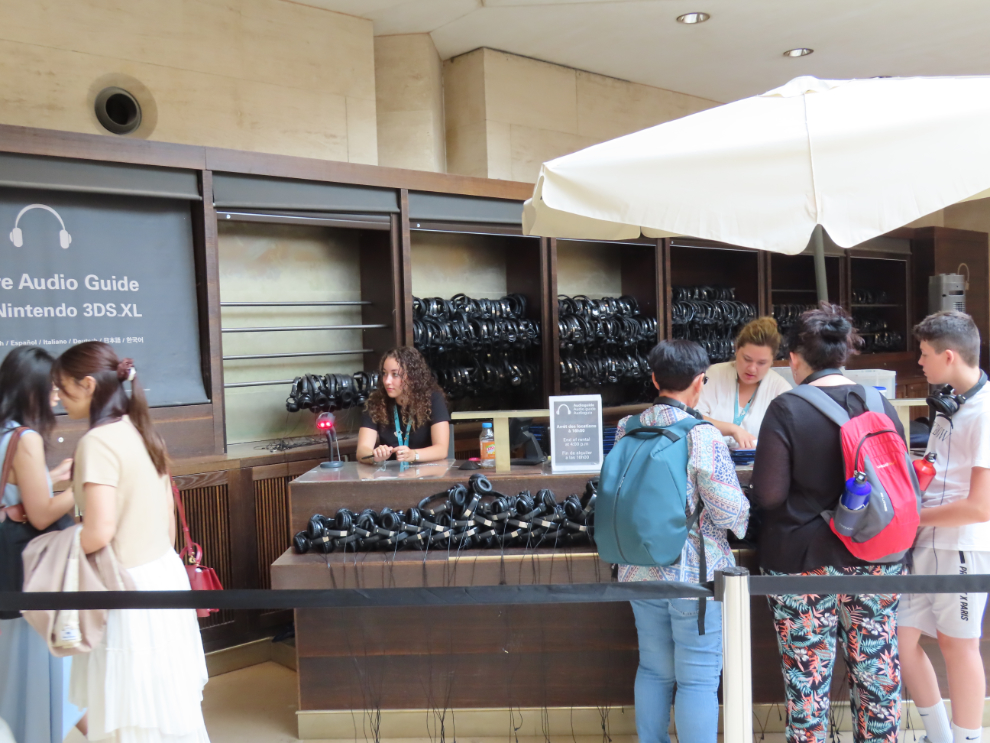
This is where our chosen tour started. We had a very difficult time figuring the audio/mapping guide out.
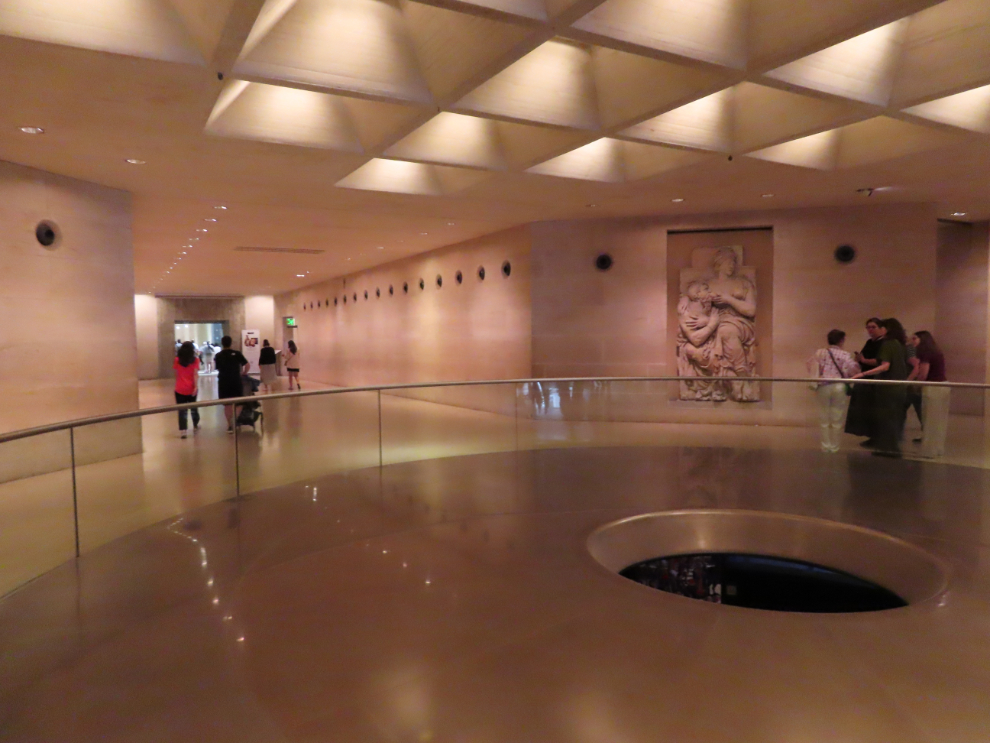
I decided this large piece is probably called “Monday” – but now I think it could also be called “Starting Your Louvre Tour” 🙂
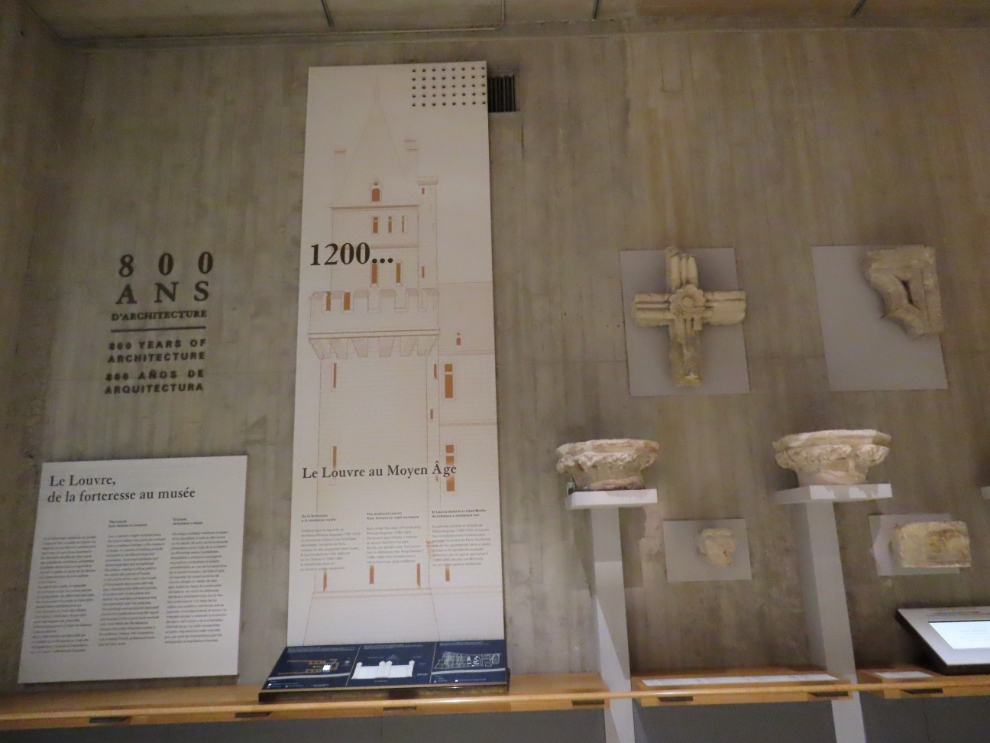
I could have spent a long time in the “800 Years of Architecture” hall that describes the evolution of the buildings that now house the Louvre Museum.
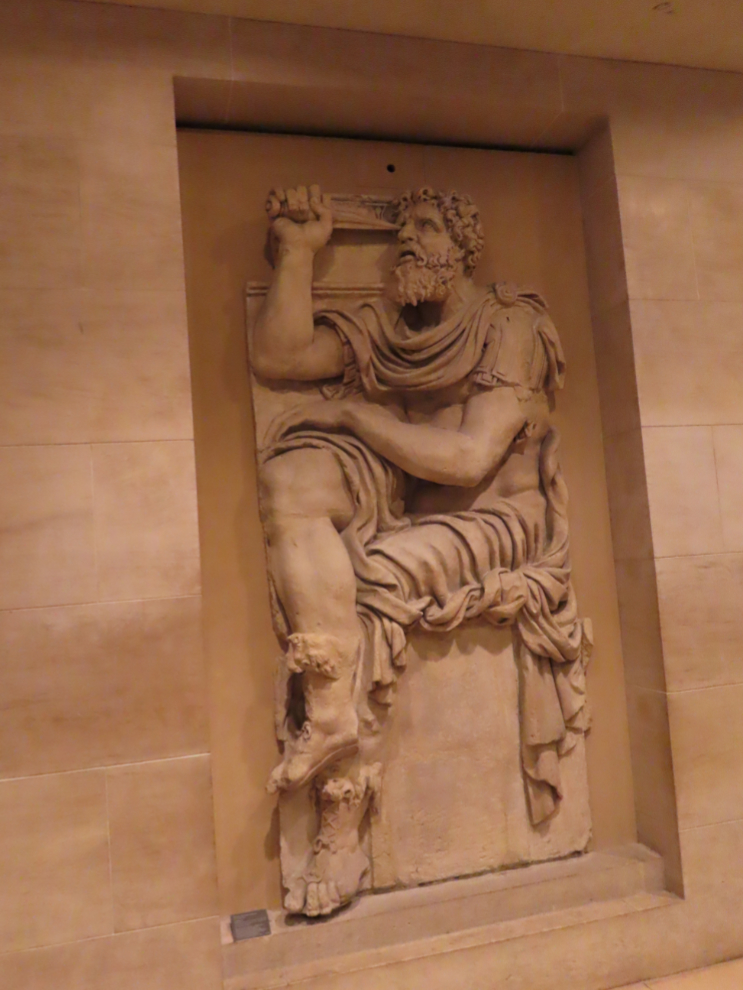
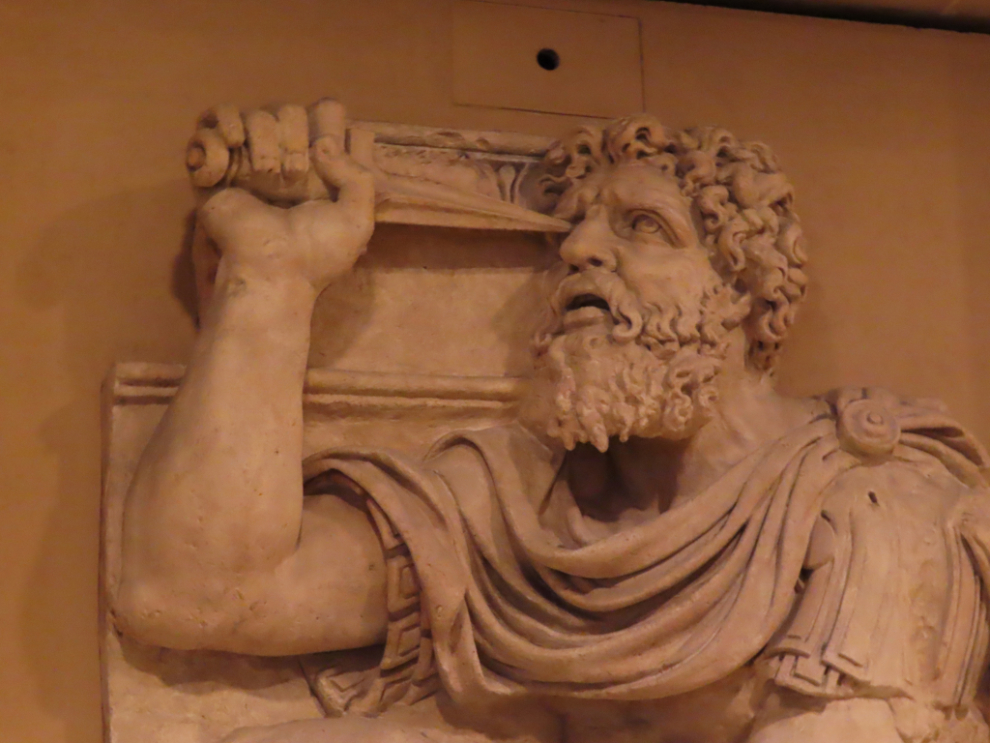
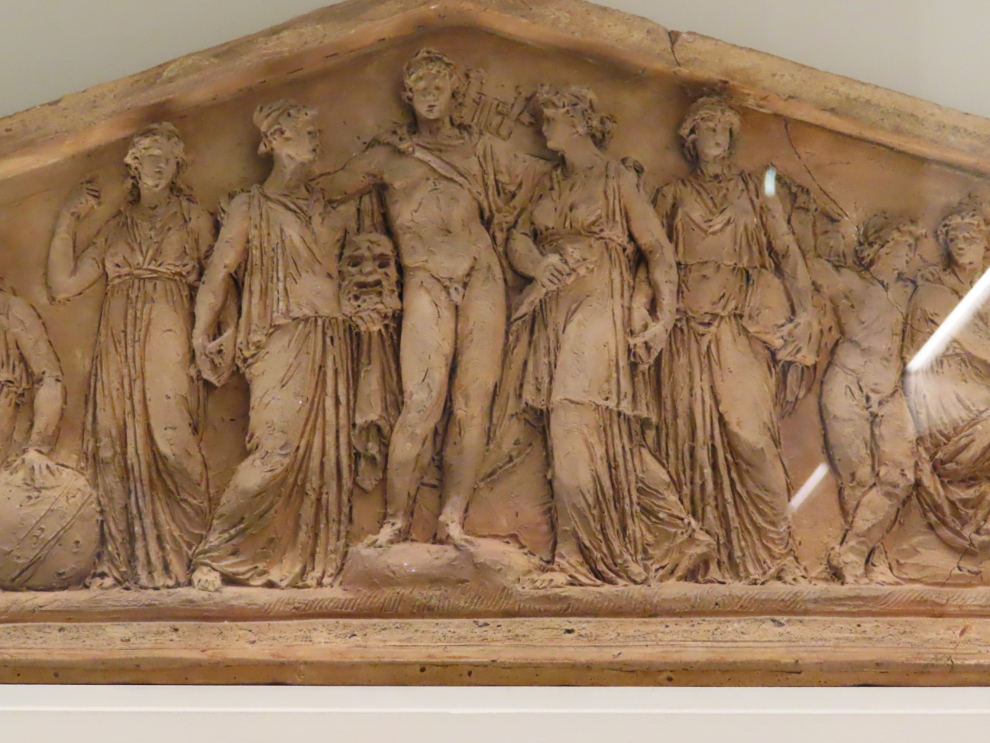
The sculpted decor of the building facades continued for a century after the initial construction of the Cour Carrée, one of the main courtyards. This small model for a pediment is based on “Apollo Rewards the Arts and Sciences.”
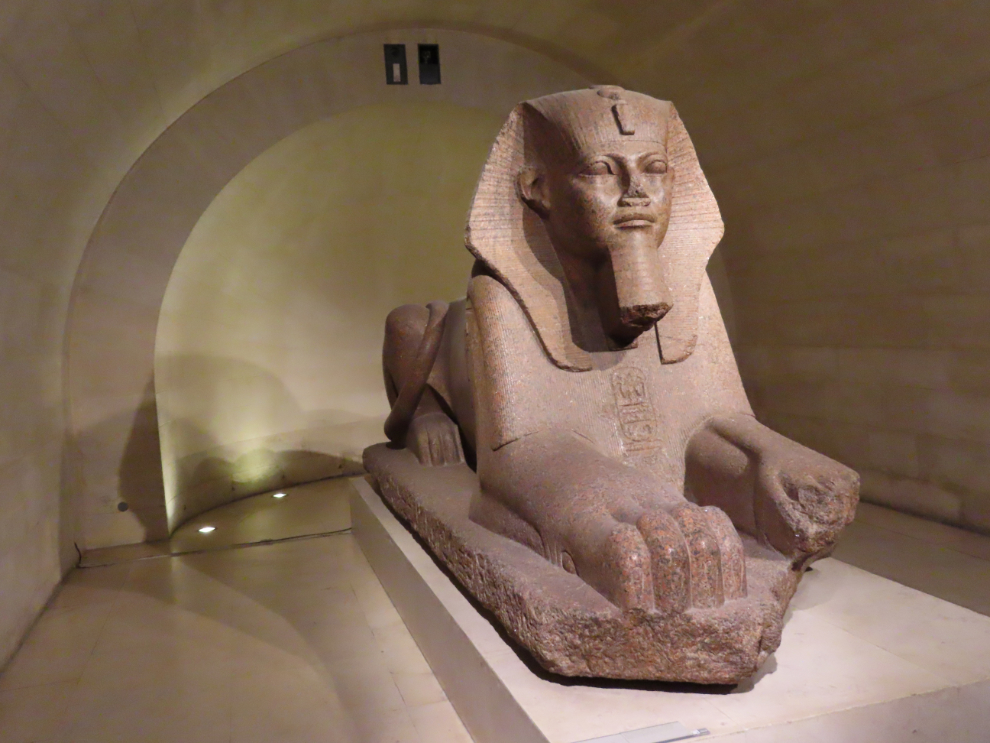
The Great Sphinx of Tanis was discovered in the ruins of the Temple of Amun-Ra in Tanis. Its origins are unknown, but may date to as early as 2600 BC.
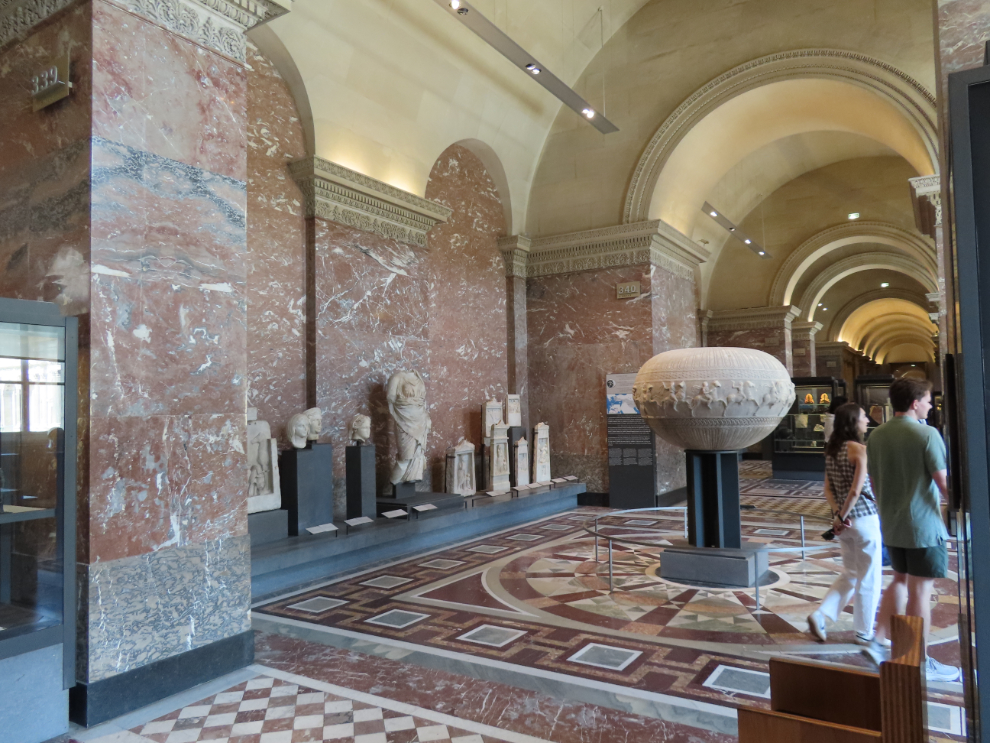
Greek antiquities in Room 340.
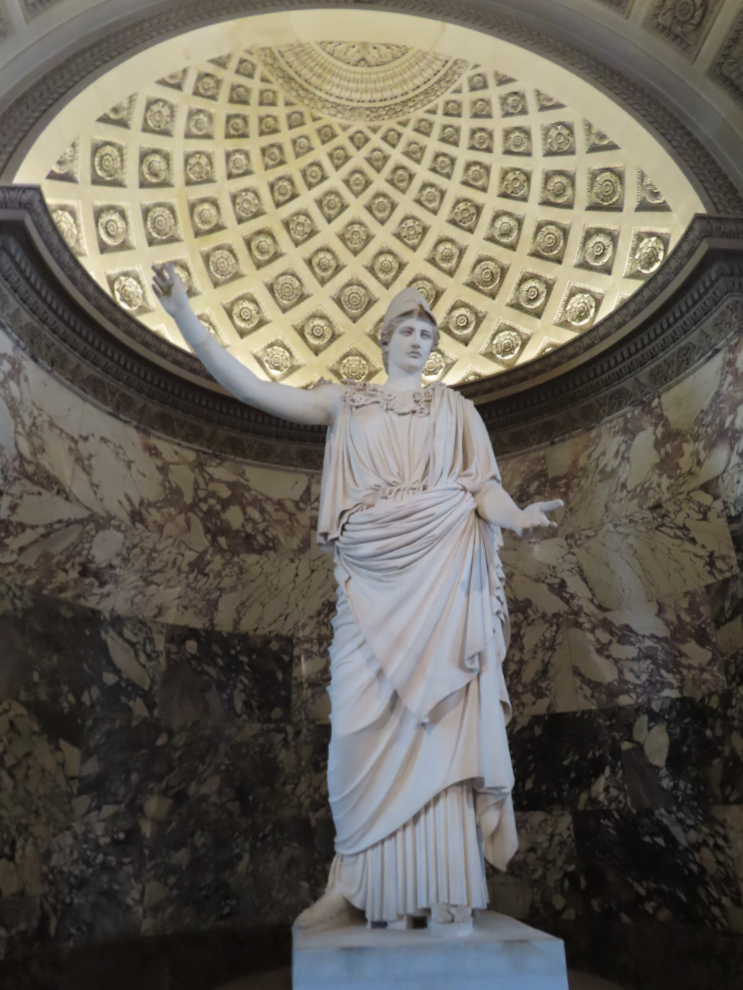
The very large statue Athena, a.k.a. the Pallas of Velletri. I also got a photo of a little girl in a lovely dress “modelling” in front of it 🙂
Aphrodite, commonly called Venus de Milo, was the first piece that really struck me to see in person. She is thought to be the creation of Alexandros of Antioch, between 130 and 100 BC.
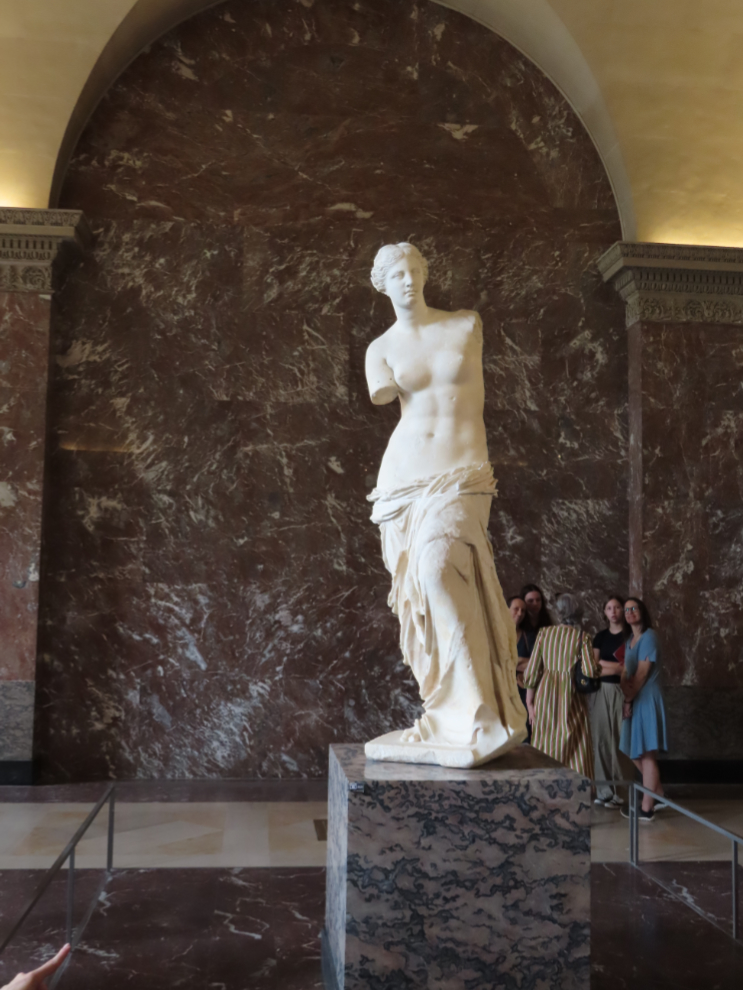
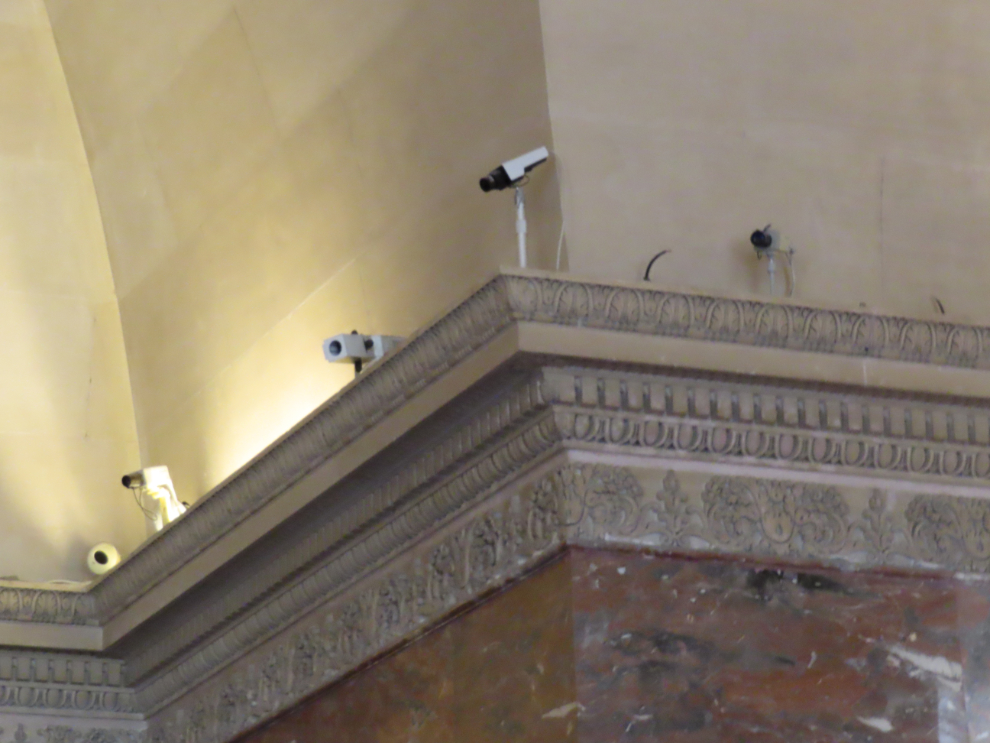
A look at the security around Venus de Milo. I didn’t notice this on any other piece, though I expect that many of the truly priceless pieces have this sort of protection.
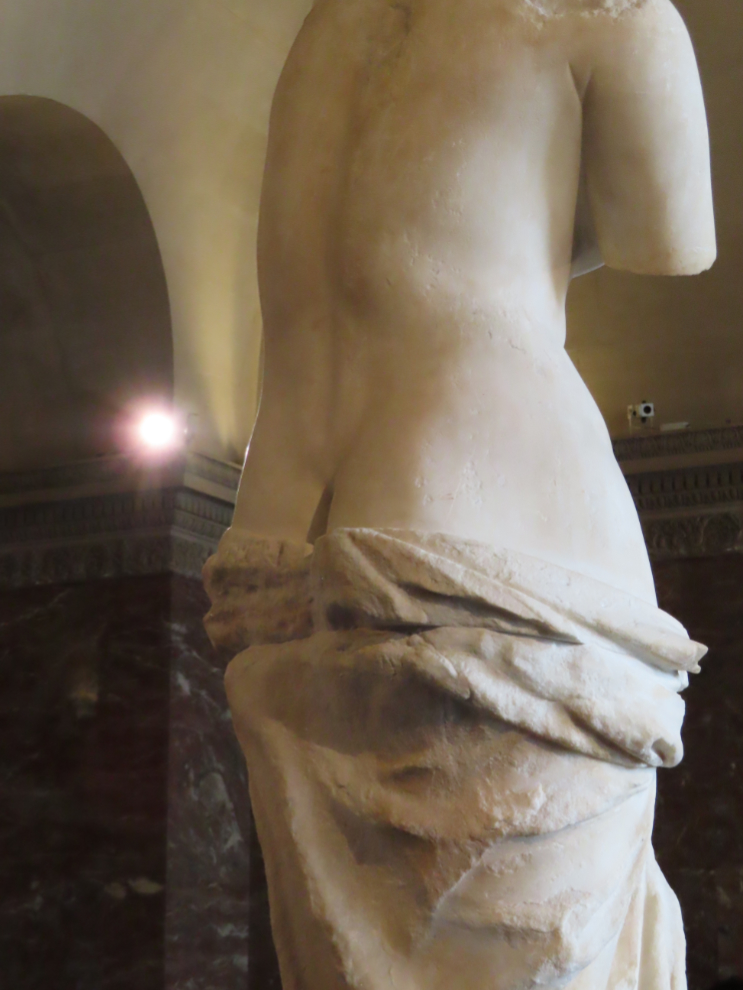
The audio guide suggested that we look at the back of Venus. It’s thought that she was meant to be mounted in a corner, so the sculptor took little care in finishing the back – the two blocks of marble used can even be seen.
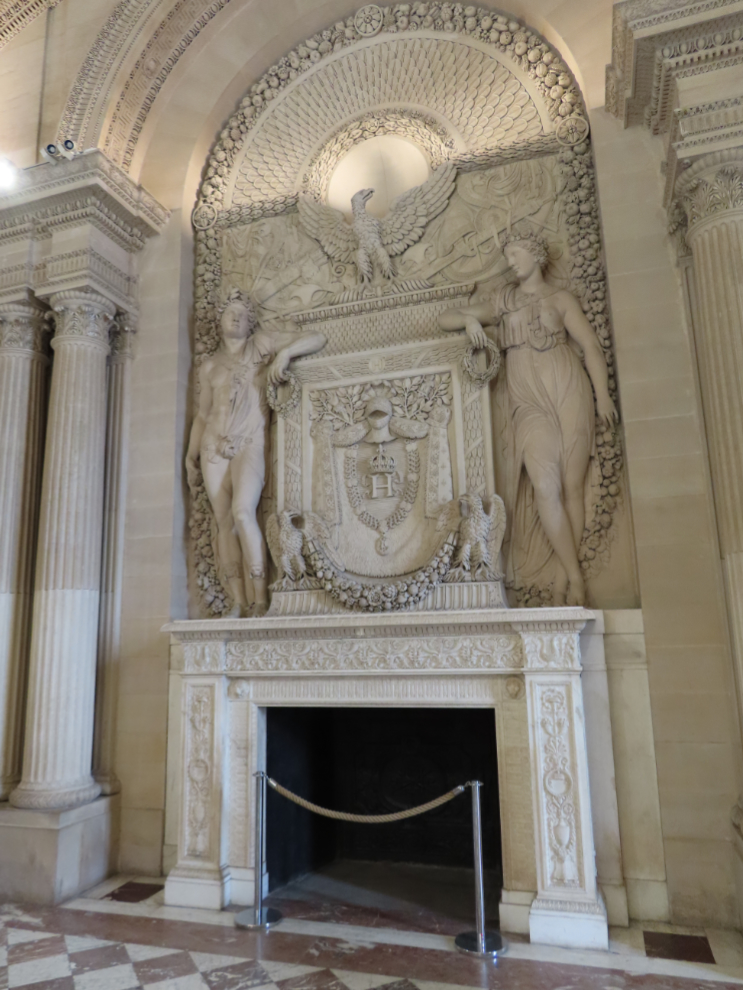
I don’t have any information about this magnificent fireplace.
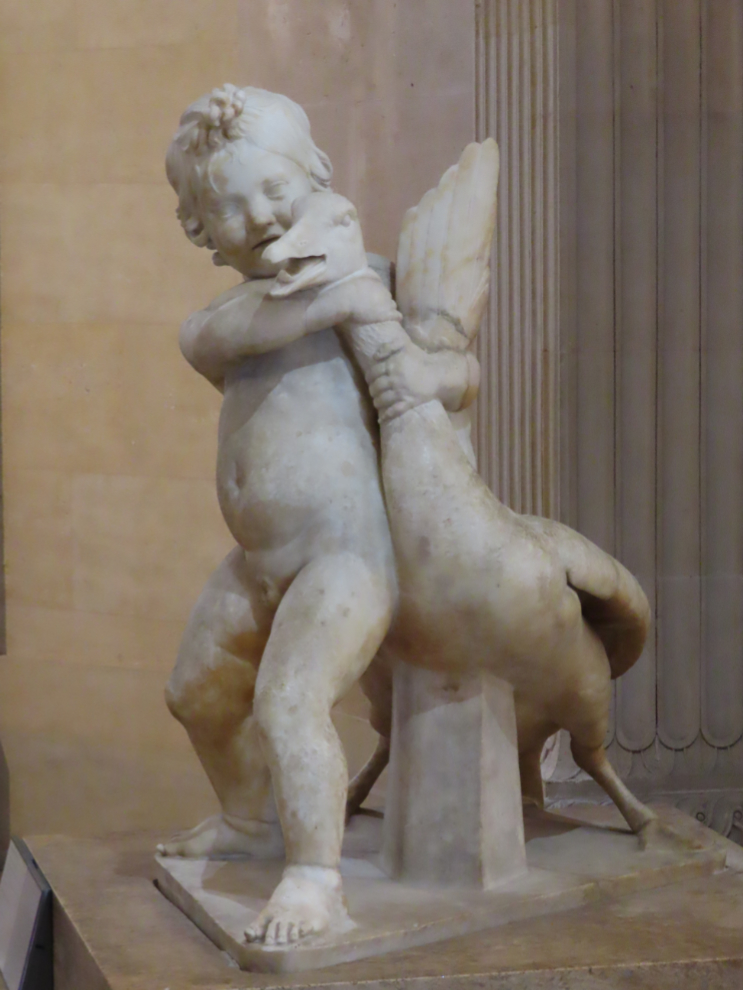
The humour of this small piece makes it easy to overlook the skill it took to create it. This is a copy of the original, and I feel like I’ve seen another copy in a palace garden in Bavaria.
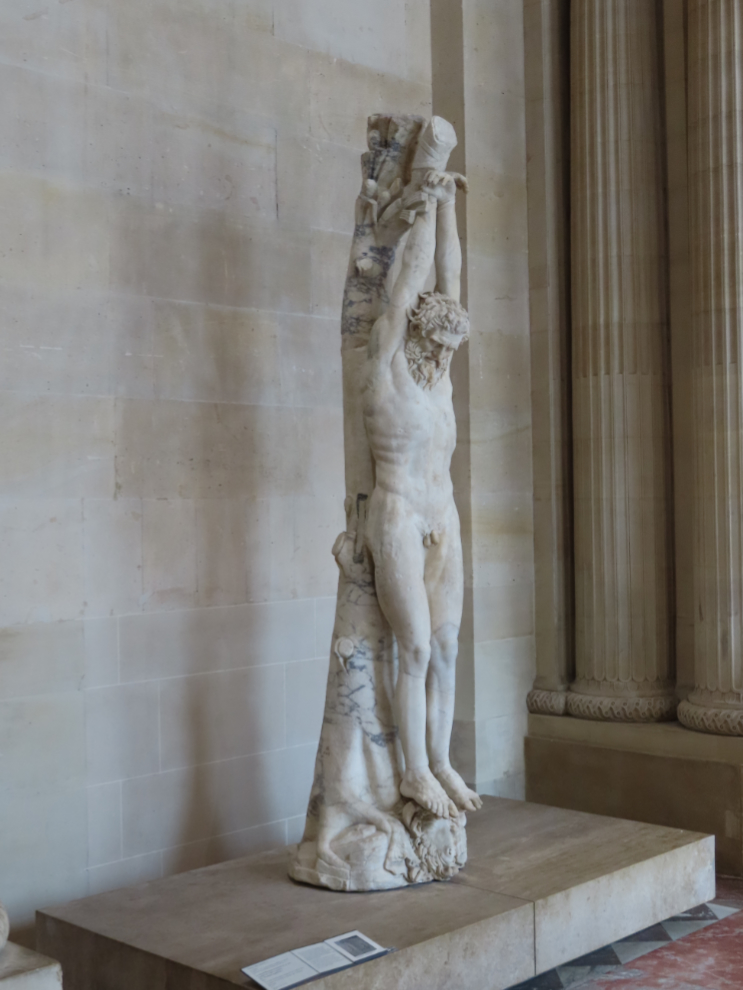
This is a Roman copy of the Greek statue “The Flaying of Marsyas.”
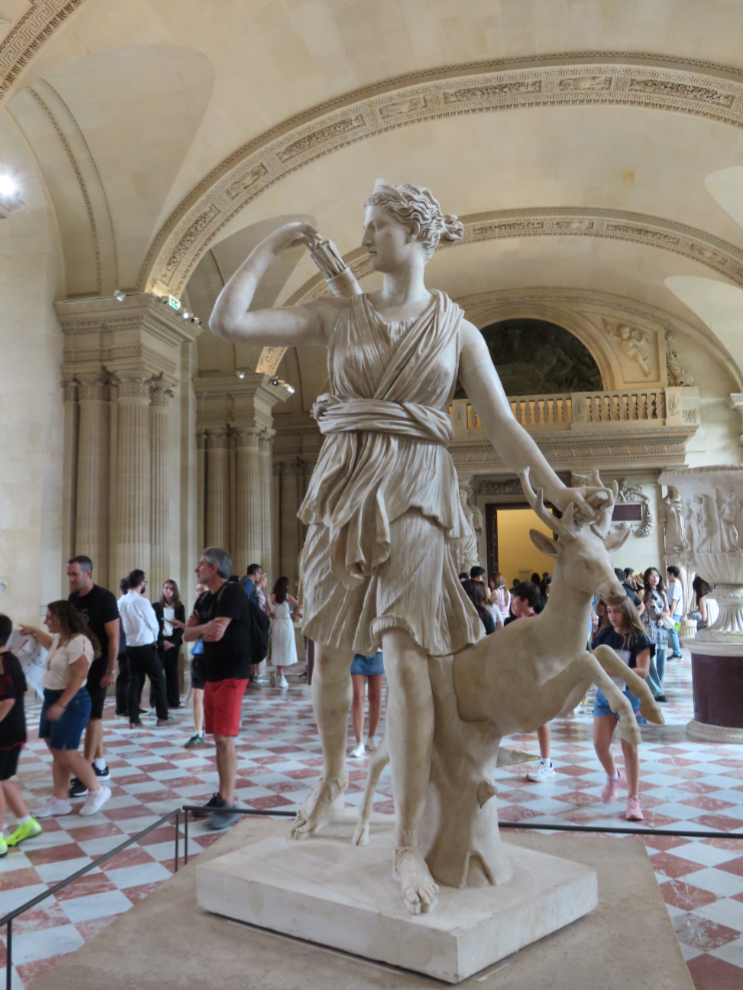
Diana of Versailles, also known as Diana the Huntress, Artemis of the Chase, and Artemis with the Hind. It is a marble Roman copy from the 1st or 2nd century AD of a lost Greek bronze.
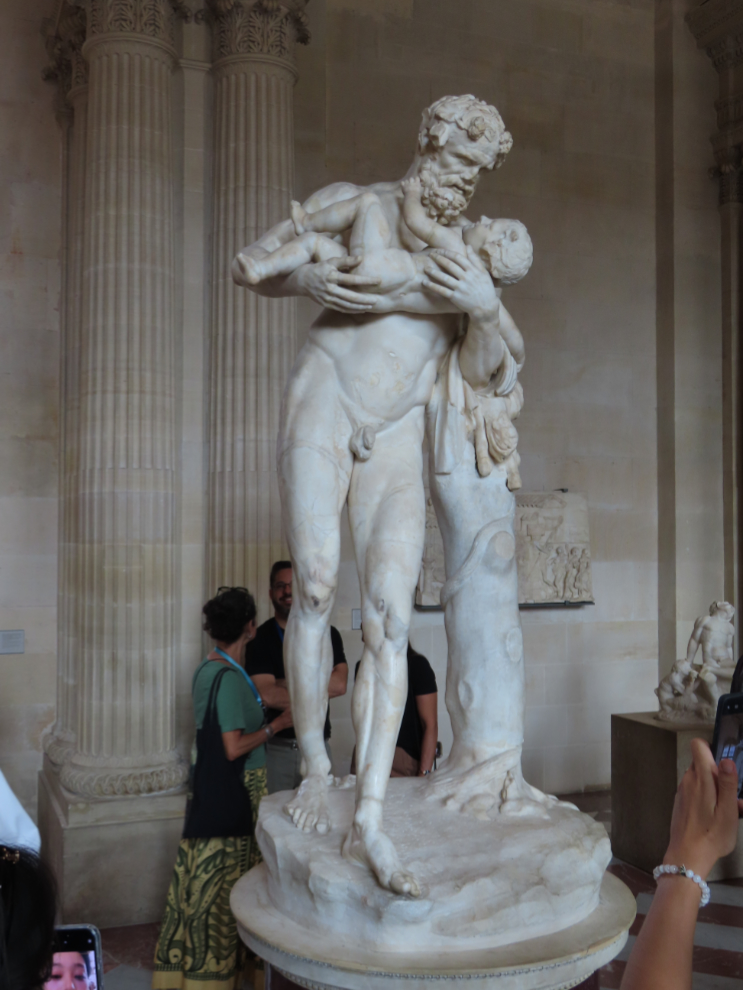
Silenus with infant Dionysus.
There are some massive stairs to navigate.
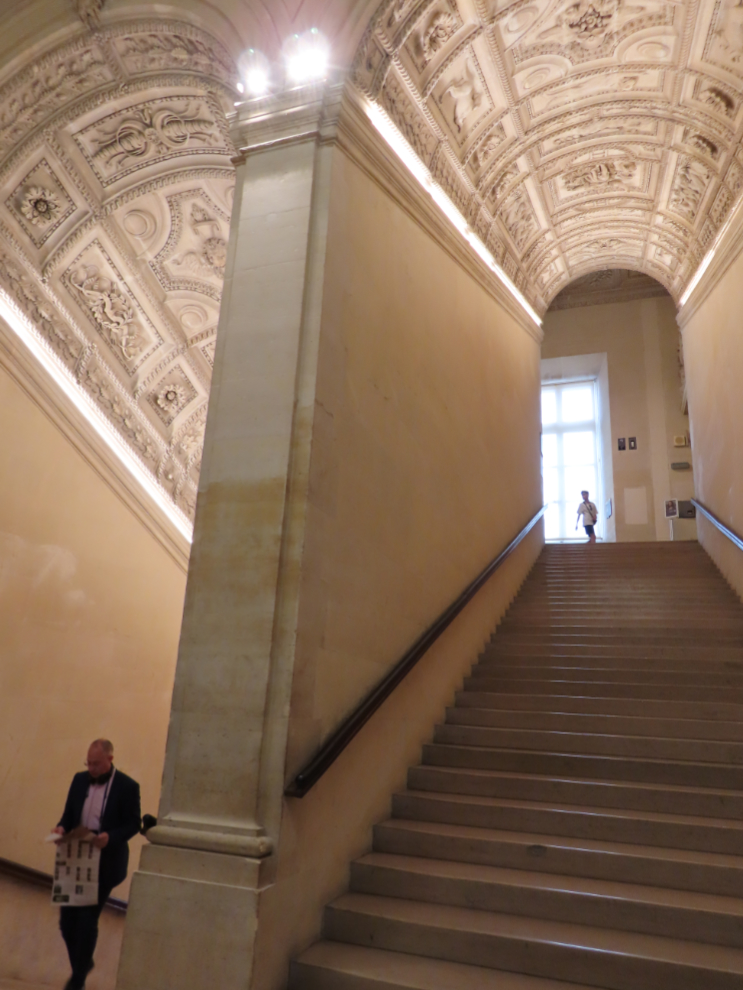
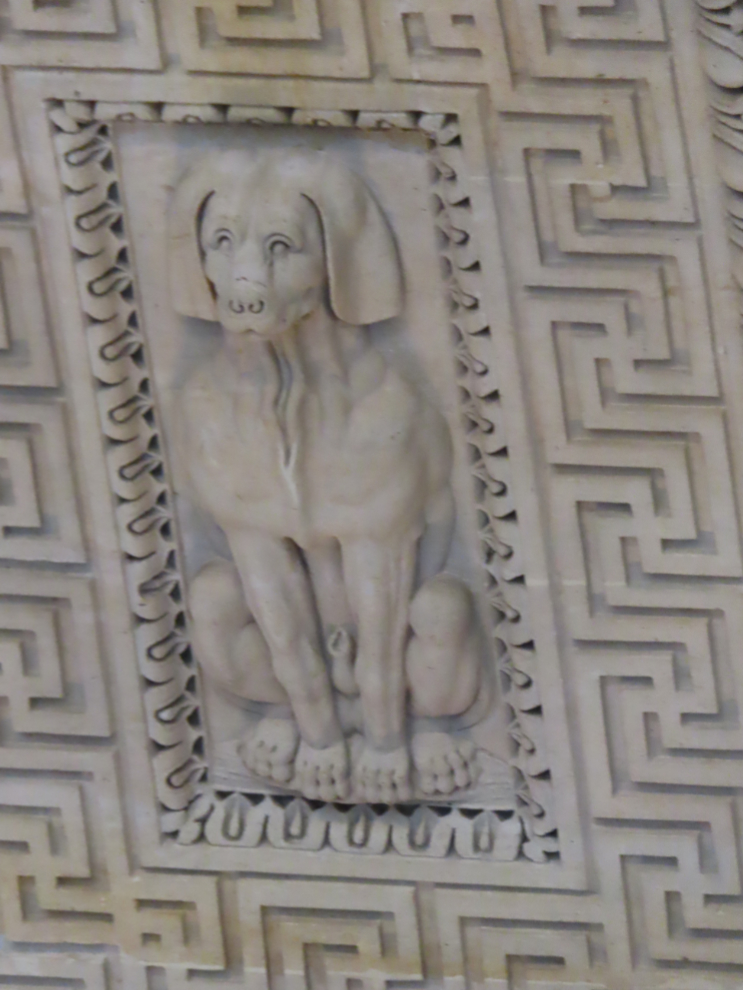
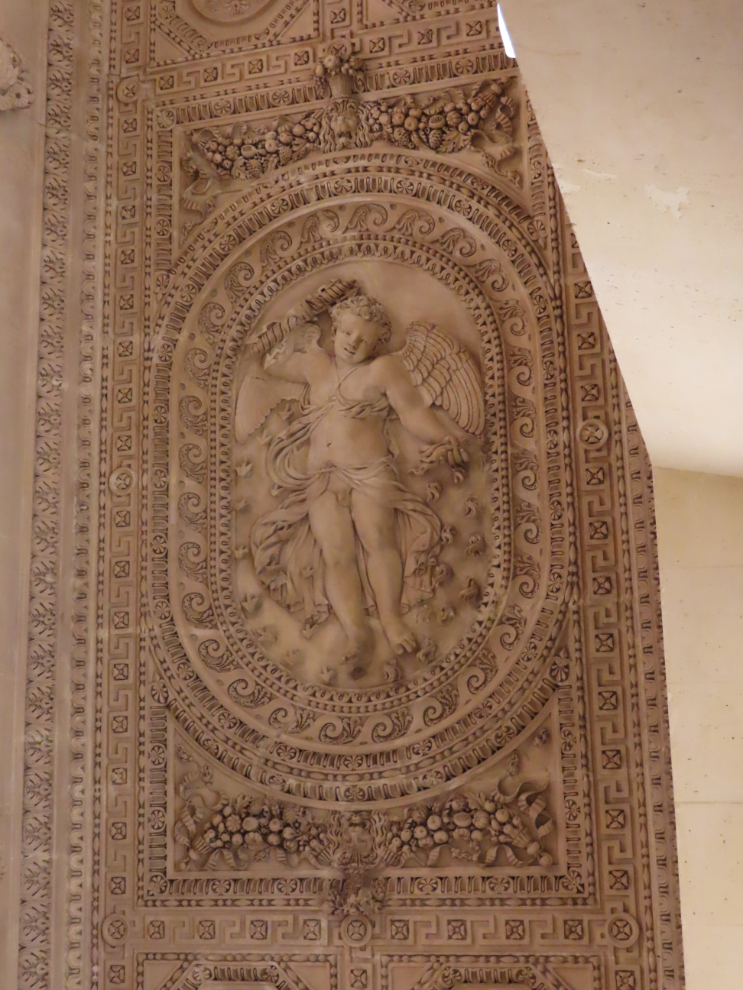
Your eyes need to search in every direction – the next two pieces are on the ceilings above those stairs.
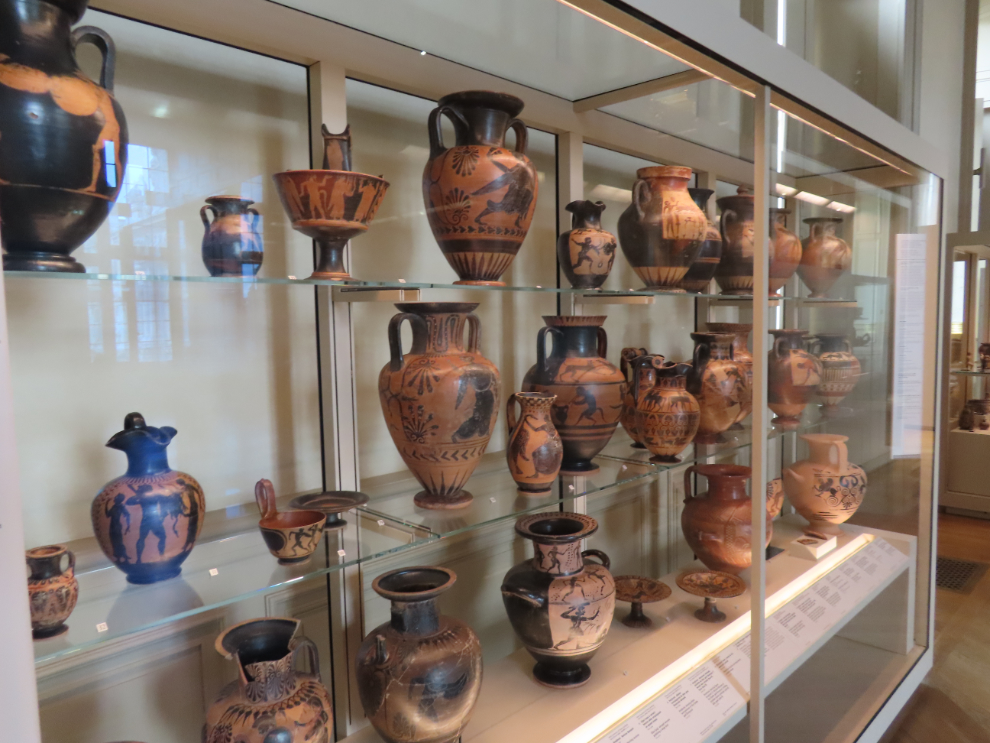
A case of Etruscan pseudo-red-figure vases from 480-450 BC.
This ceiling painting was a surprise – very much out of character.
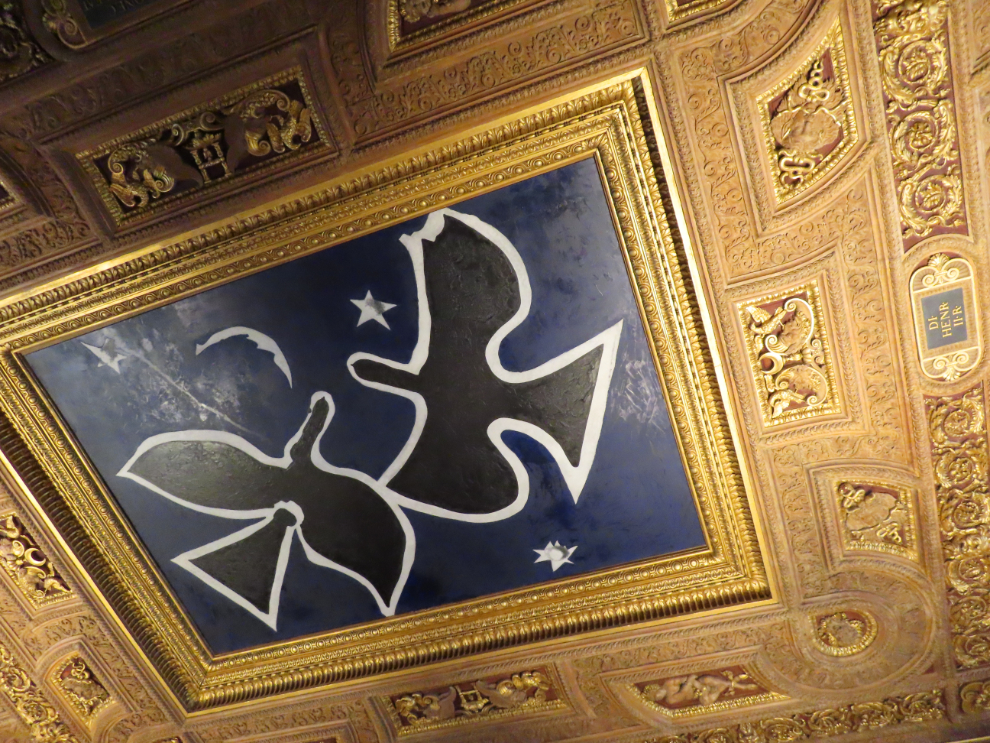
Some of the rooms are truly mind-boggling.
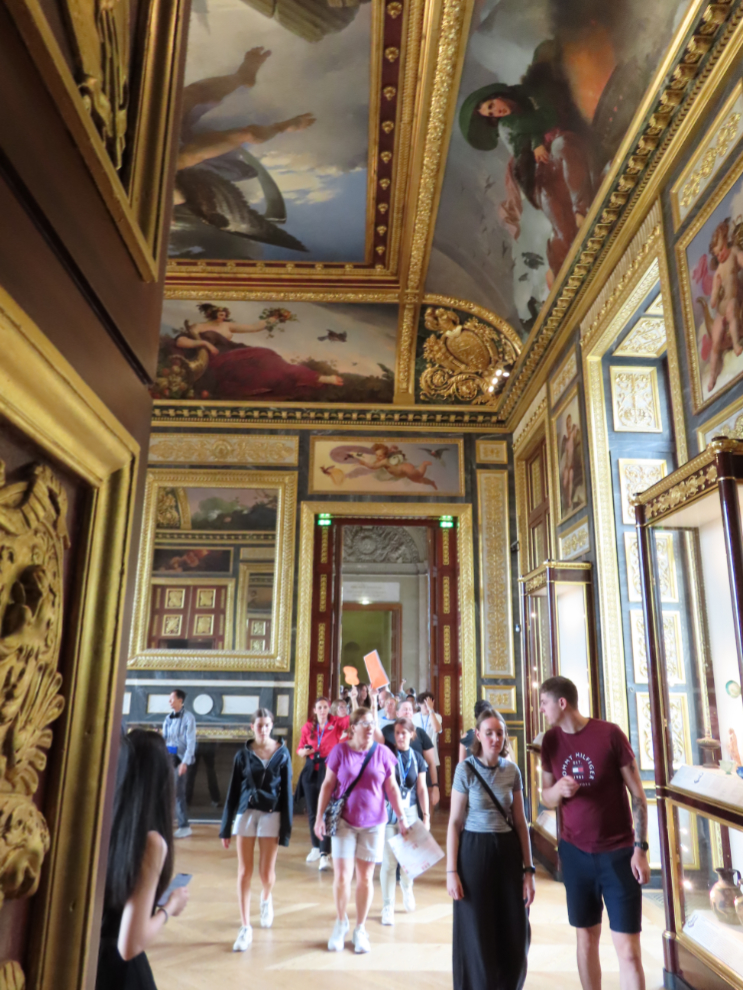
Once in a while, a window offers a look at the courtyard.
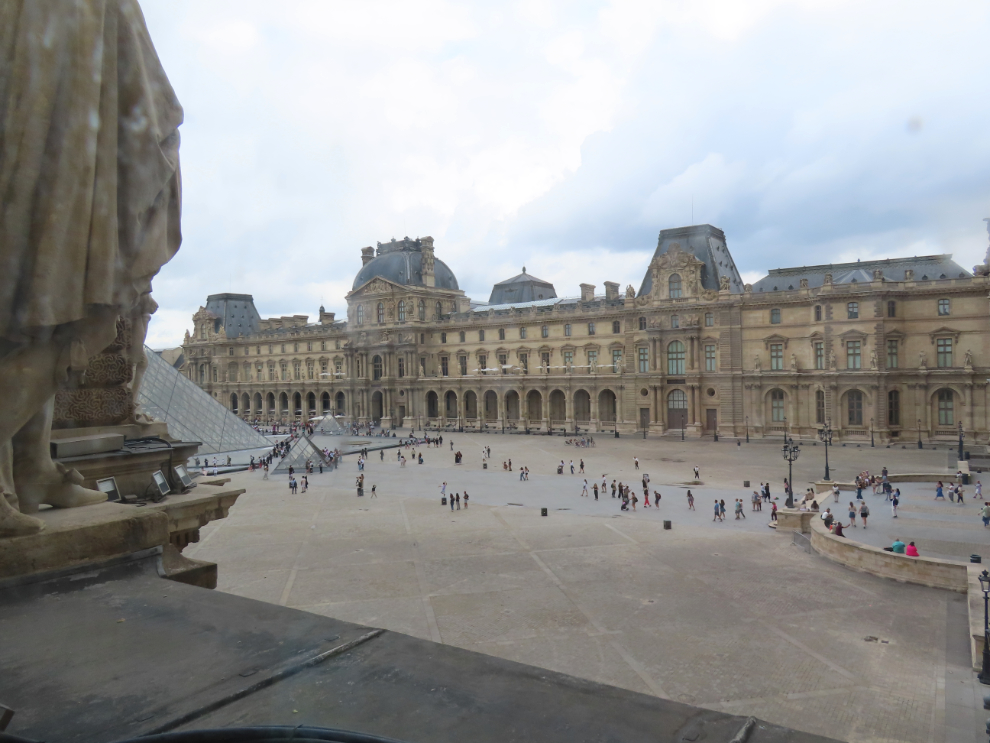
Just another mind-boggling room 🙂
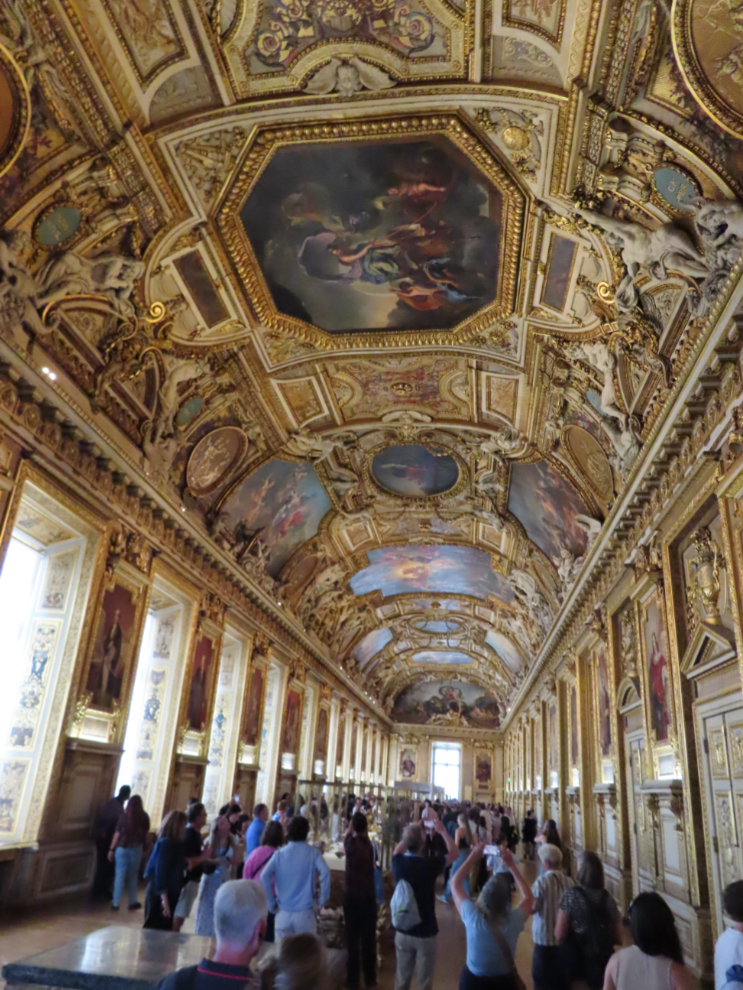
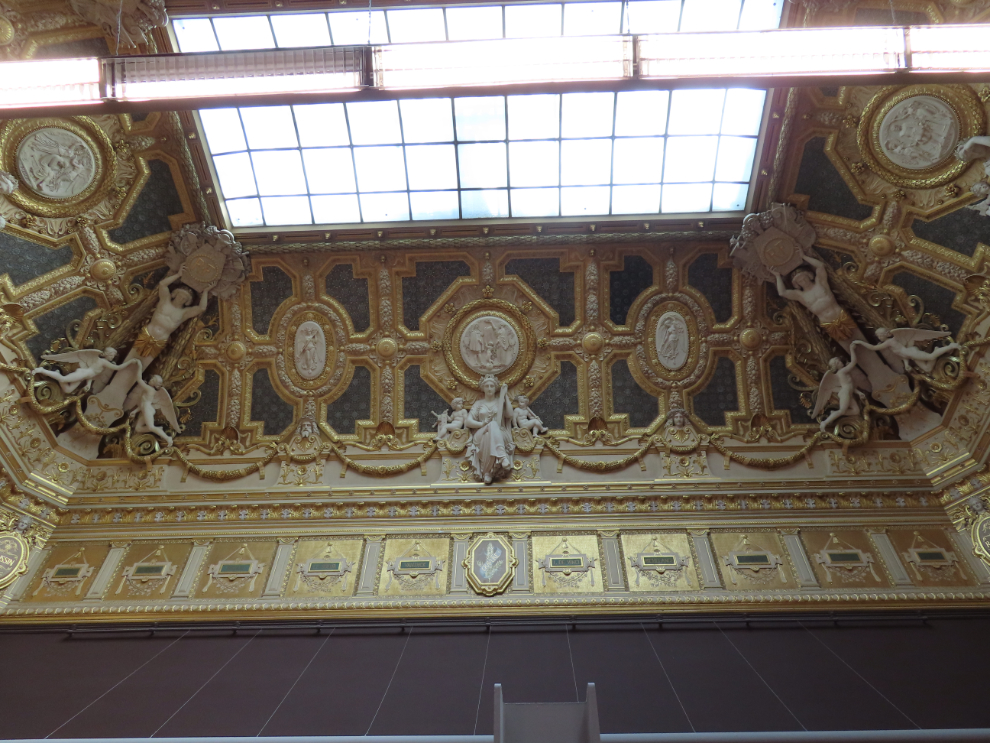
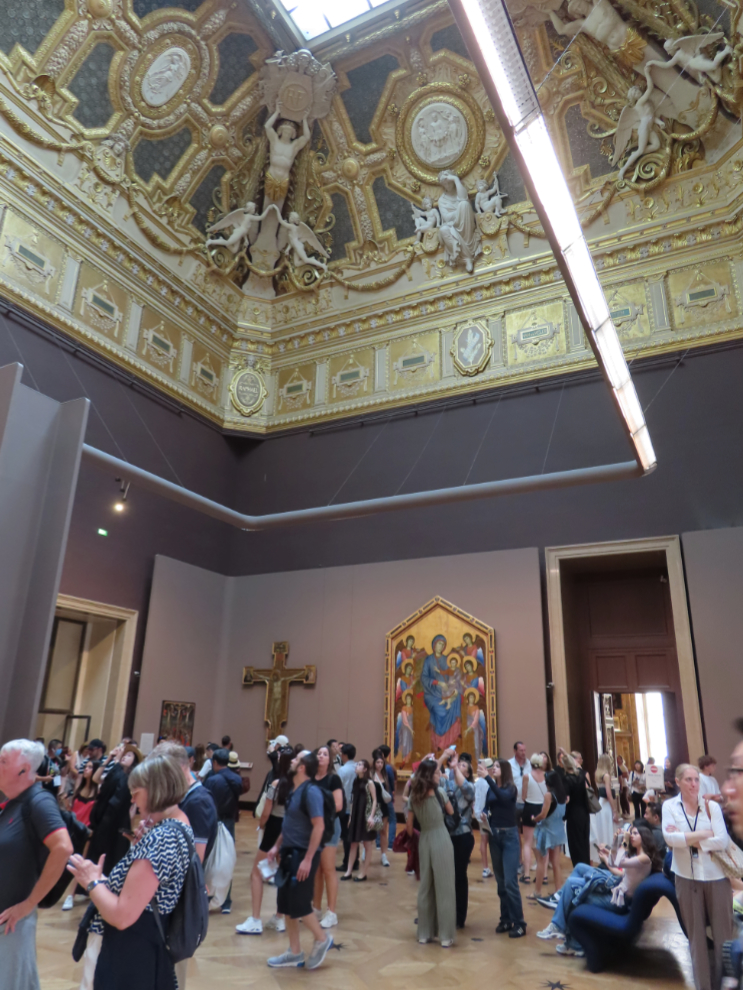
Madonna and Child by Cimabue , ca. 1280. This room looks at the evolution of religious paintings.
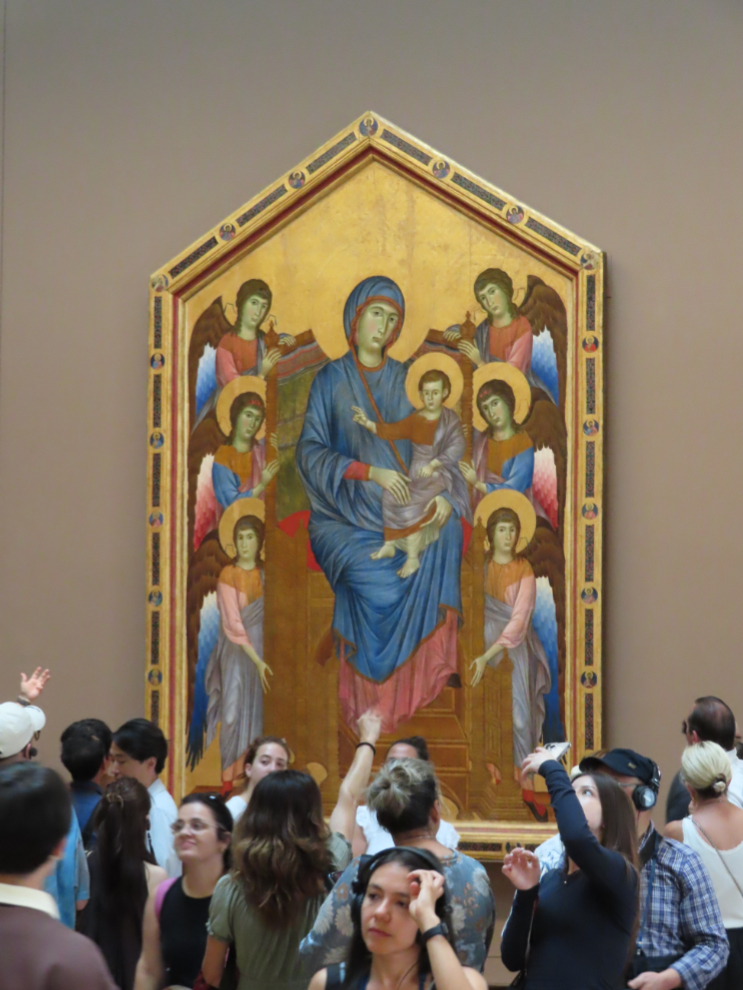
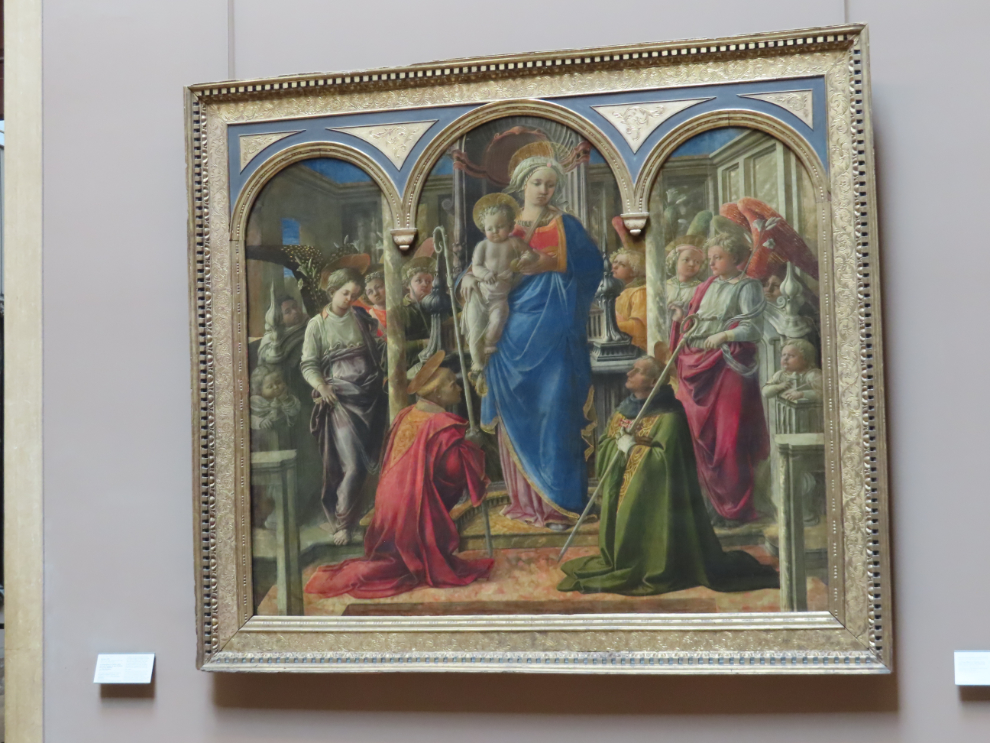
The Barbadori Altarpiece by Filippo Lippi, 1438 – “Virgin and Child Surrounded by Angels with St. Frediano and St. Augustine.”
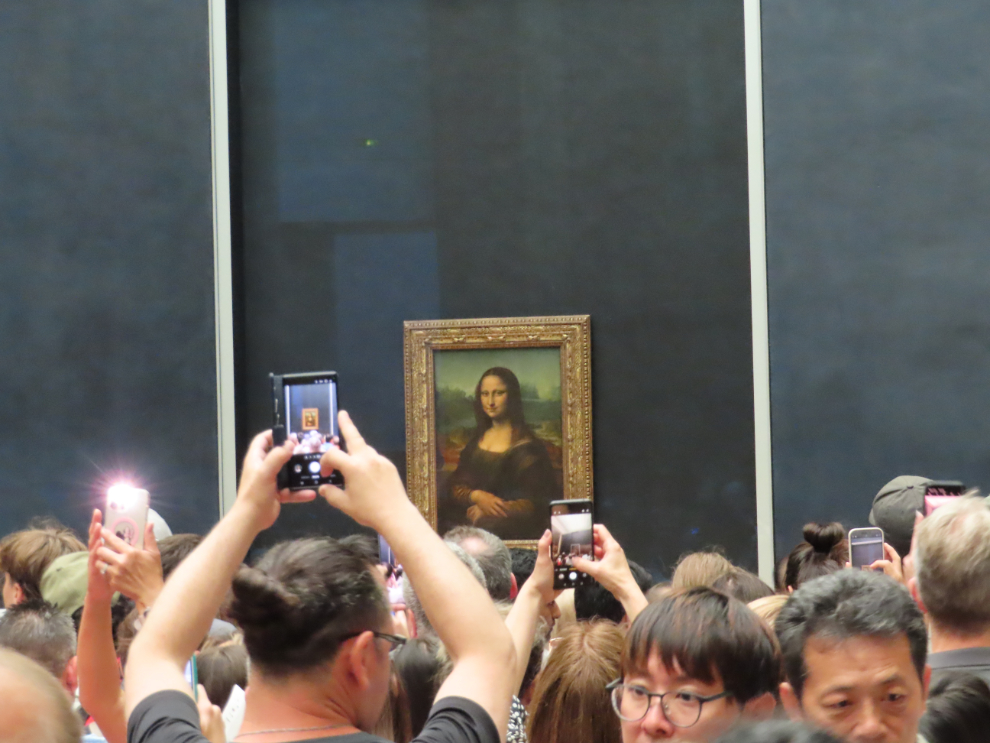
We weren’t going to even bother dealing with the Mona Lisa crowds but it did produce this amusing photo 🙂
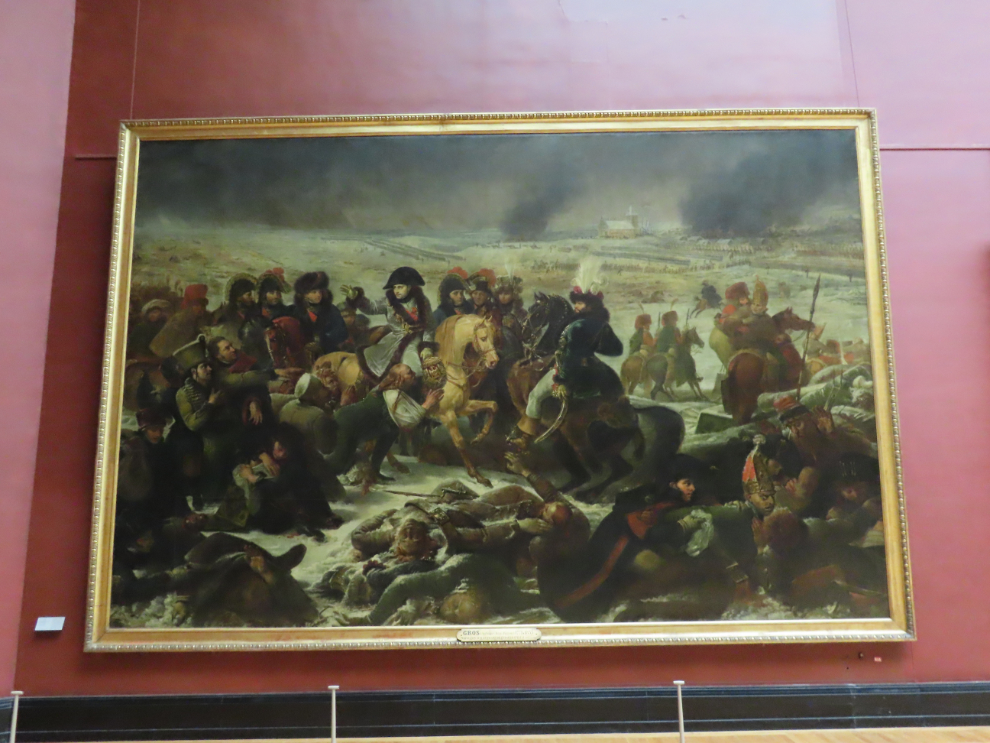
The audio guide spent a long time describing the importance of “Napoleon on the Battlefield of Eylau” by French Romantic painter Antoine-Jean Gros (1808).
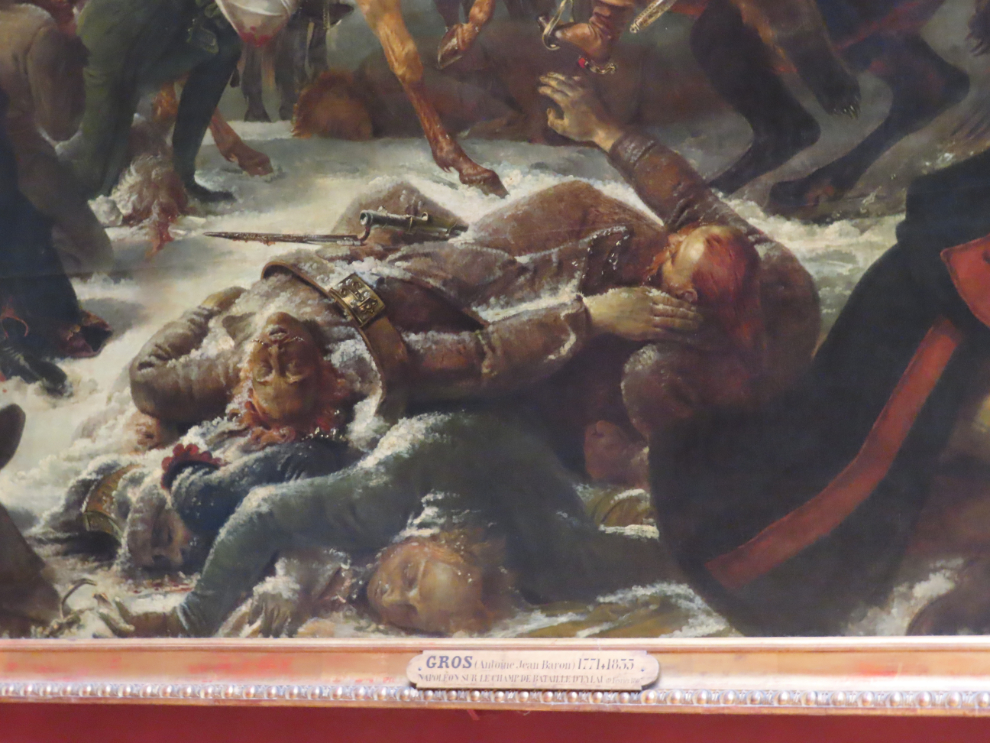
Antoine-Jean Gros’ depictions of the dead were very controversial at the time.
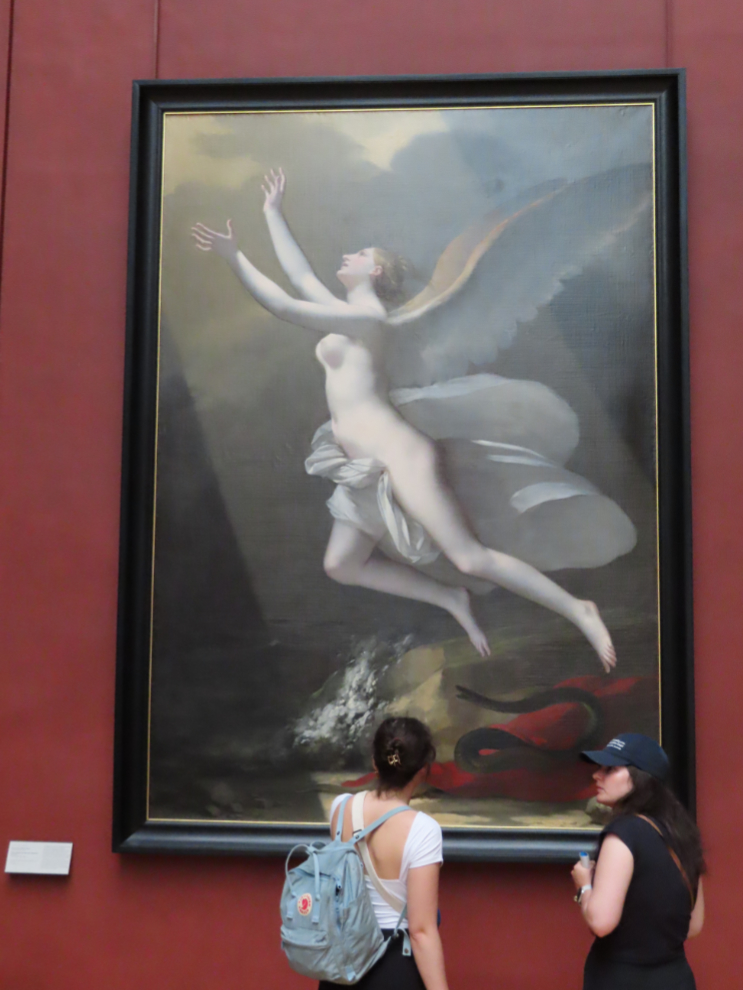
“The Soul Breaking the Links Holding it to the Earth” (1821-1823) by Pierre-Paul Prud’hon.
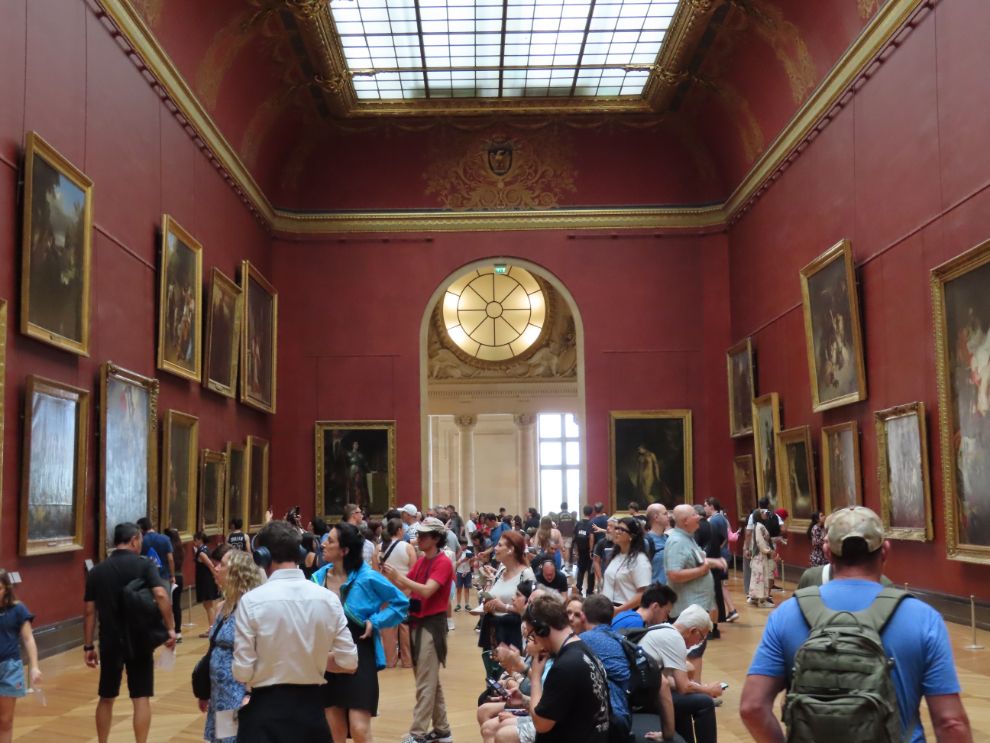
Benches in some of the rooms are very welcome, whether to contemplate a particular piece or simply to rest (or make a Facebook post).
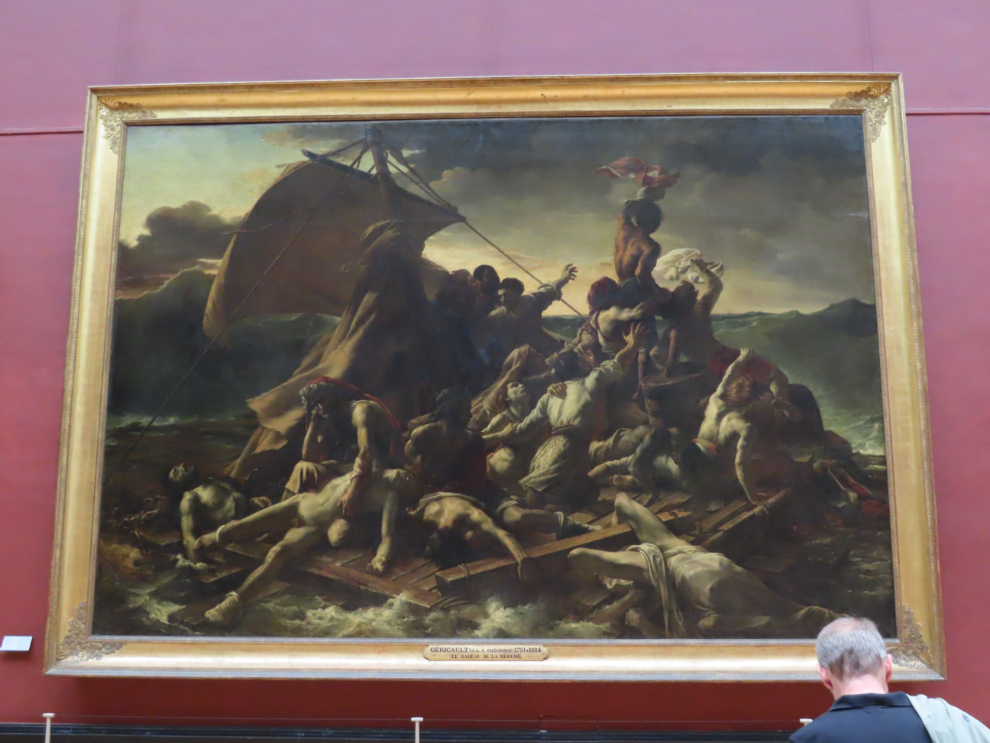
The audio guide also spent a long time describing “The Raft of the Medusa” by Théodore Géricault. It’s huge, 16 by 23 feet, and shows the few survivors of the wreck of the French naval frigate Méduse – of the 150 men set adrift on a makeshift raft, only 15 survived.
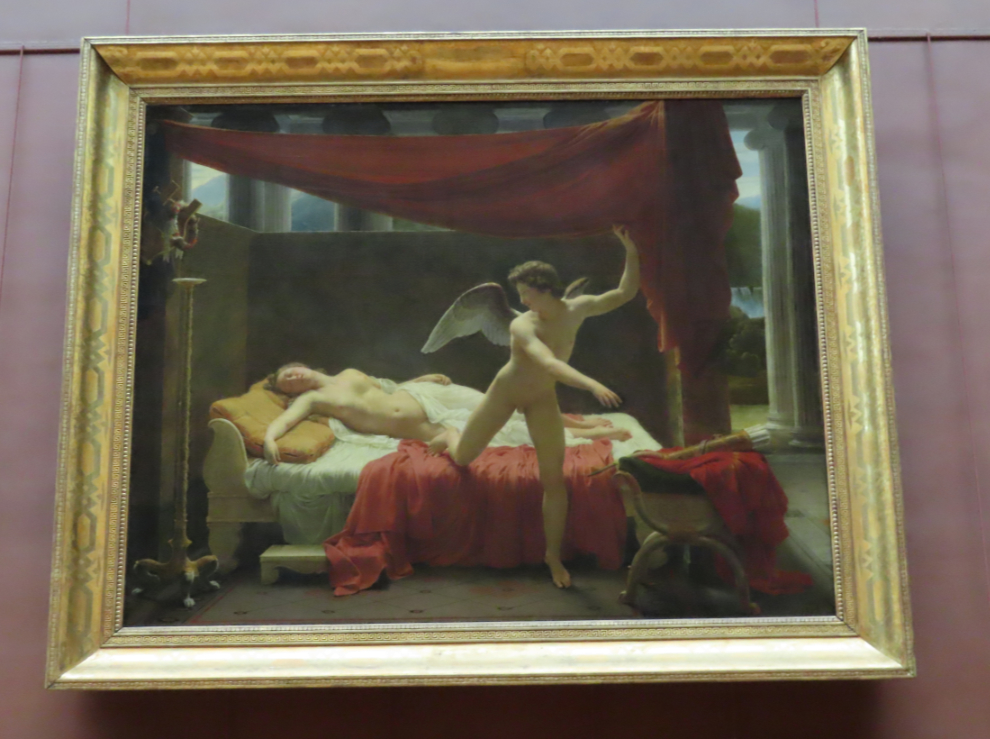
“Cupid and Psyche” by François-Édouard Picot.
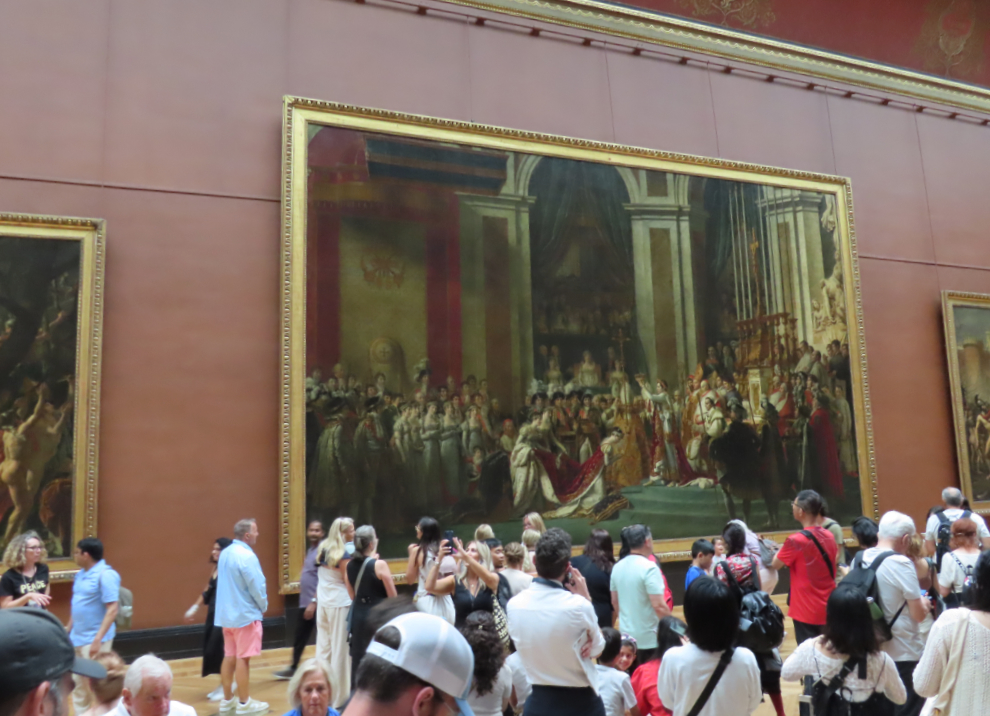
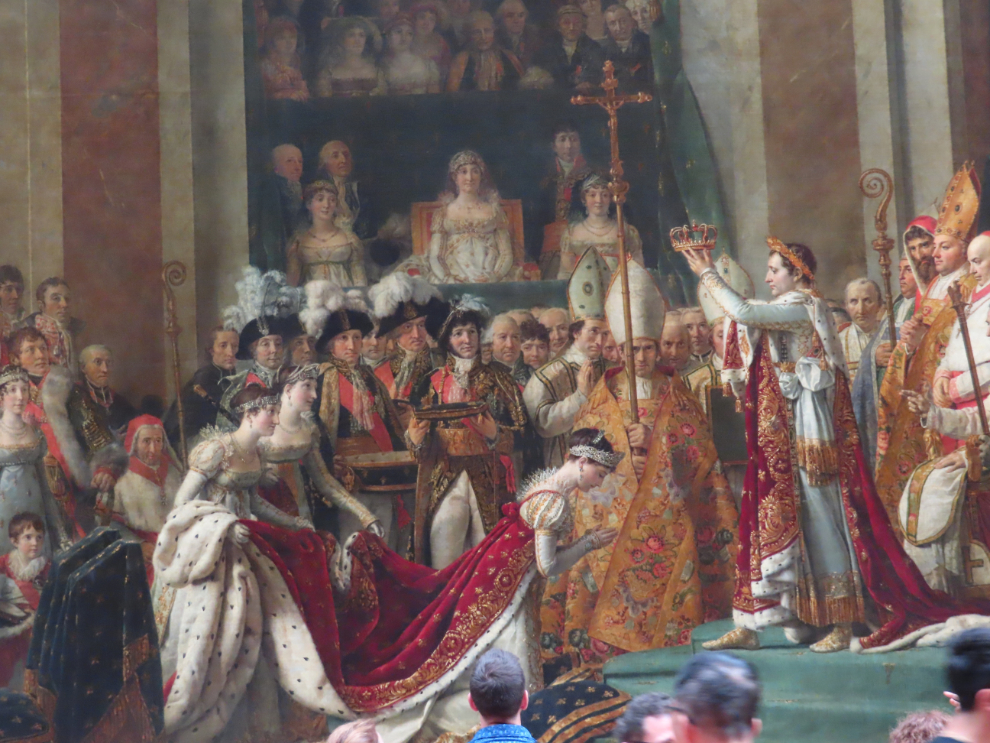
“The Coronation of Napoleon” (1807) by Jacques-Louis David, Napoleon’s official painter. It depicts a scene during the coronation of Napoleon at Notre-Dame de Paris, when he was about to place the crown on Josephine’s head.
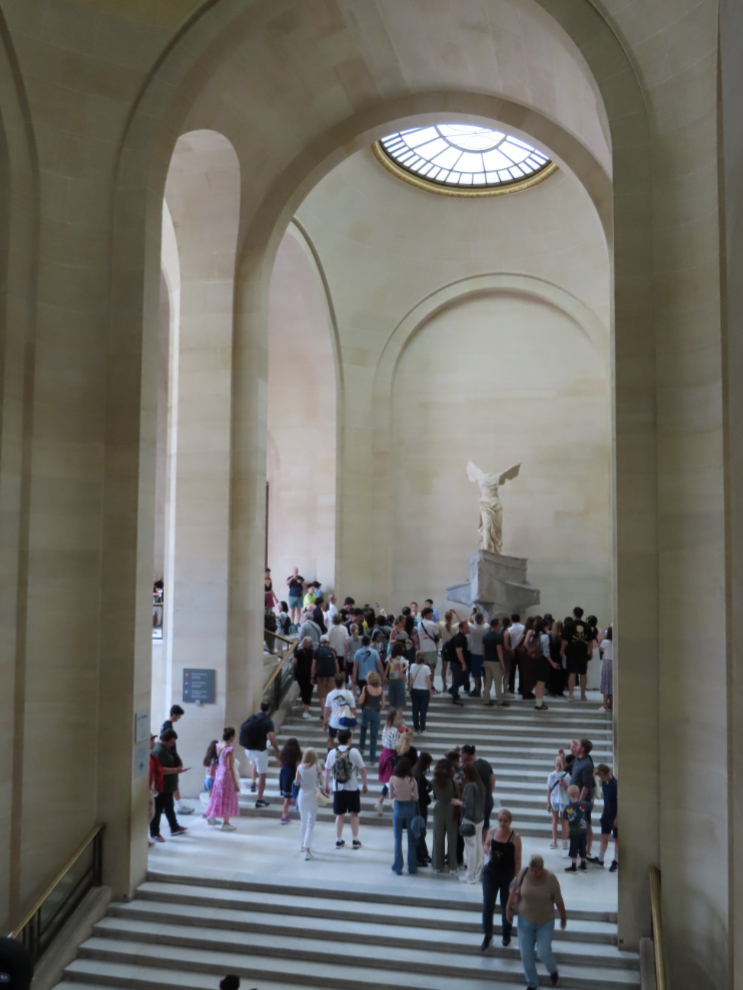
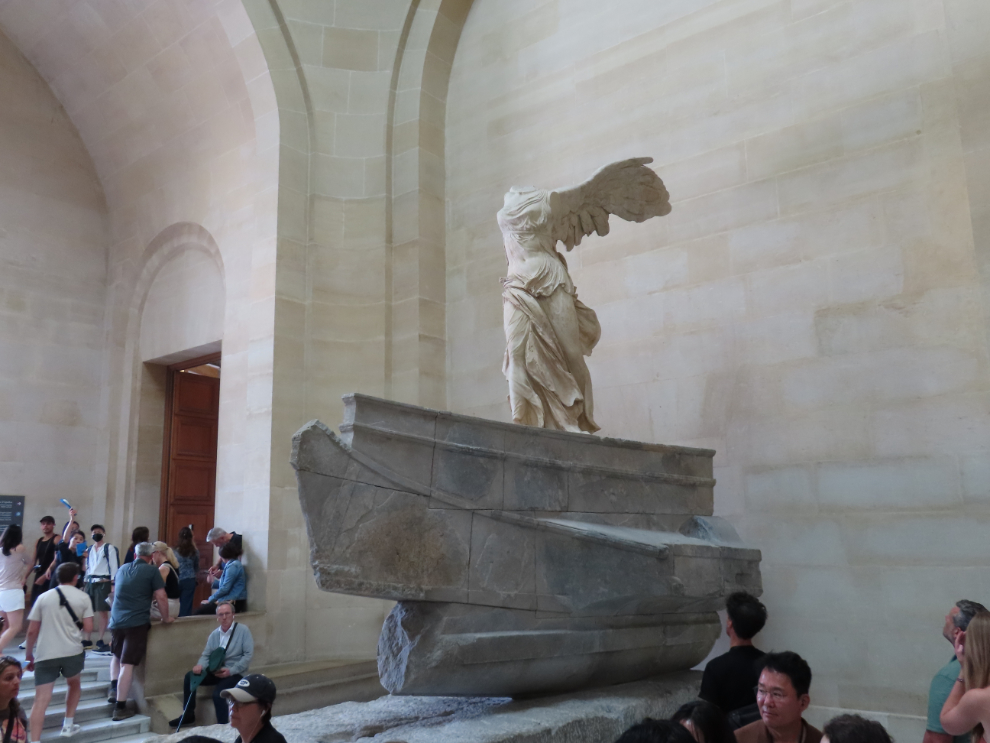
We were getting very tired, and I’m just going to show you one more piece, The Winged Victory of Samothrace. The audio guide once again gave a very detailed presentation on it, and for 5 Euros was a good investment.
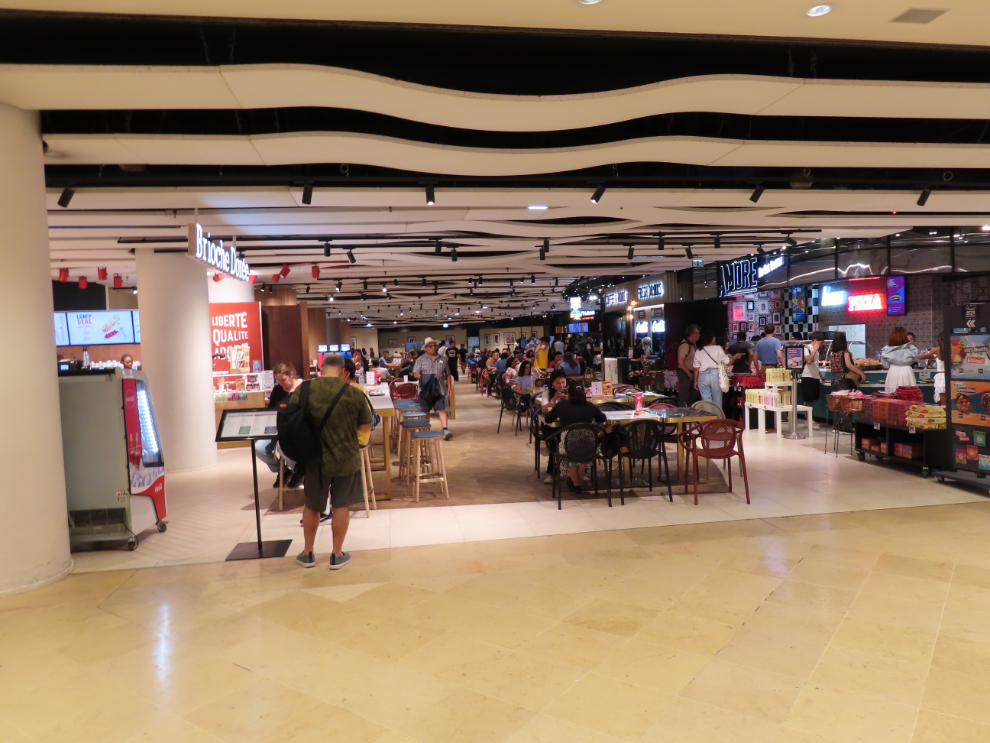
As you leave, there’s a large food court with about 10 shops, and we took advantage of it to get a sandwich and drink before walking back to our hotel.
Each person will have their own idea of what works for them at the Louvre. Given our time and physical constraints, this 3 hours worked for us. In a perfect world, I would devote 2 hours every day for a week to get a proper view of it.
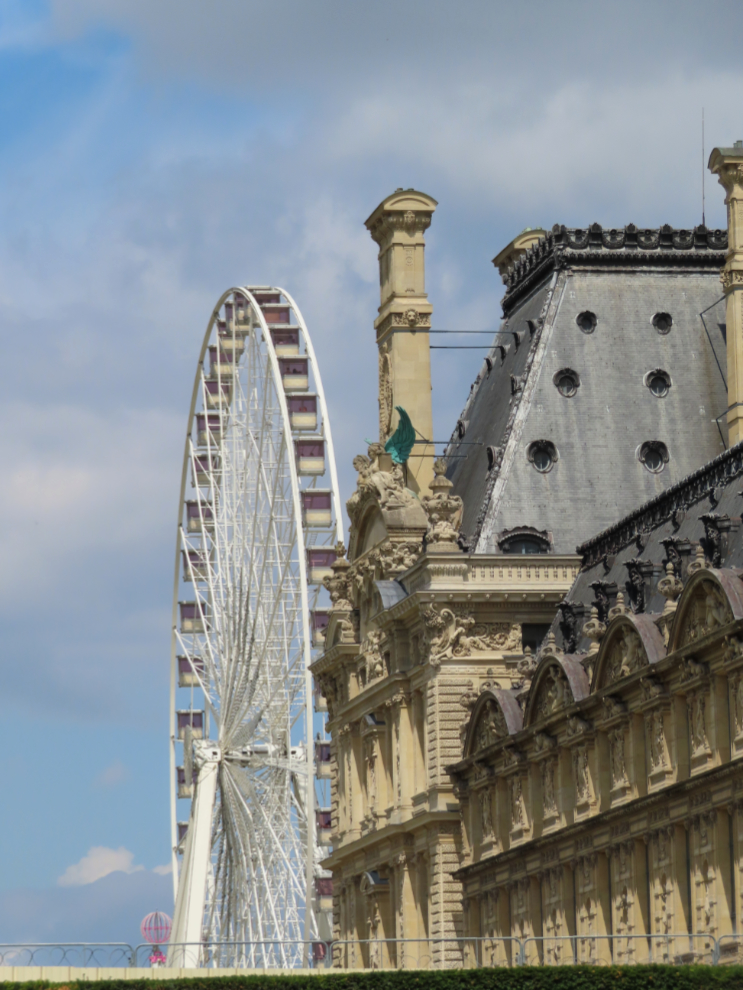
I would have liked to have a look at the ferris wheel…
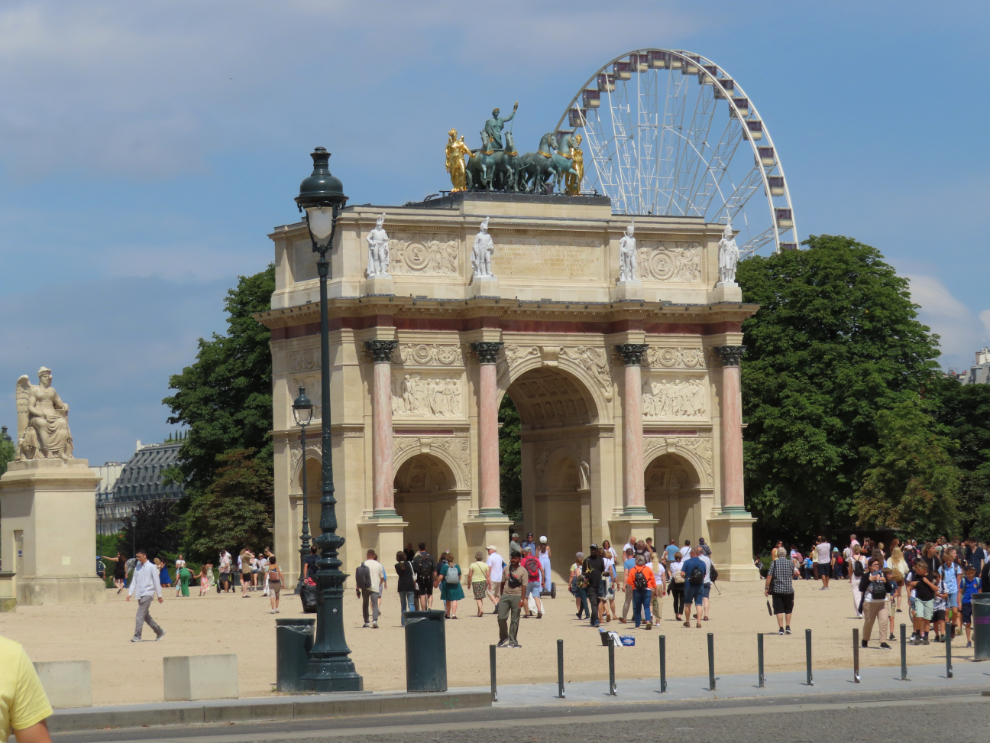
We got a better, though still not close, look at the Arc de Triomphe du Carrousel, then went directly back to the hotel and our bed for a rest before the afternoon walking tour. The Louvre walk totalled 7.4 km.

About The Author

Looks amazing! Enjoy the rest of your trip.
<3