More exploring at St. John’s, Newfoundland
Monday, June 29th, Day 32 of our trip and the 25th day in Newfoundland, was a more in-depth look at St. John’s, starting with a 4-hour van hour, and continuing with a lengthy visit to the amazing museum/gallery called The Rooms.
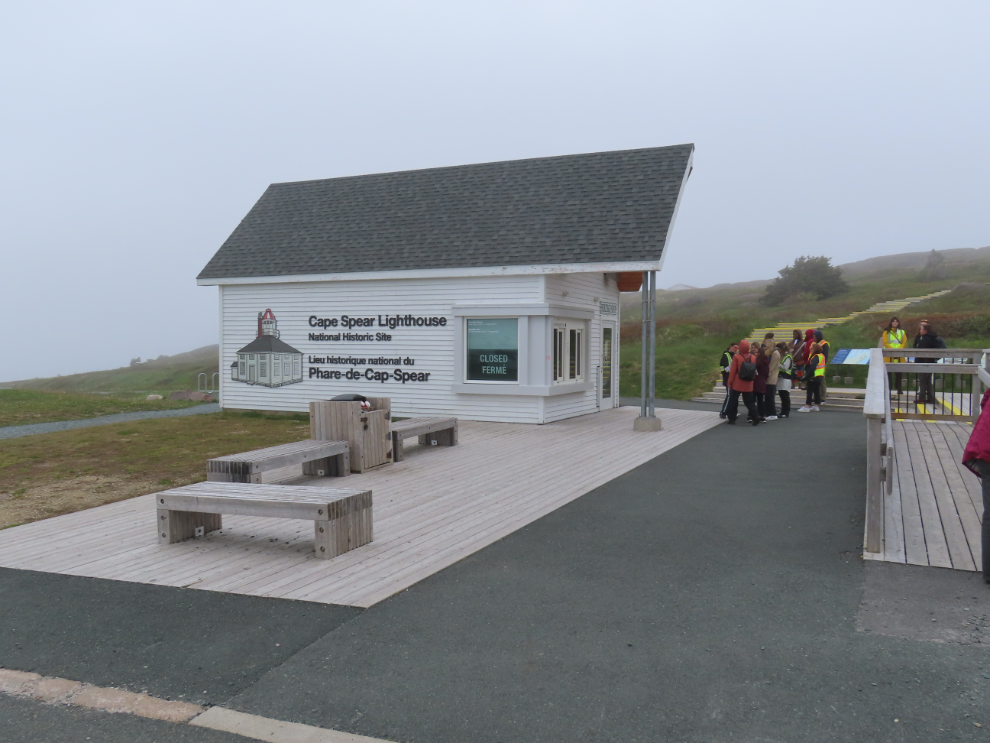
Our tour with Jellybean Tours is actually advertised as a 3-hour tour, but from the time we got picked up to the time we got dropped off was over 4 hours. We began at Cape Spear, the most easterly point in North America and the site of two lighthouses and a World War II fortification. It was foggy but I made the best of our 30-minute stop with a 1.3-km navigation of the main attractions.
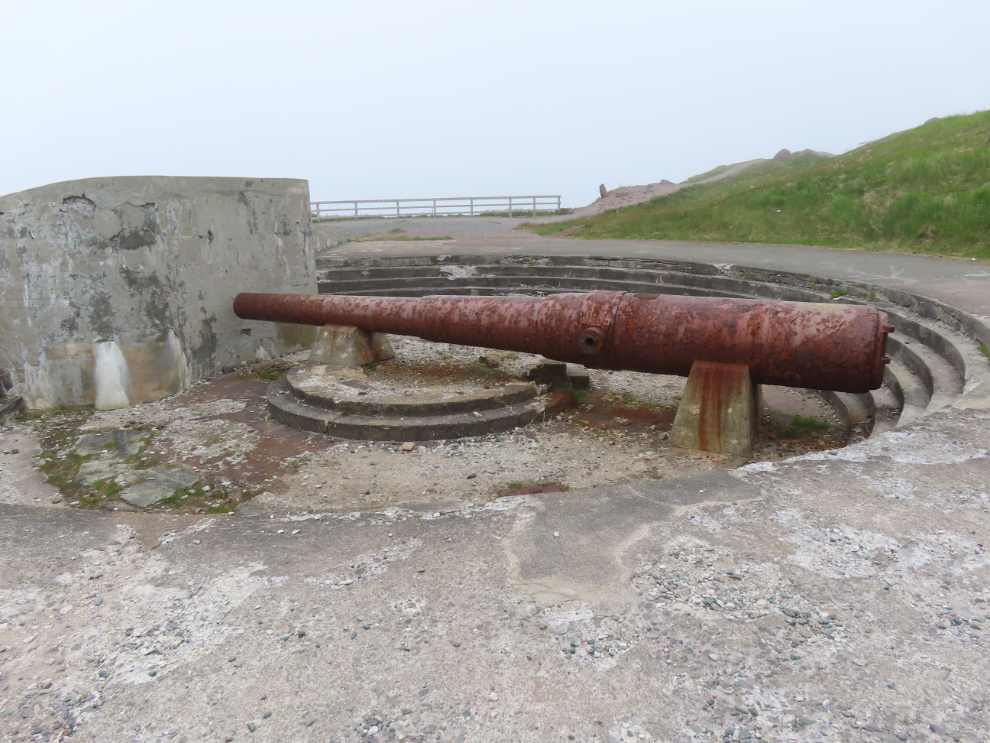
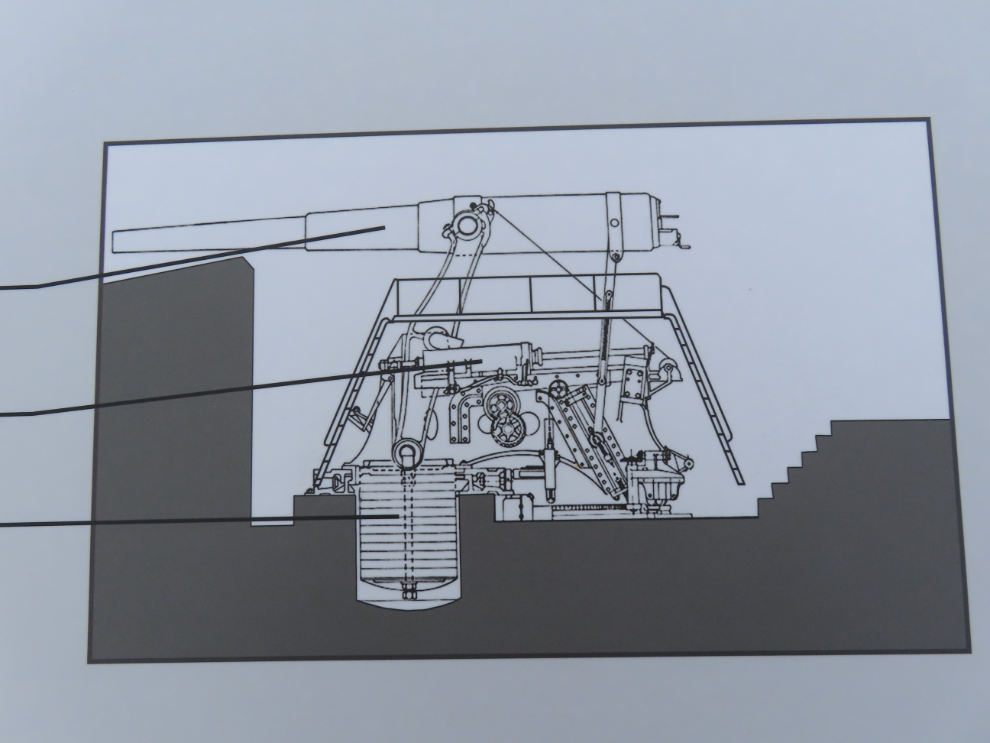
The fortification is very impressive. This is one of two 10-inch 30-ton M1888 guns that could be lowered out of sight.
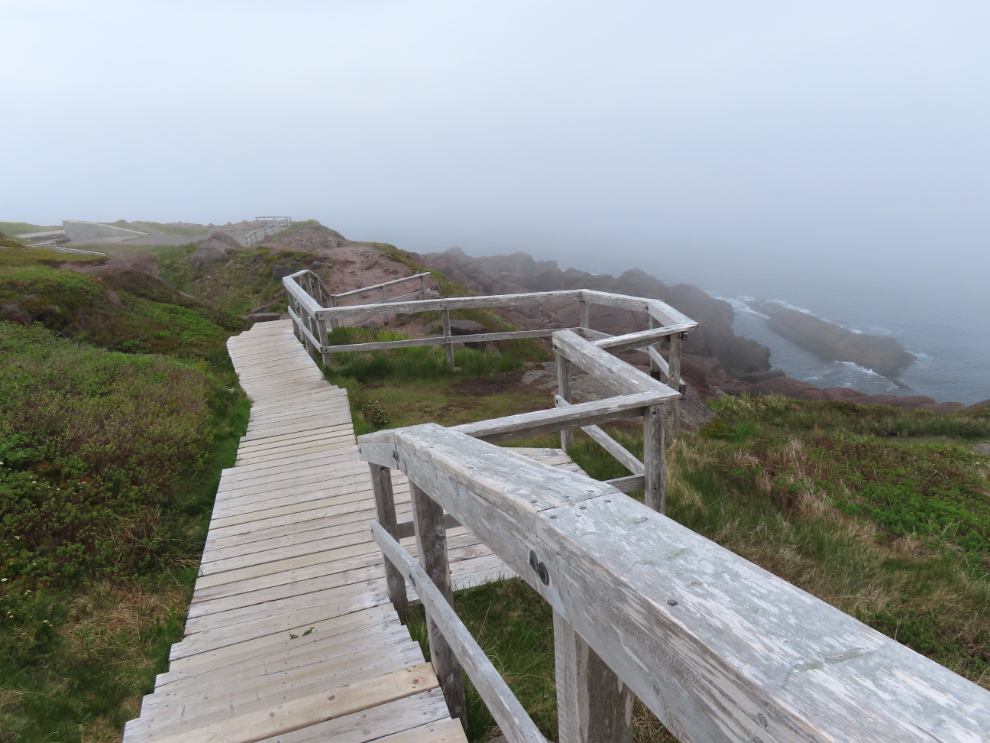
There are a lot of stairs in a complete tour – my Strava tracker shows a 47-meter elevation gain. The next photo looks down from near the newer lighthouse to the fortification.
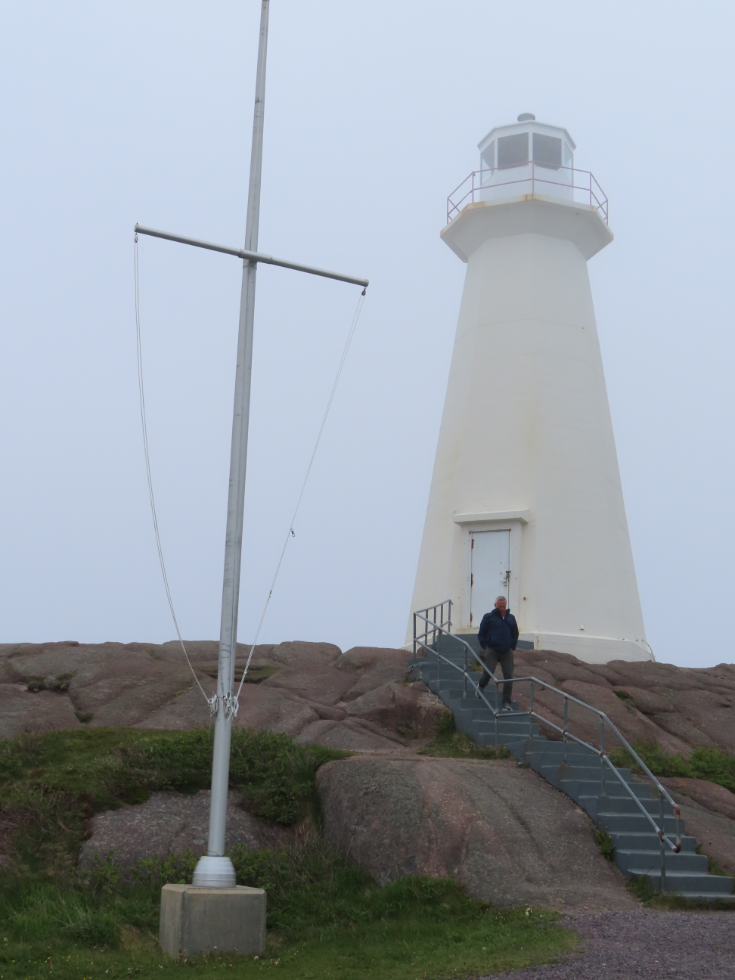
In 1955, a new concrete, octagonal lighthouse tower was built. It stands 13.7 metres tall, and has the Fresnel lens from the 1835 lighthouse. It still produces three white flashes every fifteen seconds, its signature.
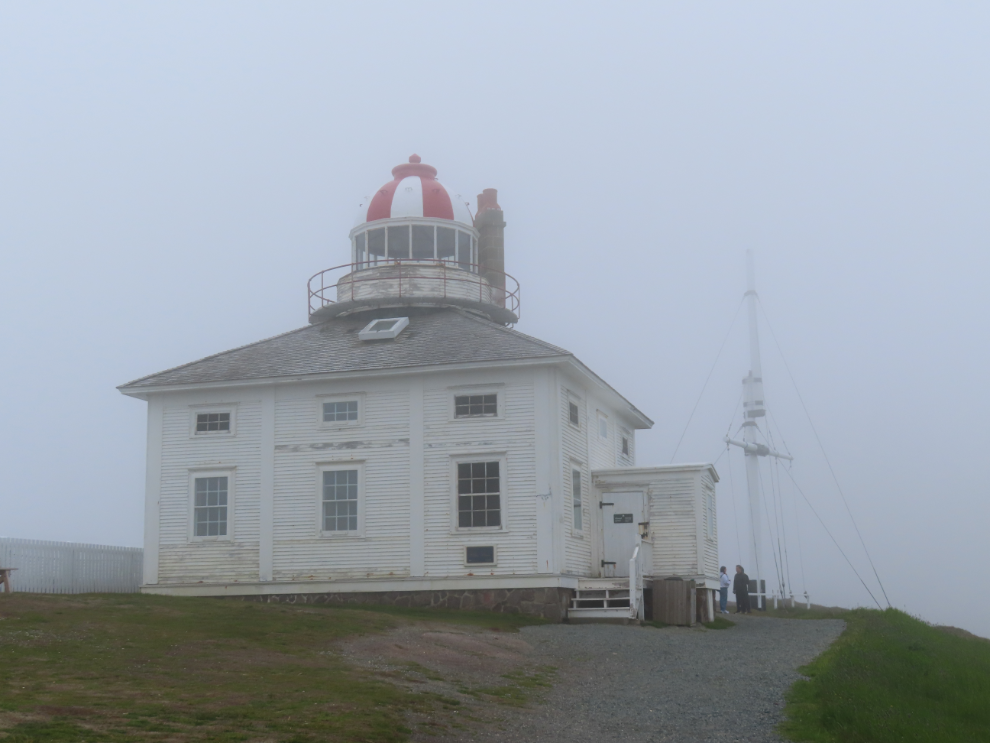
Built in 1835, this is the oldest surviving lighthouse in Newfoundland and Labrador. While the fog and time constraint could have been disappointing, I knew we had the opportunity to return on our own as we headed south from St. John’s.
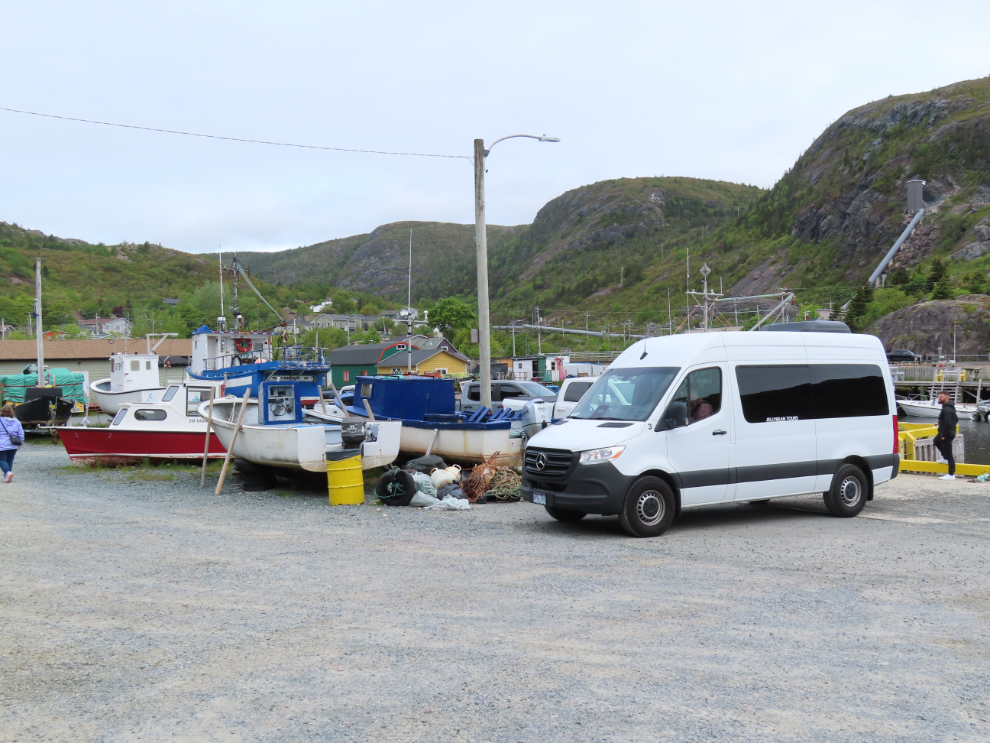
Our next stop was 15 km to the southwest – the extremely photogenic little community of Petty Harbour. This was a short photo-stop simply because there’s virtually no parking for visitors – with the RV all we could do is drive through. With our little Mercedes van, stoping in a no-parking area with the driver staying in his seat in case a rapid move was needed, it worked just fine.
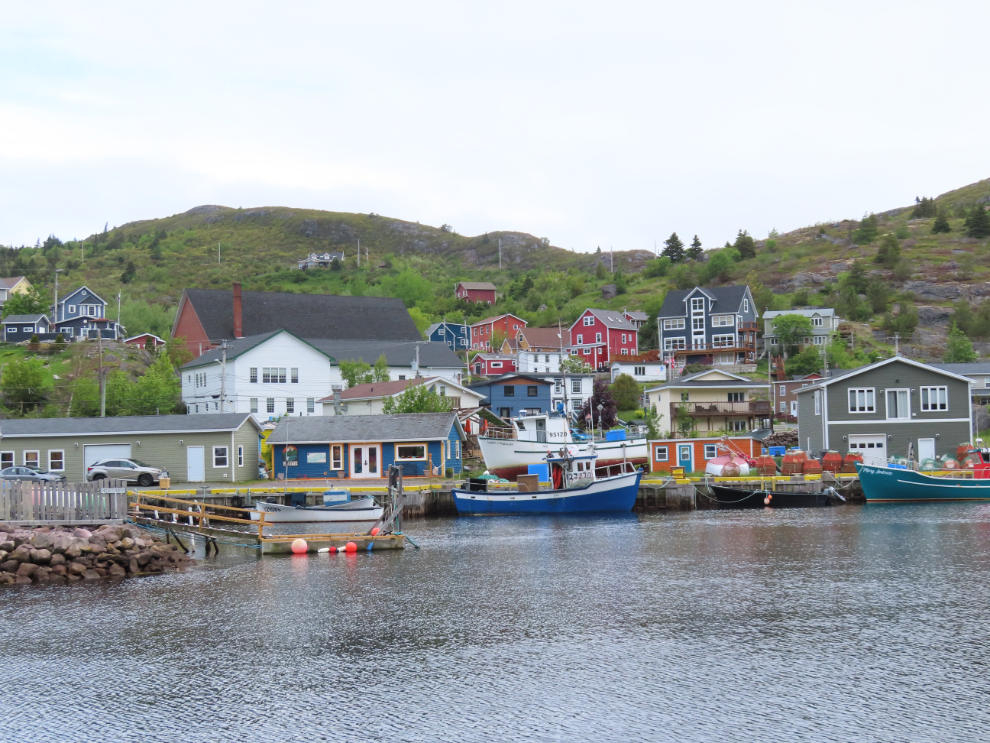
The hydro-electric project Petty Harbour looked very interesting.
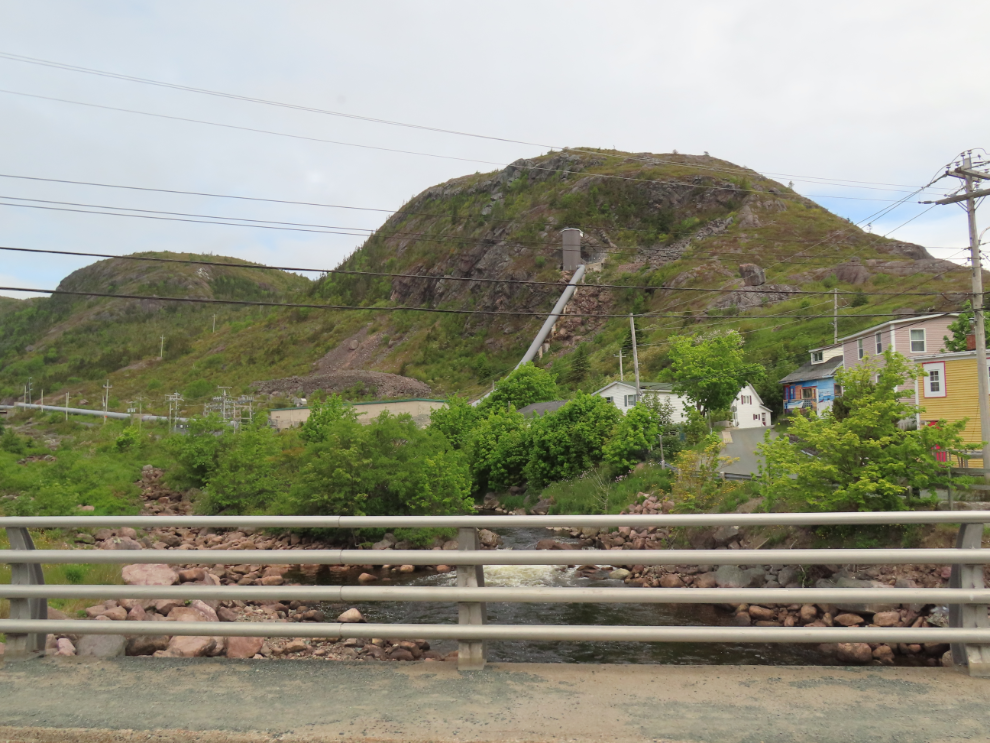
Yes, I could spend a lot of time shooting in Petty Harbour. But…
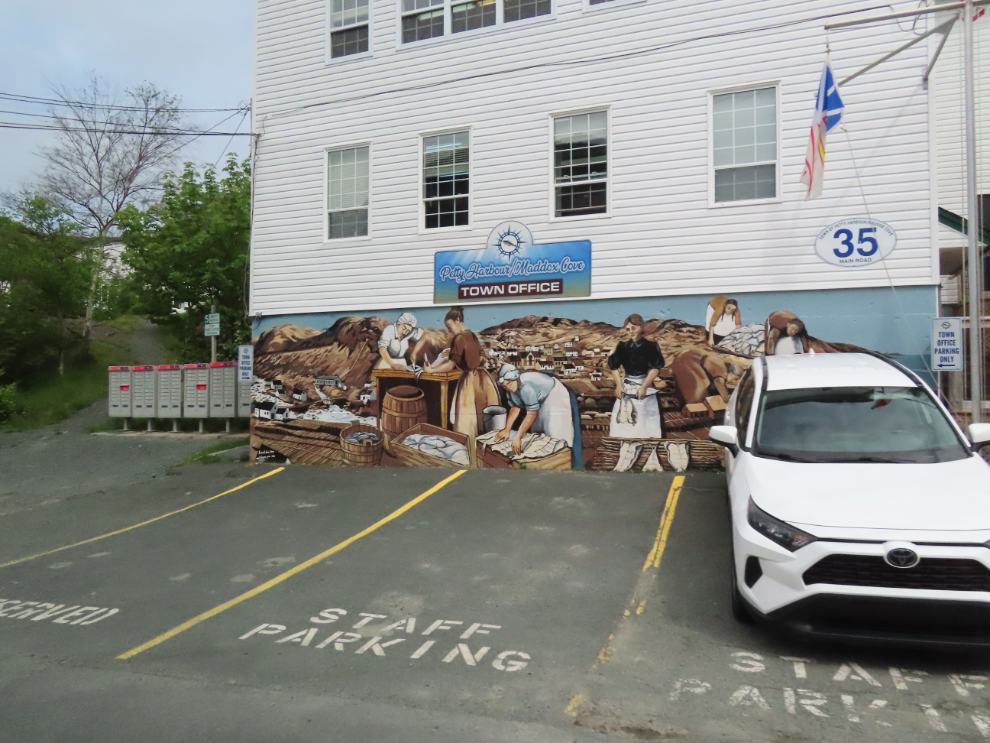
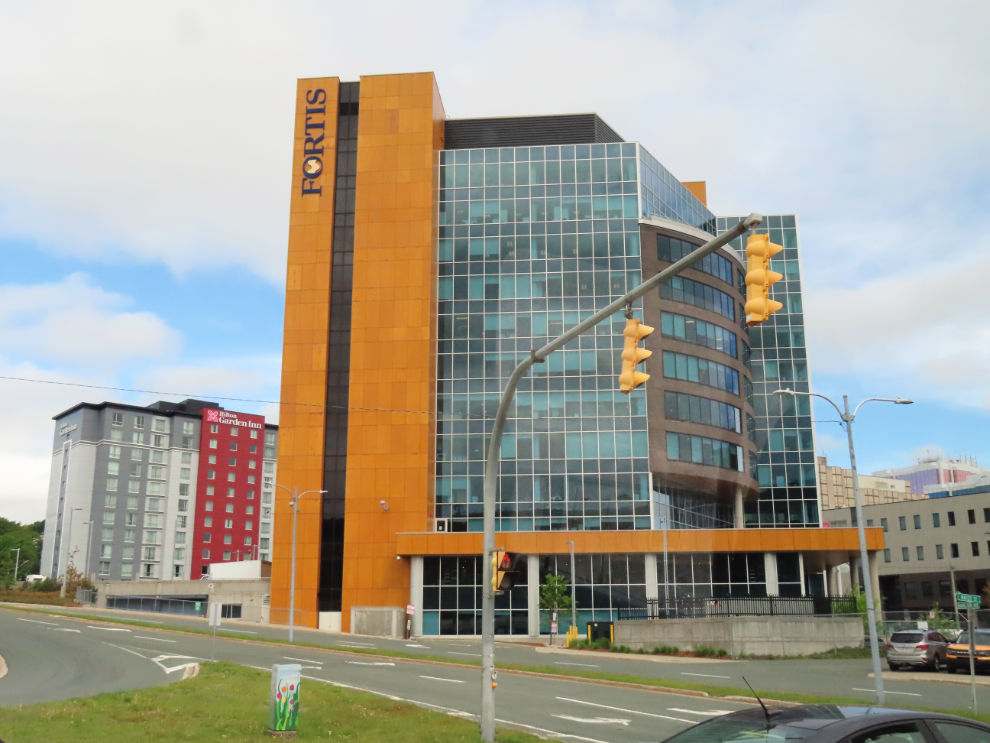
We next headed into St. John’s, starting along the waterfront. The tour really proved its worth here, as we made stops that simple aren’t available with the RV except with lengthy walks. We were both very impressed by the architecture in the city, both historic and modern, as we drove around. The lead architect for the Fortis building, which was completed in 2014, was James Case of LAT49 Architecture Inc.
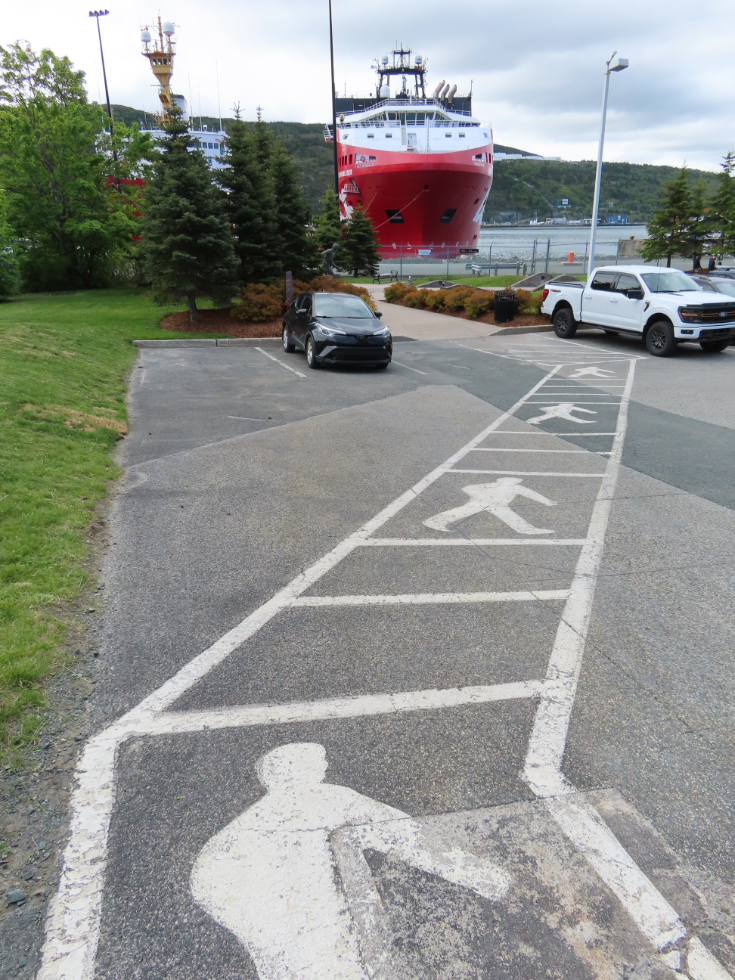
We spent a few minutes at the Terry Fox memorial, where there’s no parking even for small tour vans. From the spot where our driver dropped us off, this was the walk to the memorial.
On April 12, 1980, Terry began his Marathon of Hope here at what is known as Mile 0, by dipping his artificial leg into the Atlantic Ocean.
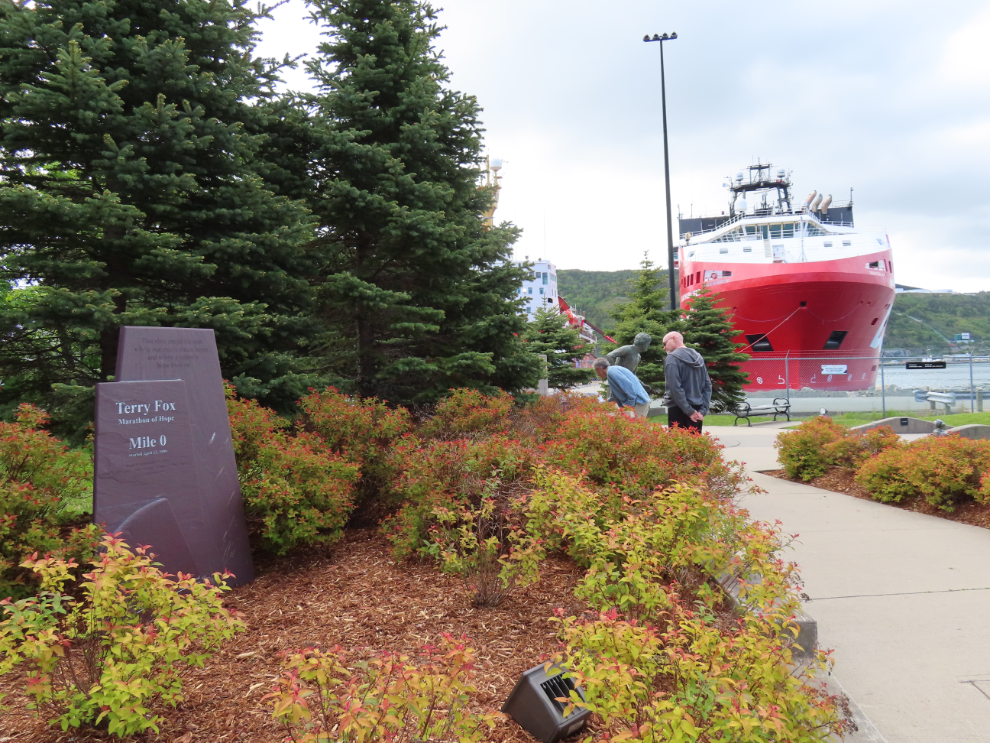
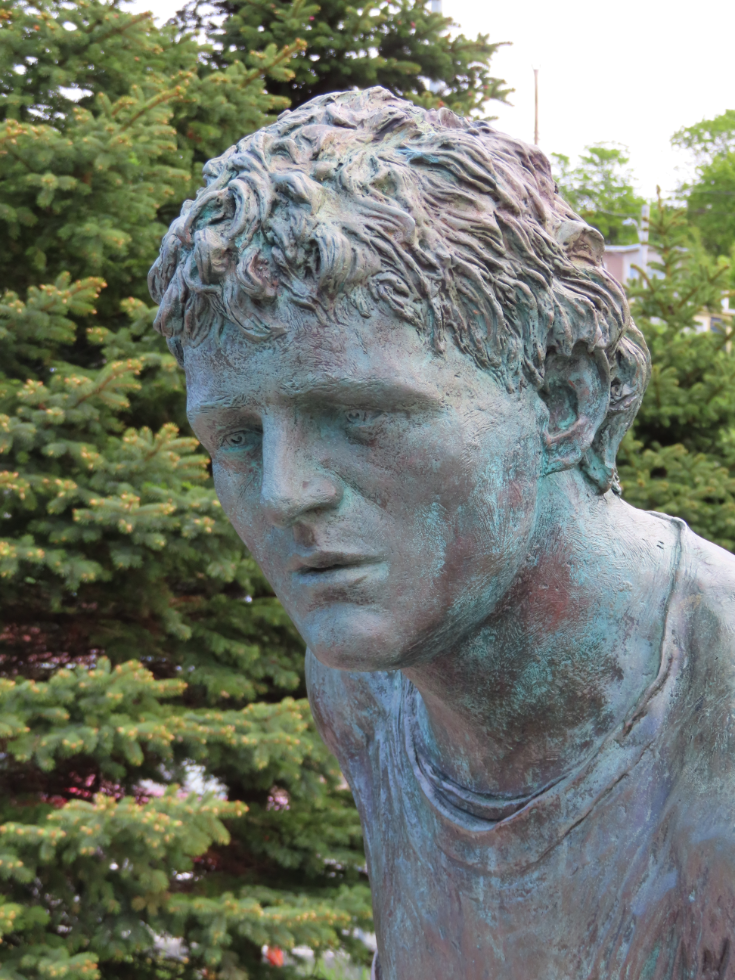
The sculpture is another powerful piece by Luben Boykov. On the wall arcing behind it is a quote by Terry: “I just wish people would realize that anything’s possible if you try; dreams are made if people try.”
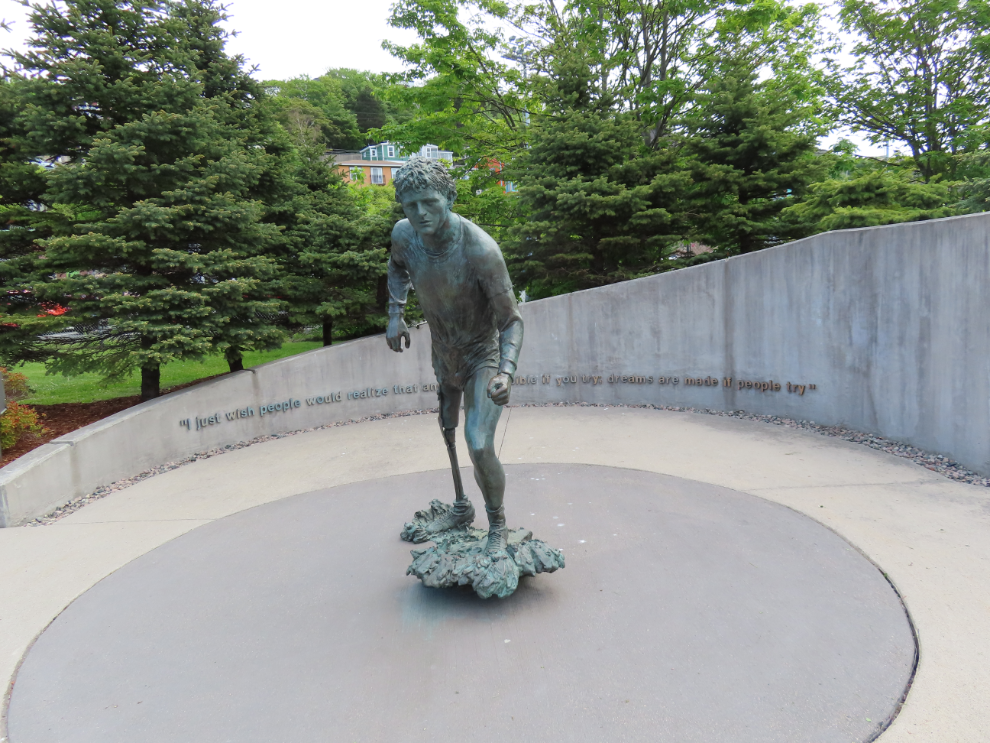
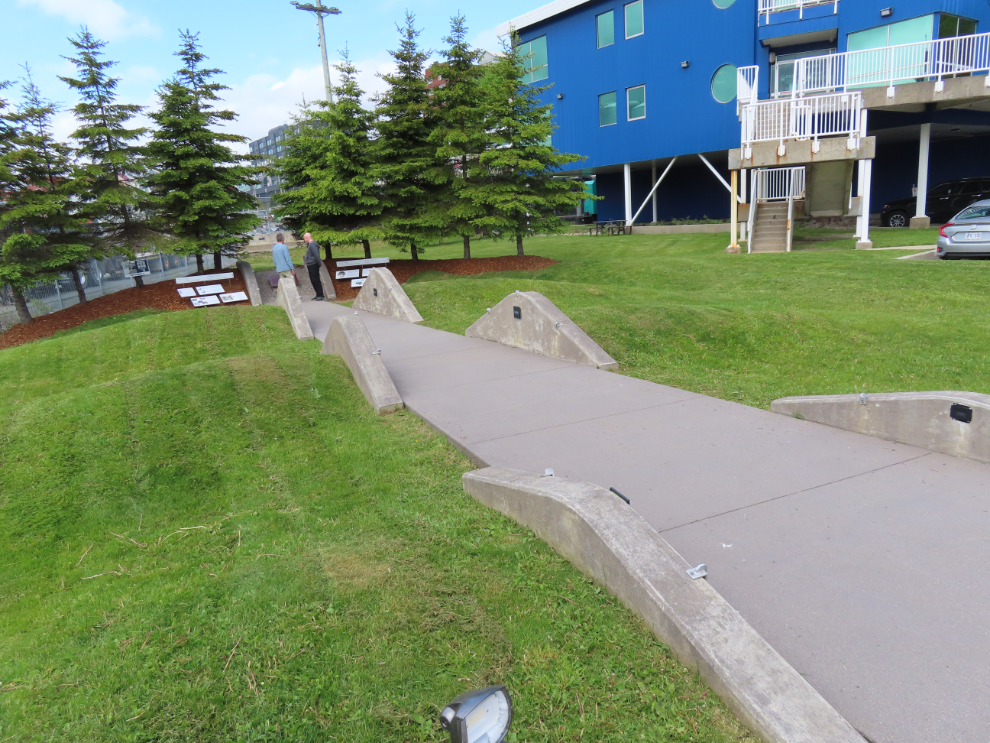
I expect there’s a symbolism to the undulating concrete wall along the path to two brass plaques about the Marathon of Hope, but I haven’t found out what it is – Terry’s journey up hills and and down across Canada, perhaps.
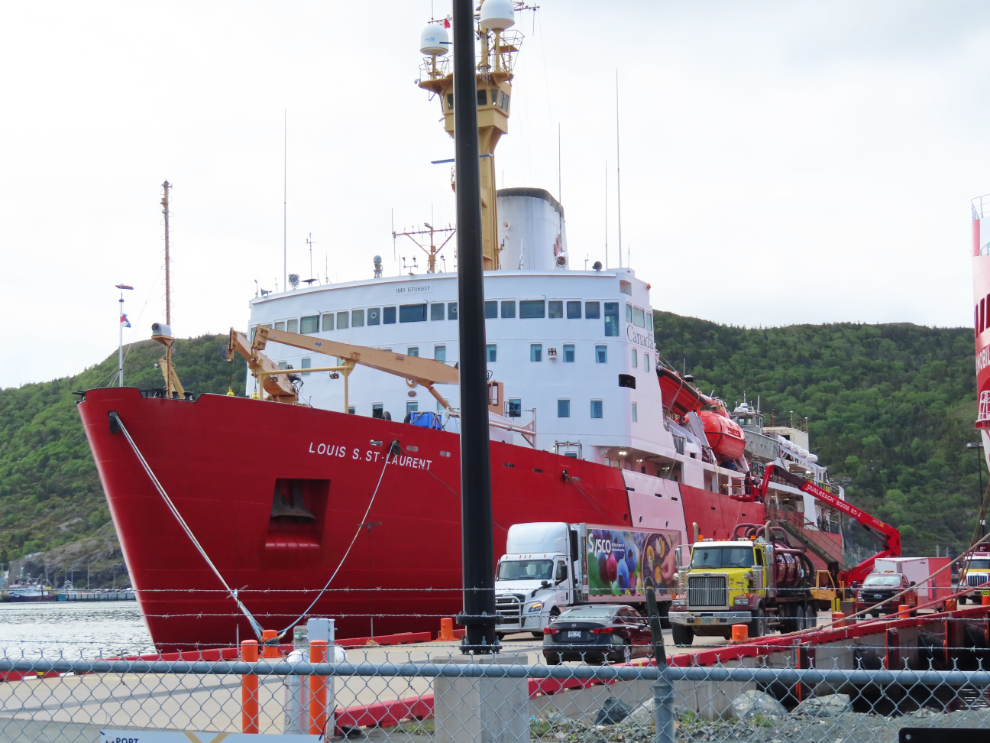
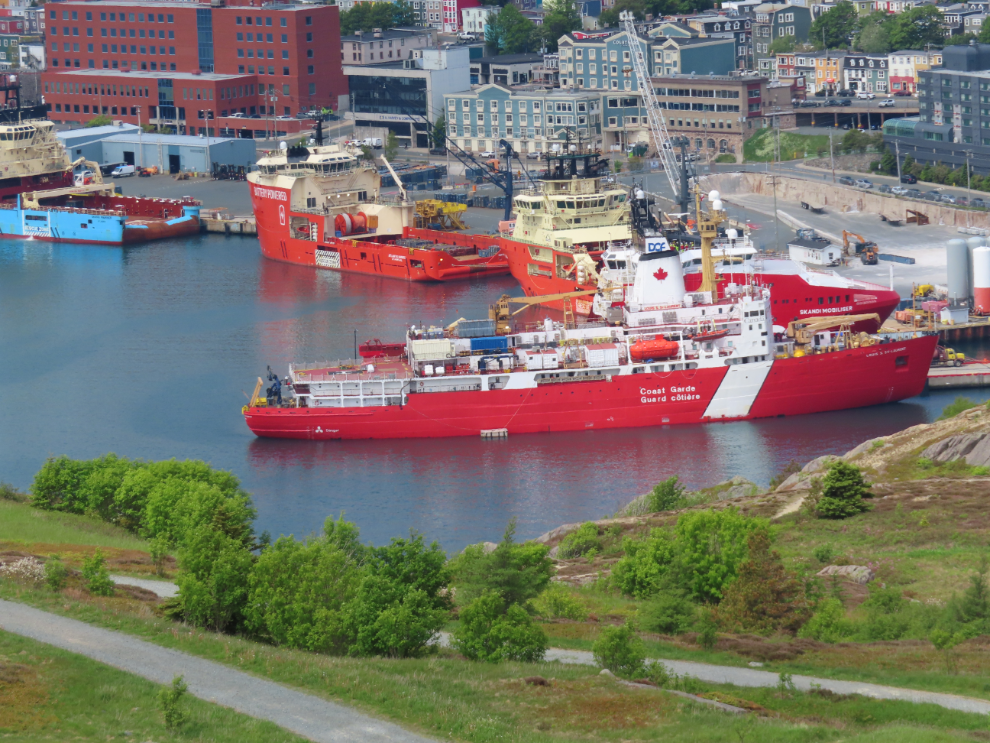
At St. John’s harbour, you would get a good look at the Canadian Coast Guard’s eastern fleet over the course of a year. This is the heavy icebreaker Louis S. St. Laurent. Launched in 1968, the 119.6-meter-long vessel was built by Canadian Vickers Ltd. She is staffed by 13 officers and 29 crew members, has a cruising range of 28,000 nautical miles, and can stay at sea for 120 days. She was docked and being re-supplied for another voyage right in front of the Terry Fox memorial.
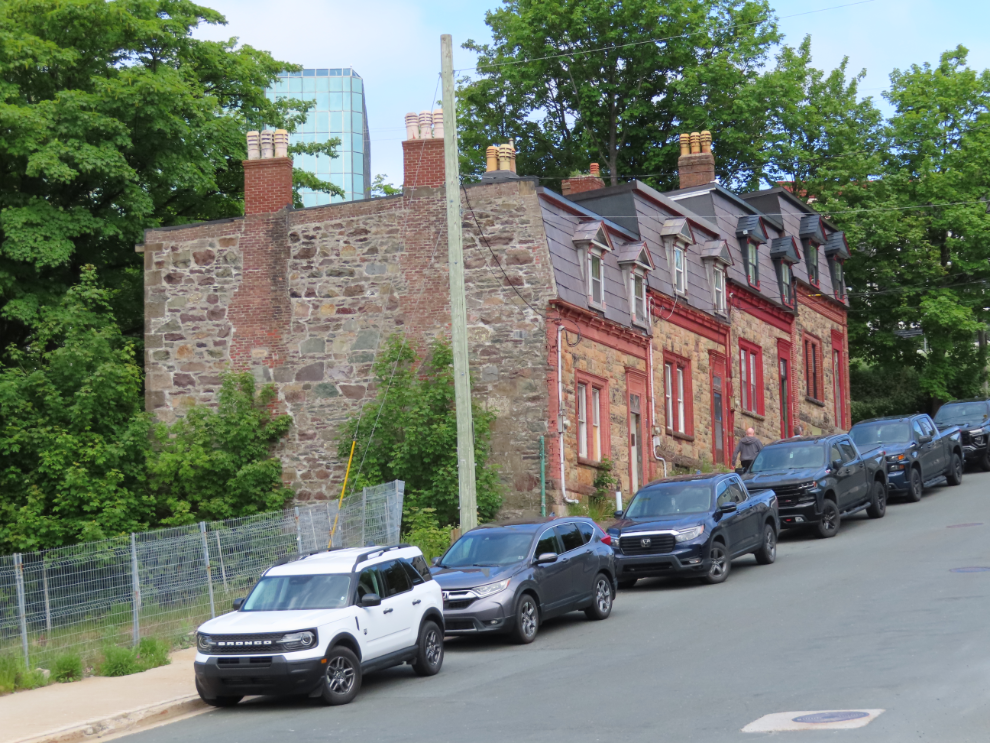
Located on the street leading up the hill from the Terry Fox memorial, at 31, 33, 35 and 37 Temperance Street, is a series of three-storey, stone row houses known as the Four Sisters. The were built Samuel Garrett, a prominent Newfoundland stonemason, as wedding gifts for his four daughters starting in 1893.
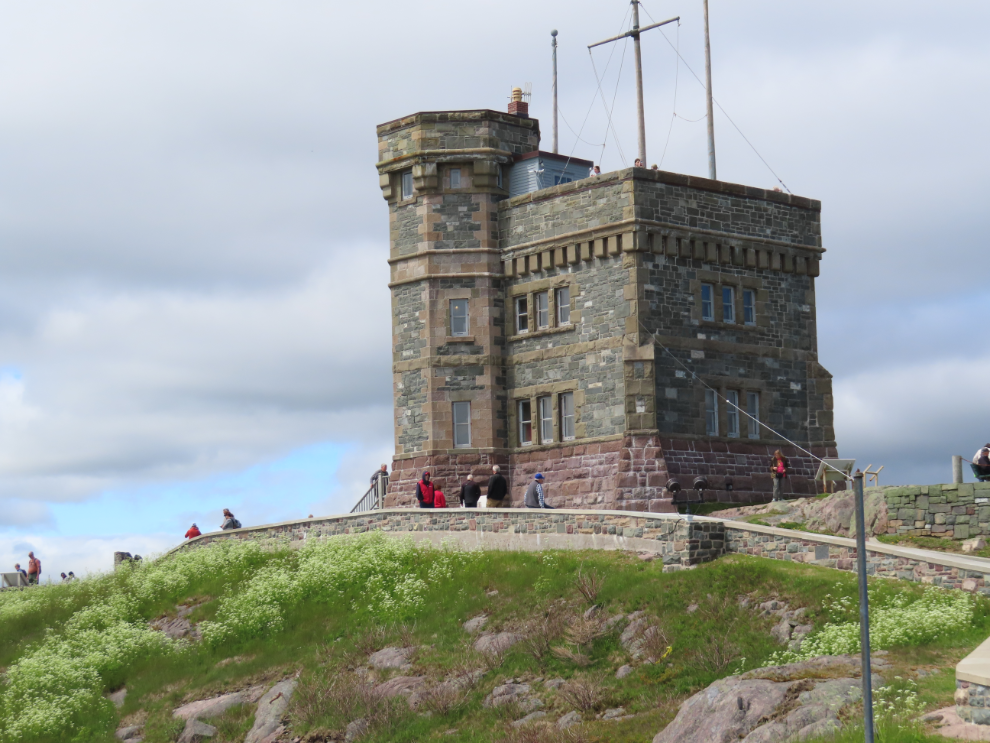
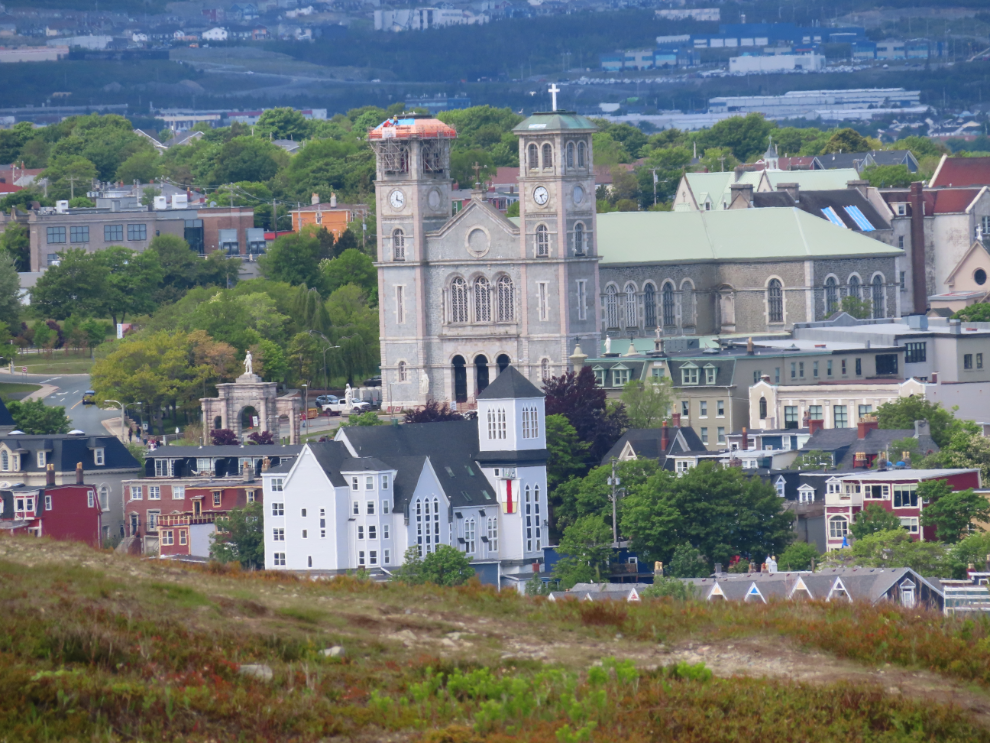
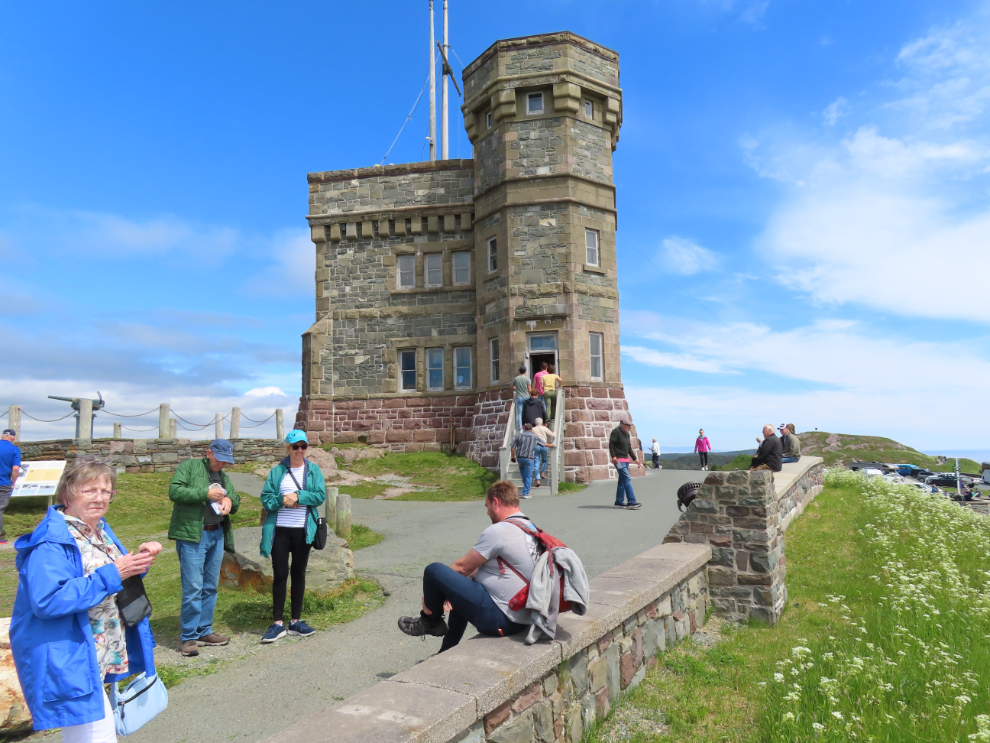
Our major stop of the tour was at Cabot Tower, located high over the city on Signal Hill. Construction of the tower by Samuel Garrett began in 1898, to commemorate the 400th anniversary of John Cabot’s landing in Newfoundland, and Queen Victoria’s Diamond Jubilee.
The views from the tower grounds give visitors an excellent look at the city and harbour area, from broad views to telephoto views of specific sites.
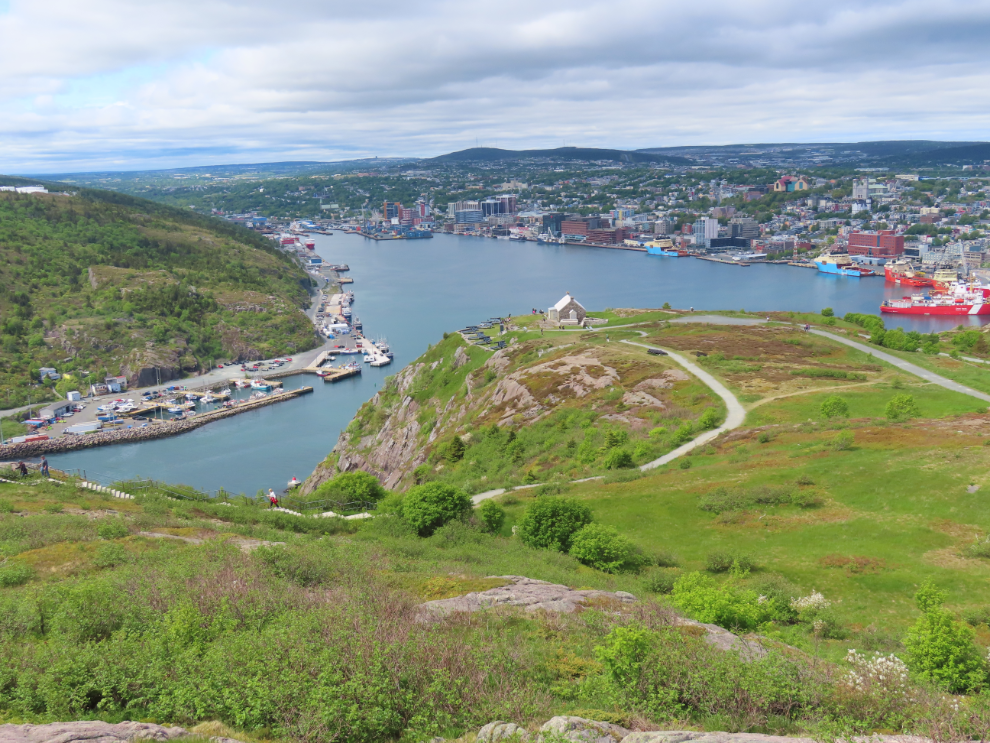
Another look at the icebreaker Louis S. St. Laurent, and several offshore oil rig supply ships.
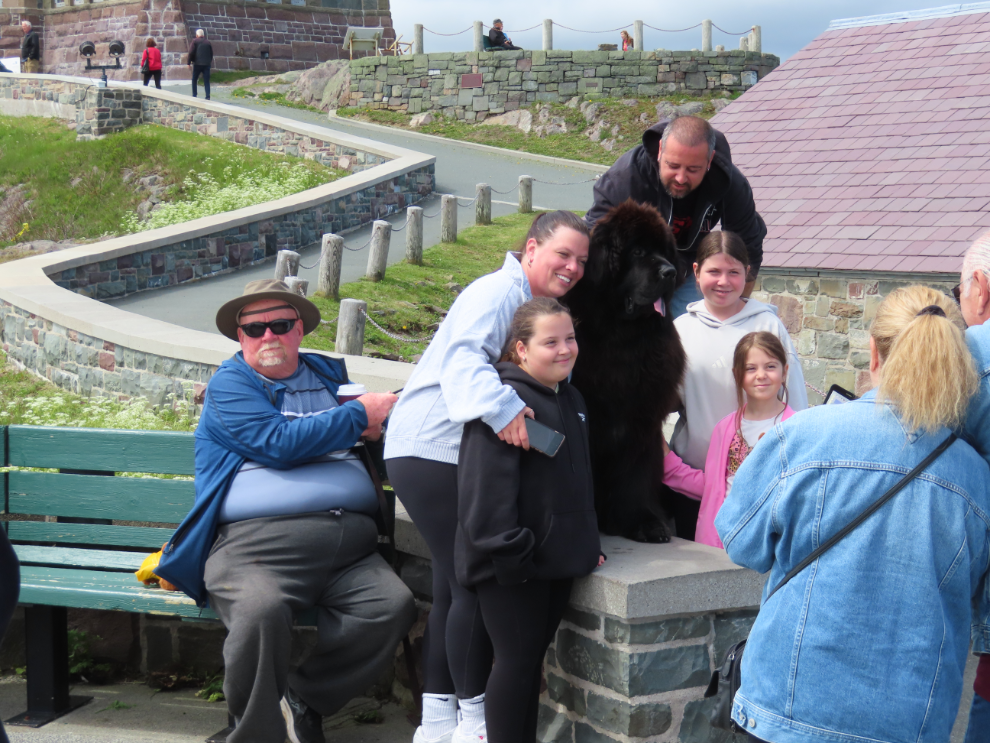
Ed Jackman regularly brings his Newfoundland dog named Sable Chief up to Signal Hill to meet people, and the dog has become the unofficial mascot of the historic site 🙂
It was a fairly busy day, but I really wanted to get up into the tower so I inserted myself into the crowd and made the climb.
This is the inside of the tower – there’s also an outside deck.
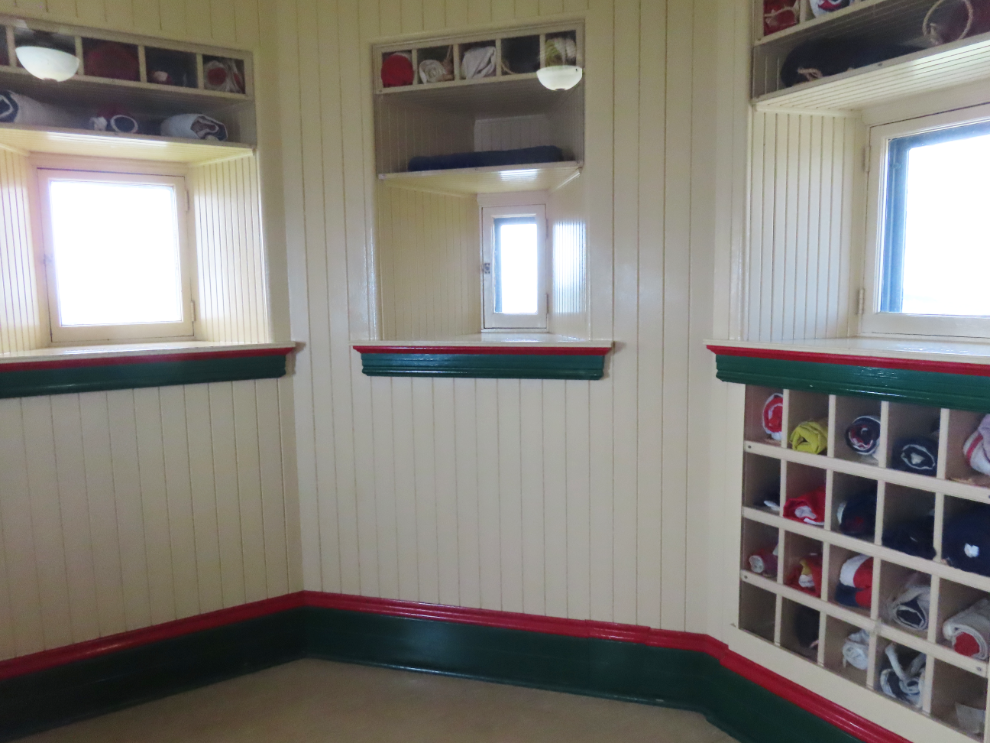
On the next level spot below Cabot Tower is The Queen’s Battery Barracks, which has been restored to the period of 1862. We didn’t get there.
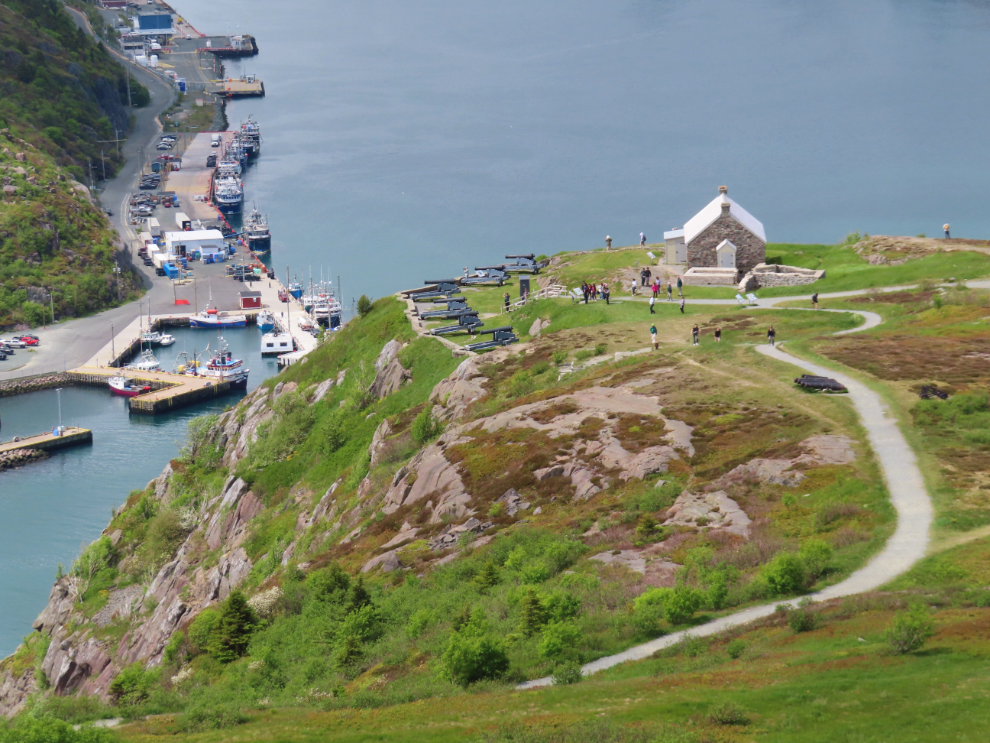
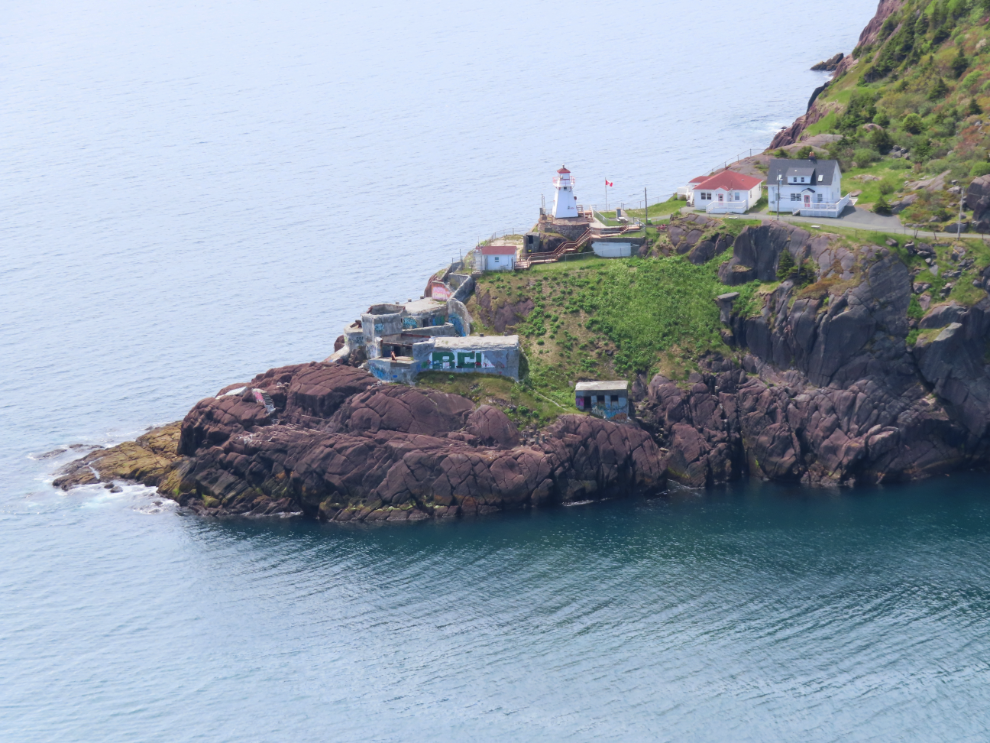
On the southern headland guarding the harbour is Fort Amherst. The original Fort Amherst lighthouse was Newfoundland’s first lighthouse, built cin about 1813. The current one was built in 1951.
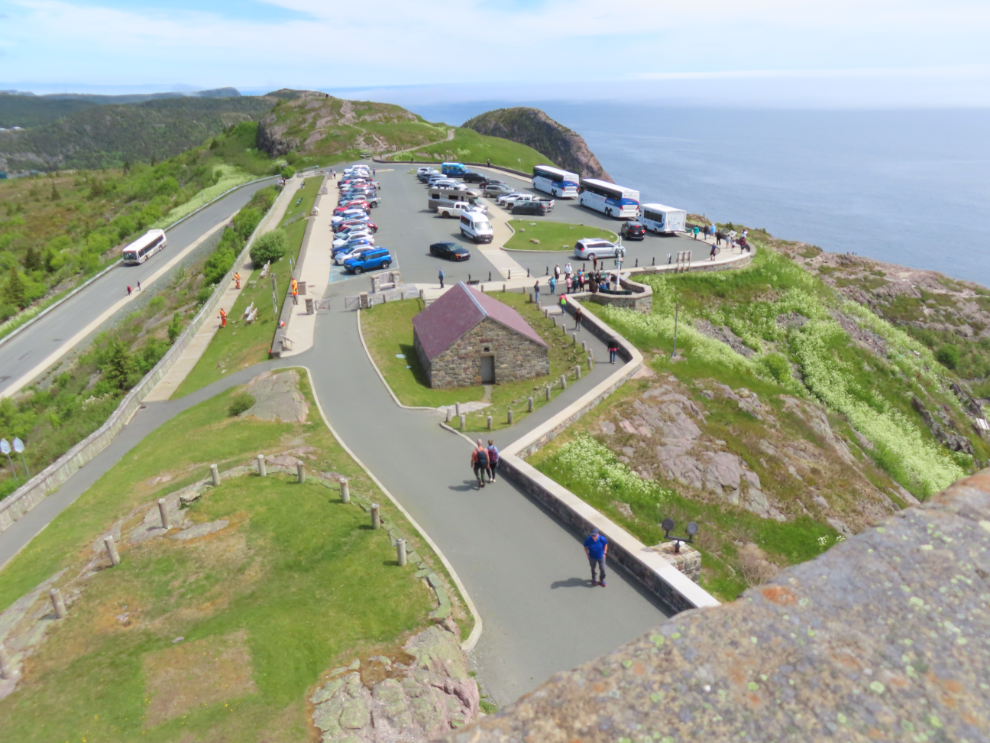
The parking lot is, of course, far too small for one of the city’s most popular attractions.
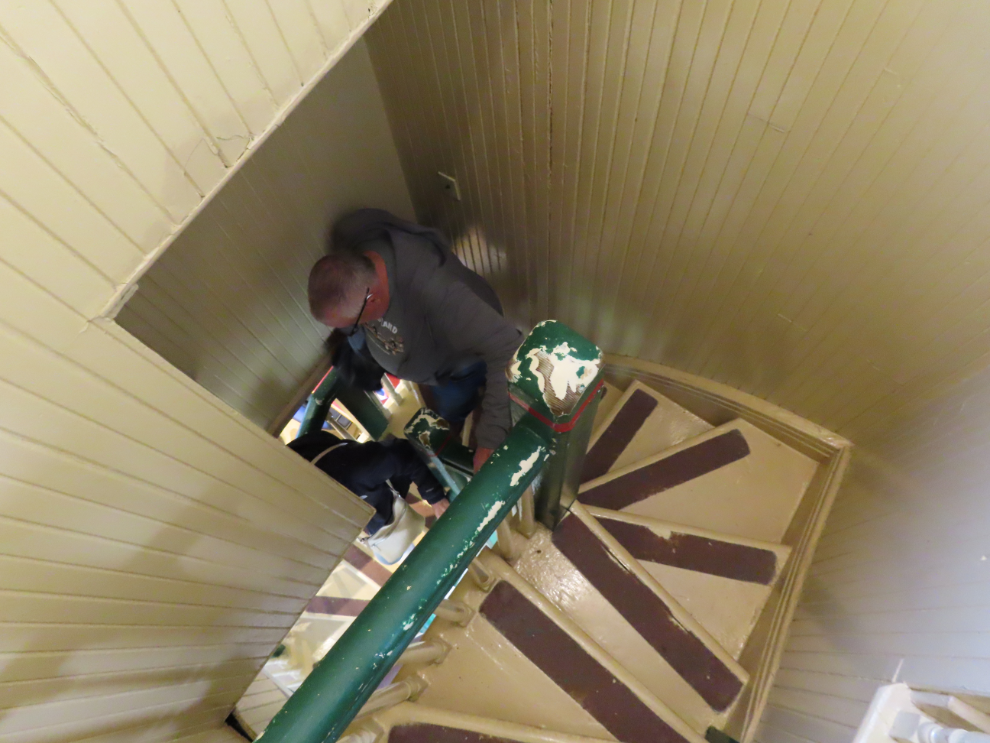
Getting down from the tower on the narrow one-person-wide staircase when many people wanted to be going UP them proved to be a challenge 🙂
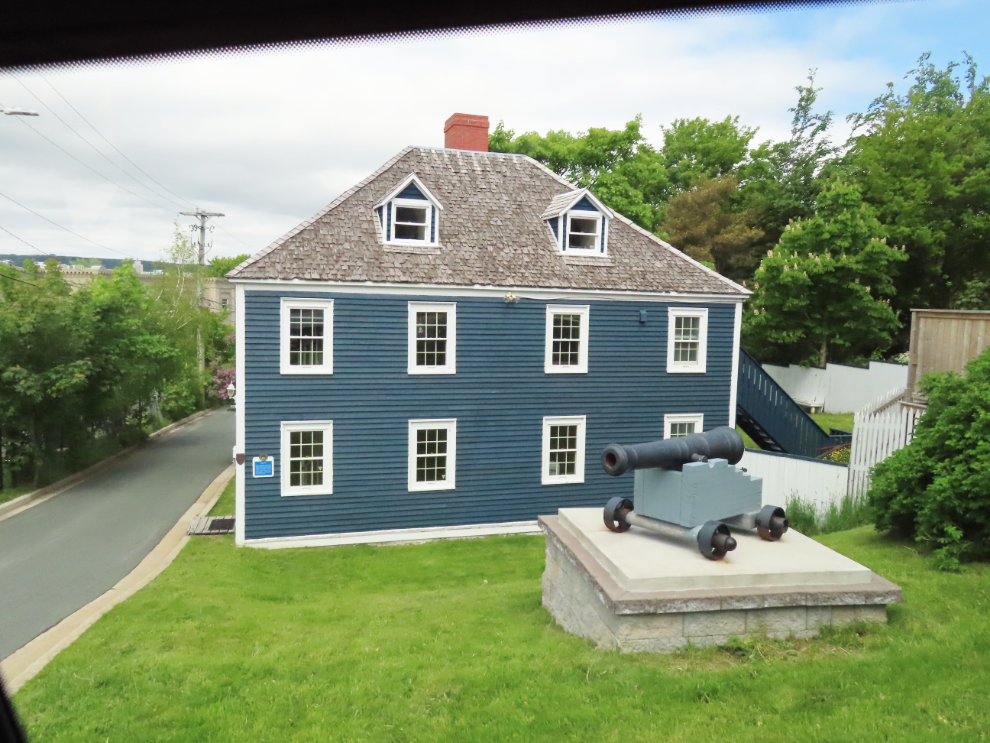
The Anderson House, a Vernacular Georgian style building, is one of the oldest structures in St. John’s, having been built in about 1804. I grabbed the photo as we drove by on our way to the next stop.
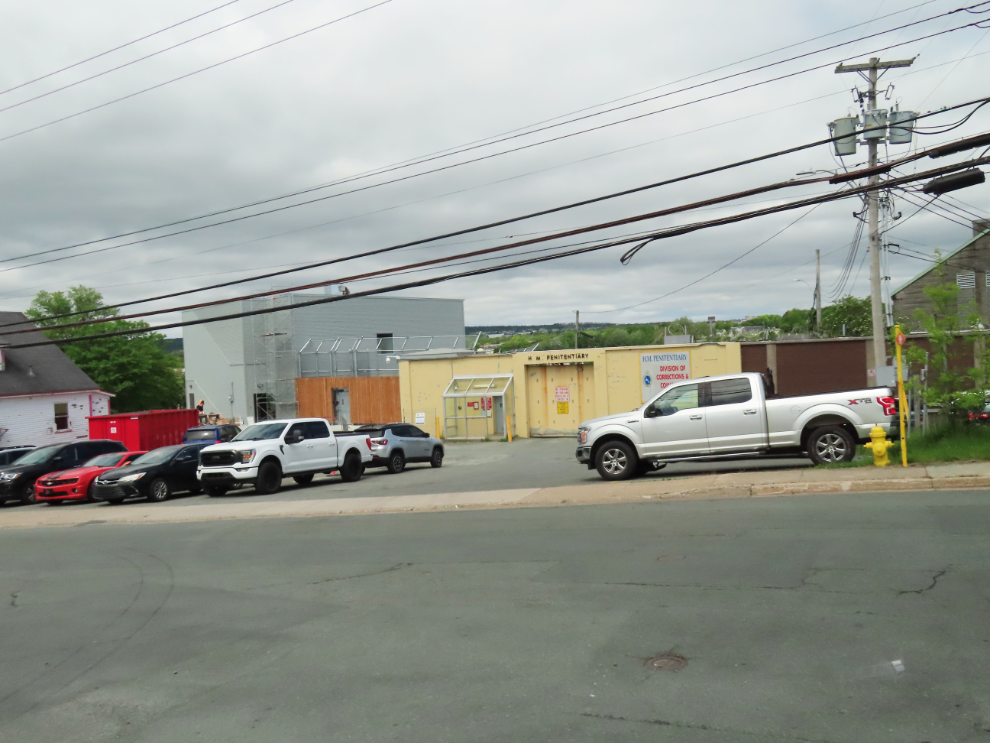
H. M. (Her Majesty’s) Penitentiary is among the oldest operating prisons in Canada and has been slated for demolition for years. It sits on prime land for redevelopment, sloping down to Quidi Vidi Lake.
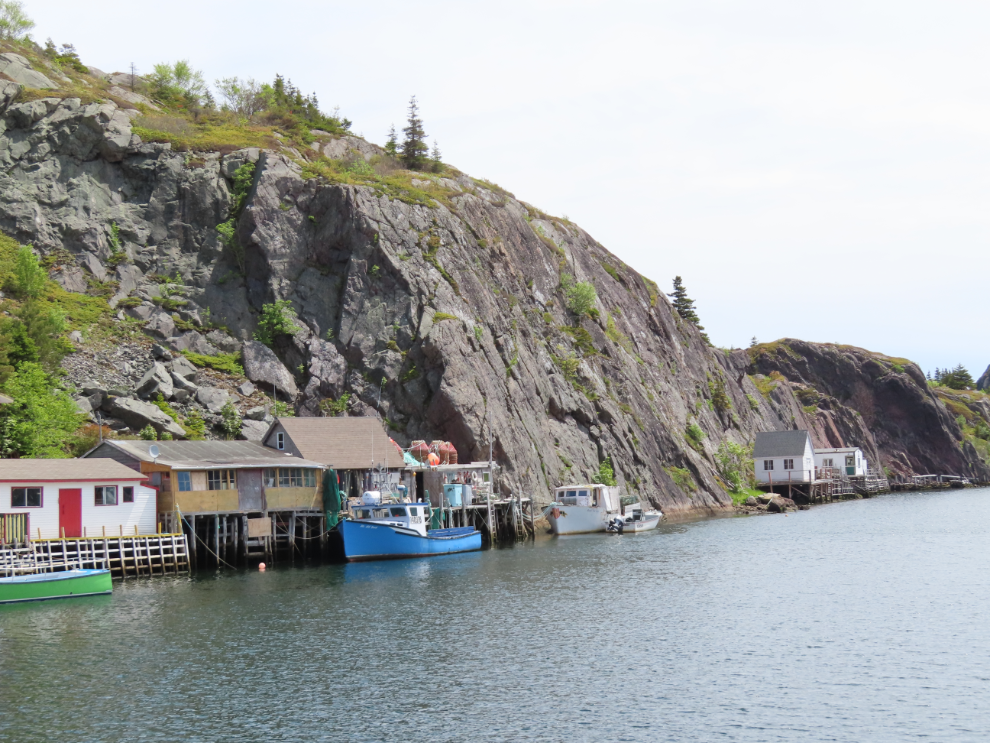
We had a look at Quidi Vidi, a village of about 60 homes known for being one of the oldest fishing villages in North America. Seeing Quidi Vidi takes time, and preferably includes a lunch or dinner reservation at the Quidi Vidi Brewery – we had neither.
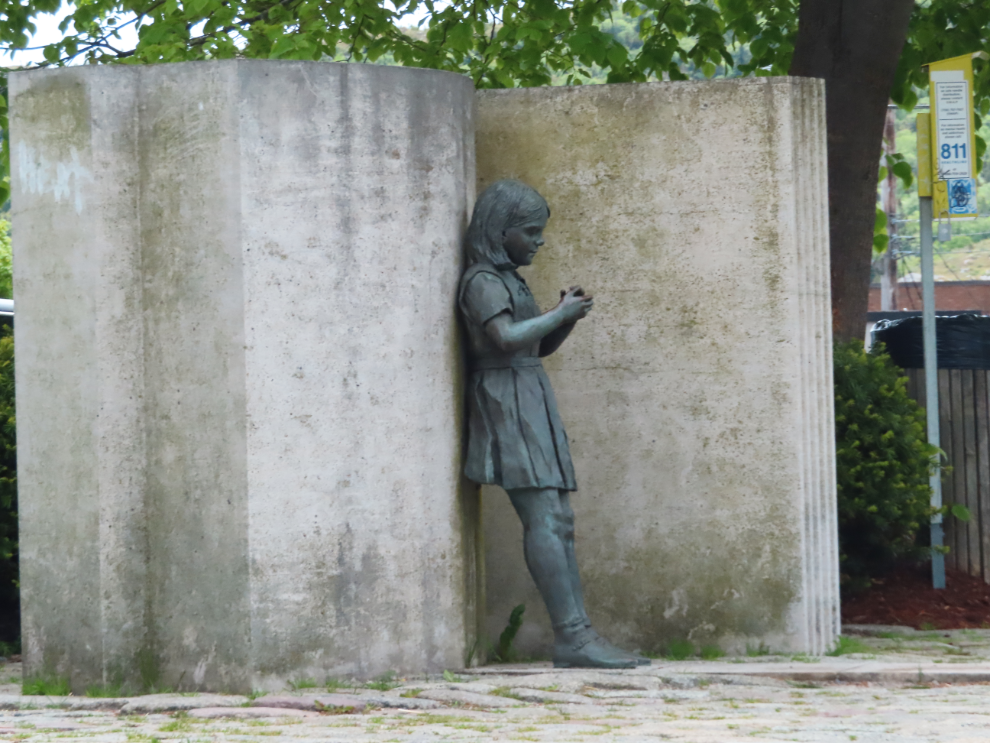
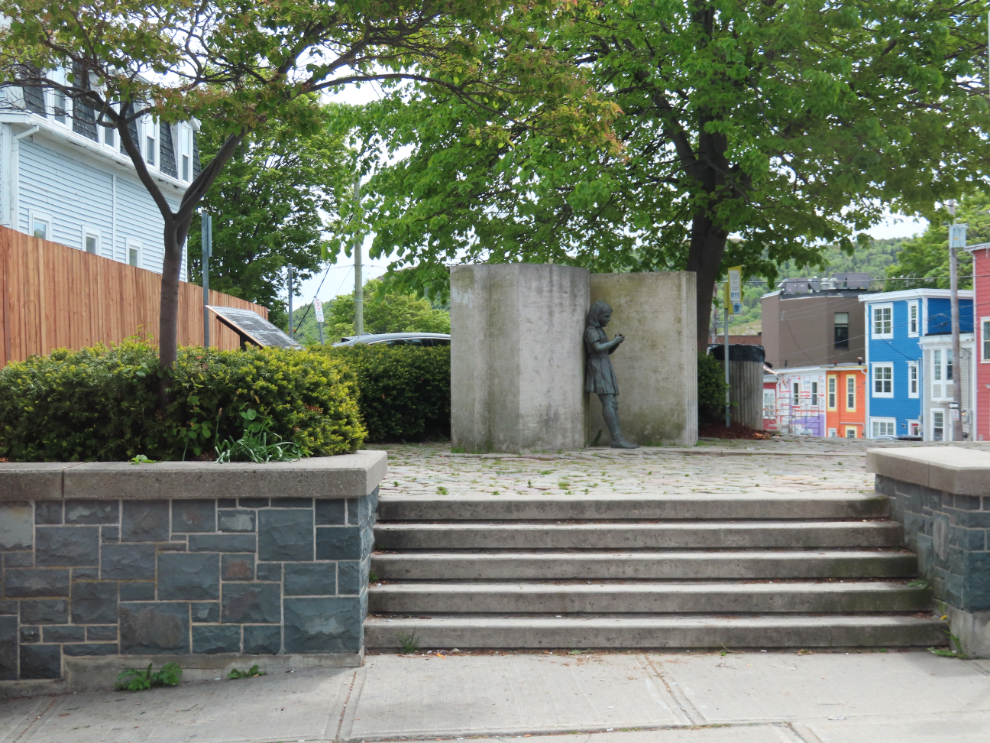
I grabbed a couple of photos of a sculpture as we drove by. Another bronze by Luben Boykov, this one commemorates Bishop Spencer College, a prominent Church of England girls’ school that operated from 1845 until 1972.
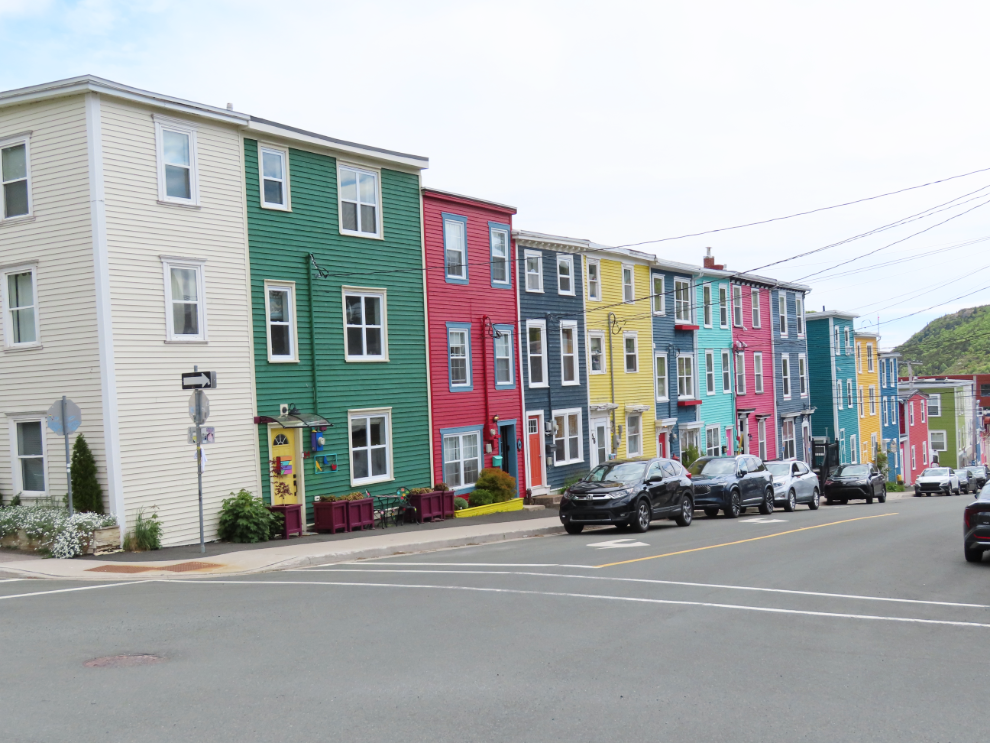
We made a brief photo stop at one of the brighter rows of “jellybean homes.” They can be see all over St. John’s 🙂
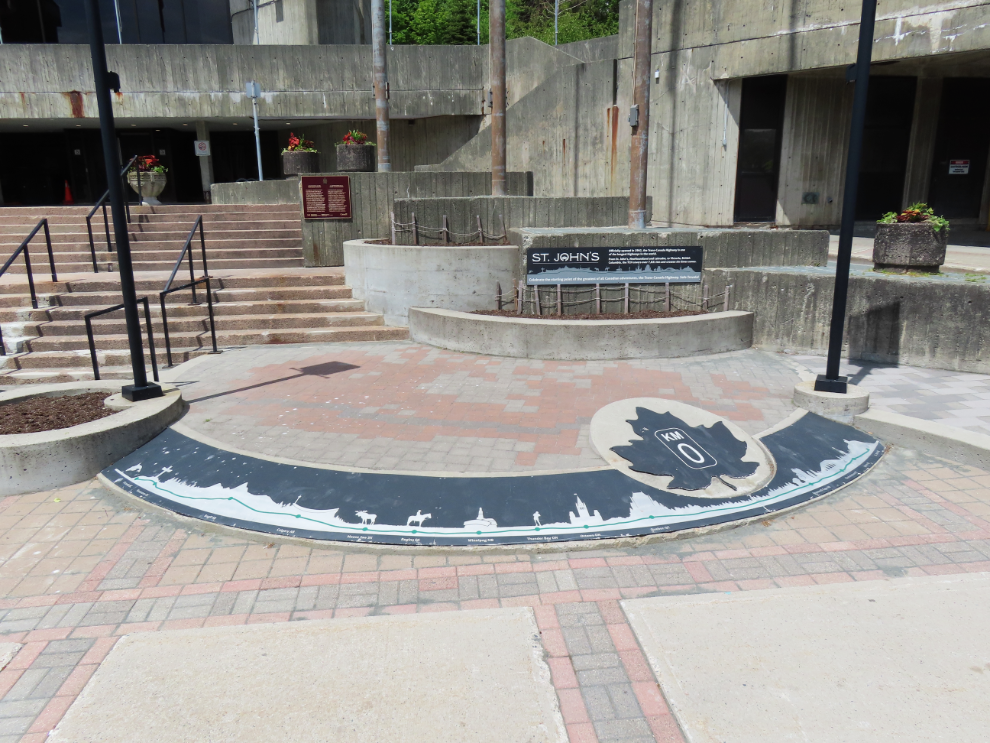
I totally lucked into the next photo. I really wanted to see Mile 0 of the Trans-Canada Highway and had made that known, but there was a lot going on and I forgot about it. We were dropping the two other passengers in the van off at City Hall when I realized that we had stopped right in front of it!!!! To have been able to grab this shot – with no people in it – is quite amazing.
Although he would have dropped us off anywhere, we had our driver drop us back at the RV, as I needed a break. The tour had proved to be the perfect way to see the highlights of the St. John’s area in half a day, and I highly recommend Jellybean Tours. Our driver, Geoff, was extremely good, both knowledgable and personable, an excellent representative of his city.
Cathy and I decided that experiencing the museum/gallery called The Rooms was the “must” to complete our St. John’s visit well, so after our break, we called for a taxi to take us there.
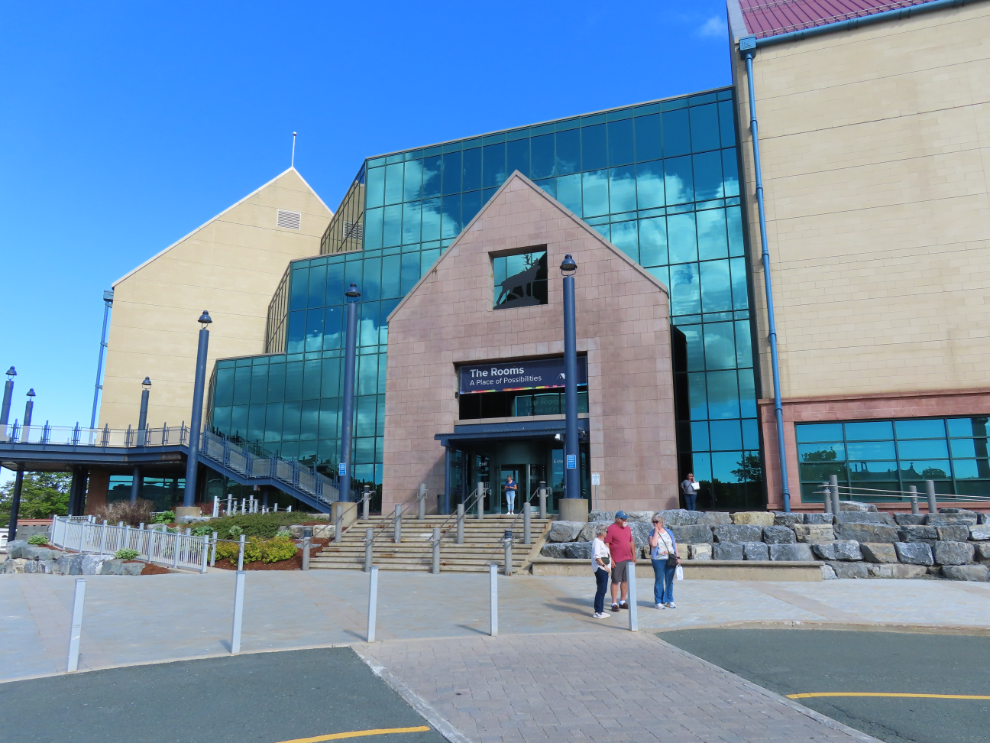
The tagline of The Rooms is “A Place of Possibilities,” subtitled “Creating spaces that inspire, challenge and connect.” This is a museum/gallery for people who don’t really like museums or galleries.
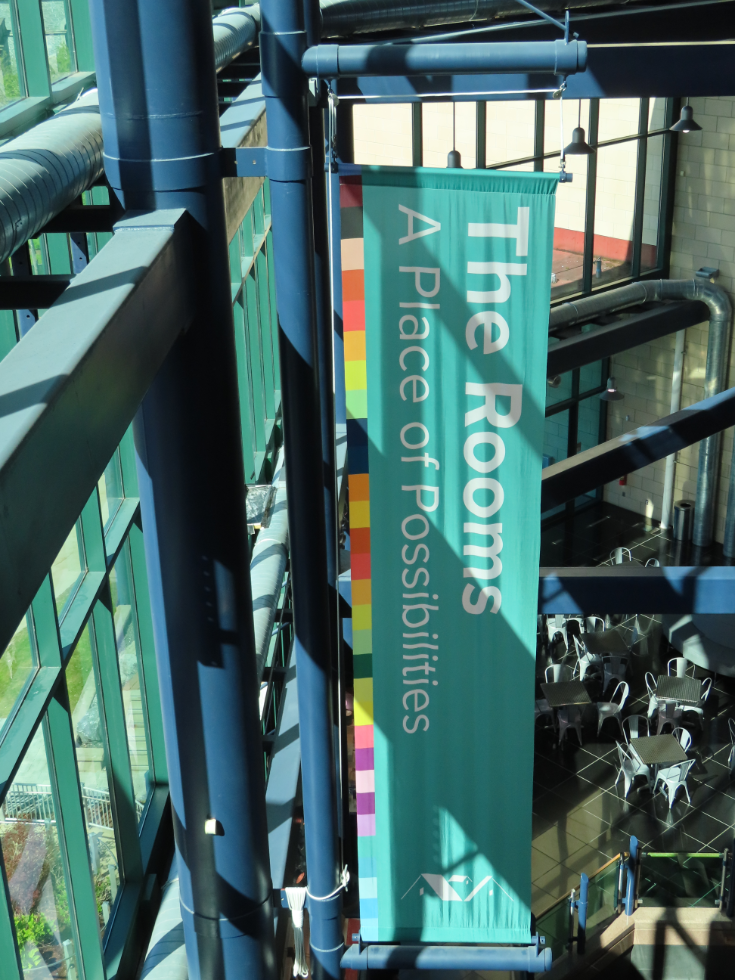
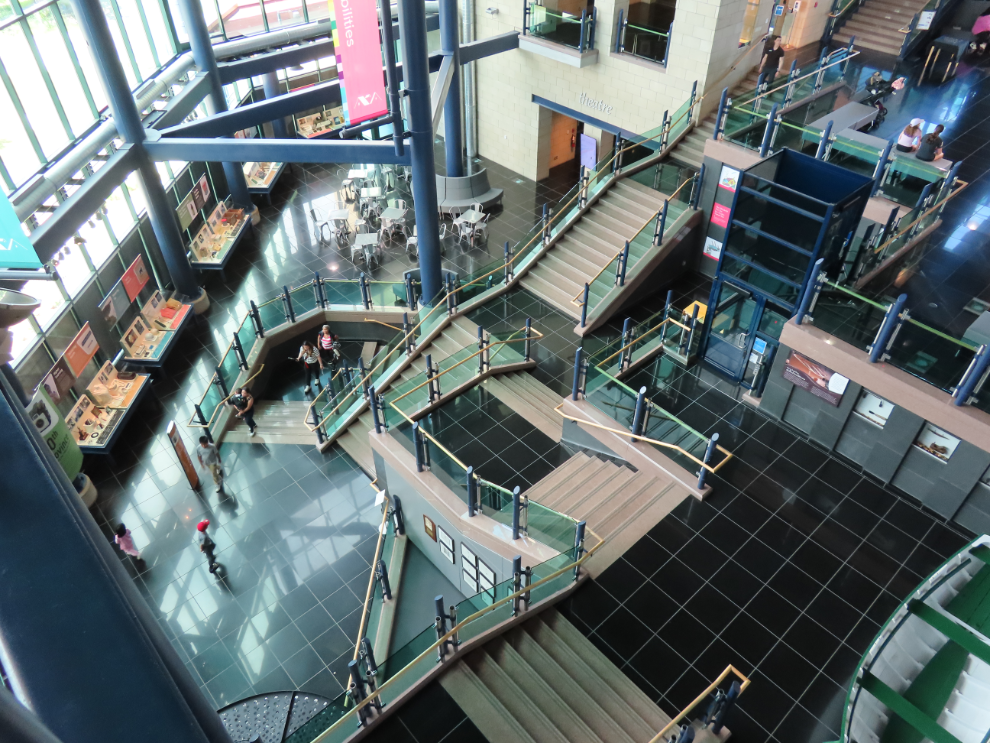
The architecture is stunning, and Cathy suggested that the views of the inside and outside break up the “learning” part of the place.
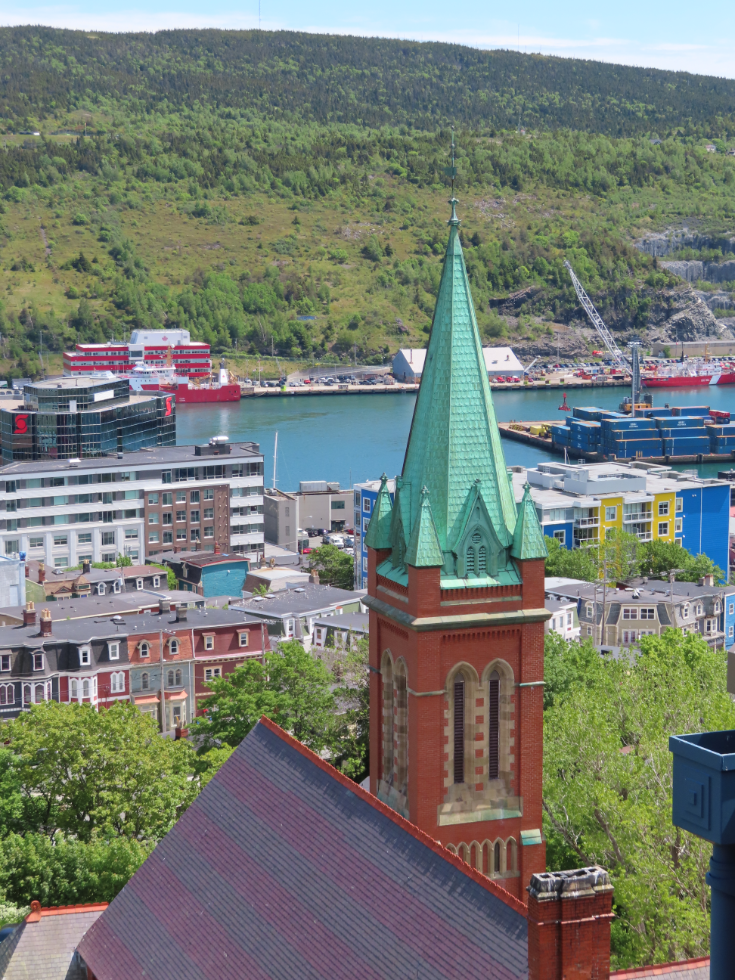
While we were learning, we took a couple of breaks on the outside deck, which provides some of the best views in the city.
Having recently gotten myself into trouble with a brain crash by trying to absorb too much, I was being very careful here, but the way the exhibits are set up helped that a great deal, as a vast amount of information is presented in manageable chunks that I could then pick details from.
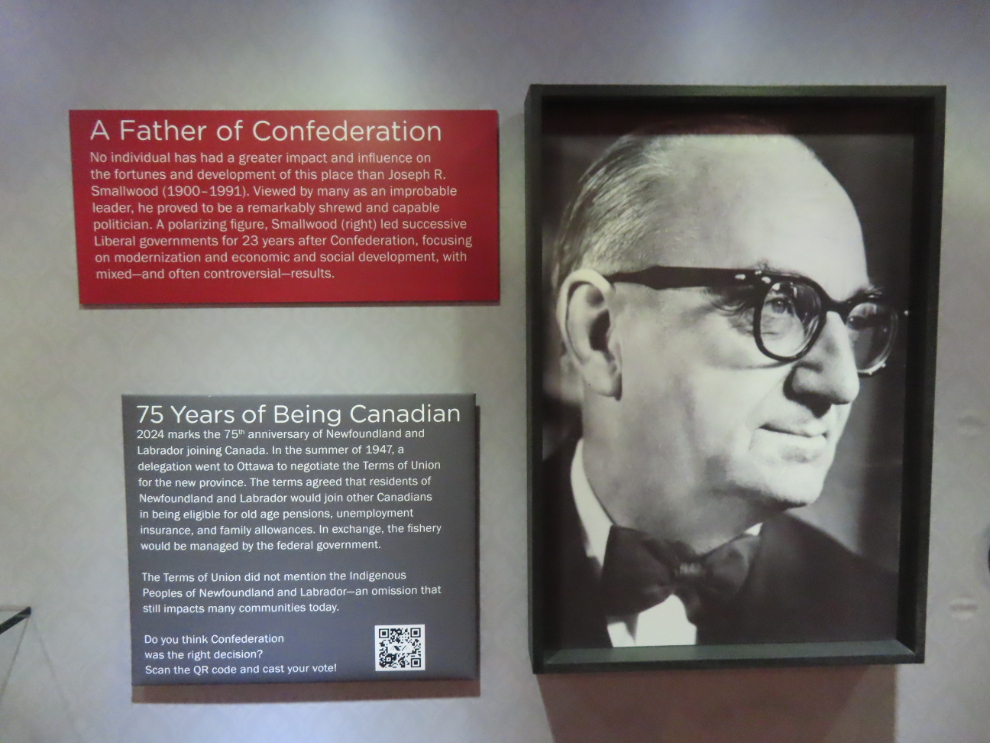
I took a lot of photos for future study, but I’m only going to show you this one : “A Father of Confederation. No individual has had a greater impact and influence on the fortunes and development of this place than Joseph R. Smallwood (1900-1991). Viewed by many as an improbable leader, he proved to be a remarkably shrewd and capable politician.” When I started school, the joining of Newfoundland to Canada was a recent event, and the name Joey Smallwood was imprinted in my head early.
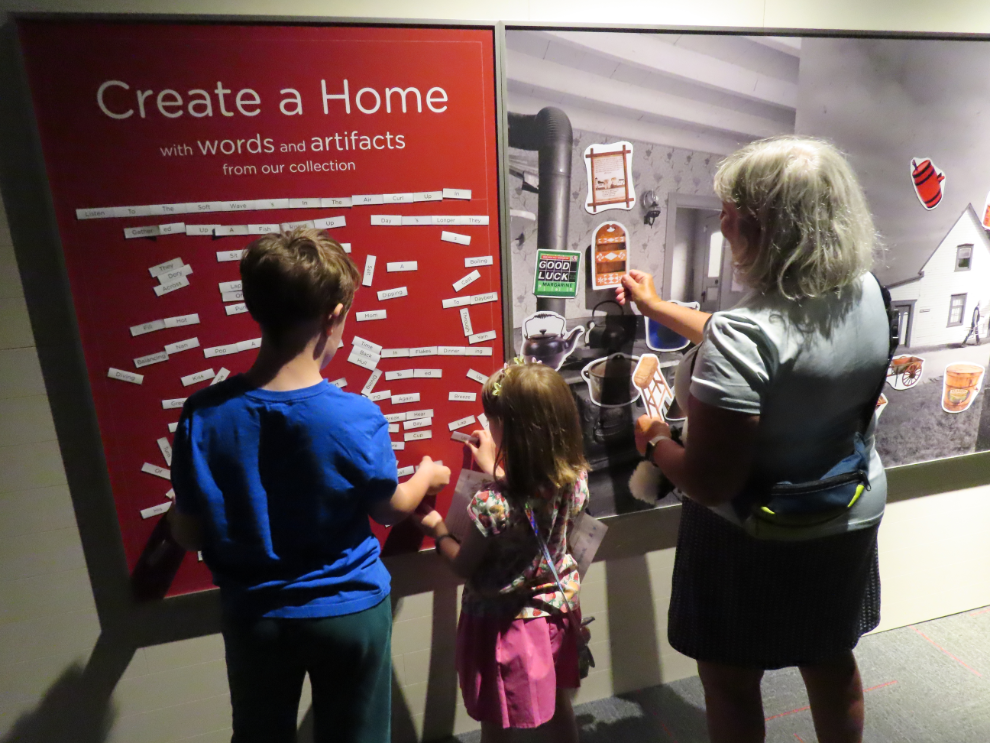
The Rooms is extremely family-friendly, with interactive exhibits to encourage learning. I’m very cautious about including people in my photos, but as I was assessing this situation, mom turned around, saw my big camera at the ready, and smiled, so I knew this was okay 🙂
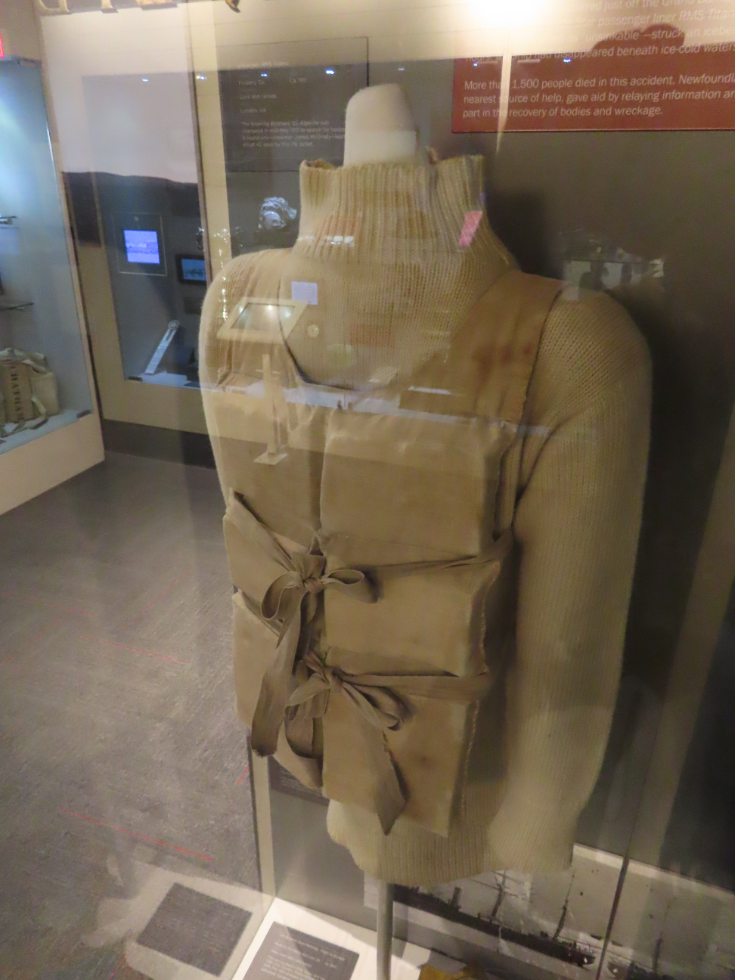
This life jacket is from the wreck of the Titanic. The Bowring Brothers’ SS Algerine was chartered in mid-May 1912 to search for bodies. It found one – crewman James McGrady – whose body had been kept afloat for 42 days by this life jacket.
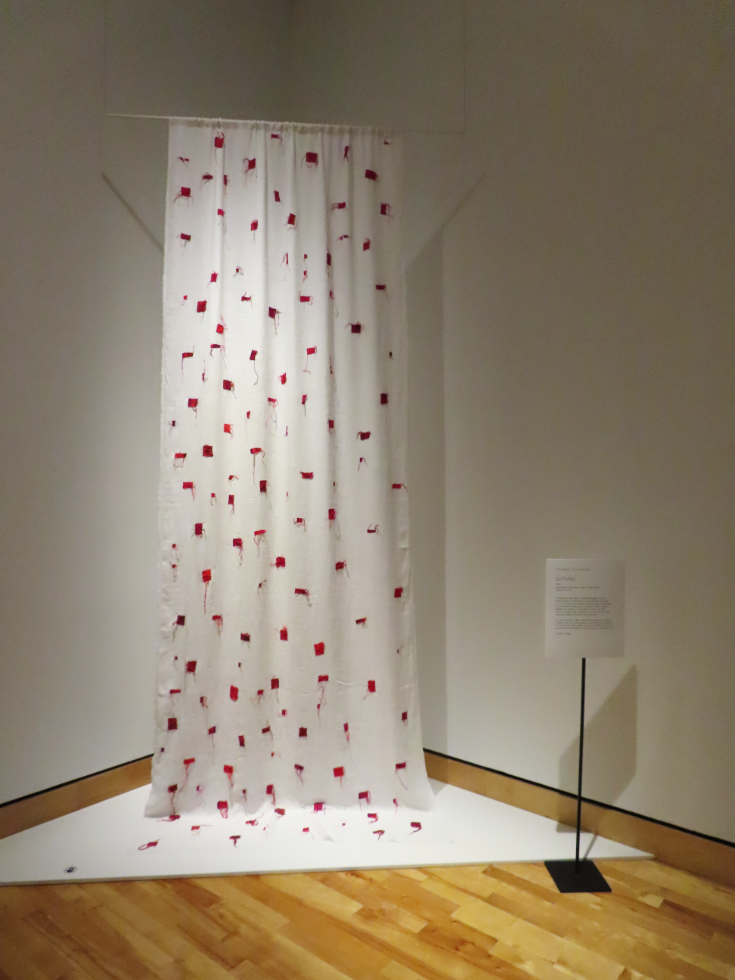
Entering the gallery, “Sutures,” by Shawn O’Hagan, stopped me for a bit. The artist’s statement will explain to some of you why this piece made my eyes wet: “In September 2025, after a routine mammogram – with no symptoms and no family history – I was diagnosed with breast cancer. The tumour was small and contained. IO had a lumpectomy in late November, followed by preventative radiation. I began sutures while waiting for my first biopsy results. Each day, I stitched – finding a way to hold fear and sadness, and to bring myself back together. Artists are lucky that way. This has not felt like a battle. I never saw my cancer as an enemy. Instead, I came to see the tumour as a kind of beacon – a guide for how I want to live. What matters, what doesn’t. What not to take for granted. What not to postpone. And how much love surrounds me.”
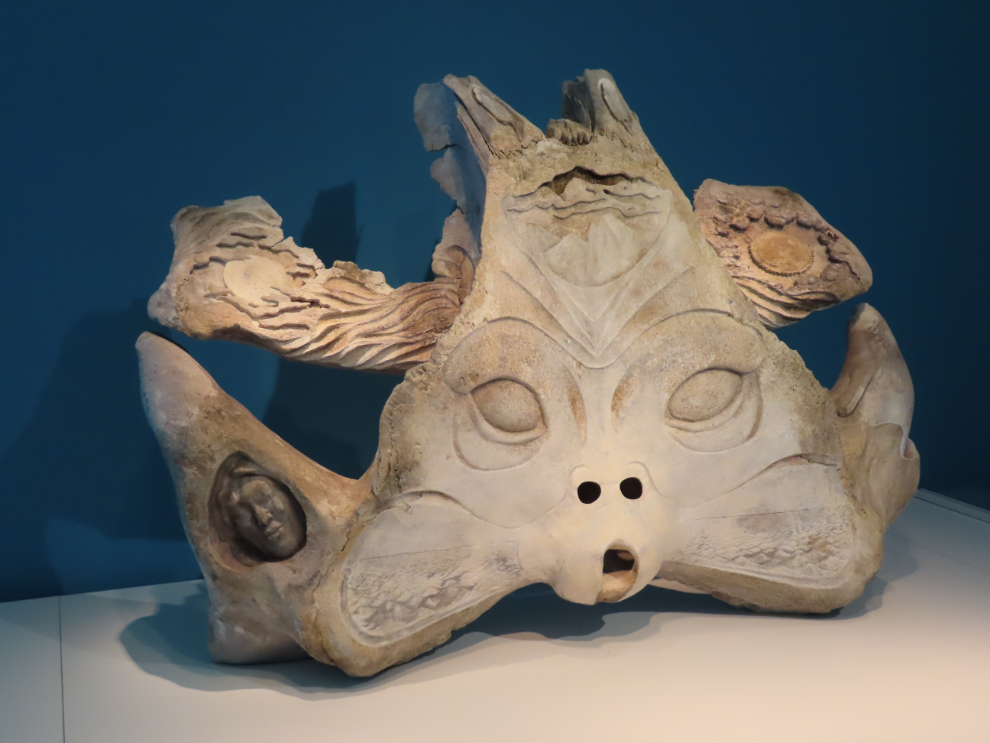
A room titled “How Do I Look?: Ways of Understanding Art” could have taken an hour to go through well, but the only other piece I’m going to show you is “The Earth, Our Mother,” carved from a fin whale skull by Billy Gauthier over seven days. “Working closely with the bone’s qualities, a multi-part story of animals, landscapes, and faces emerged. Gauthier’s work represents his relationship to his ancestors, his land, his Inuk heritage, and carries with it his call for responsible stewardship of the planet.”
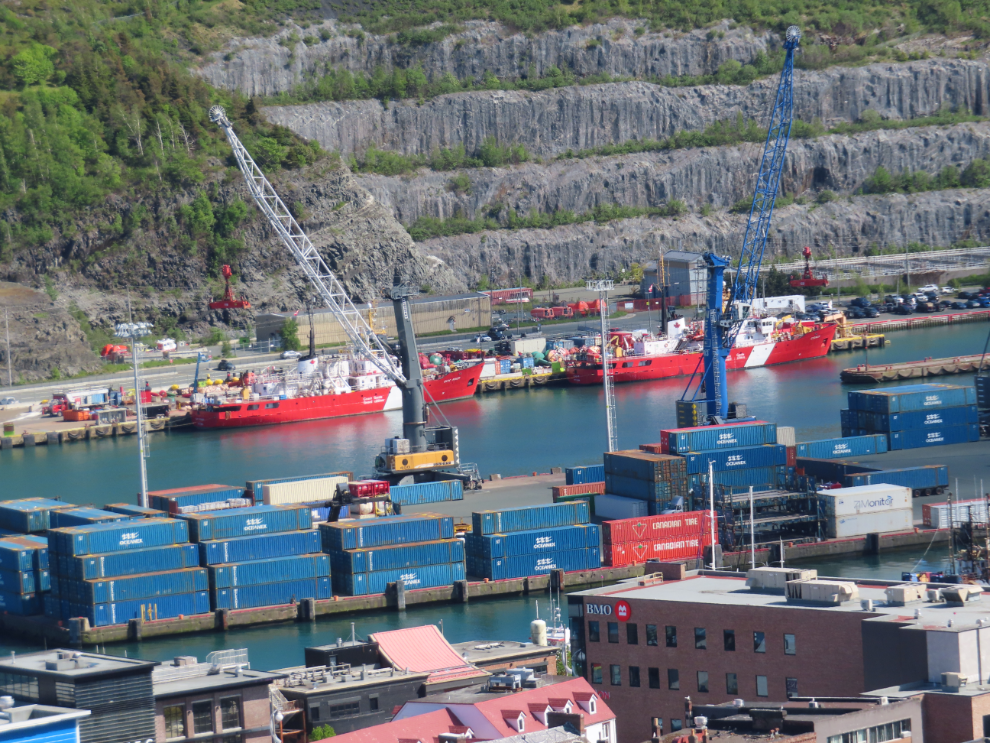
I knew my brain was nearing a crash but I kept dipping a toe into the exhibits. Finally I had to quit, and went out onto the deck again, looking across the harbour to the Coast Guard area.
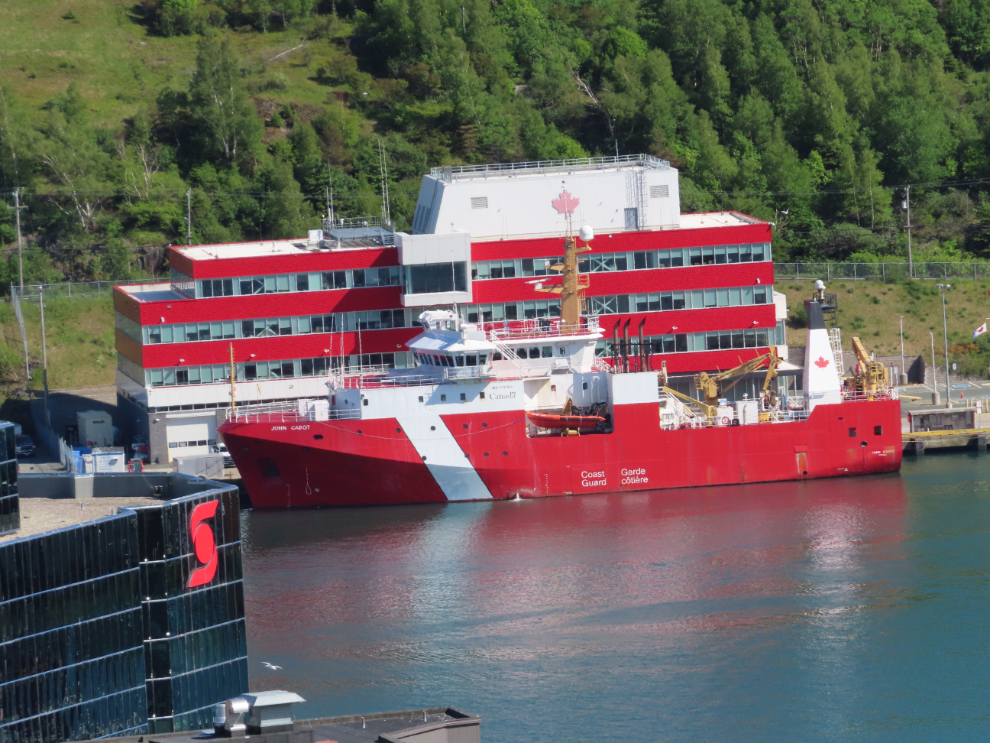
The John Cabot is an offshore fisheries research ship that was constructed in 2020 by Vancouver Shipyards.
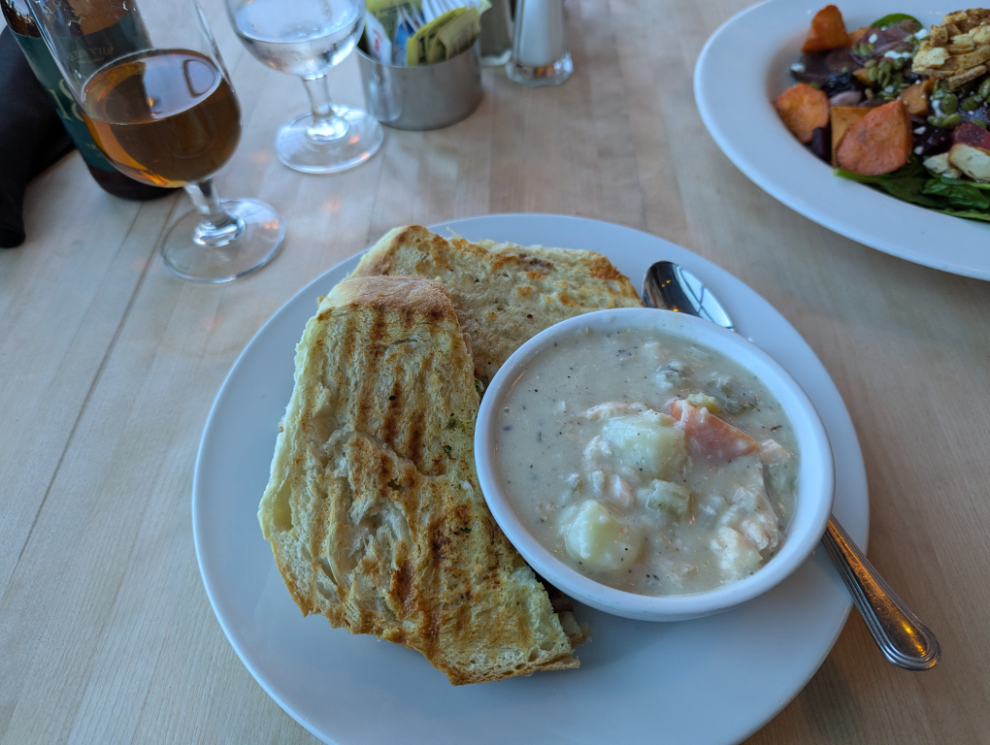
Having heard how good the food is at the cafe in The Rooms, we decided to end our visit with an early dinner. I had a Grilled Chicken sandwich with the East Coast Seafood Chowder. It was extremely good – the chowder exceptionally so 🙂
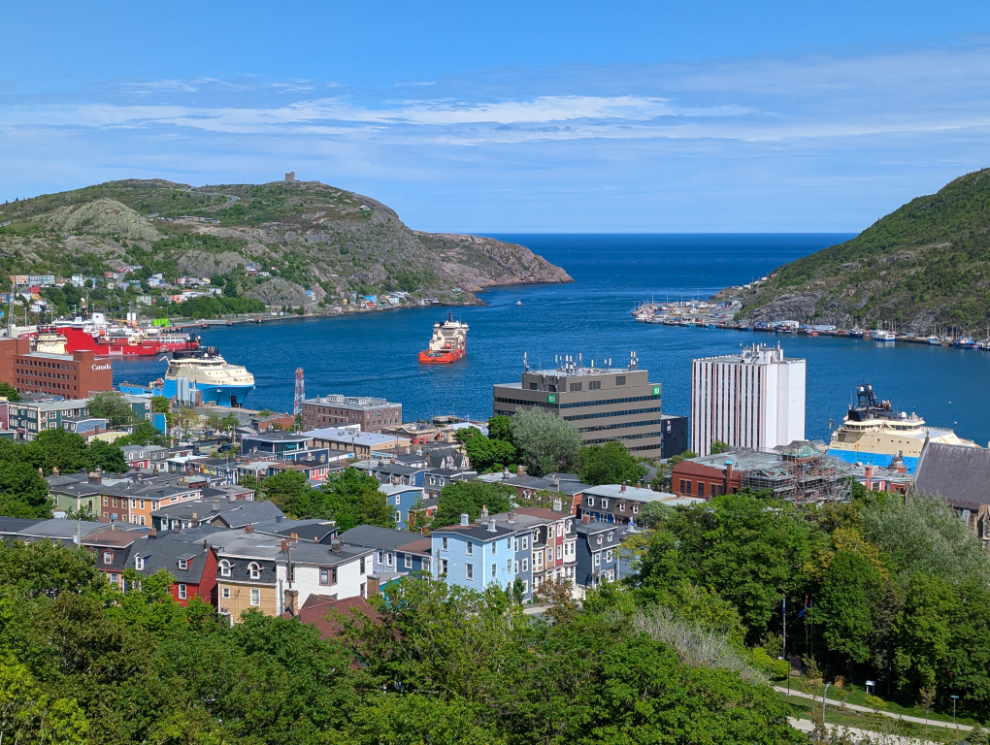
This was the view from our table! Well, that’s a slight exaggeration – I had to go outside to get the deck railings out of the photo. Pretty incredible.
The next day, we would start driving south. We had 3 days to make it to the ferry terminal at Argentia for our 5pm reservation on July 2nd, but we had no plans of exactly how tha would play out.

About The Author
