L’Anse aux Meadows – Newfoundland 1,000 years ago
L’Anse aux Meadows National Historic Site is the only authenticated Viking settlement in North America and the earliest evidence of Europeans in North America. This was really the trigger to create this journey, with Gros Morne National Park also being significant. Everything else on the itinerary just got added those visits. Thursday, June 11th, Day 14 of the trip, was our primary day there, with the next day available as a backup.
It wasn’t a great day weatherwise – 4°C with rain and wind when we started getting ready to head out. I posted on Facebook “if it becomes problematic we can come and go as we want for 2 days, so no biggie. The forecast is dramatically better than it was a few days ago – it hasn’t snowed on us yet!”
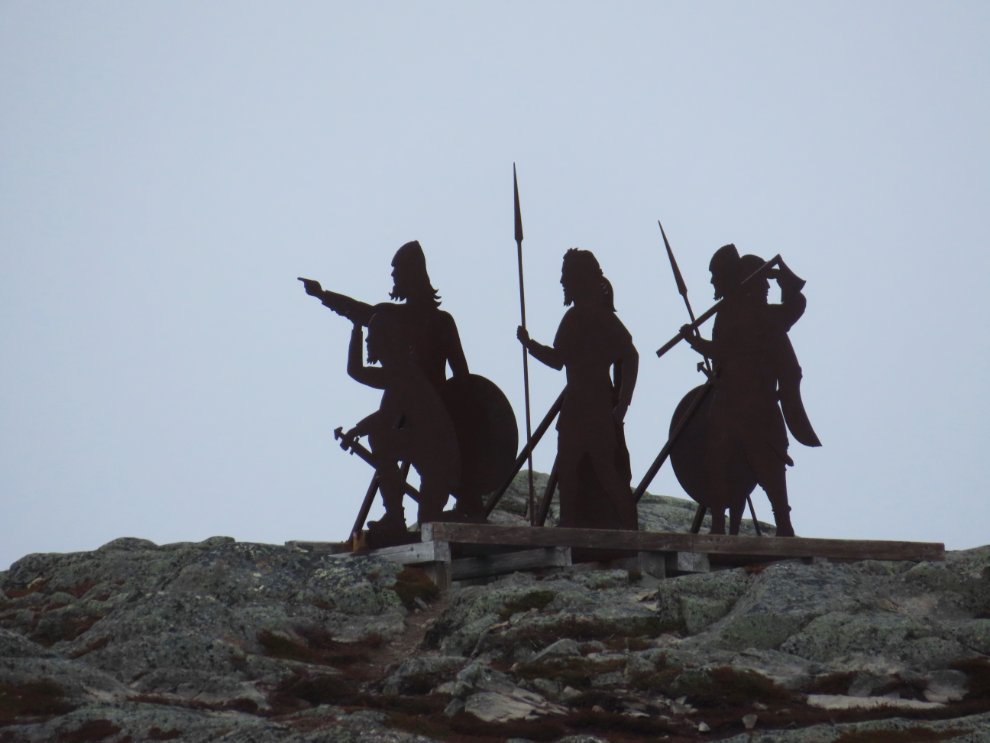
The first thing you see when you drive up is this group of life-size Vikings high on a rocky hill above the site.
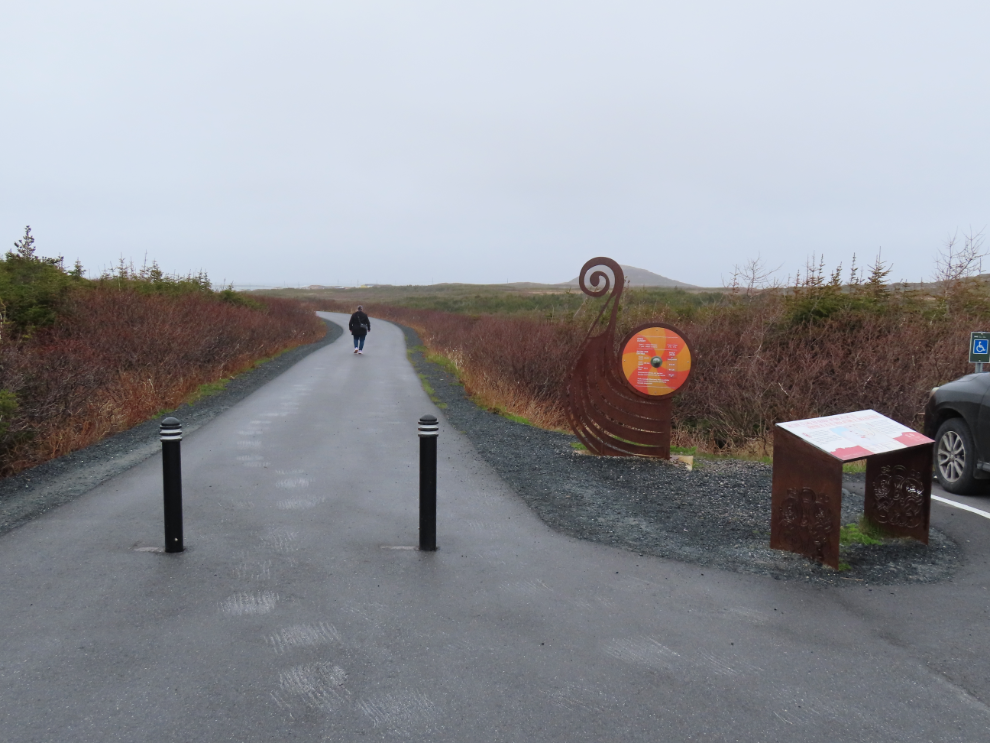
The start of the walk to the Visitor Centre.
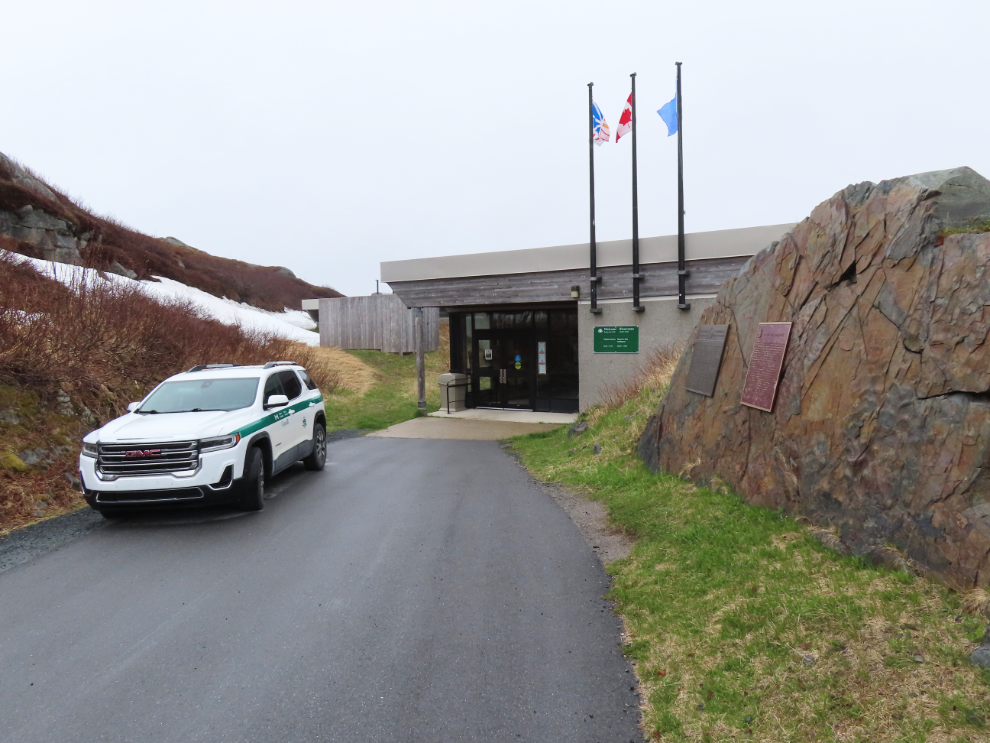
The entrance to the Visitor Centre.
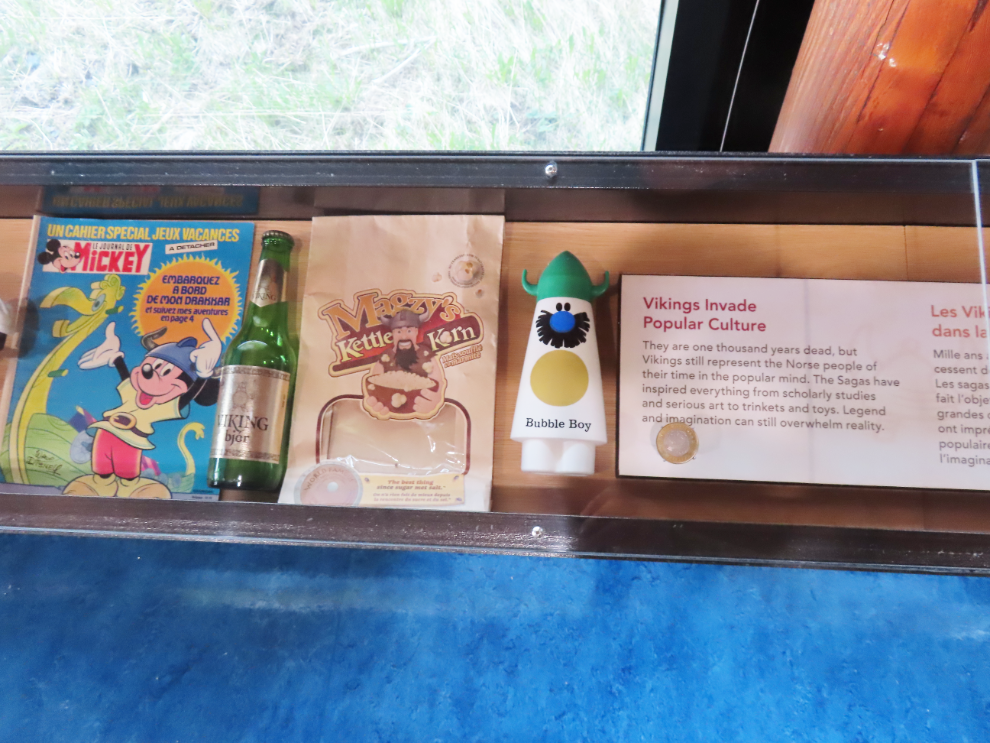
When you walk in, the first big display before getting to the check-in desk shows a broad range of items showing Vikings in popular culture, from comic books to beer to a doll and a BOAC airline ad.
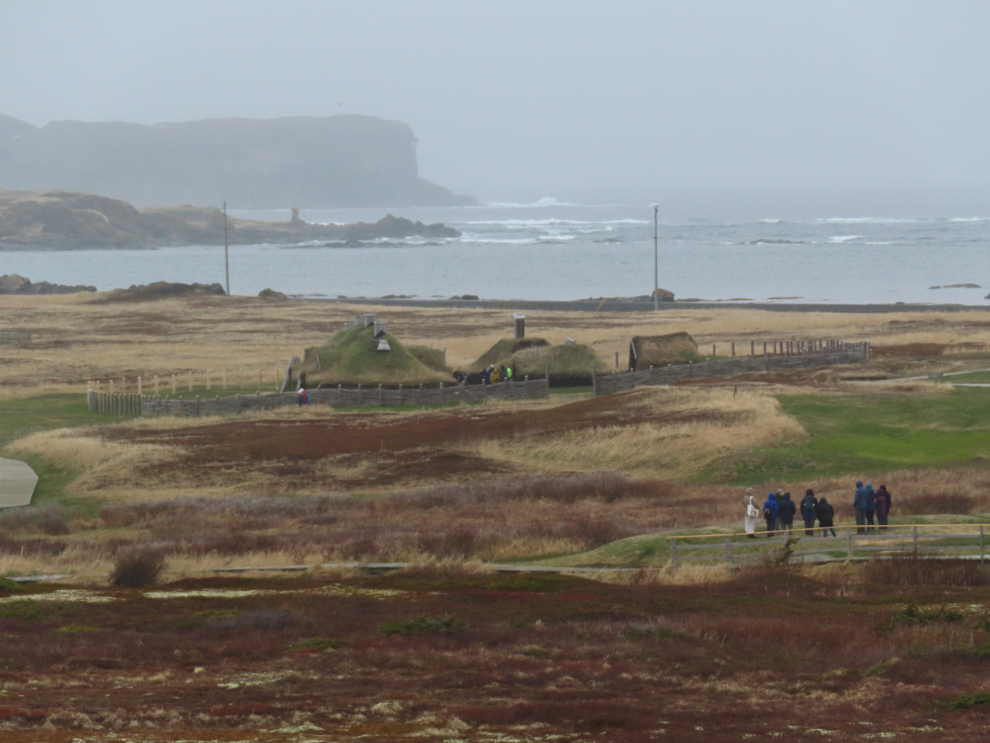
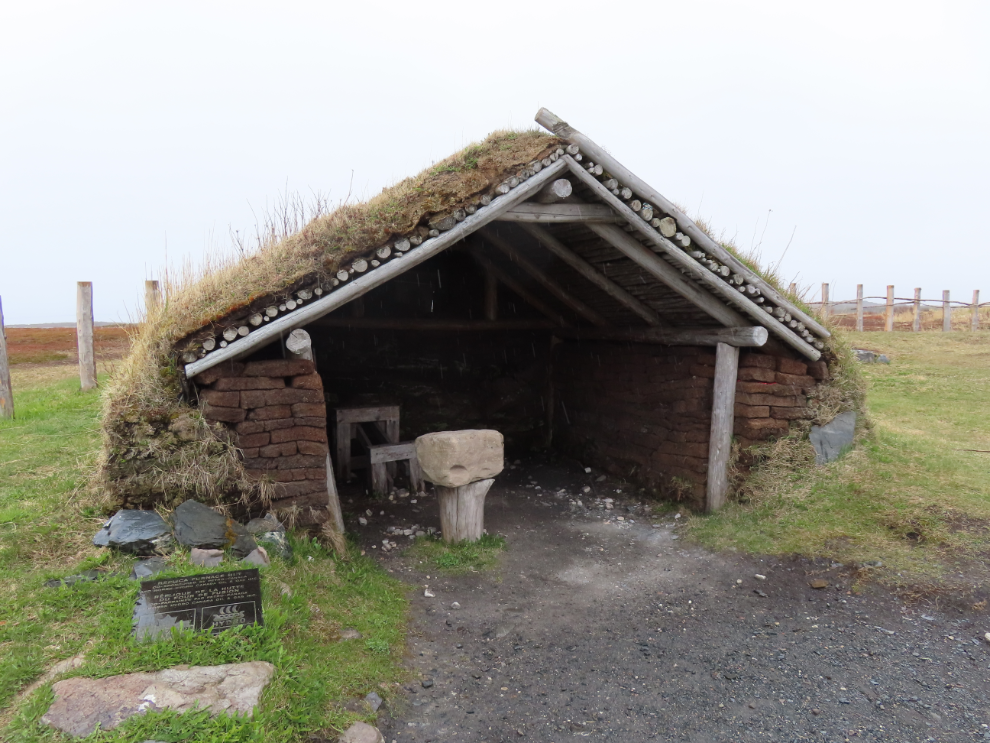
After checking in with our Parks Canada annual pass, I first went outside. We had read that bad weather is more evocative of the life the Vikings led, and that is true – this is one of the two images of L’Anse aux Meadows that will stick with me (the other is the fireside scene you’ll see in a bit).
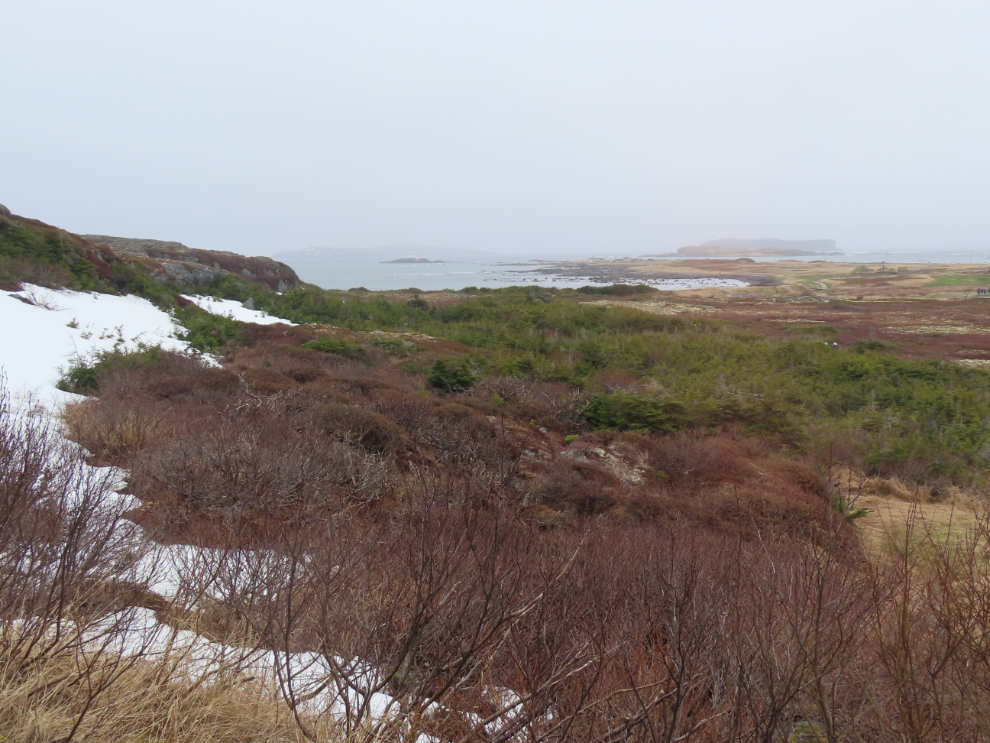
Snow was still feet deep at the base of the north-facing cliffs beside the Visitor Centre.
There was a guided tour coming up at noon, and we decided to take it – that gave us an hour to go through the inside exhibits, which was about right. This scale model of the site is a good starting point. The site was not meant to be a town, merely a base to explore from, and the Vikings were only here for about 10 years. It’s commonly said that they were here in 1000 C.E., but carbon dating has determined the date to be exactly 1021 (though to be really precise, I don’t know when during the 10-year span that date is).
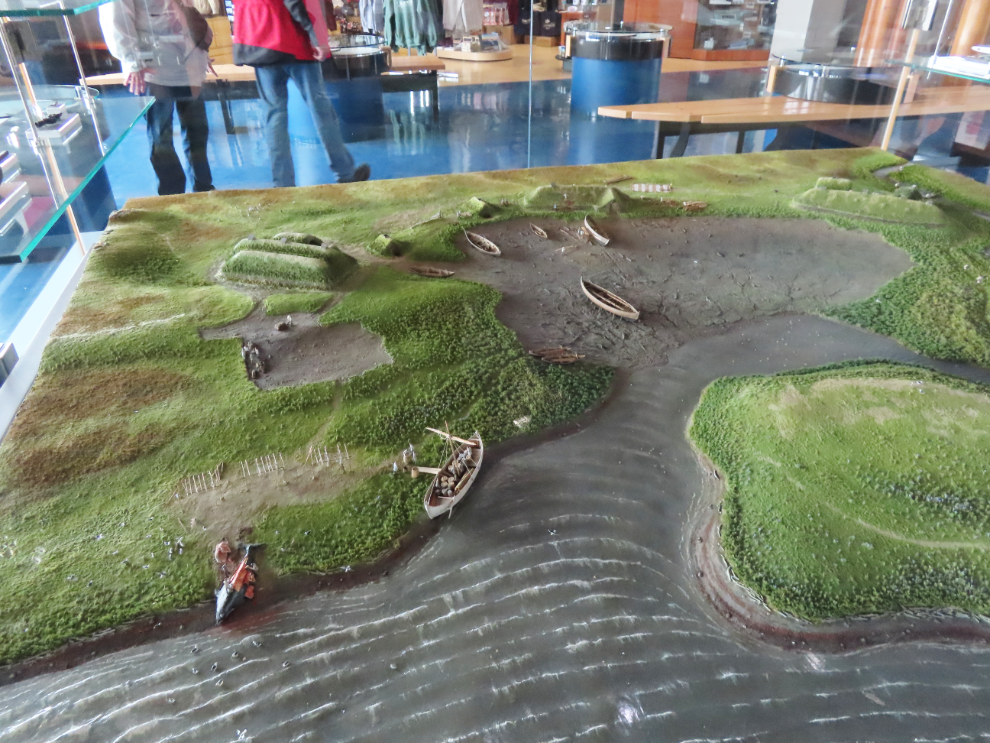
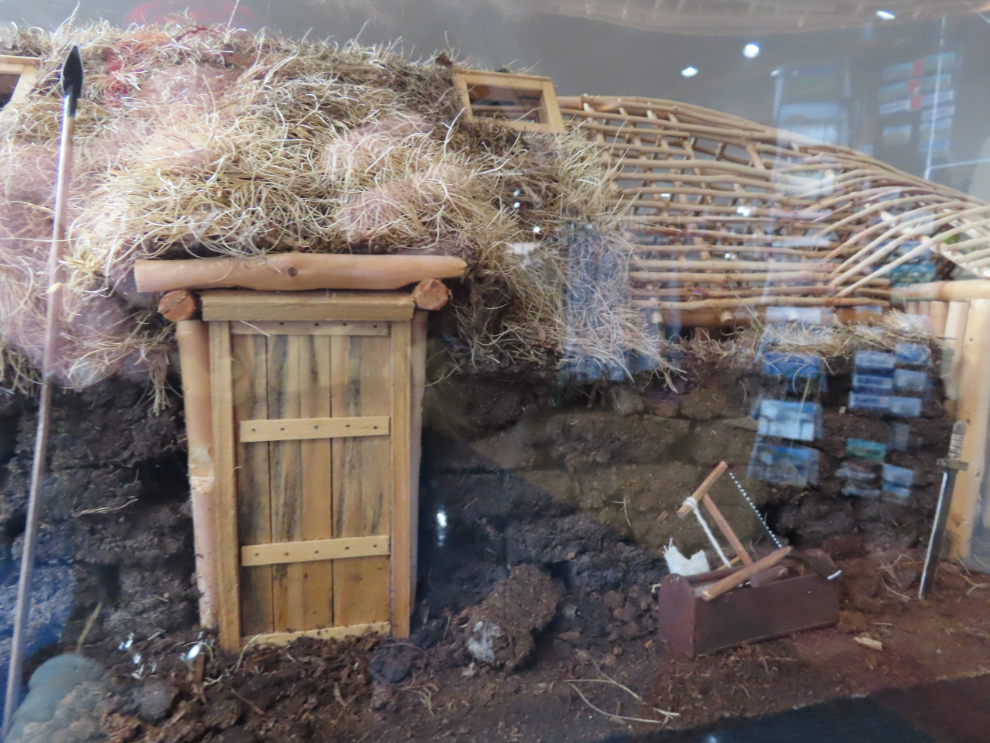
There were originally eight buildings – three dwellings, one forge and four workshops. When discovered in 1960 by Norwegian explorer and writer Helge Ingstad, only low ridges and mounds remained. This model shows how the walls and roofs were built, with layers of sod over a supporting wooden framework. The walls of the dwellings were six feet thick, giving an insulation R value of about 100!
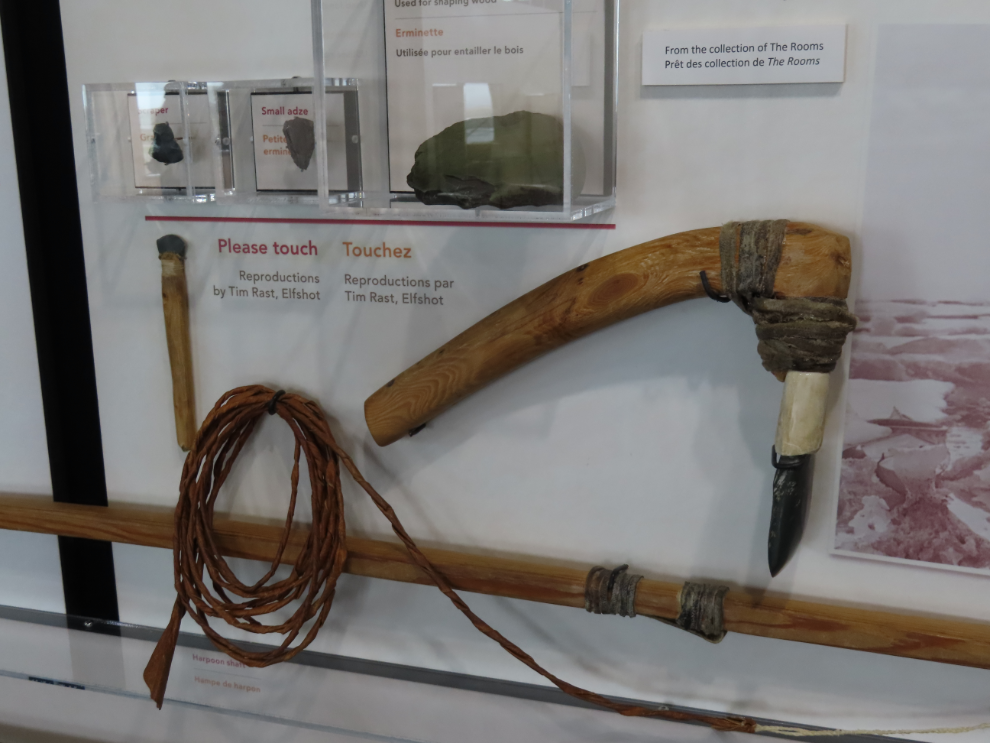
Details of the making of tools. Since planning for this trip began, Cathy has been very worried that the trip – museums in particular – would be too much for me to deal with because of my brain injury. I had done well in Halifax, but L’Anse aux Meadows was the real test. There was a vast amount of information that I’m deeply interested in, but I have to be extremely aware of when my brain has had enough, and take a break. That can mean going away and sitting down, closing my eyes during a video presentation, and/or avoiding some presentations completely.
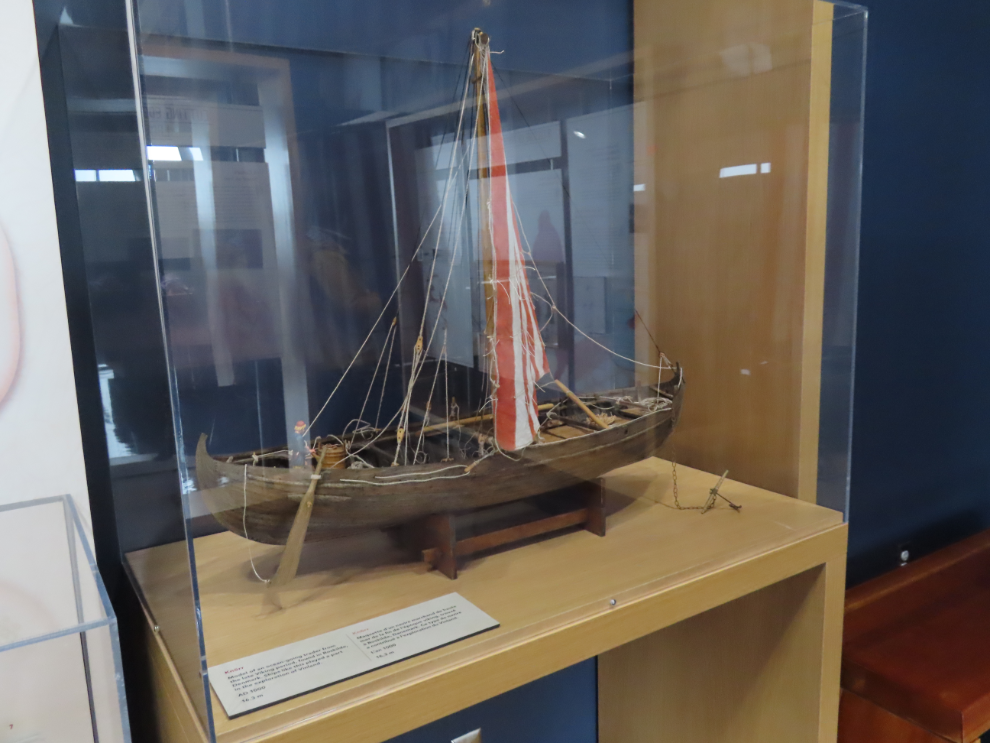
“The pinnacle of Norse woodworking was boatbuilding. Their knörrs and other ocean-going vessels were strong, light, and flexible, yet could carry heavy cargo, withstand the pounding North Atlantic. and be drawn into shallow waters or even be beached without damage. The boats combine complex woodworking techniques, iron fastenings, and ingenious waterproofing of joints. The Norse relied on their wooden boats to bring them to Vinland, and to carry their valuable cargo back to Greenland and Iceland.”
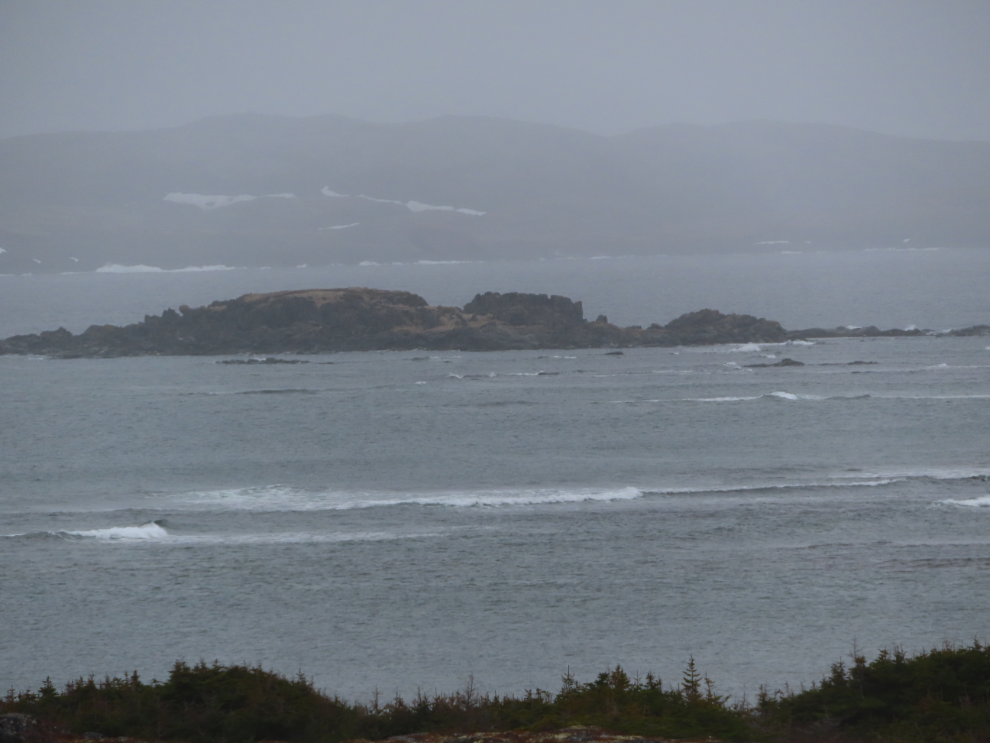
This was a good day to see the sort of conditions the explorers faced.
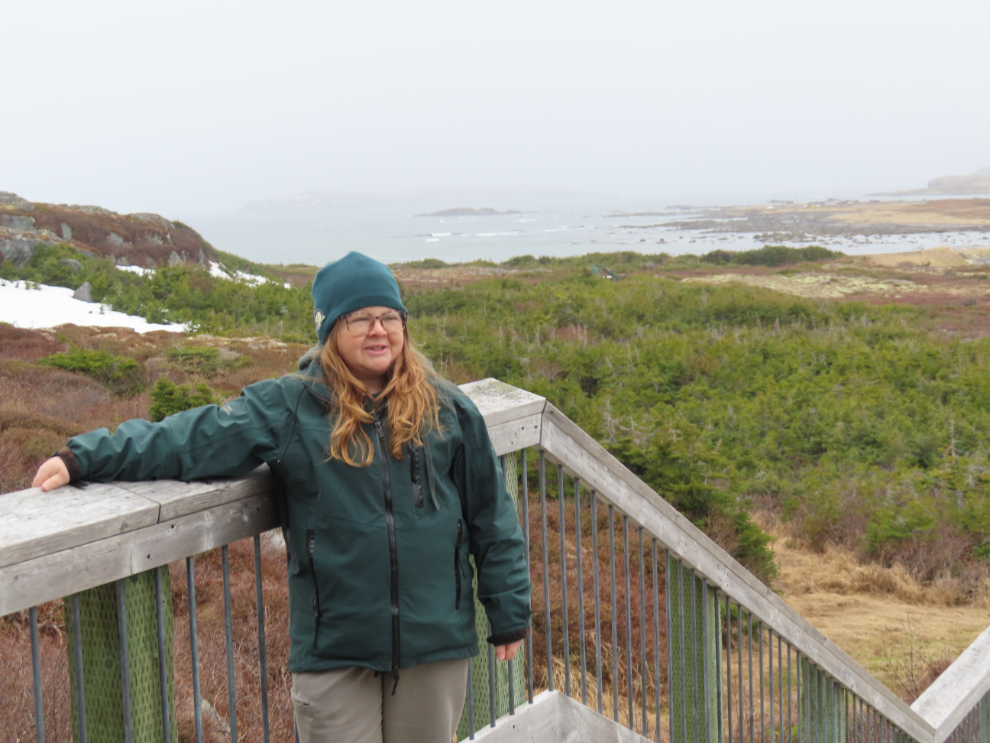
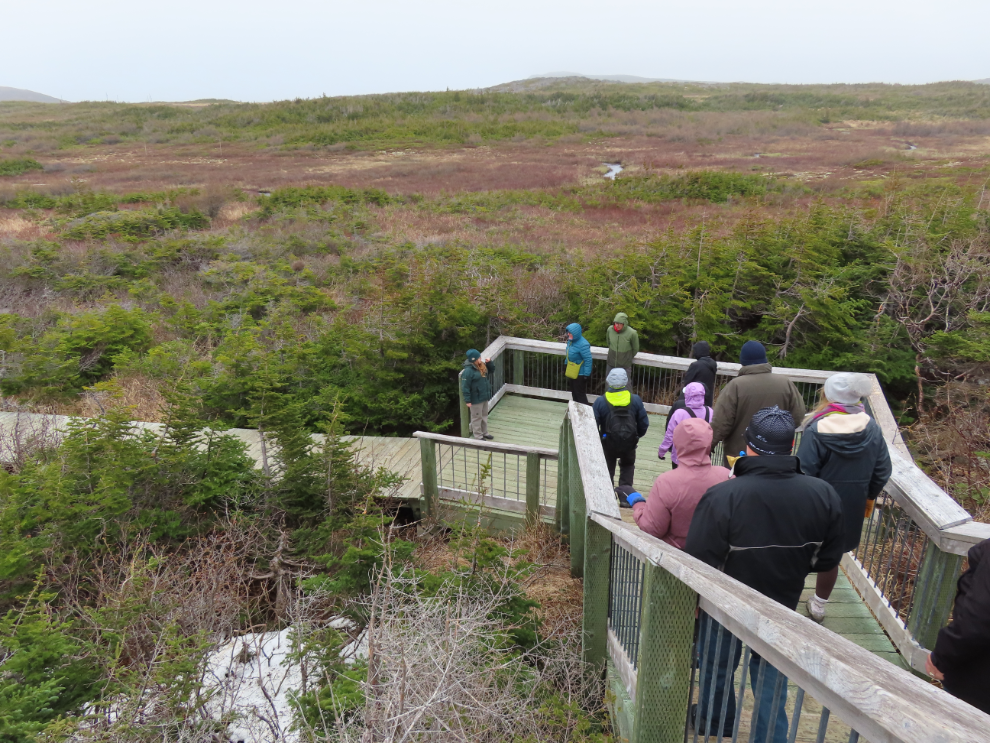
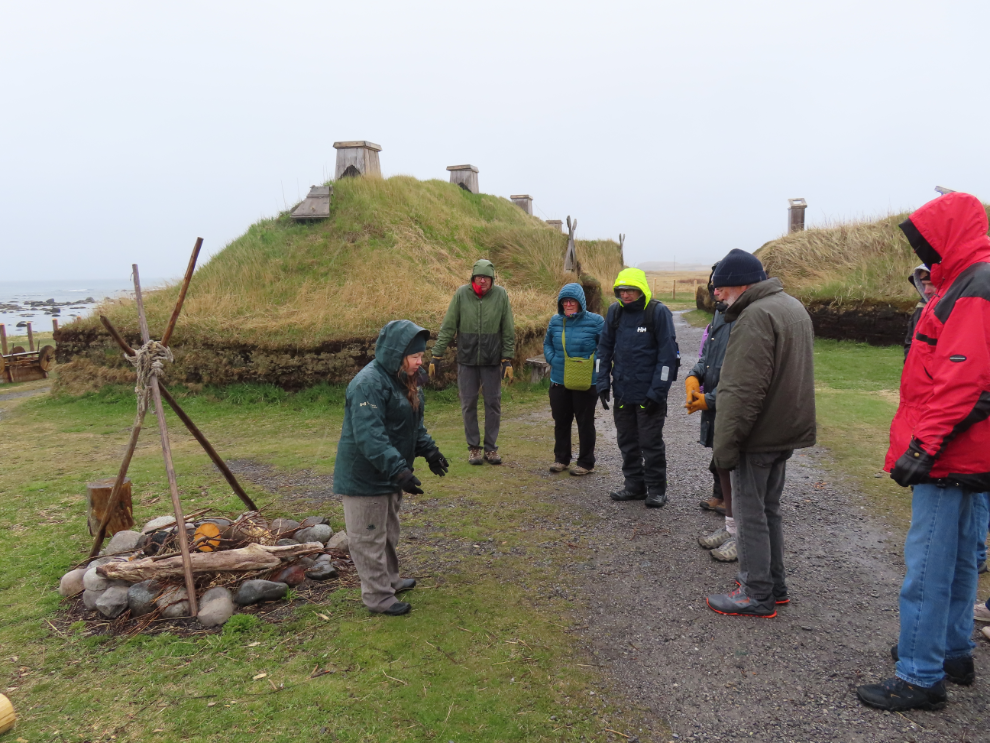
At noon, a dozen people gathered outside to meet Stephanie, who would spend the next 45 minutes taking us back and forth between 1,000 years ago and today. She did an excellent job, and had extra stories, as she was born and raised in the community of L’Anse aux Meadows, population 21.
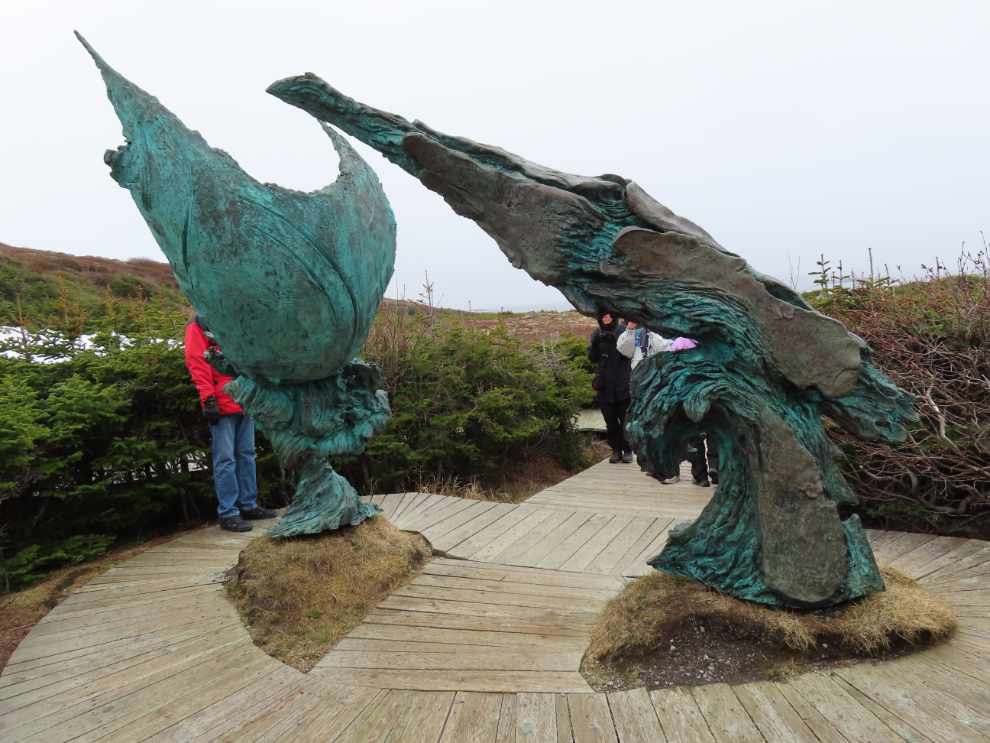
The Meeting of Two Worlds sculpture was a collaboration involving Newfoundlander Luben Boykov and Swedish sculptor Richard Brixel. It commemorates the meetings between the Vikings and the Indigenous people, who they called Skraeling.
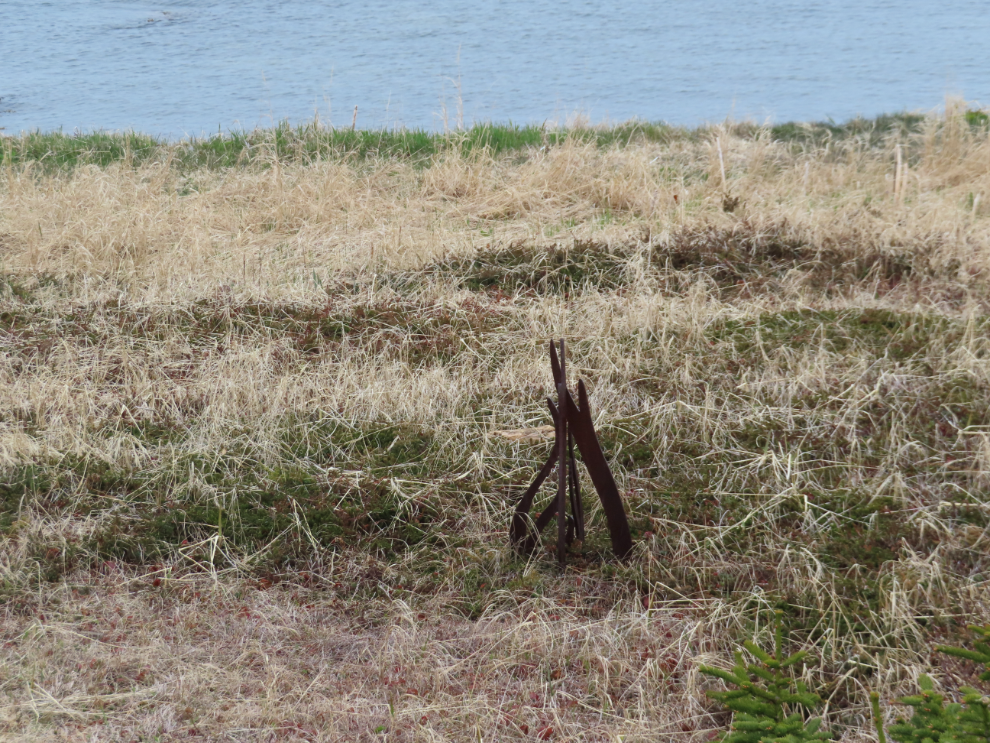
People have visited and possibly lived at the site for 4-5,000 years and dozens of their firepits are identified with these steel markers.
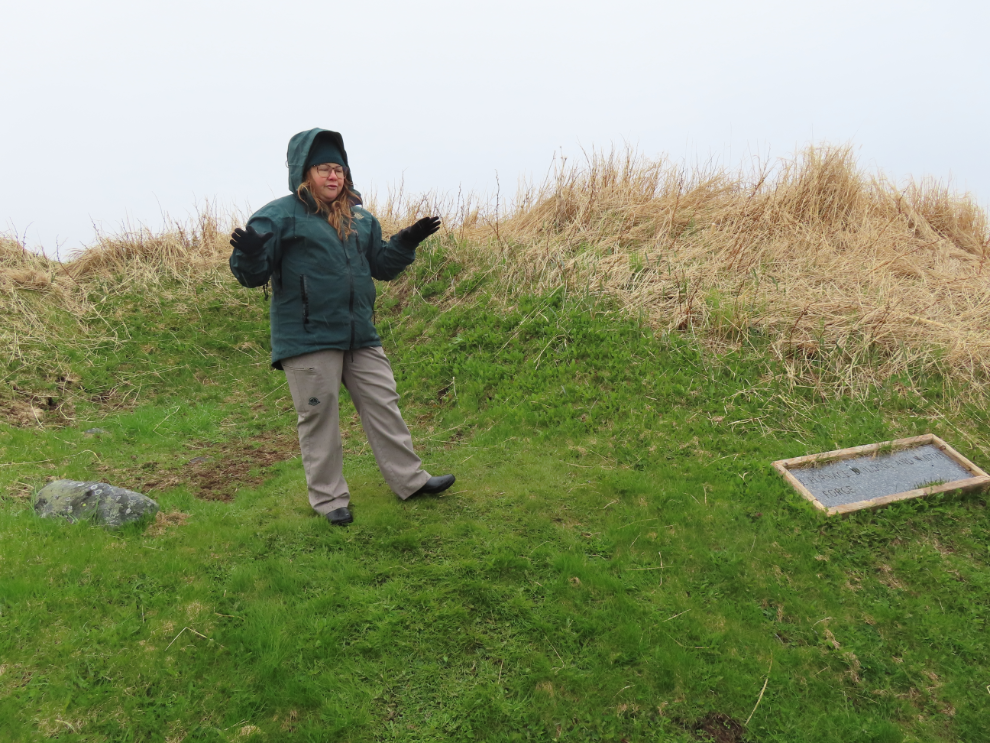
Stephanie explained what we know about each of the building locations, including stories about playing in some of them as a child.
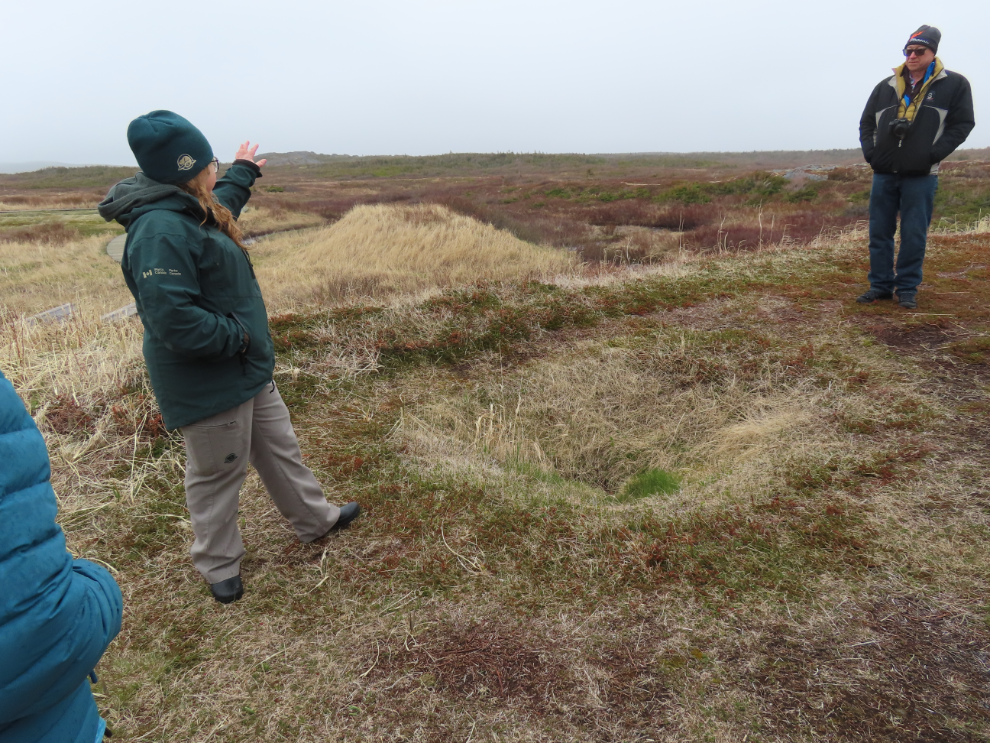
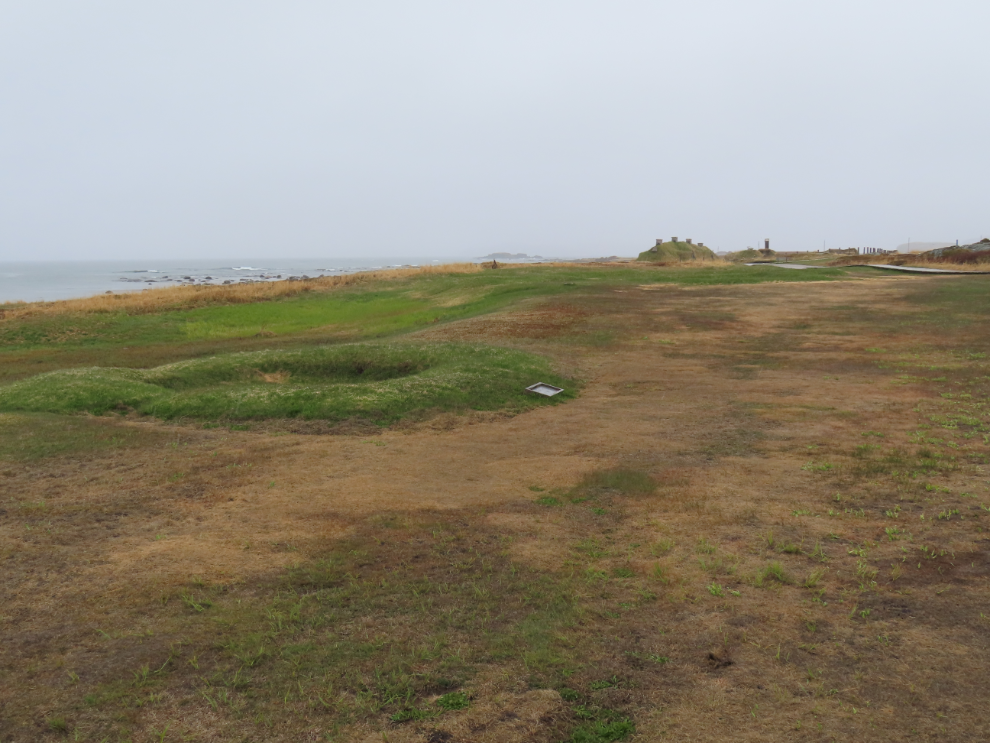
At this small, isolated site, a smelting hut contained a furnace for producing iron from bog ore. A simple smelter stood in the middle of the floor. A charcoal kiln was nearby. The amount and type of slag found suggests that a single smelt took place. Very little iron was manufactured, only enough for making about 100 to 200 nails.
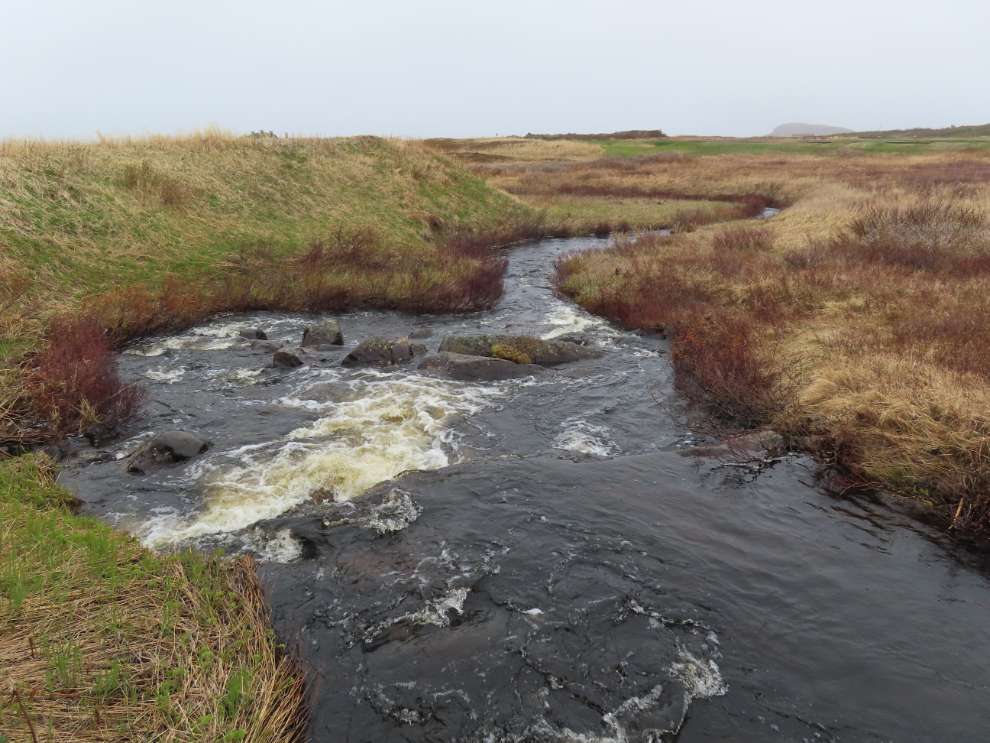
The presence of this creek as a source of fresh water would have been a significant factor in deciding to build at this location.
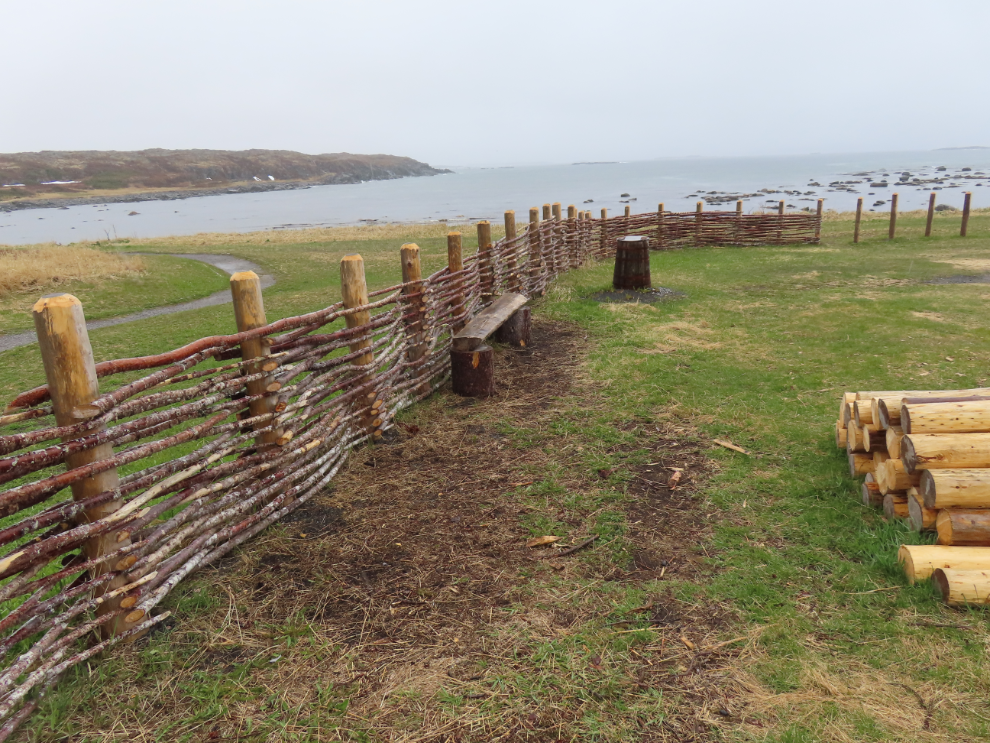
At the reconstructed compound, Stephanie left us in the capable hands of the interpreters inside the sod buildings.
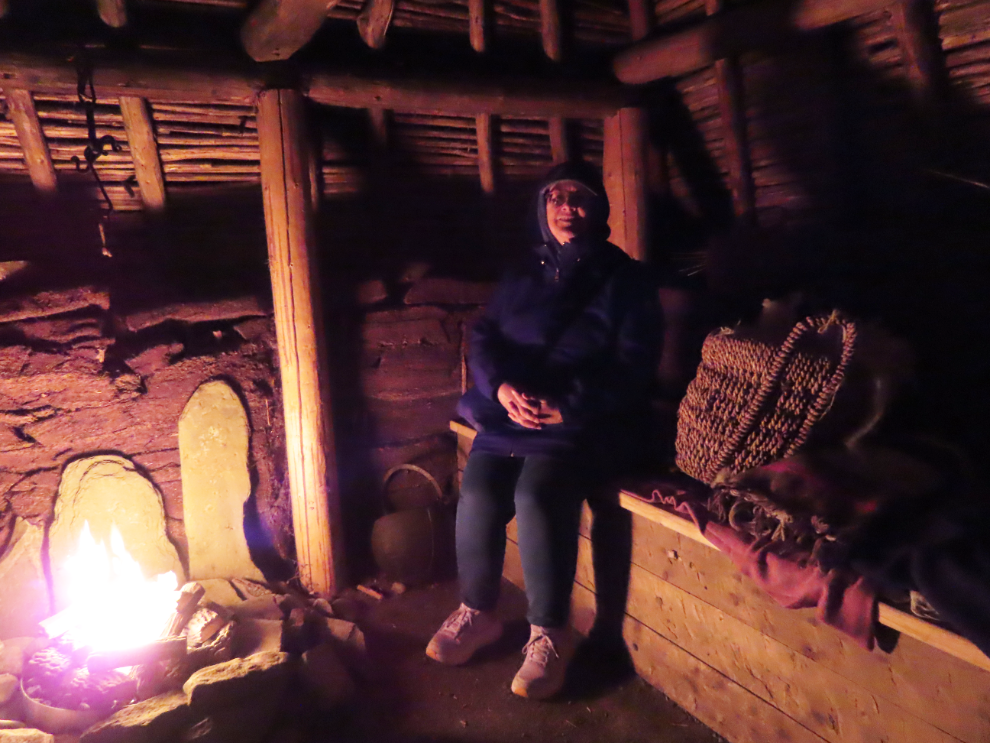
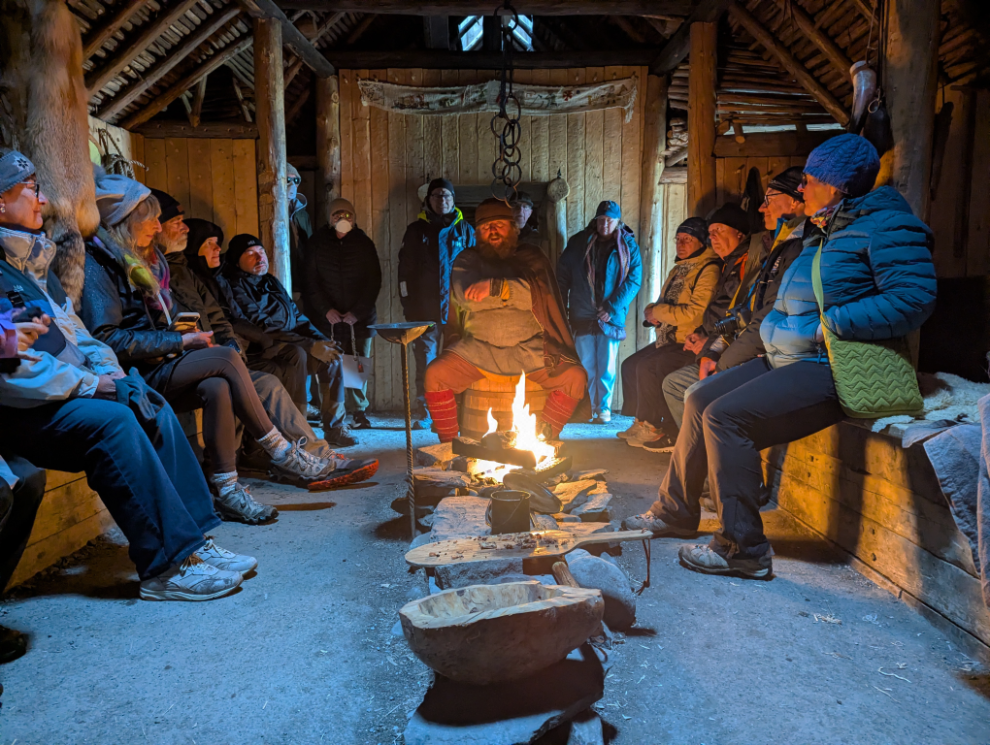
We first went into a large hall that was built for someone of high social status. This is Cathy enjoying the warmth of the propane-fuelled fire. Dark and very cozy.
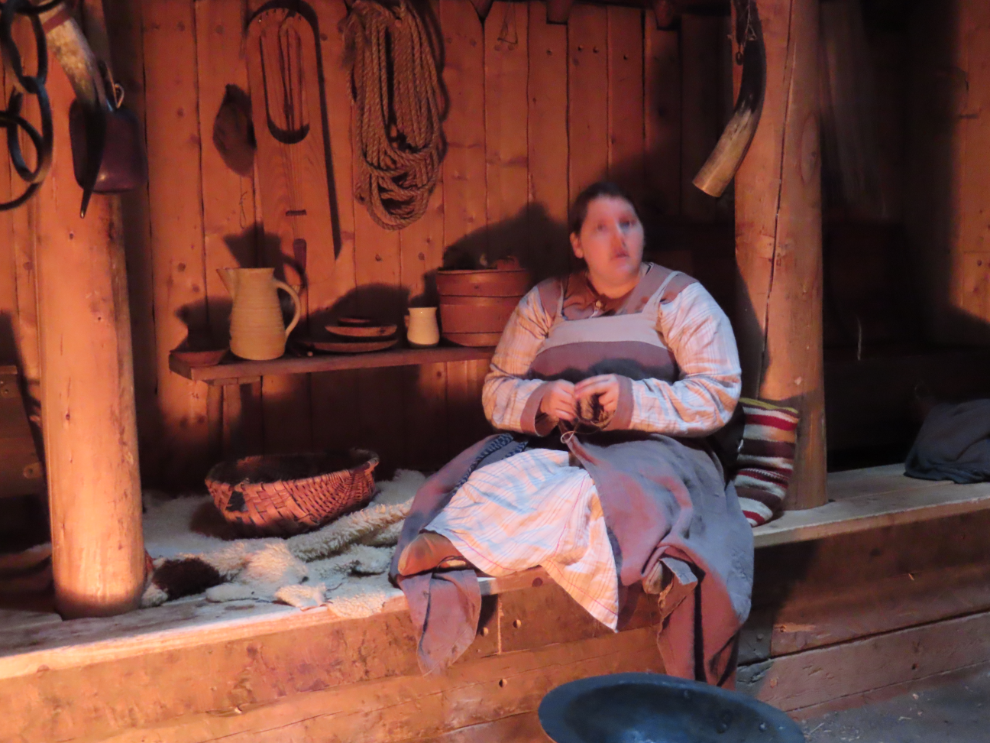
Inside, the focus turned to the daily lives of the people who were here 1,000 years ago. The Vikings had slaves here, and there were women here. Perhaps the women were slaves.
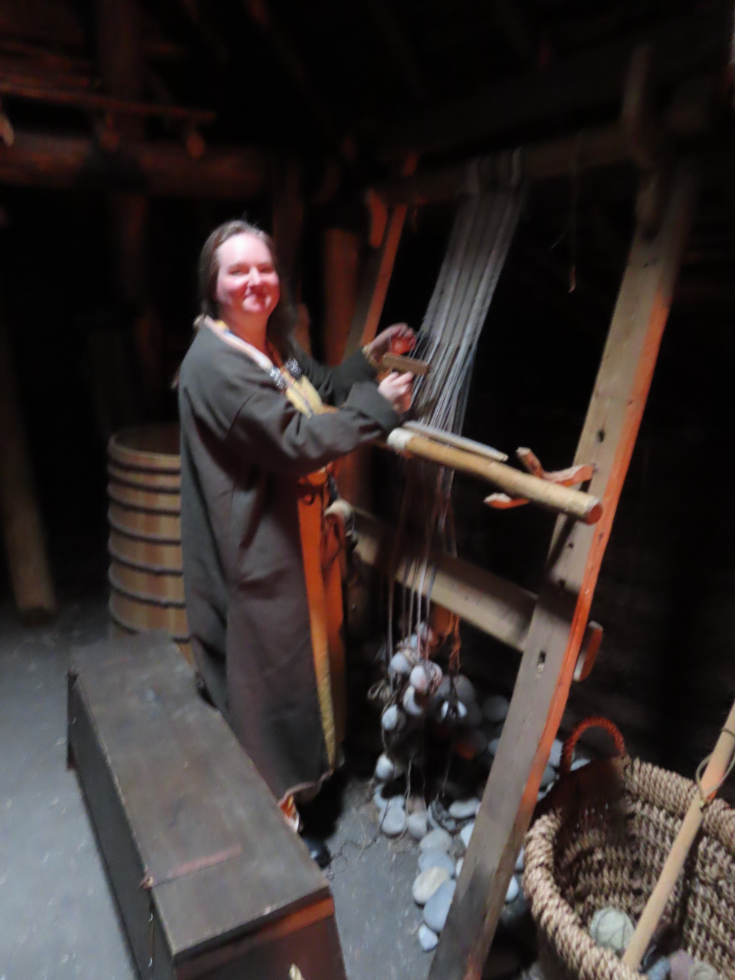
Its hard to really imagine what life would have been like, but the interpreters got us as close as possible to them.
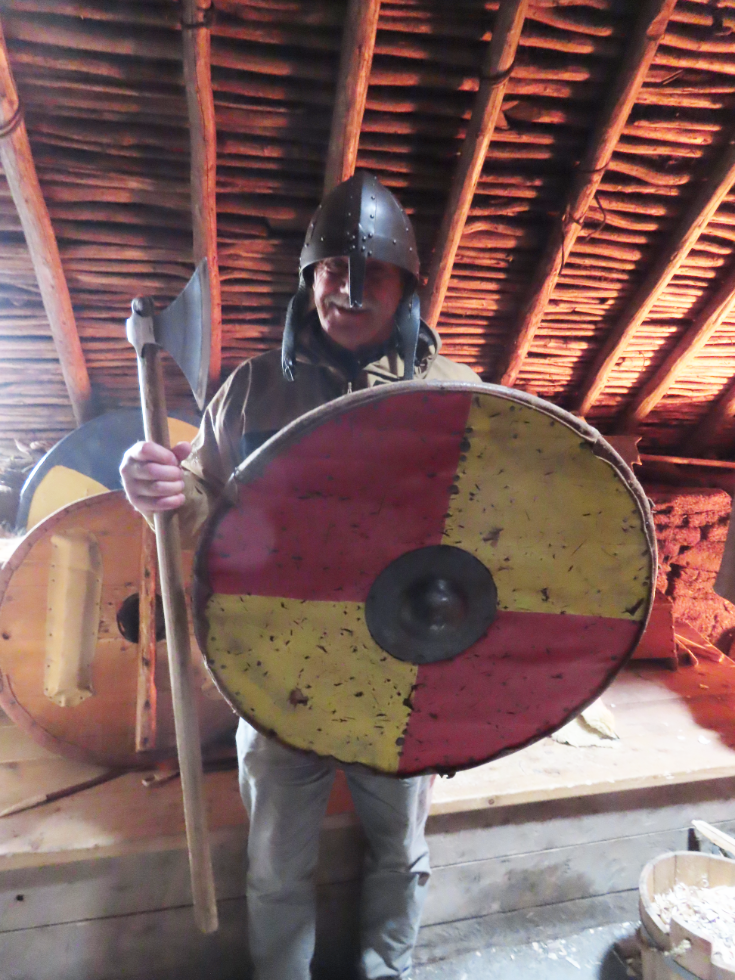
Murray the Viking 🙂
Back out in the cold rain, but there was lots to see yet.
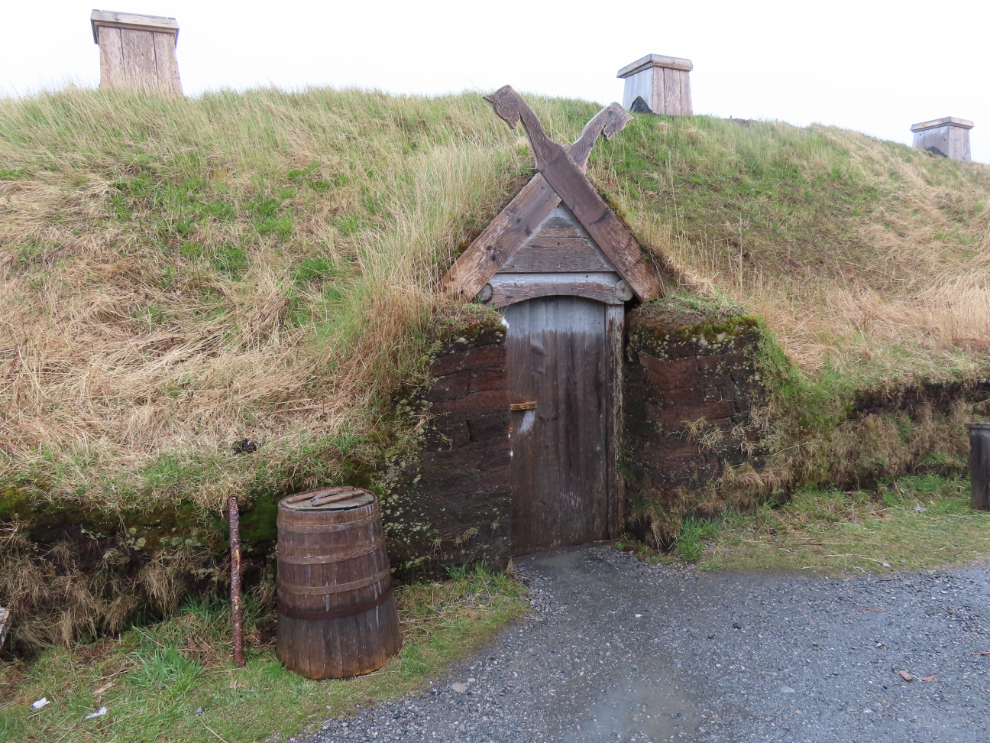
The first building in the next photo, the smallest of the three halls, was probably built for a crew of labourers. Judging by the jasper chips aroudn the fire, they were from Iceland.
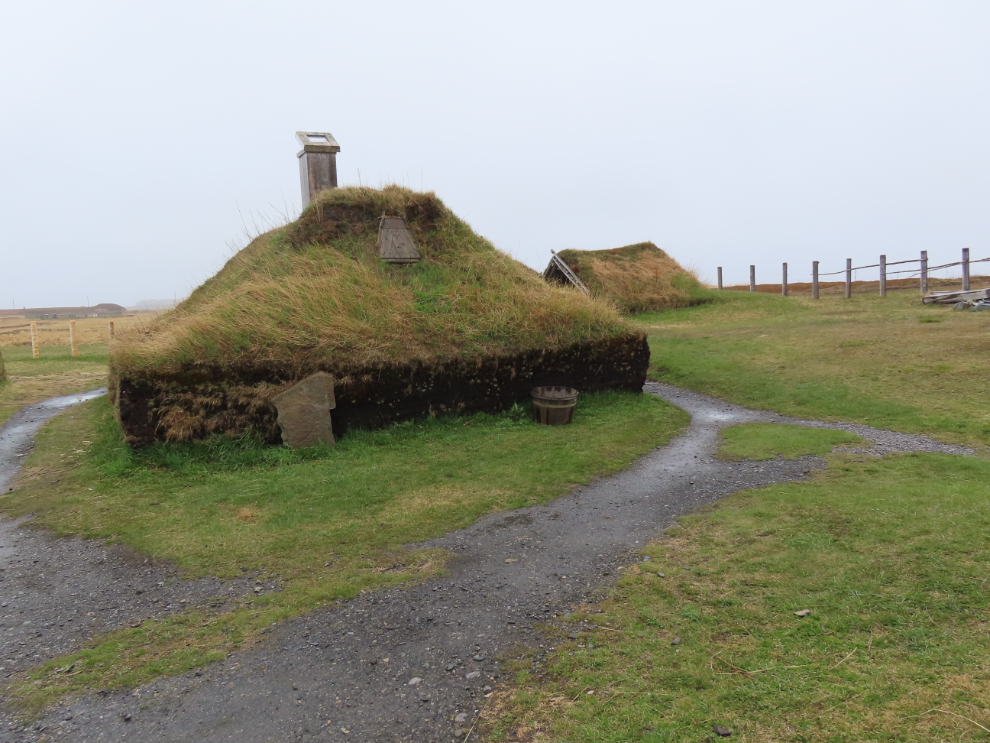
A small workshop.
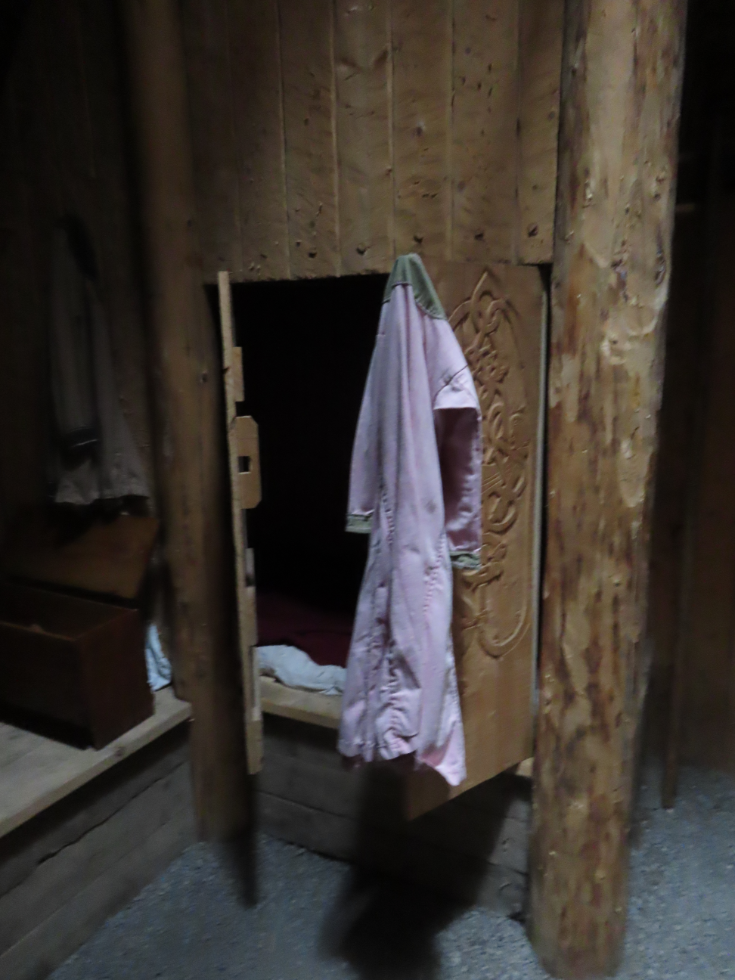
Finally we went into the largest building, where the leader of the expedition probably lived with his crew. It has a private room for the leaders with two enclosed beds, a large central room that could serve as a banquet hall, two large storage rooms, and a lean-to shed for boat repair.
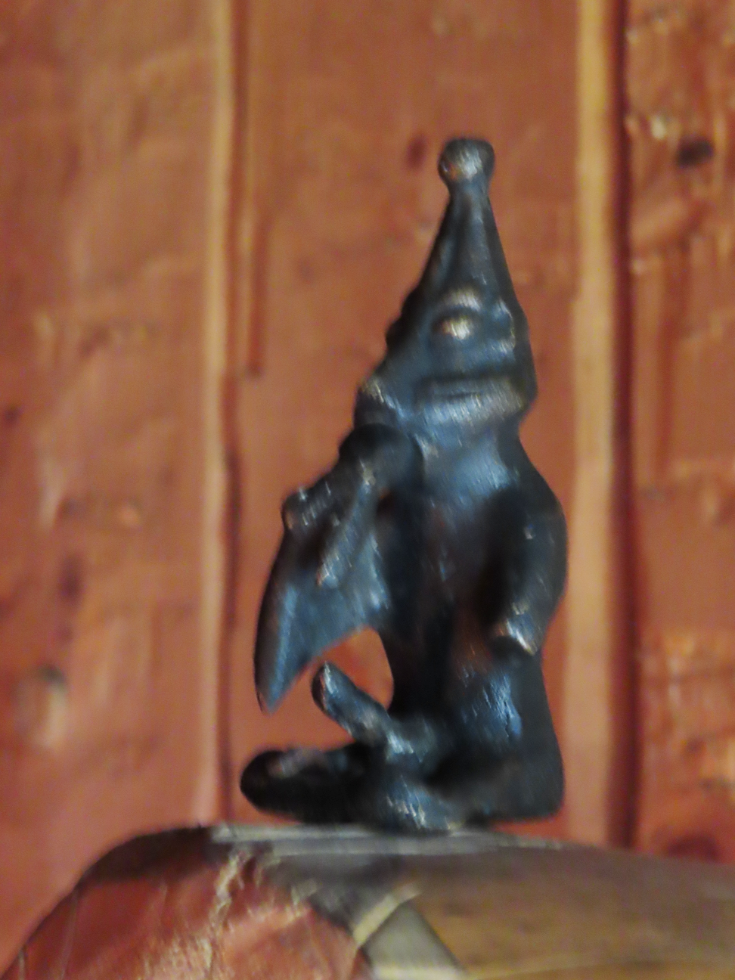
High up on two beams, I spotted a couple of small lead figures. The interpreter told me that one was Thor, and this one is Freyr, “the god associated with kingship, fertility, peace, prosperity, fair weather, and good harvest.” The image at Wikipedia shows a version that is considerably toned down from this one, which seems to be particularly focussed on fertility.
Good-bye my Viking friends. I couldn’t have been more pleased with this experience.
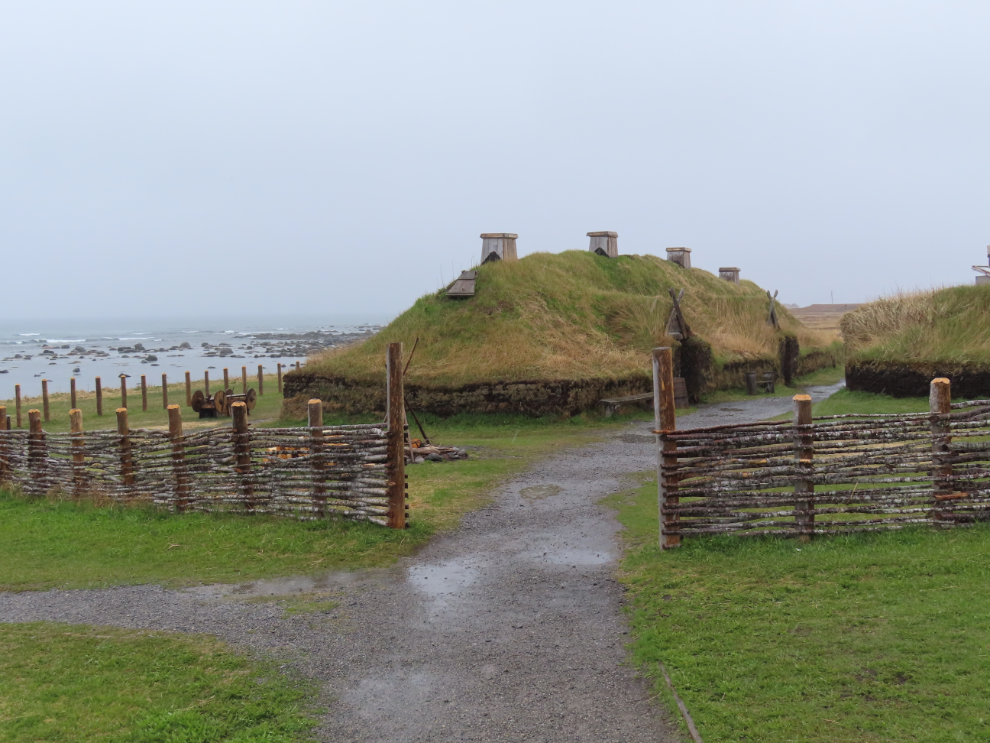
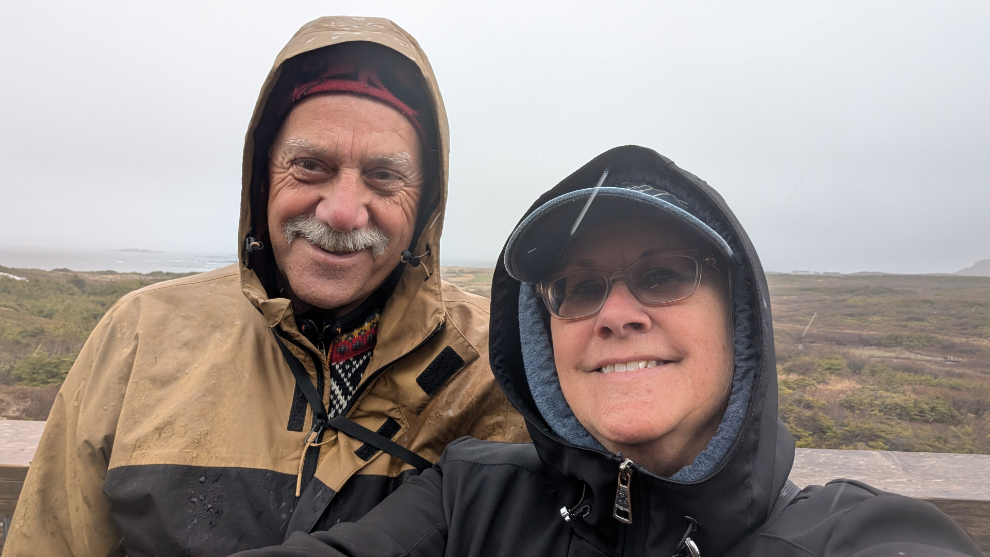
Cathy shot this back at the Visitor Centre.
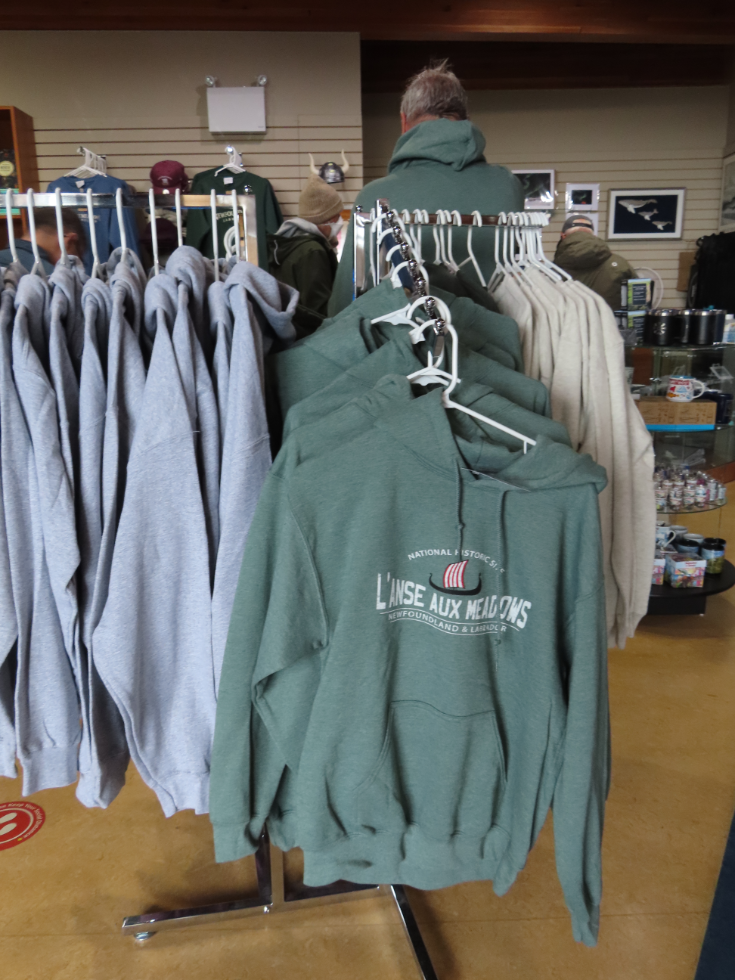
We spent a while in the gift shop. I really wanted a memento and was torn between a long-sleeved tshirt that I really liked the colour of, and this sweatshirt that I loved the design of. Cathy convinced me that I deserved both, so that’s what happened 🙂
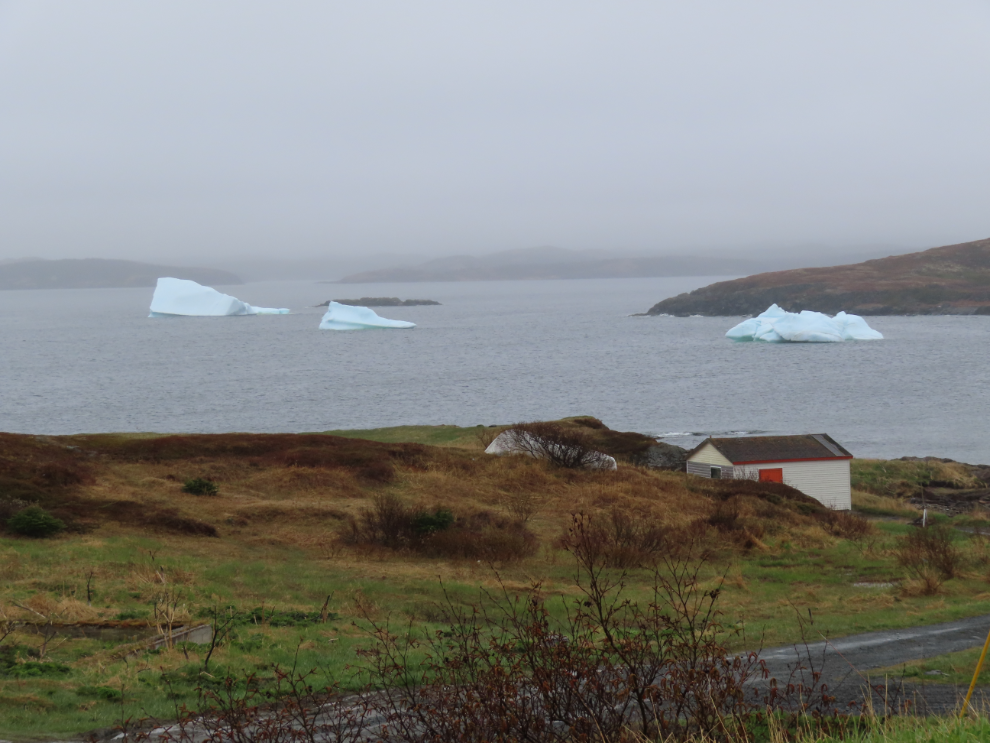
We spent just over 3 hours at L’Anse aux Meadows, then went on an other successful iceberg hunt for a while.
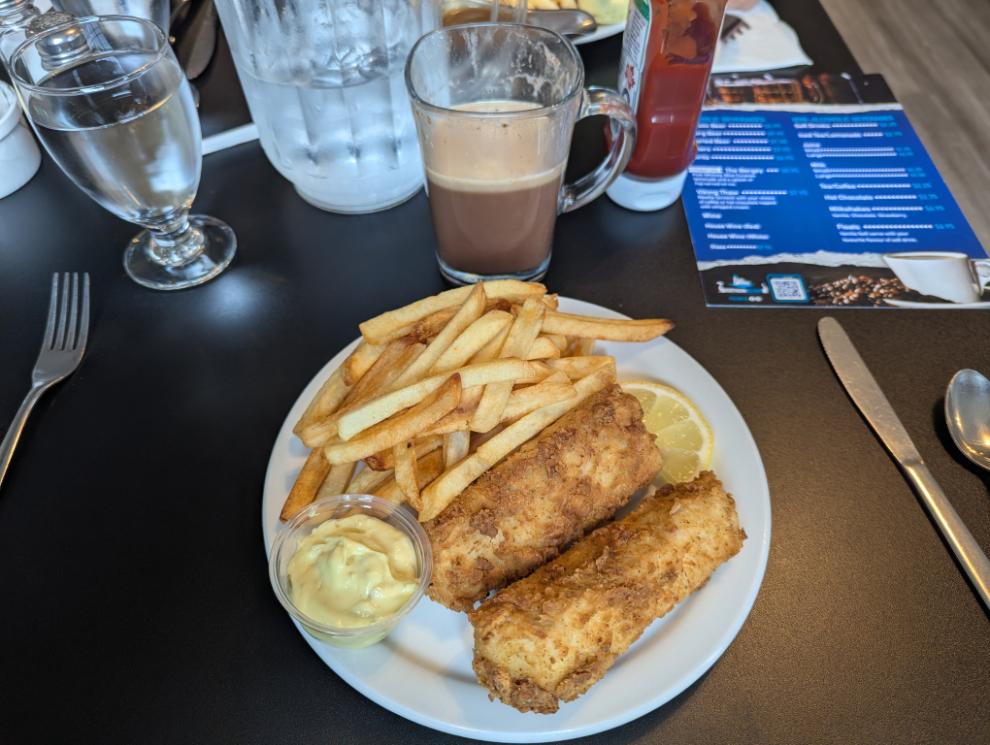
Cathy had read great reviews about the fish and chips at the Northern Delight Restaurant at Gunner’s Cove, not far from our RV park, so we went there for an early dinner. The first thing on the menu that caught my eye, though, was a drink called Viking Thaw – Newfie screech with hot chocolate and whipped cream. Yuuum! 🙂
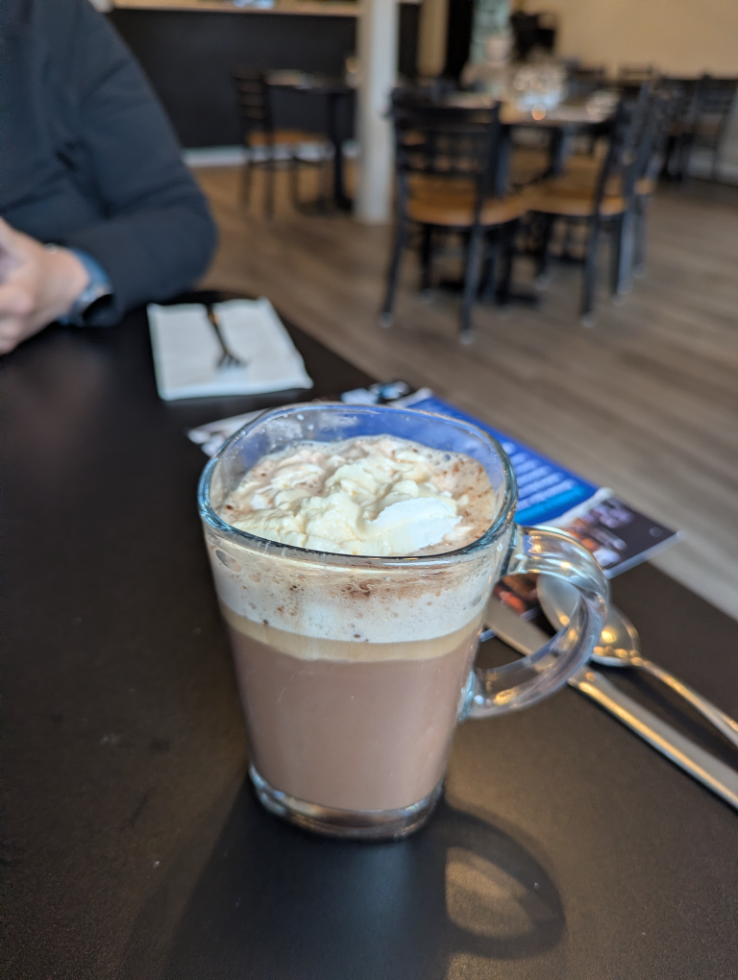
We have a new fish and chips in first place, edging out Earle’s at Rocky Harbour by using a thin batter on perfectly-cooked cod. Being there at an odd hour, we were the only people there. The server and cook were both very friendly, making for a particularly good experience – 5 stars 🙂
The weather forecast for the next day was much better, but as this day ended we weren’t yet sure what we would do exactly – a brief return to L’Anse aux Meadows was likely, and the Norstead Viollage was on the list.
About The Author

I thought we had cool weather when we were told it was a mild winter in July, but we did not have -4C temps, nor snow, so you have that one for a memory.
Thanks so much for this post. We have been interested Anse aux Meadows for quite a while. It’s unlikely we will get there, so this report is awesome.
Thanks for sharing Murray! It’s on my bucket list!!
Ellen
Hi Murray,
My husband and I visited Anse aux Meadows about 10 years ago in early September. The weather was pretty much the same, just absent the leftover snow!
We also ate at Northern Delight, great to hear the food is still good.
If the weather cooperates and you have time while in the area, check out Burnt Cape Ecological Reserve. The scenery was awesome.
Thanks for your blog – we’re visiting the Yukon for the first time this August!