Dr. Wilfred Grenfell and a great hike at St. Anthony
Saturday, June 13, Day 16 of our trip and the 9th day in Newfoundland, was intended to be a full day at St. Anthony with another overnight stay there, but turned out to be a partial day then we drove south to Port au Choix to get better weather.
My Facebook post with this photo (shot from our RV) this morning said “It finally occurred to me to check the marine weather, as the reports from the airport which is inland 33 km away are meaningless. The wind yesterday was 75 km/h. About half that this morning, 5C with light rain and fog. The official Canadian Ice Service ice report for the seas around St Anthony today is ‘Bergy water’ – yes, there are icebergs everywhere, including 6 good-sized ones in the harbour.”
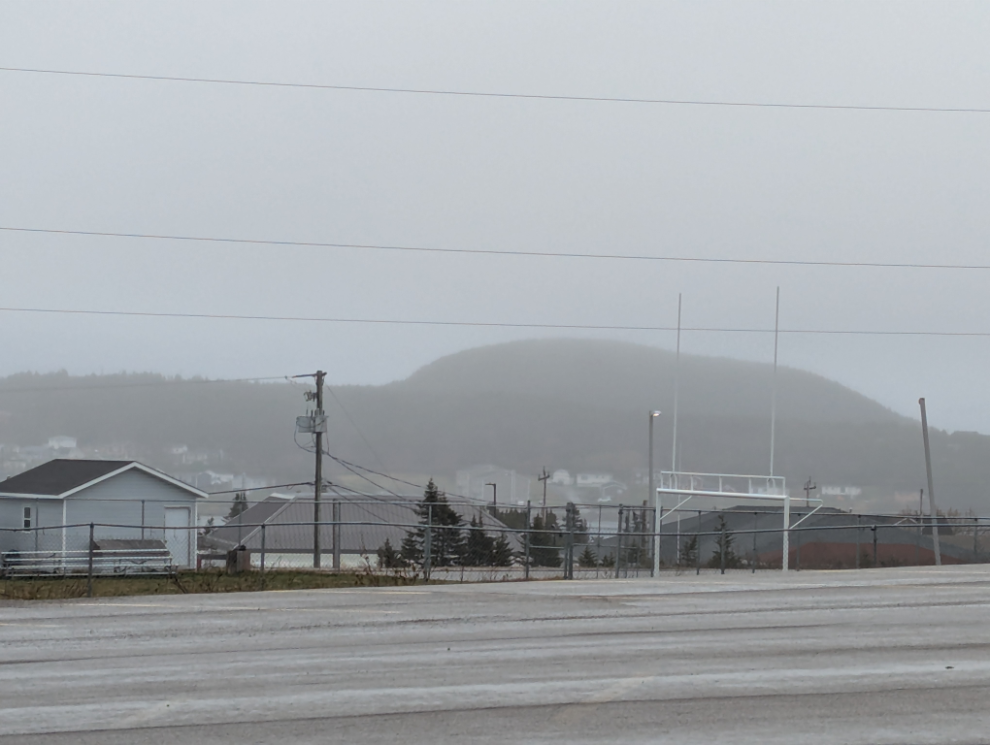
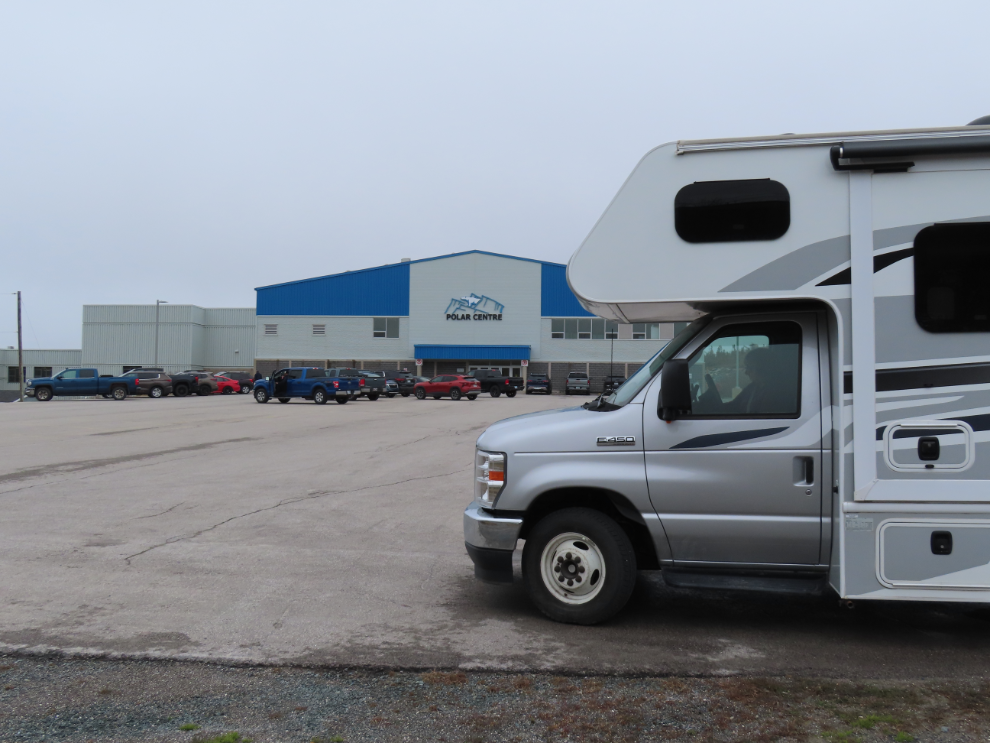
I walked back a bit to get a photo of our parking location at the rec centre, and as well as getting the photo found a Honda key fob that someone had probably lost in the snow months ago.
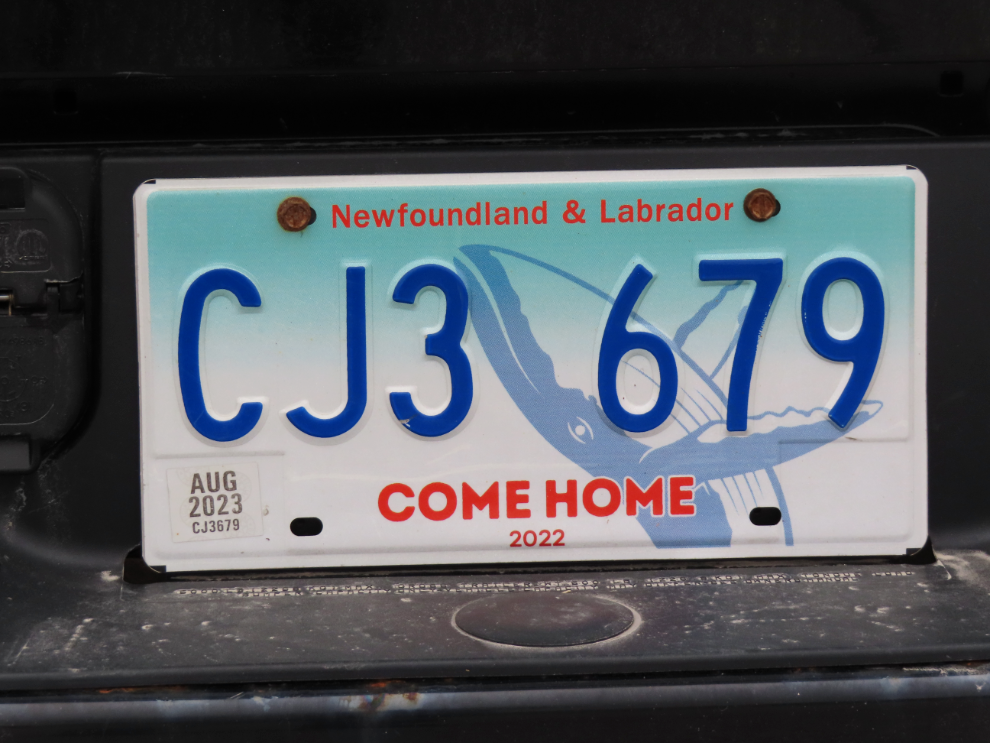
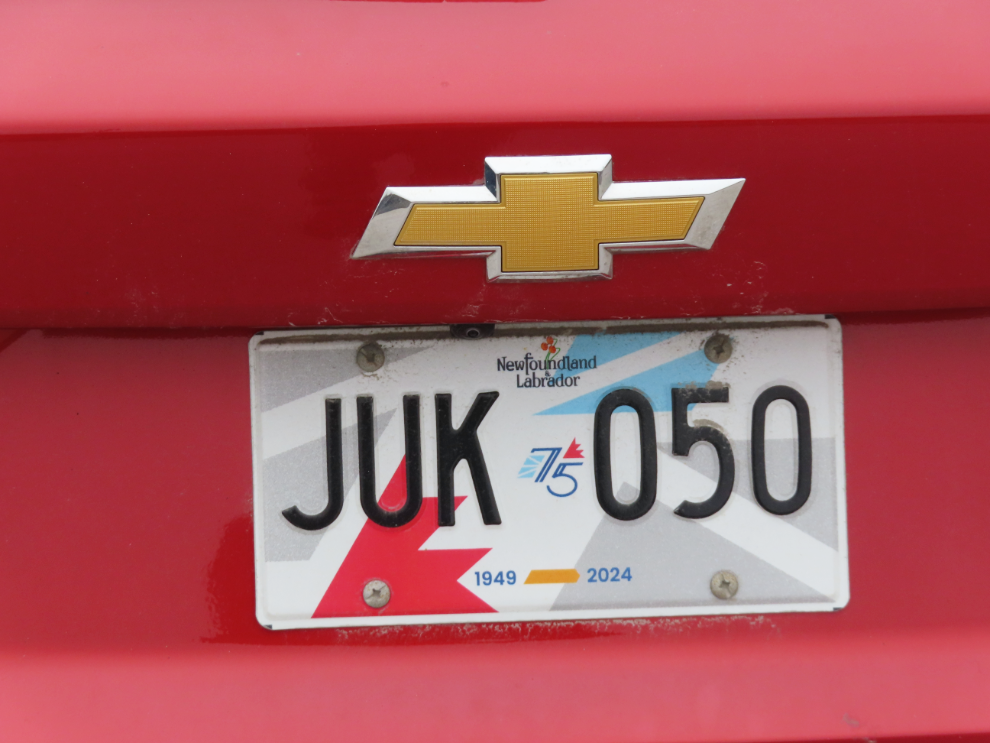
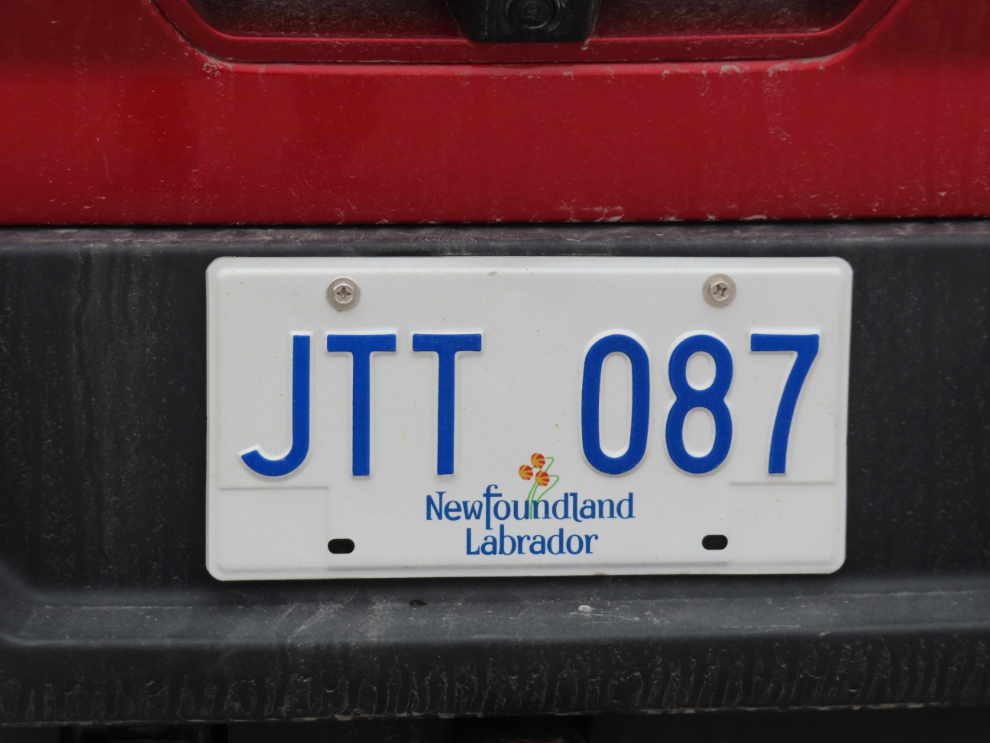
I went up to drop the key fob at the rec centre, and on the way back noticed that all 3 recent Newfoundland licence plates were on vehicles sitting there side-by-side. I’d been watching for a 2022 “Come Home” one in particular, but this opportunity was perfect 🙂
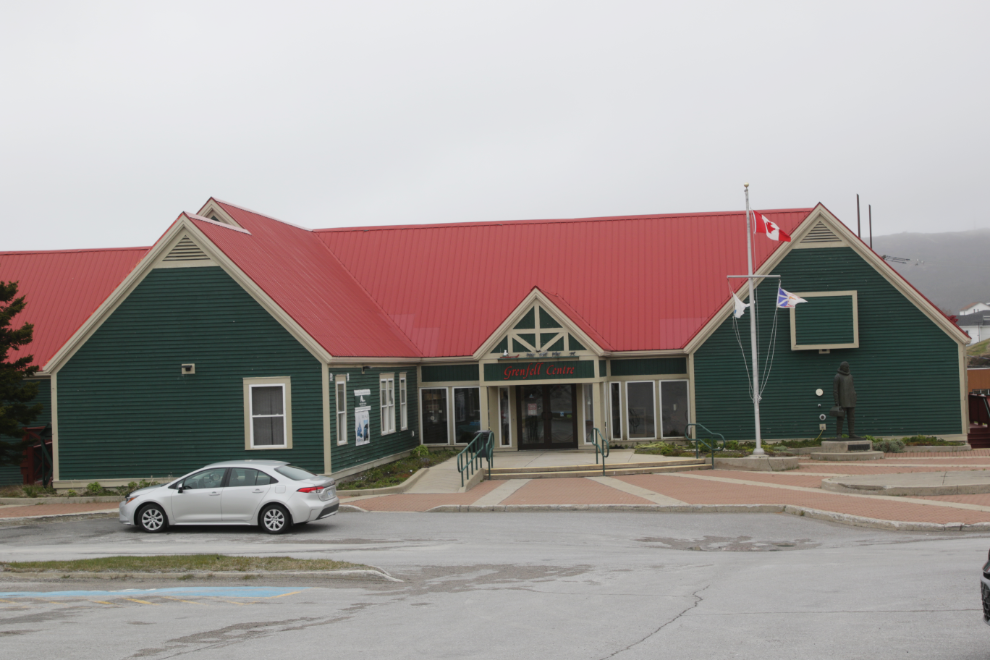
My main interest in St. Anthony was the life of Dr. Wilfred Grenfell. I’ve known the basics of his life for many years, but I wanted to know much more. The Grenfell Interpretation Centre provided that.
When Dr. Grenfell arrived in Labrador in 1892, there were 30,000 people living there without a medical doctor. He spent the rest of his live working to make their lives better, not just in terms of medical care, but also wth social programs. The interpretive centre, which opened in 1998, shows him to have been the perfect example of a “Renaissance man,” a person with a remarkably broad knowledge and deep proficiency across a wide variety of unrelated fields.
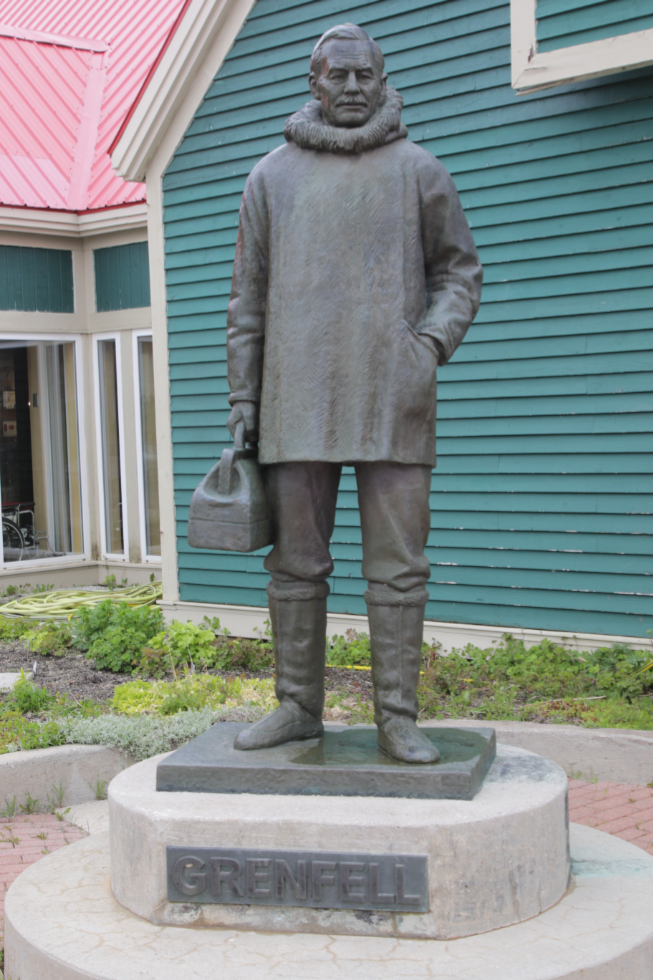
A bronze statue of Dr. Grenfell stands outside the centre. It was created by Hans Melis, official sculptor of Newfoundland, in 1978. It was originally installed at the the Charles S. Curtis Memorial Hospital across the street, then was moved here when the centre opened.
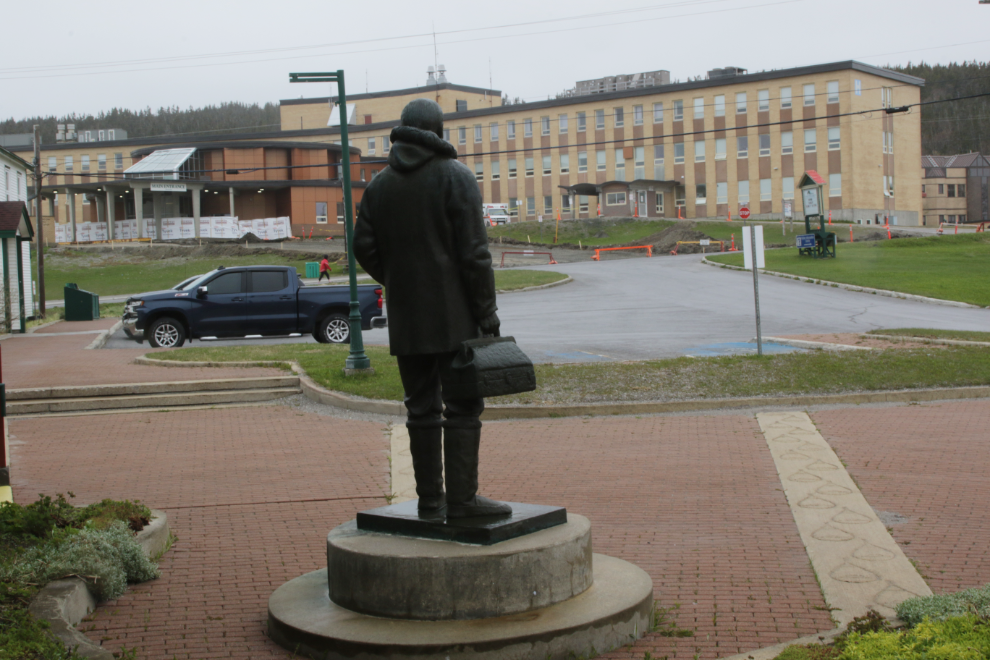
The statue now looks across to the hospital – perfect.
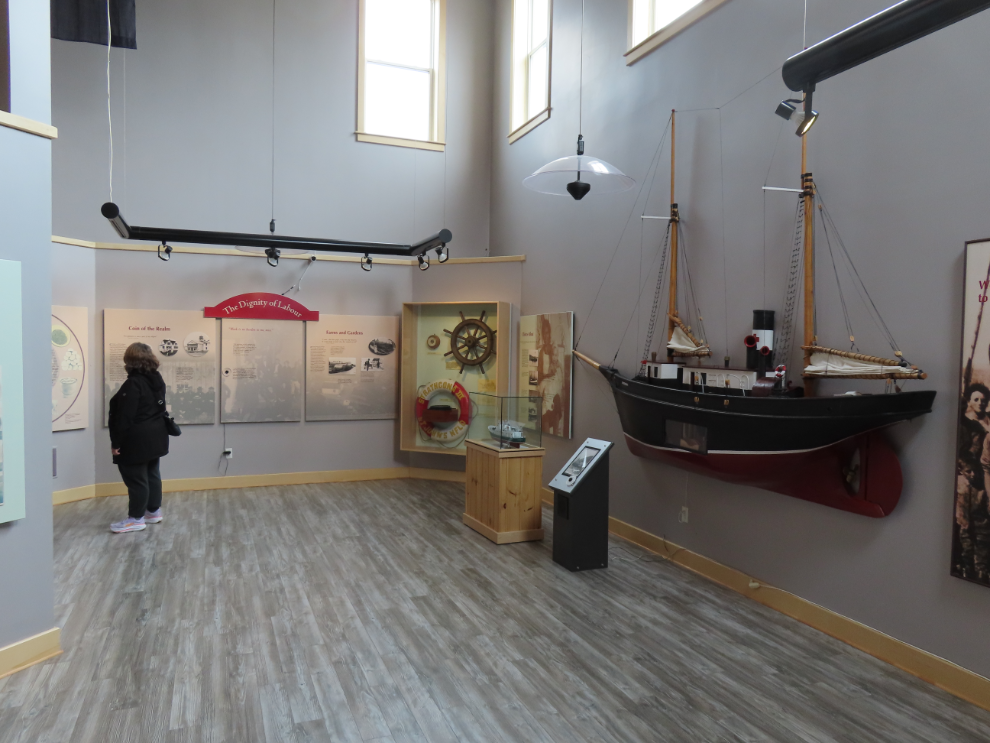
The centre does an excellent job of introducing visitors to the vast range of activities and programs initiated by Dr. Grenfell, many of which continue to this day.
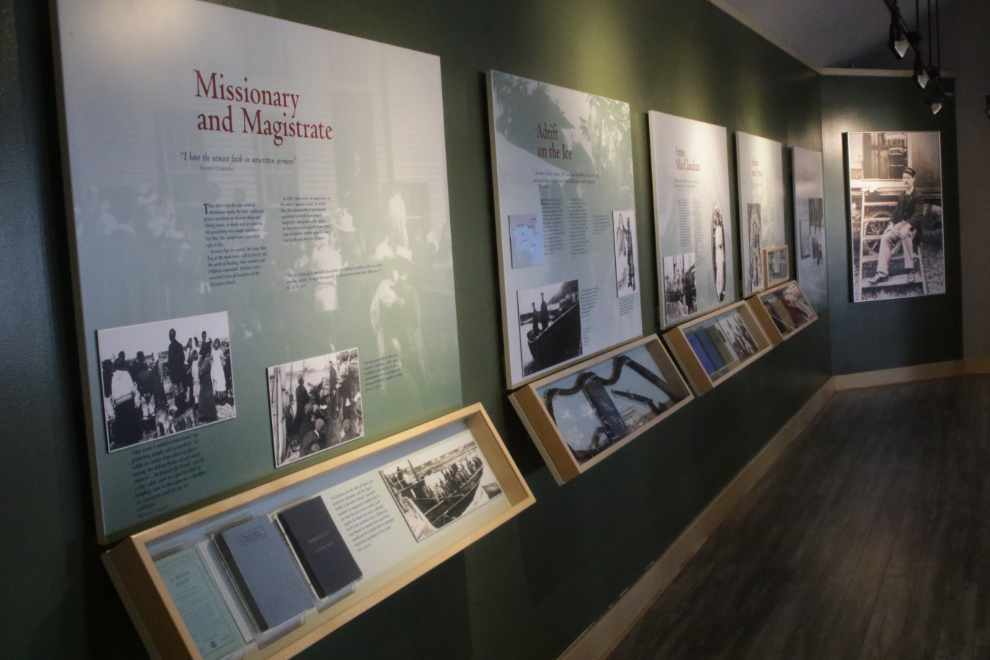
The challenges of year-round travel by ship and dogsled are well covered. The number of people seen for medical attention each year grew dramatically as other doctors and nurses joined the Grenfell Mission.
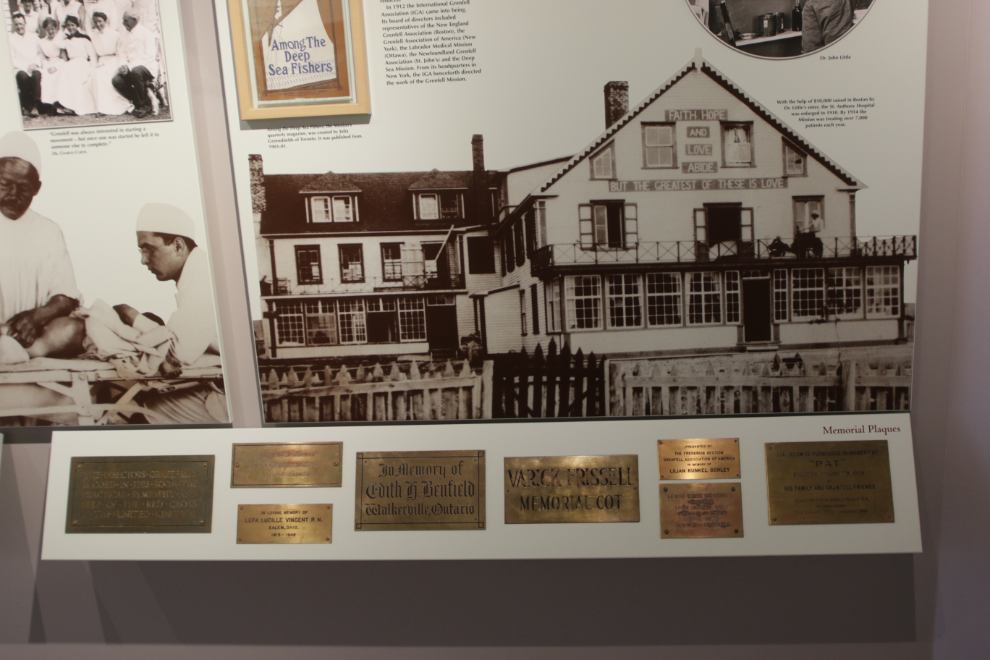
Dr. Grenfell’s life and the scope of his mission, were changed dramatically when he met American socialite Anne Elizabeth Caldwell MacClanahan during a lecture tour. She knew all the right people to support his work, and they were soon married. Her contributions to his work ran from from being his secretary and book editor to fundraising. She died in 1938 at the age of 54; Dr. Grenfell died 2 years later at 75.
The International Grenfell Association (IGA) was formed in 1914 to run all the programs. In 1981, the provincial government bought all of the hospitals (for $1), and today, the Labrador-Grenfell Regional Health Authority delivers medical services to the area formerly under IGA care.
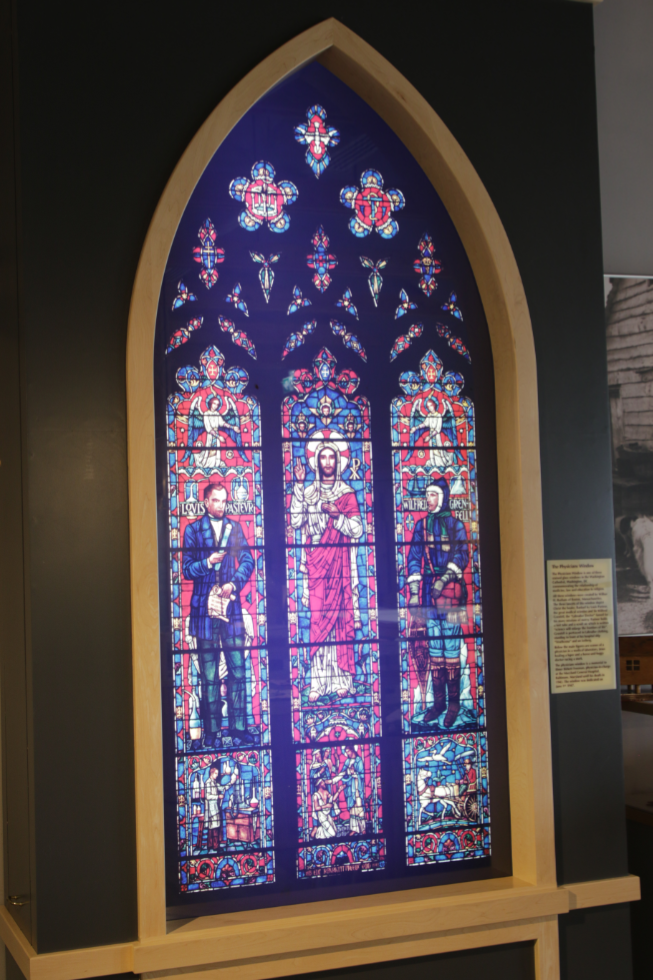
The stained-glass Physician’s Window in the Washington Cathedral in Washington, DC, created by Wilbur H. Burham, features Christ the healer in the centre panel, flanked by Louis Pasteur on the left and Dr. Grenfell on the right.
I would have liked to also visit the hospital to see the Grenfell mural, and his home and grave, but neither time nor my ability to absorb more information allowed those.
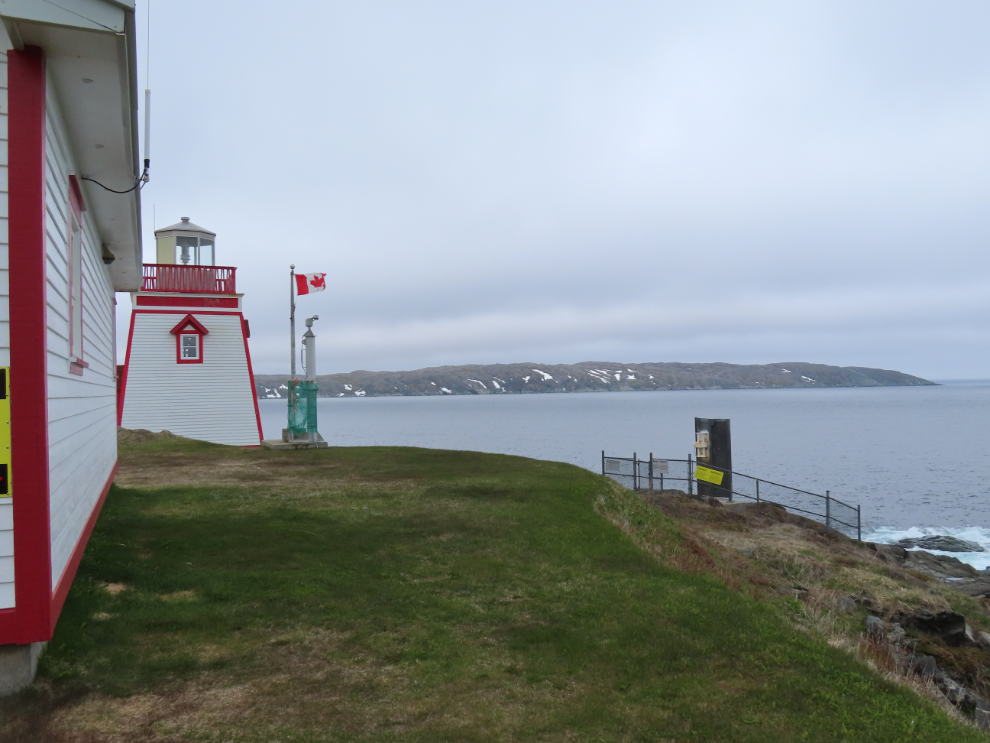
From there we went grocery shopping, then it was time for lunch. That took us back to Fishing Point, where I got a few more photos of the Fox Point Lighthouse and the icebergs in the harbour.
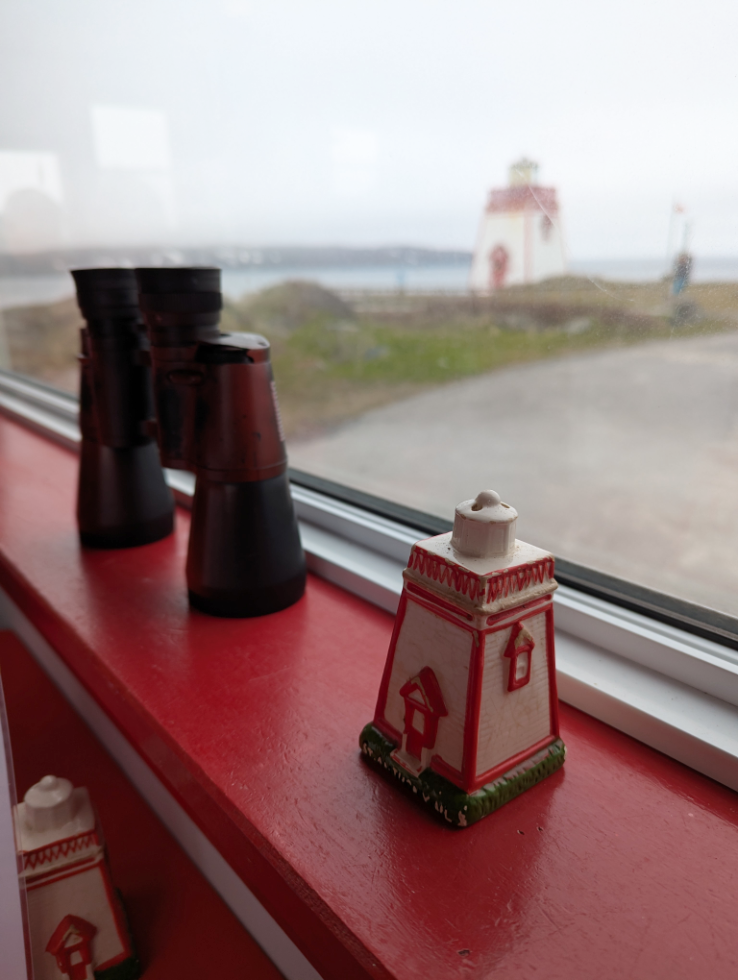
Then we went to the Lightkeeper’s Restaurant, which has well-reviewed fish and chips. There are binoculars at each window table, and the salt-and-pepper shakers are wonderful replicas of the Fox Point Lighthouse.
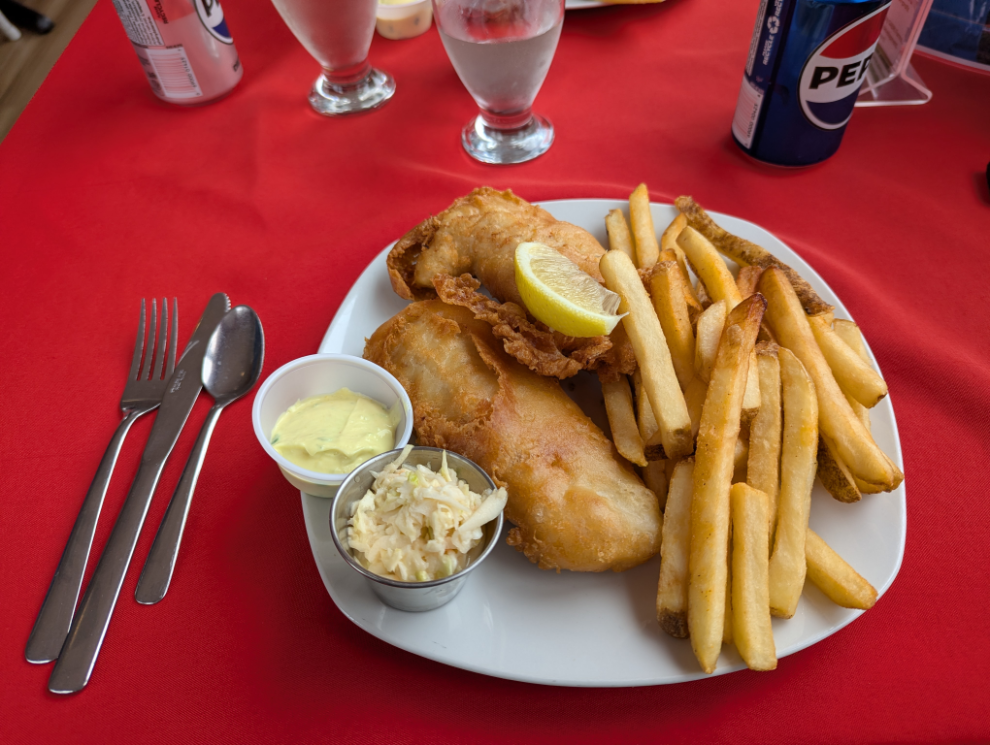
Yes, the fish and chips are excellent. I put them now at first place because of batter that has more character than at Northern Delight Restaurant at Gunner’s Cove, but Cathy still has Northern Delight in first place.
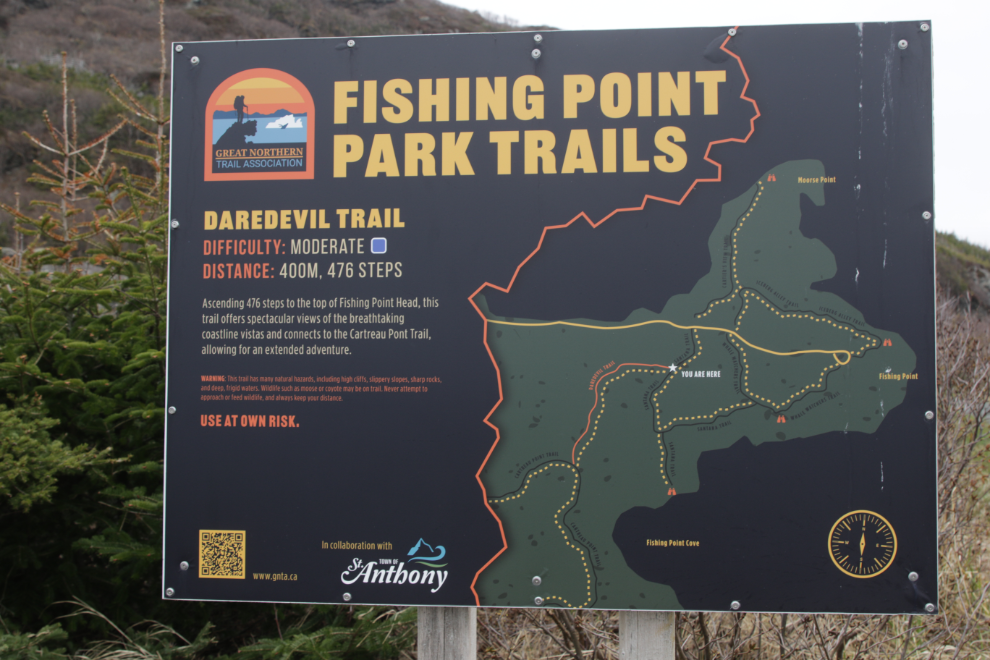
I could see stairs climbing way up to the top of the rocky knoll overlooking Fishing Point, and thought I’d like to climb them. Cathy thought I was kidding. She had read about it and apparently its commonly called the Santana Trail, but it’s not – Santana is an easy walk along the bottom. The stairs are the Daredevil Trail: “Ascending 476 steps to the top of Fishing Point Head, this trail offers spectacular views of the breathtaking coastline vista and connects to the Cartreau Point Trail, allowing for an extended adventure.” Rated moderate. I expected to be back at the RV in 45 minutes.
Before reaching the stairs, there was about 20 feet of snow to cross.
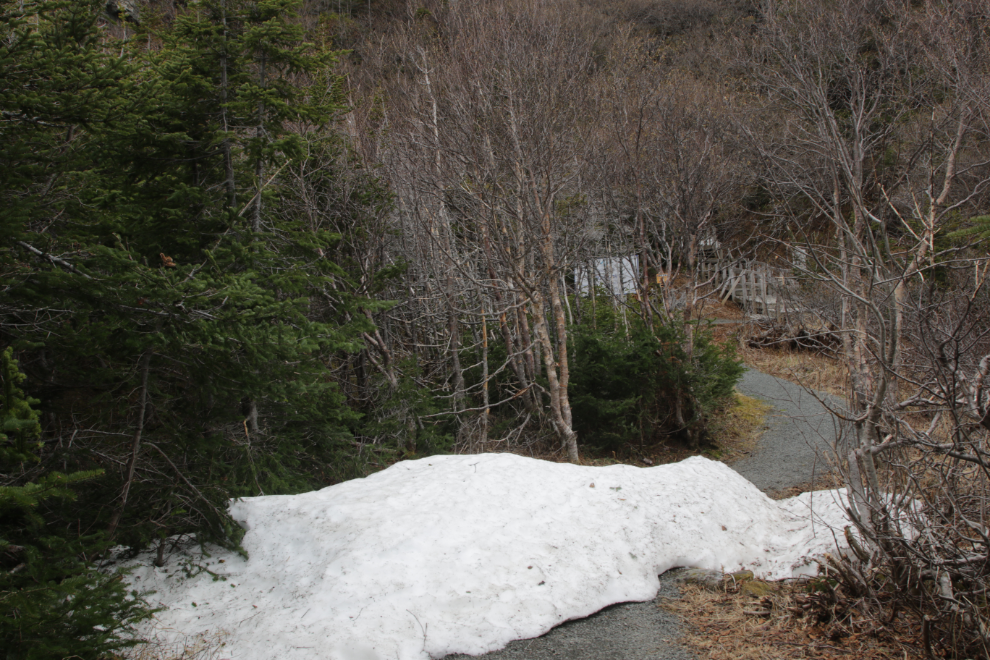
The wind was strong and cold, though nothing like it had been the day before.
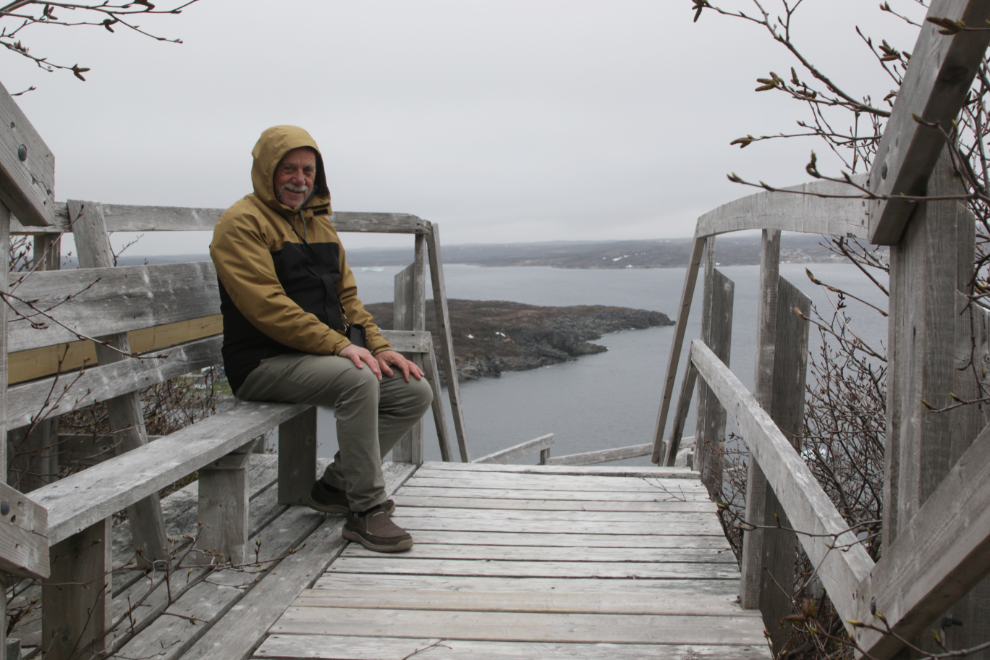
The stairs are pretty amazing!
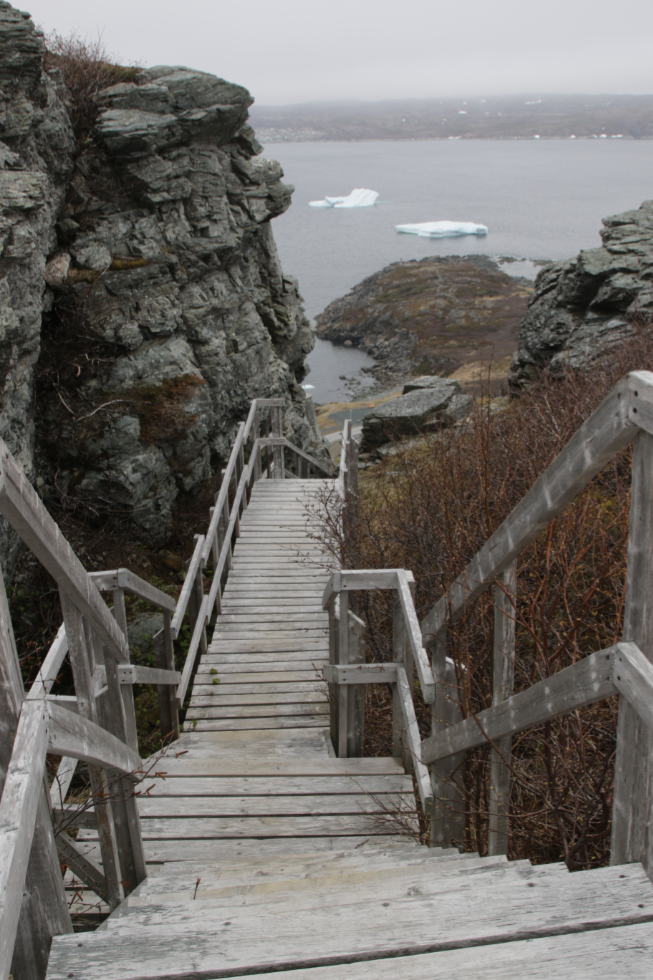
I was hoping that somebody would be telling the story of building those stairs, but I haven’t found anything in a brief search. The planning, design, engineering, and construction are each worth bragging about.
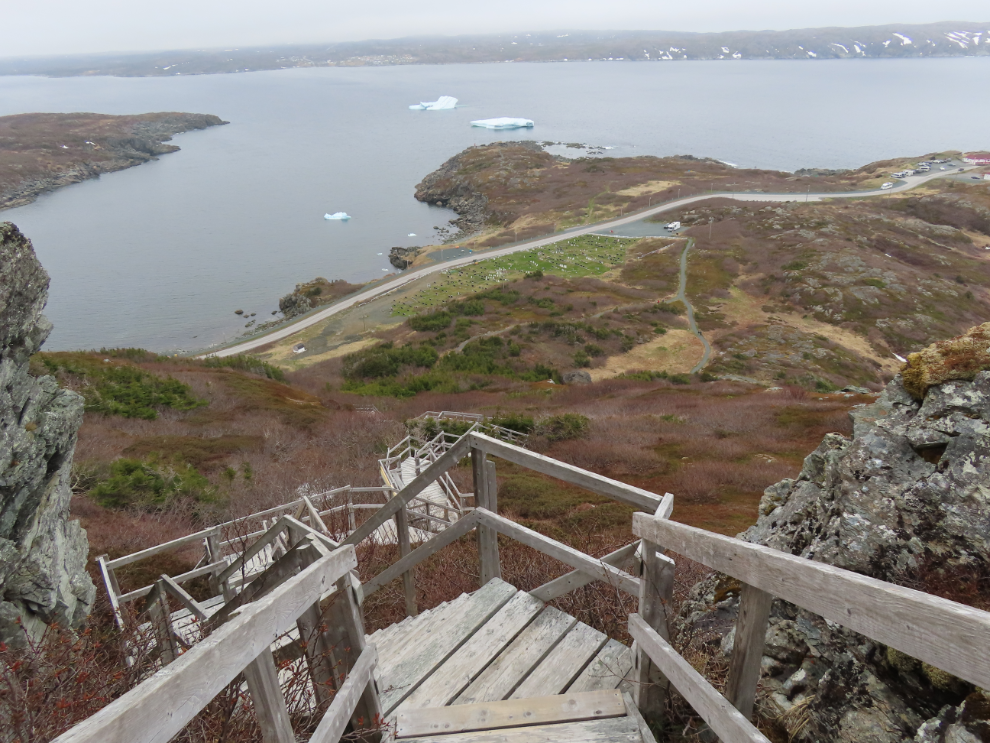
Yes, the views from the top make the climb well worth it.
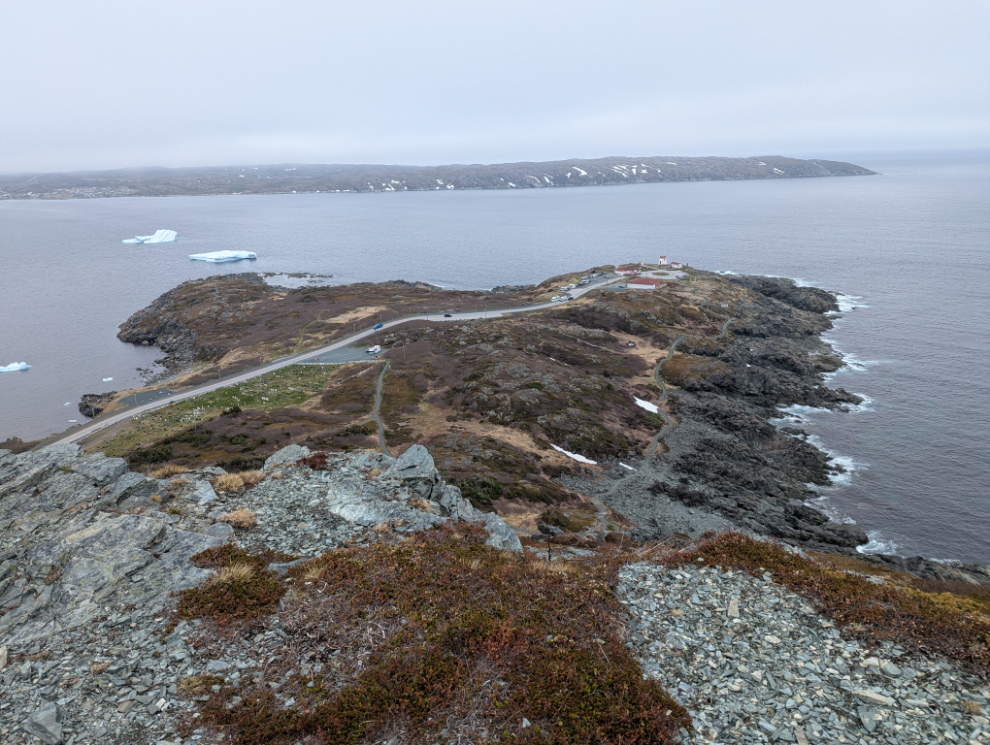
I walked over to the west side of the ridge, and much of St. Anthony can be seen from there.
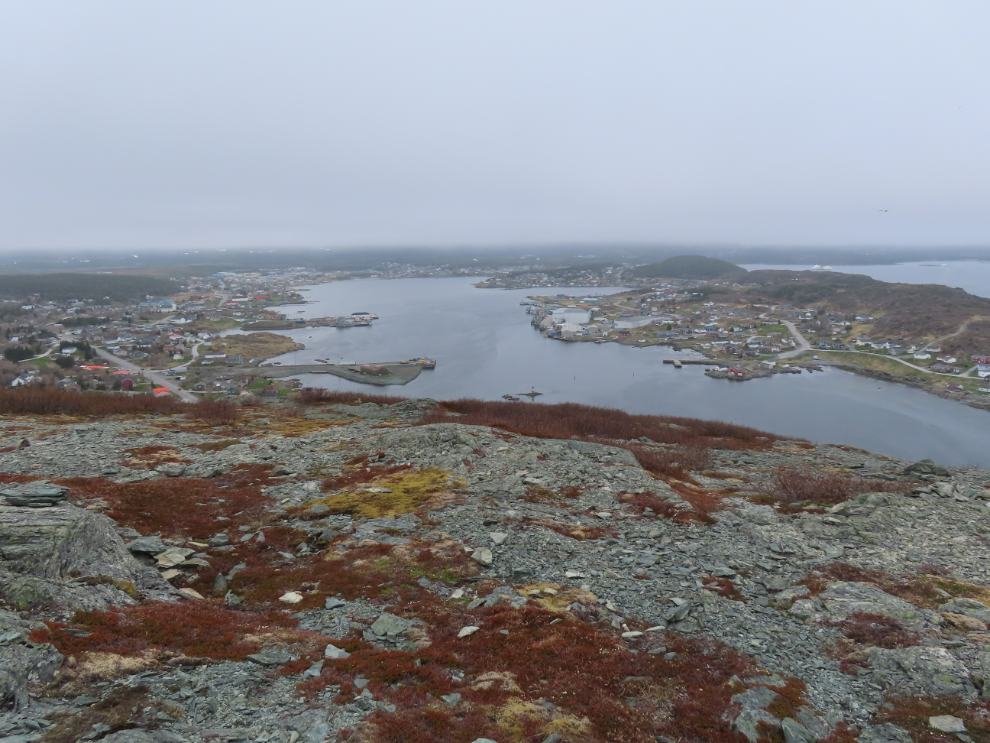
I was back at the RV in 45 minutes, having walked only 1.5 km horizontal, but with 111 meters elevation gain. An excellent outing.
Having driven by Consolidated PBY Canso water bomber a few times, I finally figured out a spot I could tuck the RV into (barely) to get a bunch of photos. The park it sits in was dedicated in 2008 to St. Anthony water bomber pilot Captain Ronald Penney and his Fist Officer Yannic Dutin from Saint Pierre and Miquelon, who were killed during a fire fighting mission with another Canso on 12th July 12, 1967. This aircraft, C-FIZU, was one of seven Cansos operated by the province’s Newfoundland Forest Protection Association.
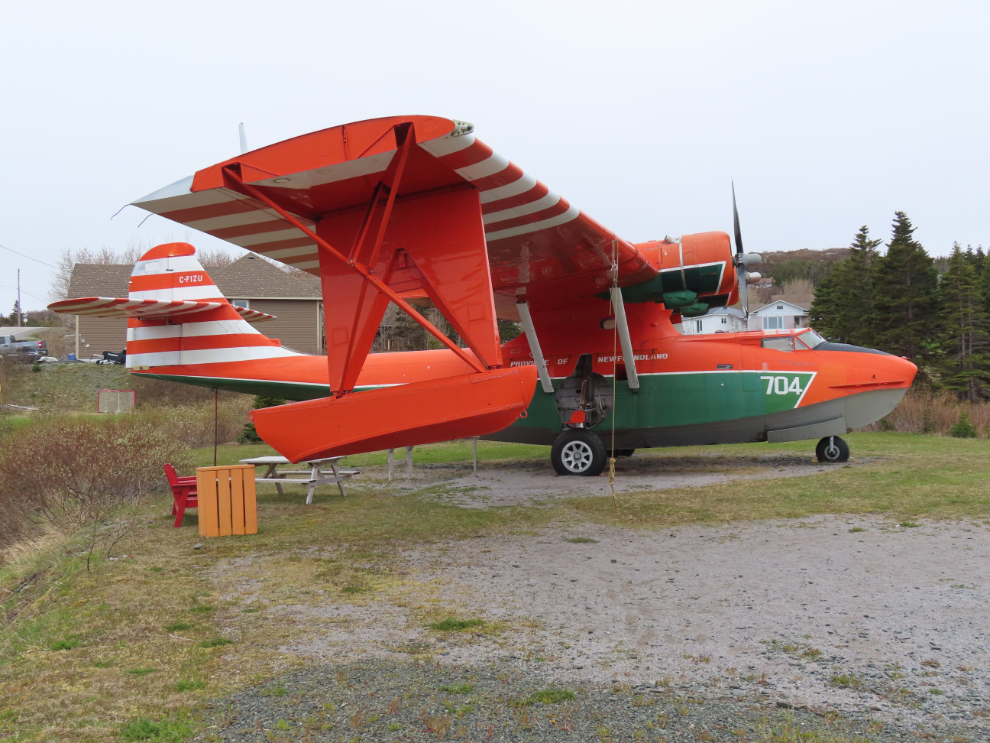
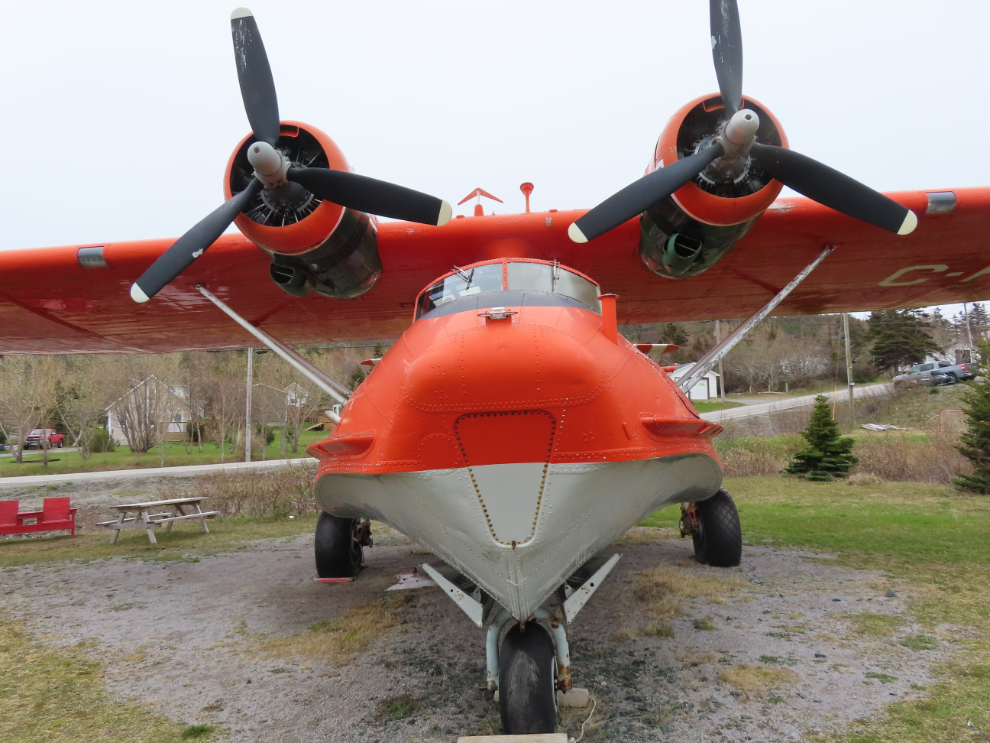
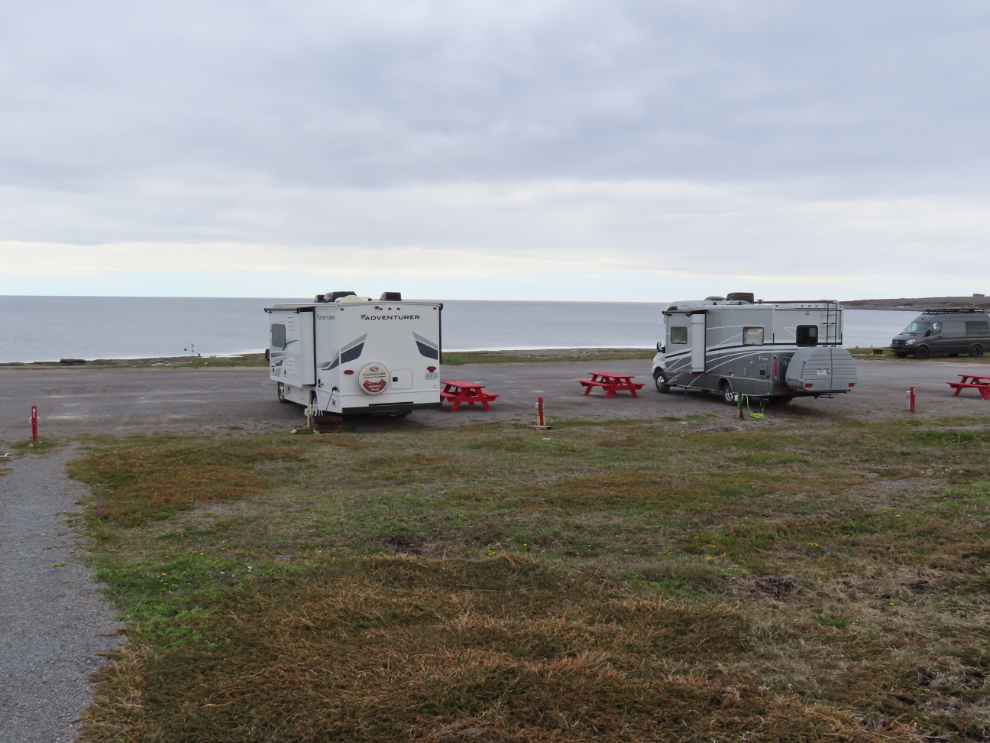
Although we had planned on spending two nights at St. Anthony, we left after one due to a combination of the weather and a parking place we weren’t happy with. Our new planned destination for that evening was Port au Choix, 201 km south. We didn’t have a place to park, but a phone call to the Oceanside RV Park, run by the Lions Club, solved that issue. We’ve pretty much given up on boondocking – not being right in the great spots we want to visit (which is where RV parks are built) is just not a good use of our time.
We arrived at Port au Choix just before 5 pm.
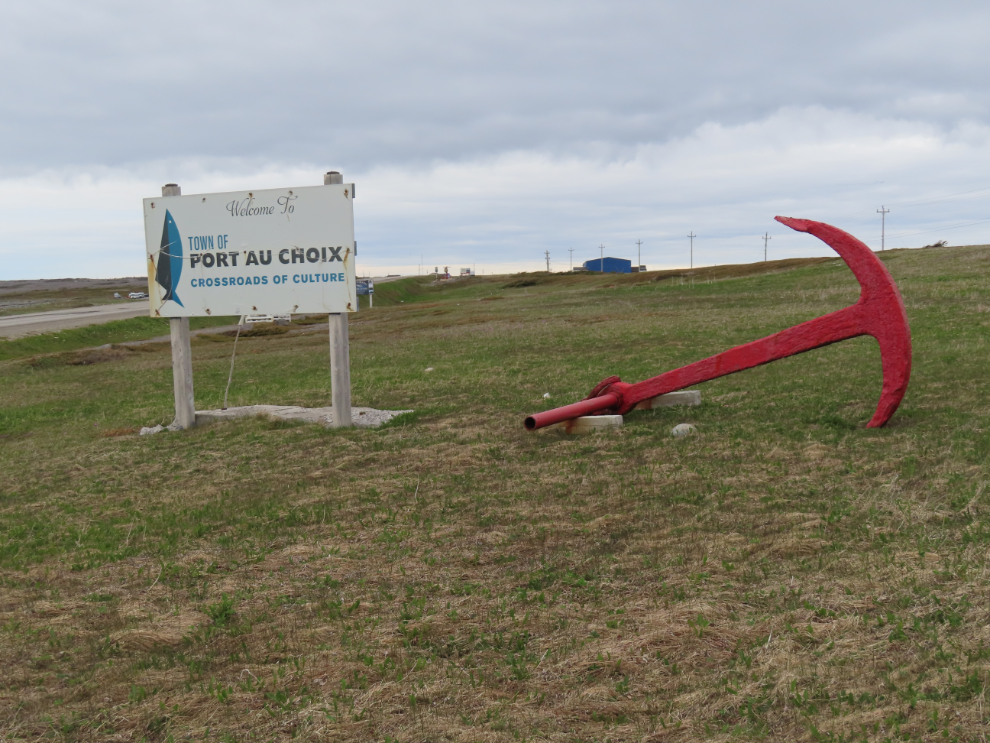
How’s that for an awesome spot to park?
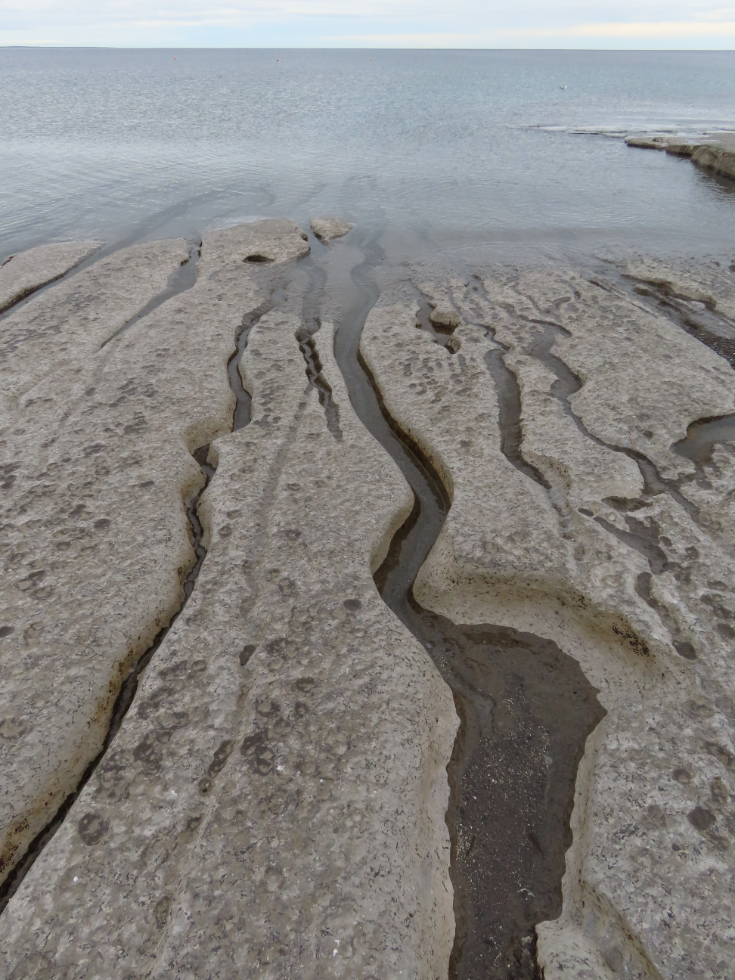
The beach right in front of us was fascinating. This ecosystem is know as the limestone barrens.
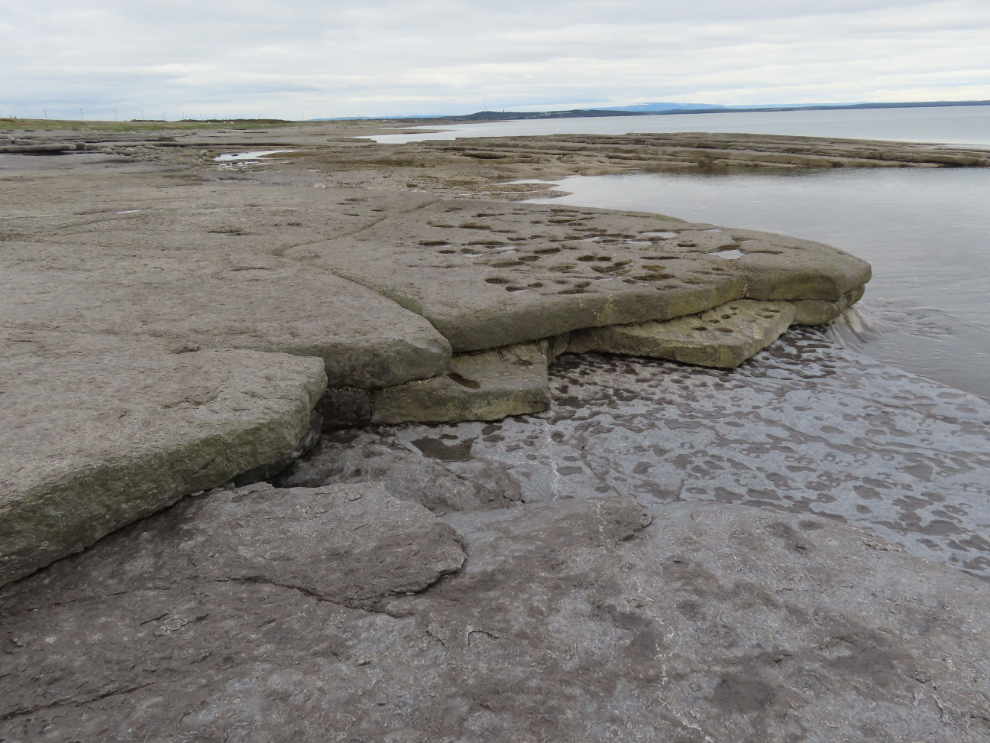
This is solid rock, not sand.
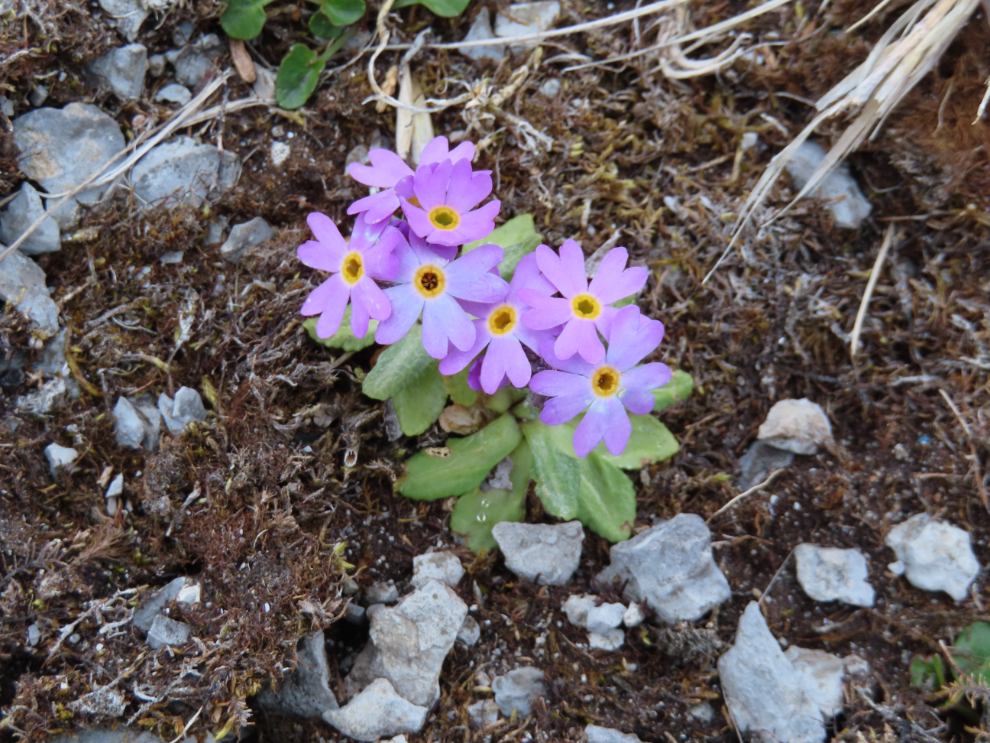
The limestone barrens is home to some unique species of plants such as this Laurentian Primrose (Primula laurentiana), which thrives on the thin, high-pH, peaty soil overlying the limestone. My short exploratory walk on the beach turned into 4 km.
We went to bed with a good weather forecast for the next day – what we woke up to would determine how the day played out.

About The Author
