Driving to Halifax and visiting the Atlantic Canada Aviation Museum
On Tuesday, July 7th, Day 40 of our trip and the 8th day in Nova Scotia, we drove 250 km from the Hyclass Ocean Campground near Havre Boucher to the Woodhaven RV Park in Hammonds Plains, with a visit to the Atlantic Canada Aviation Museum.
Our GPS had warned us about highway construction delays of about 30 minutes, and although a detour around it was available on Route 289, I chose to sit it out as it happened.
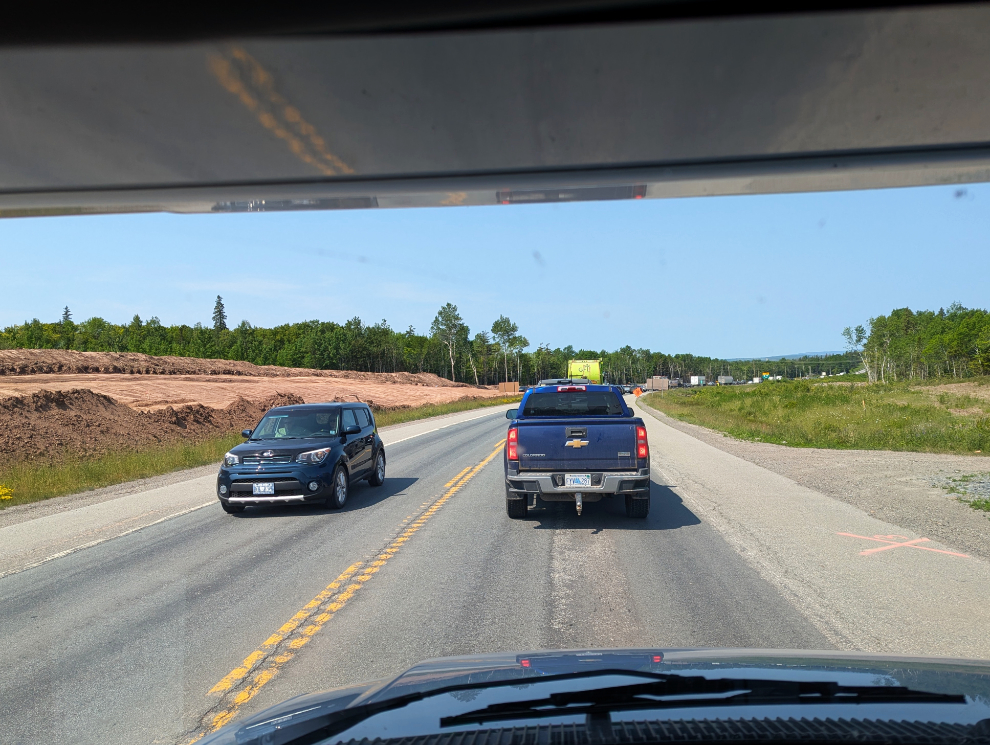
Ah, there’s the construction.
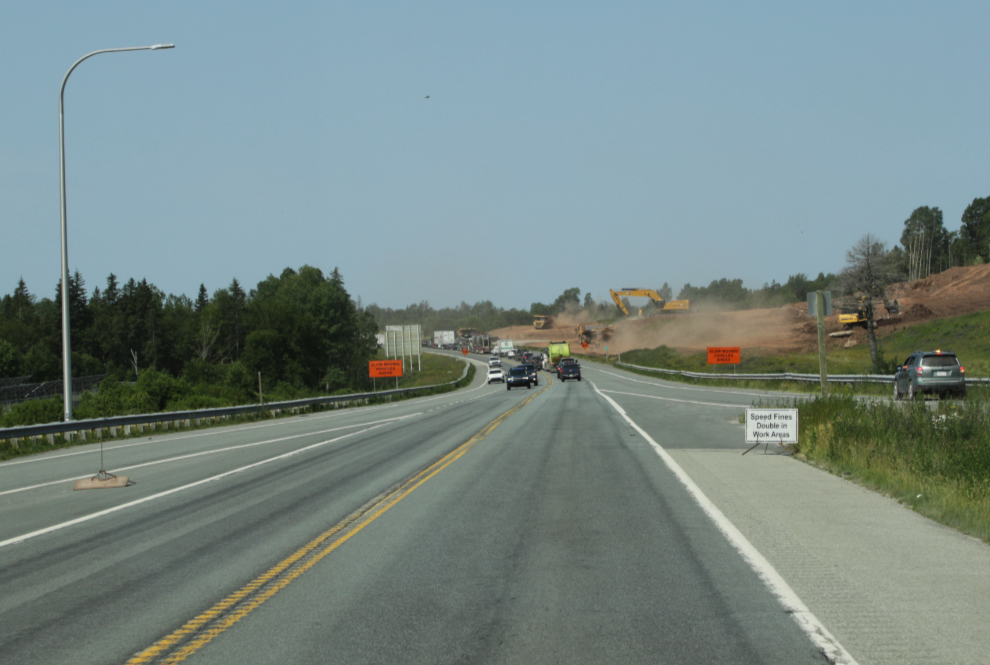
When we did come to a complete stop for half an hour or so, I at least had an interesting location to watch the equipment.
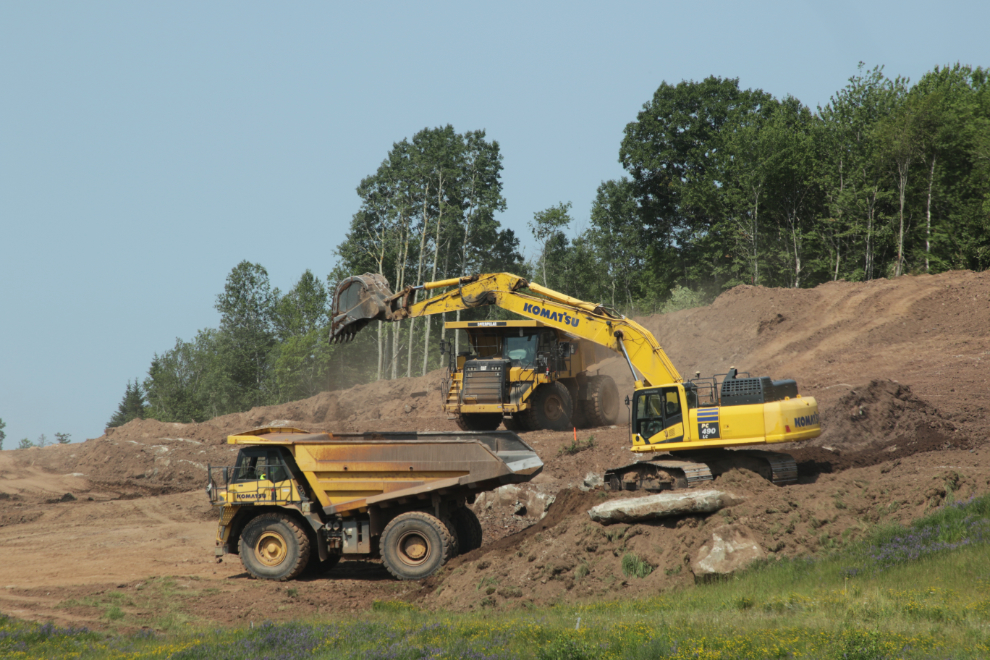
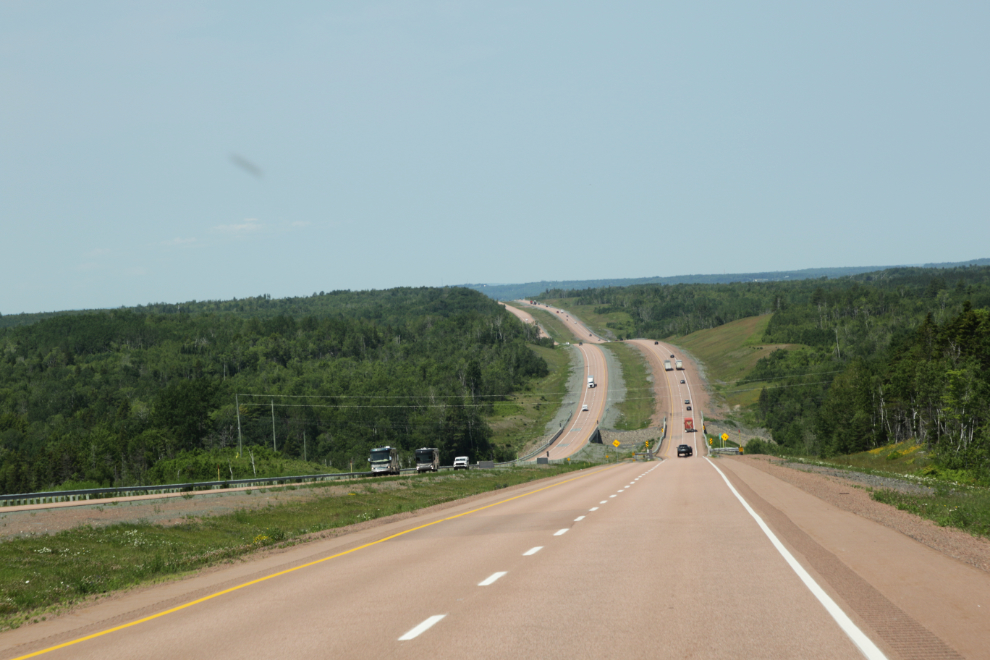
The new highway is being built beside the existing one so as not to disrupt traffic, and I never did figure out what caused the lengthy stop or a couple of shorter ones. I find highway construction to be interesting anyway, so I was glad I hadn’t taken the detour.
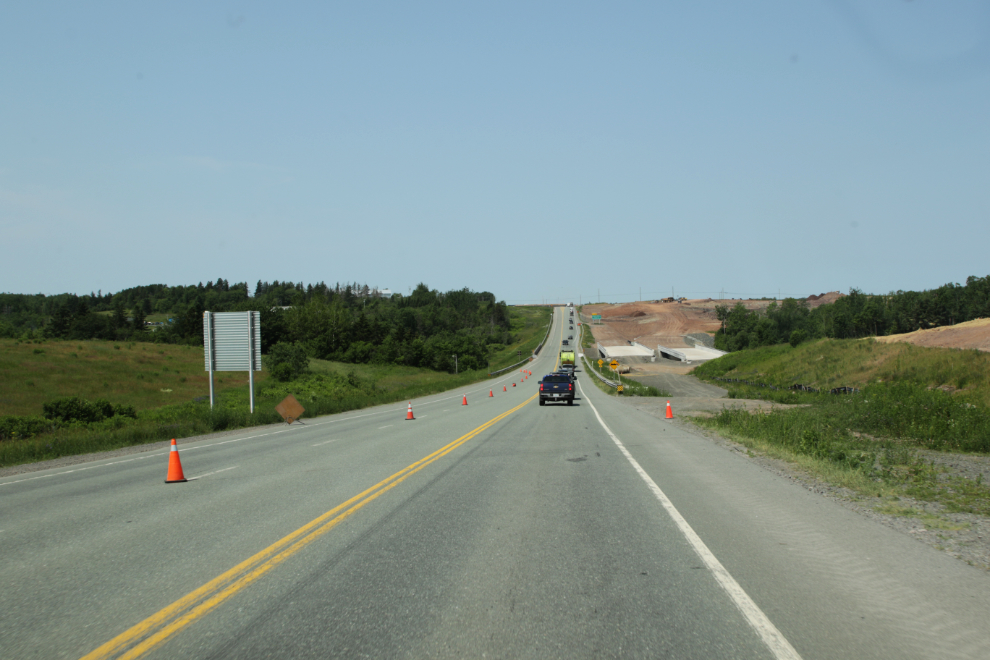
That rock cut ahead is very unusual for this country.
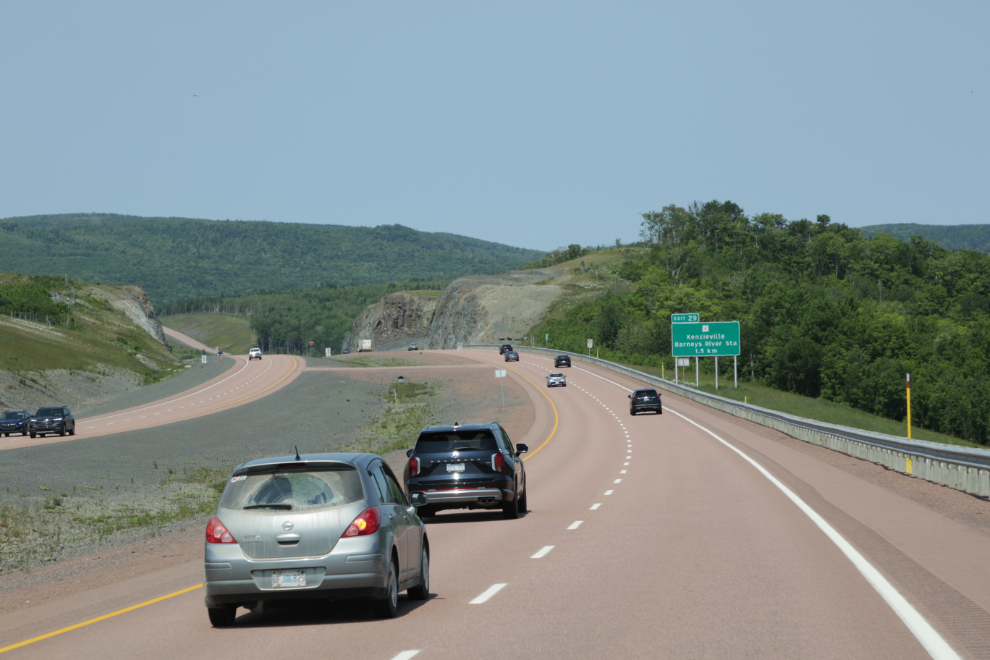
I asked Cathy to shoot the next photo to show what the finished product will look like. The red pavement is pretty cool, too 🙂
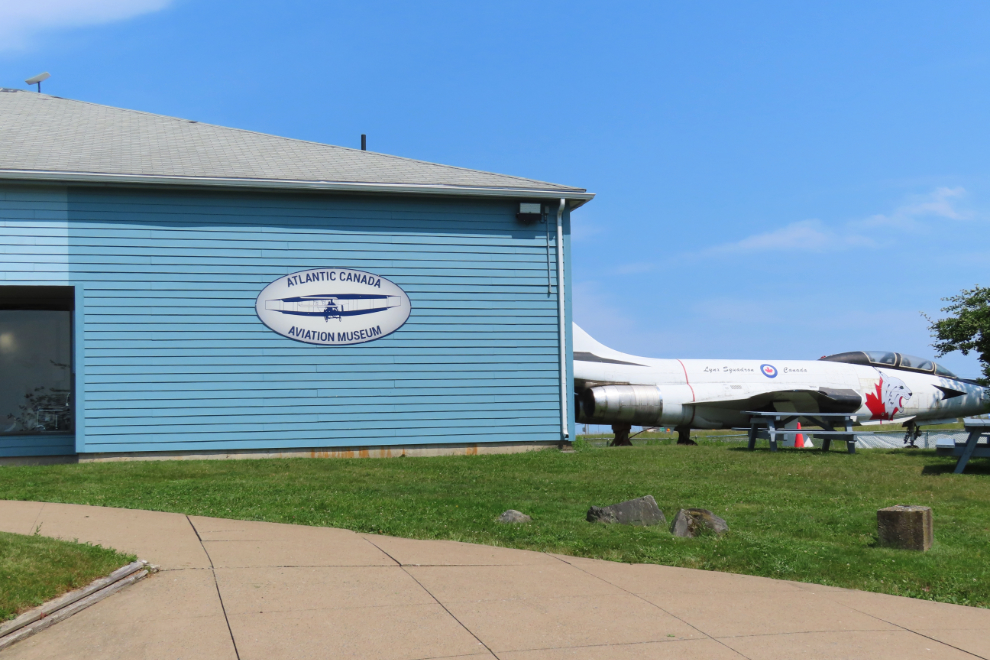
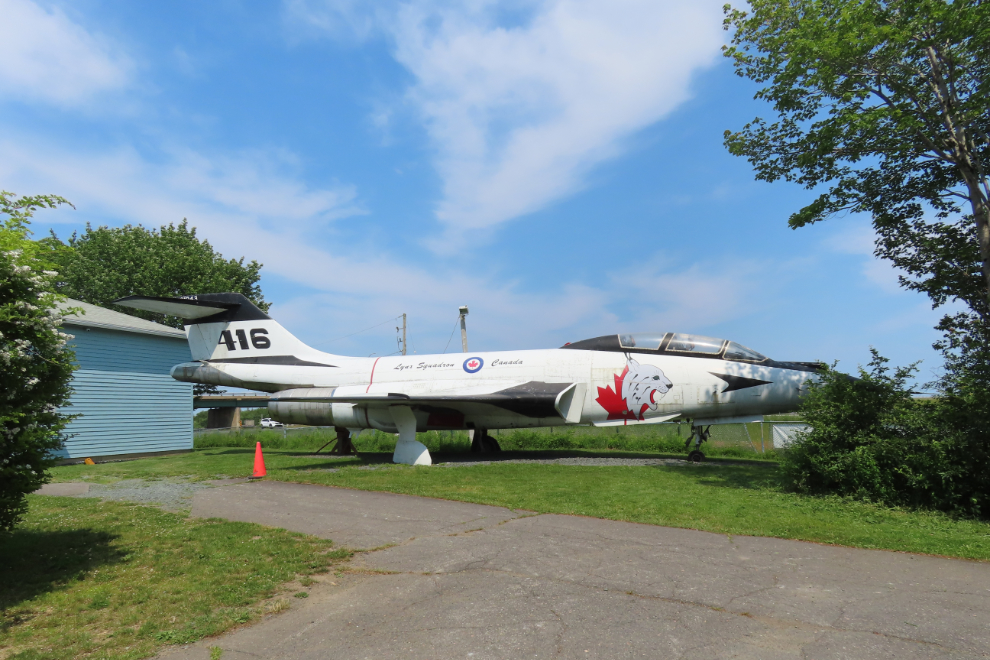
I had no idea what to expect at the Atlantic Canada Aviation Museum. There was only one car in the parking lot, so that part was simple. Seeing a CF-101 Voodoo beside the building was also a good start to seeing their collection 🙂
This is the scene when you walk in the door – there’s a lot to take in! A staff member came out and welcomed us, and gave a brief intro to the museum.
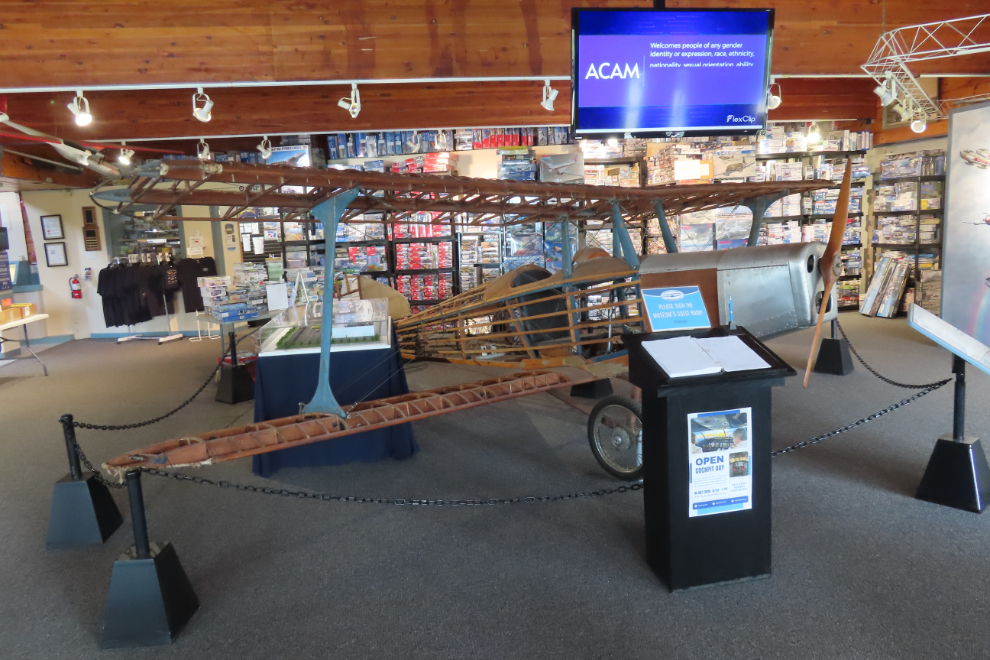
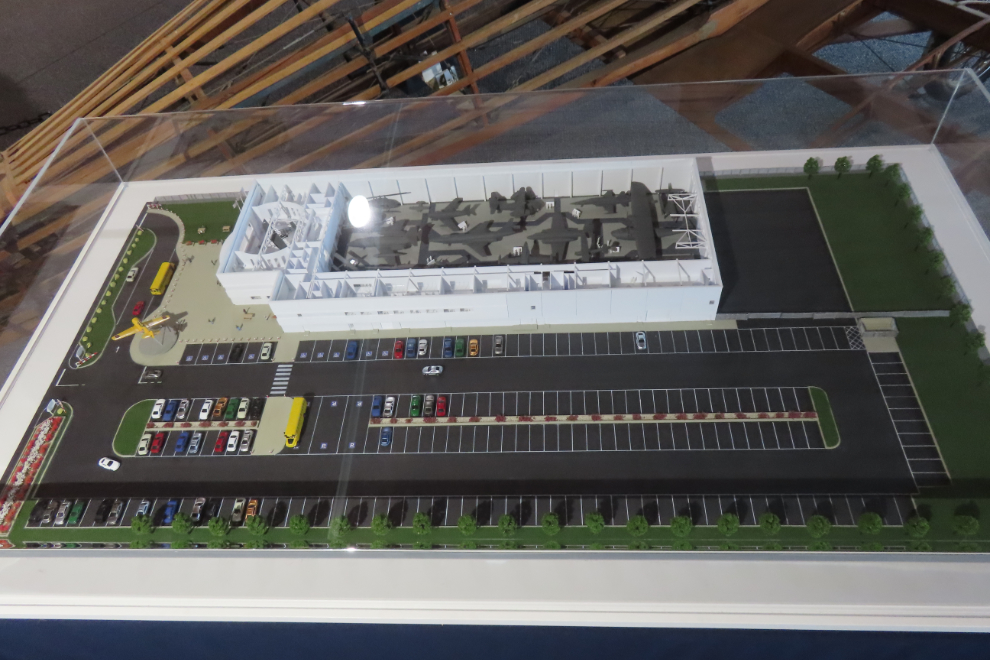
Front and centre is a model showing their dream – a 66,000 square foot building to organize, display and protect their collection properly.
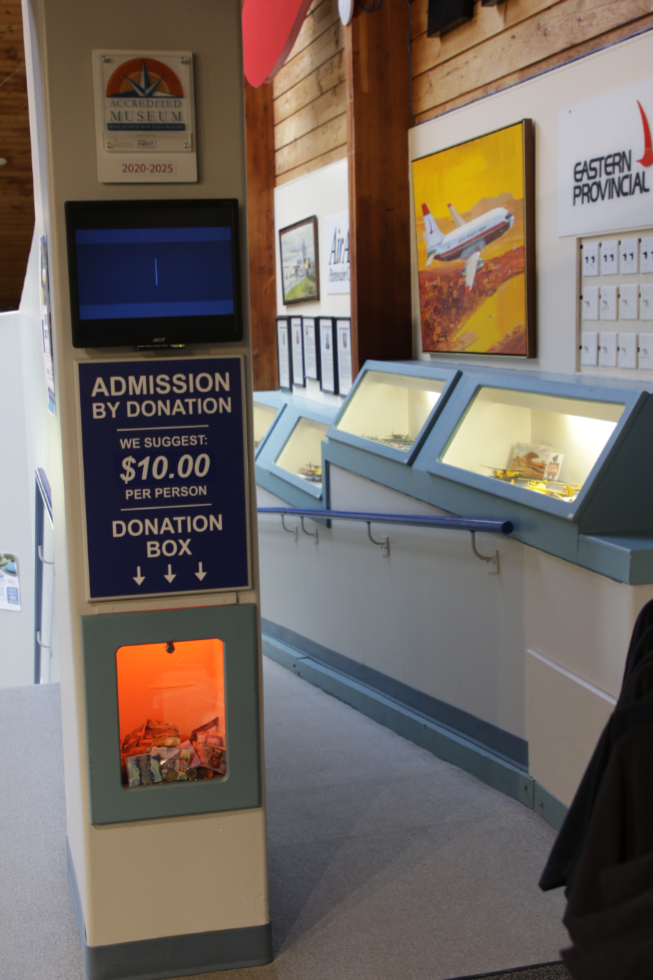
Admission by donation, with $10 per person suggested. Absolutely – I wouldn’t have balked at $20.
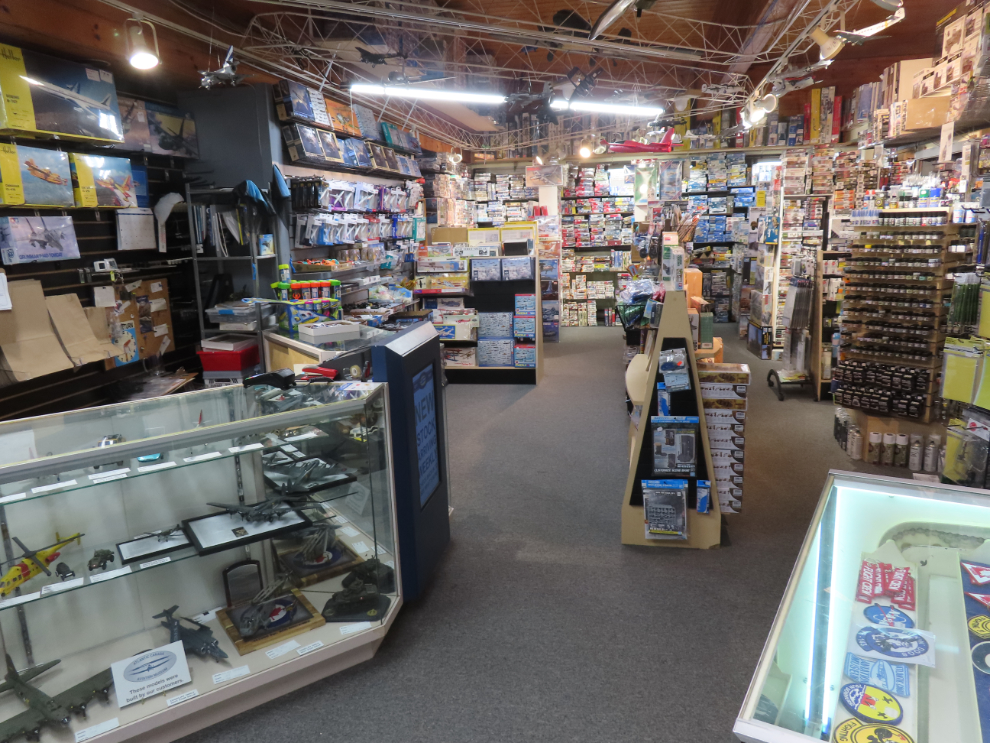
The gift shop is a model-maker’s dream store, but there’s lot of other great stuff as well.
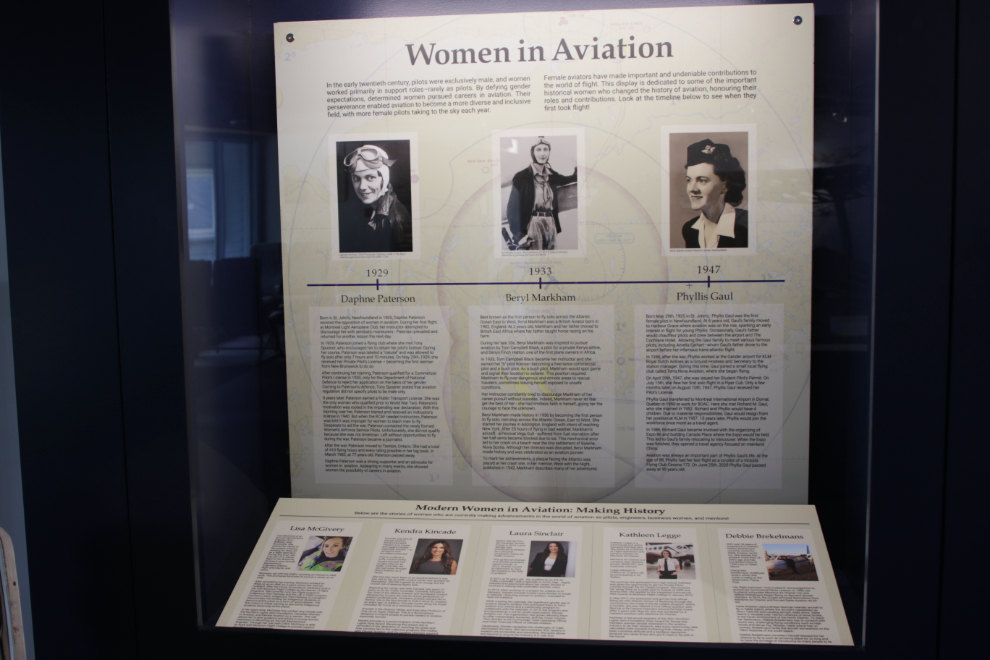
A tribute to women in Nova Scotia aviation history – Daphne Paterson, Beryl Markham, and Phylis Gaul – and five modern women making history in aviation.
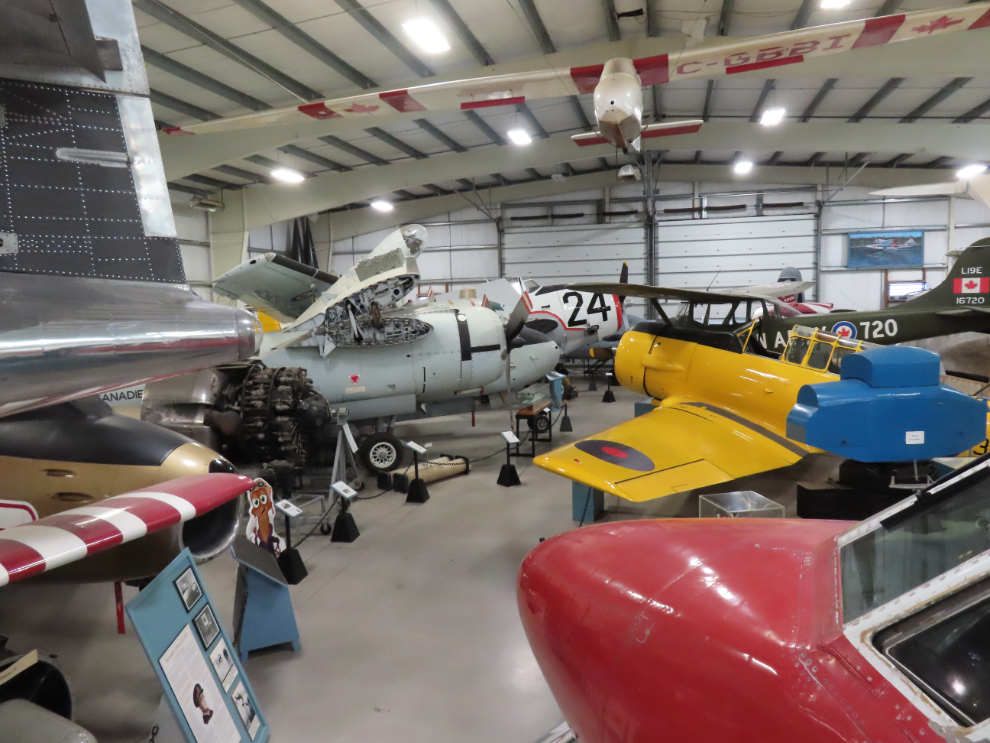
Stepping out of the welcome area, this is the view. I immediately knew, as did Cathy, that I would have to be extremely careful here not to overload my brain. That would primarily mean scanning information panels for highlights rather than trying to read them to understand it all. I shot over 100 photos to go through later.
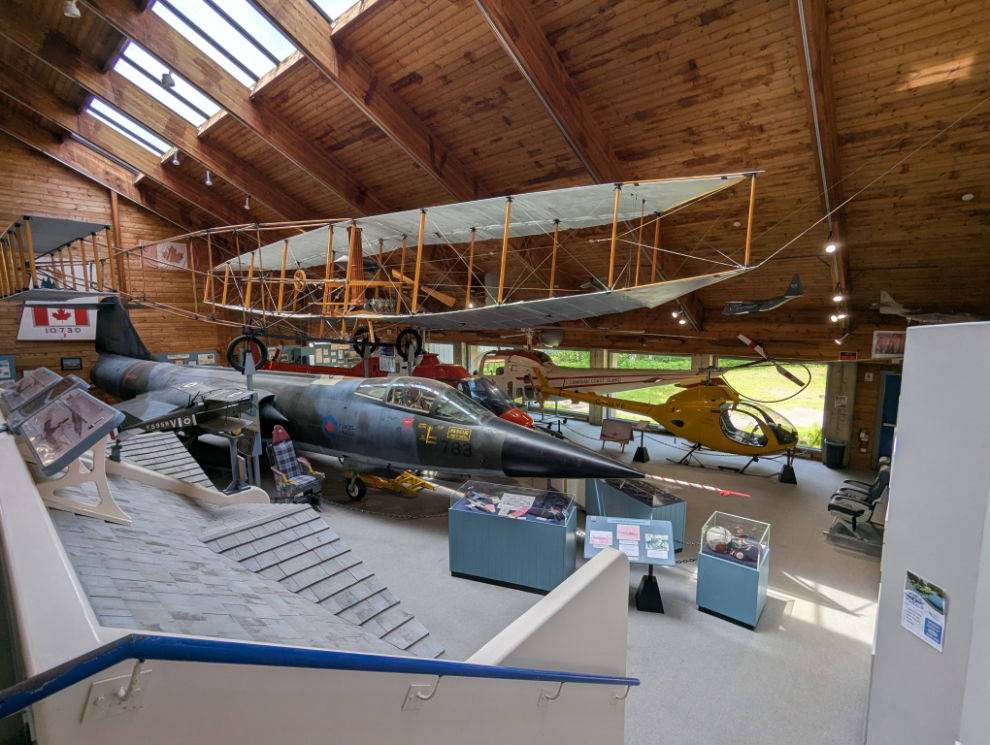
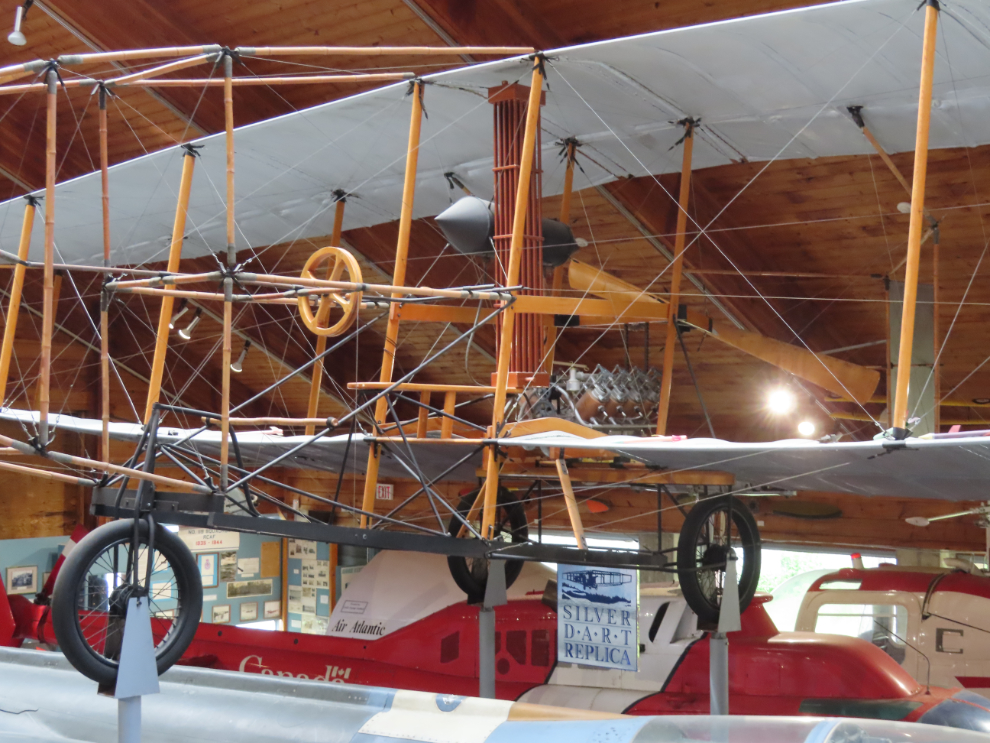
The Silver Dart replica is one of two built by Gordon MacRae of Baddeck, Nova Scotia. It was built from the original plans and is correct down to the last stitch. The engine is a wooden replica, but the plane did make one flight, tethered and towed by a truck for a scene in the movie “The Sound and the Silence.”
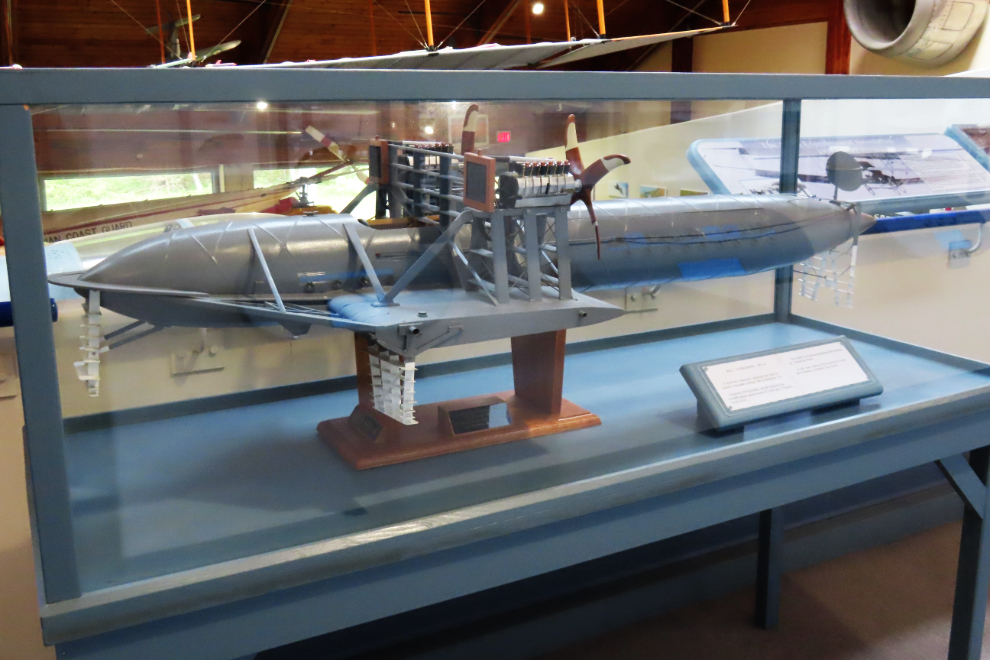
This is a model of the Bell HD-4 Hydrodome, designed and built by Alexander Graham Bell at Baddeck. It was powered by two 350 hp Liberty engines and set a world marine speed record in July 1919, at 70.86 mph.
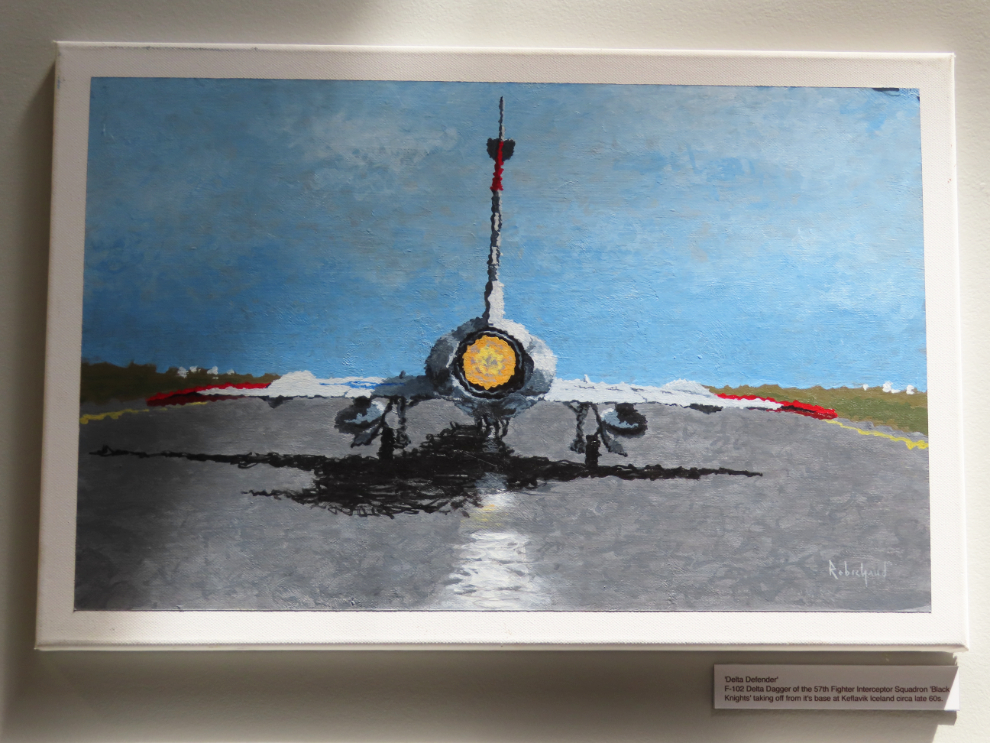
Several paintings by Peter Robichaud, who spent nearly 30 years in the Canadian Forces, are displayed. I particularly liked “Delta Defender,” which shows an F-102 as it would look taking off, seen through the heat waves.
This collection of solid-wood aircraft models from the 1930s was fascinating – I don’t think I’ve seen any examples before.
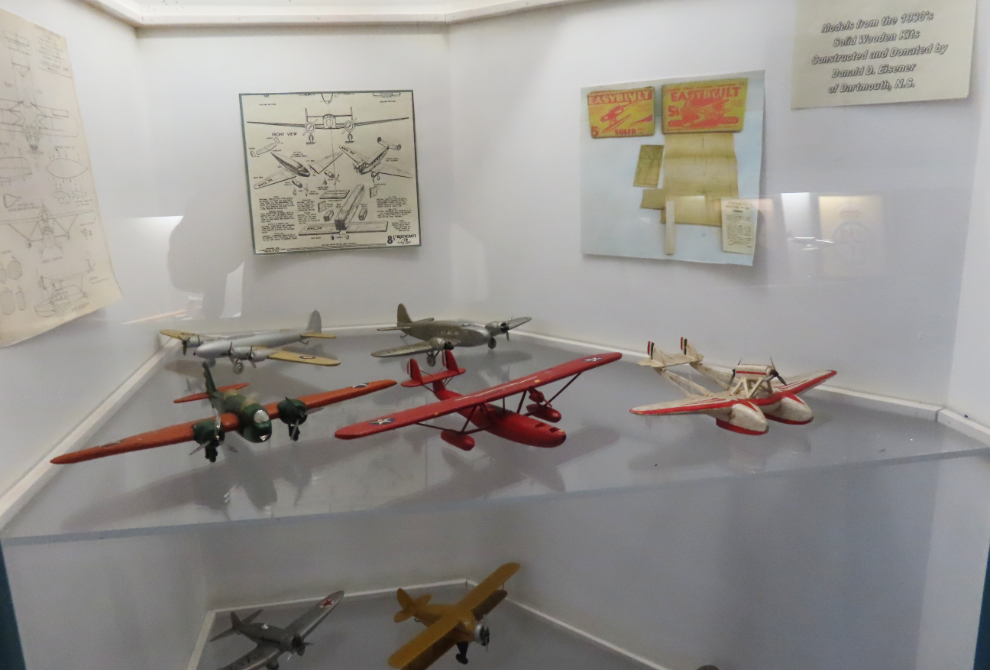
“Hey mister, this is made for kids!” “Get lost kid, can’t you see I’m busy?” 
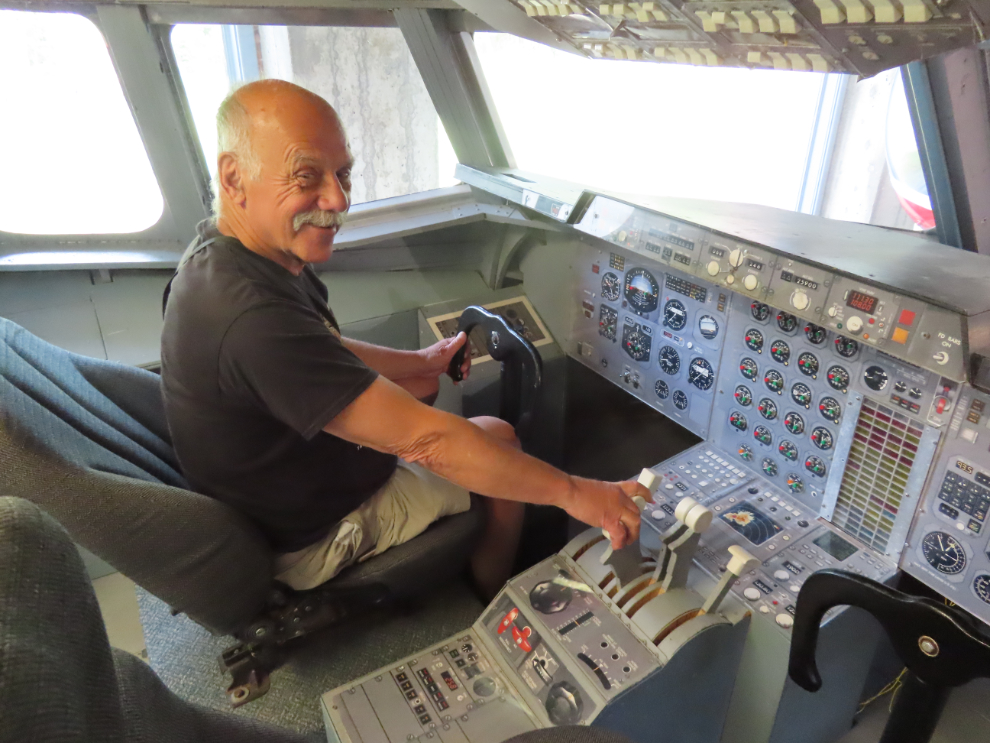
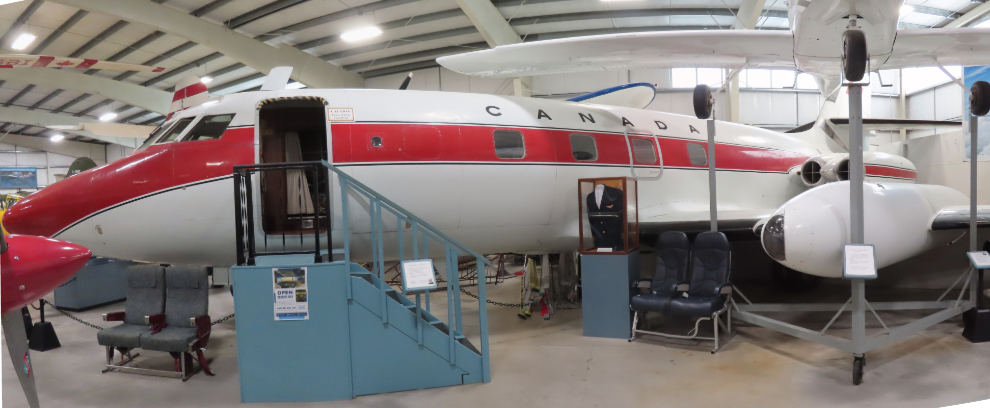
This Lockheed Jetstar is one of 204 produced between 1961 and 1980. Capable of carrying up to 14 passengers, Jetstars were used as VIP transport; this one, C-FDTF, was used by Transport Canada for many years to fly Prime Ministers including Pierre Trudeau on official business around the globe. Because of the cramped space in the museum, it took 3 photos stitched together to create this photo.
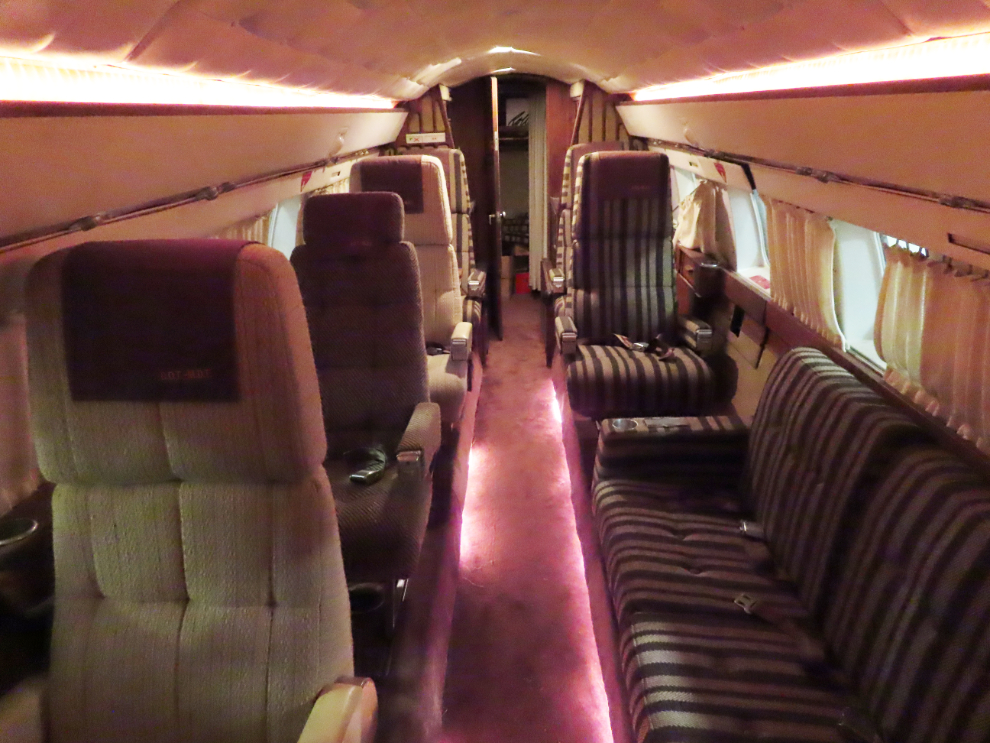
The Jetstar interior is luxurious by 1970s-1980s standards.
To see what a group of passionate people can accomplish is just plain exciting. And yes, a little overwhelming. I was nearing now the problem point and had to really back off on what I wanted to do.
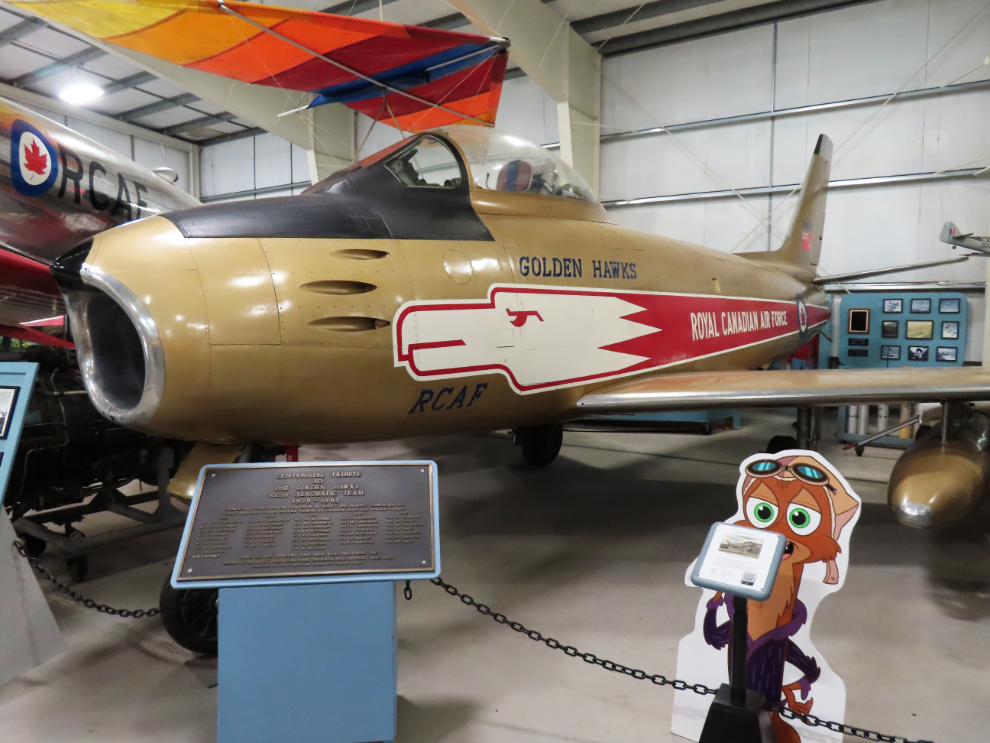
The Golden Hawks aerobatic team was formed in 1959, flying six Canadian-built Canadair F-86 Sabre Mark 5 jet fighter aircraft. They performed in 317 shows over five seasons, then budget cuts killed the program. This was Canada’s first demonstration team, and they set the standard for future teams including the Snowbirds.
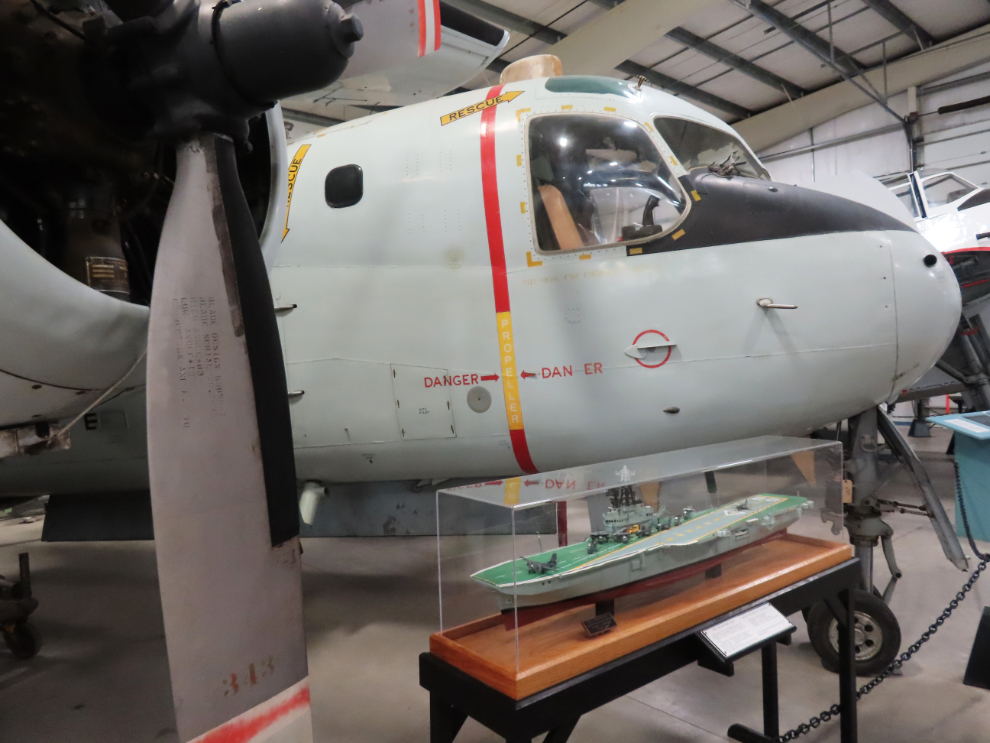
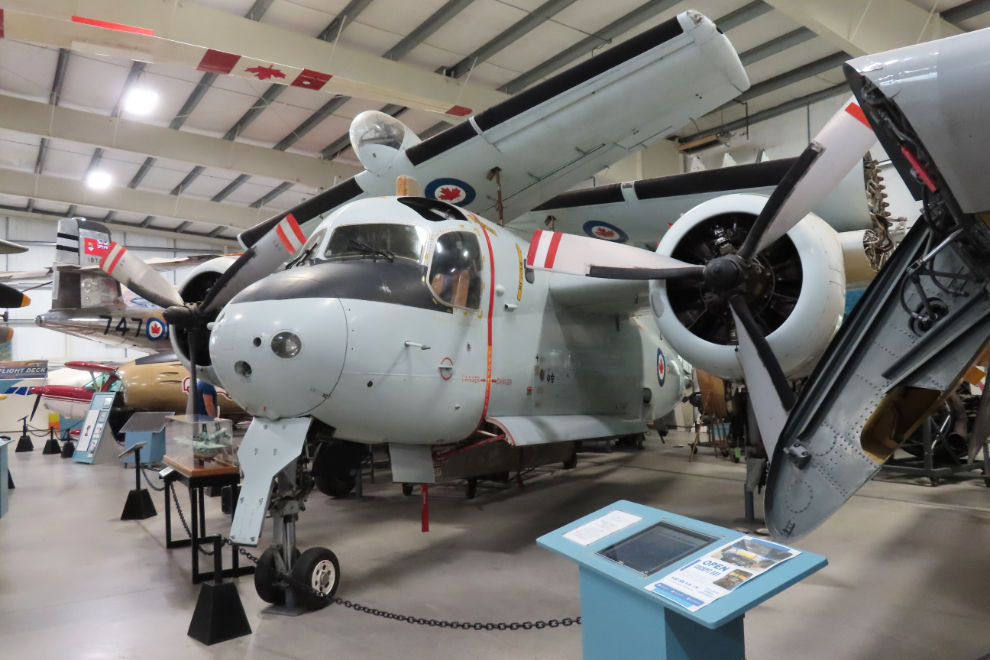
Designed by Grumman, the CP-121 Tracker is an aircraft carrier-borne anti-submarine patrol aircraft from the 1950s. In Canada, 100 Trackers were built under license by De Havilland Canada for use with the RCN aboard HMCS Bonaventure. With the retirement of the Bonaventure, the Trackers became land-based patrol aircraft based at CFB Shearwater and later CFB Summerside PEI.
The Boeing Model 75 (PT-17) Stearman first flew in 1934, and this one was built in 1941. They were used as a primary trainer in World War II and after the war they were sold as surplus and became popular for jobs such as crop dusting.
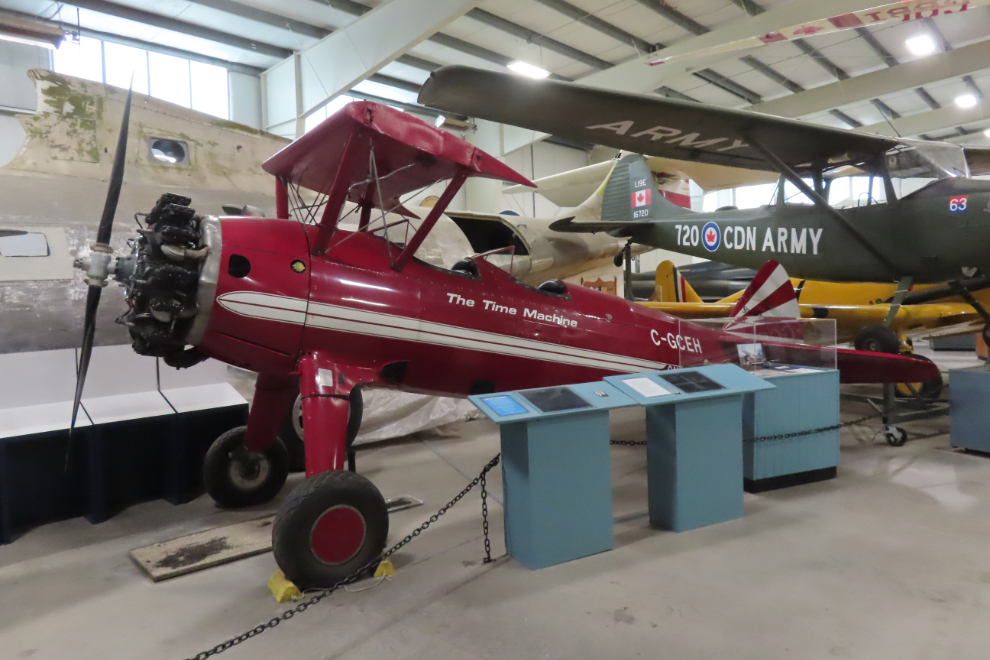
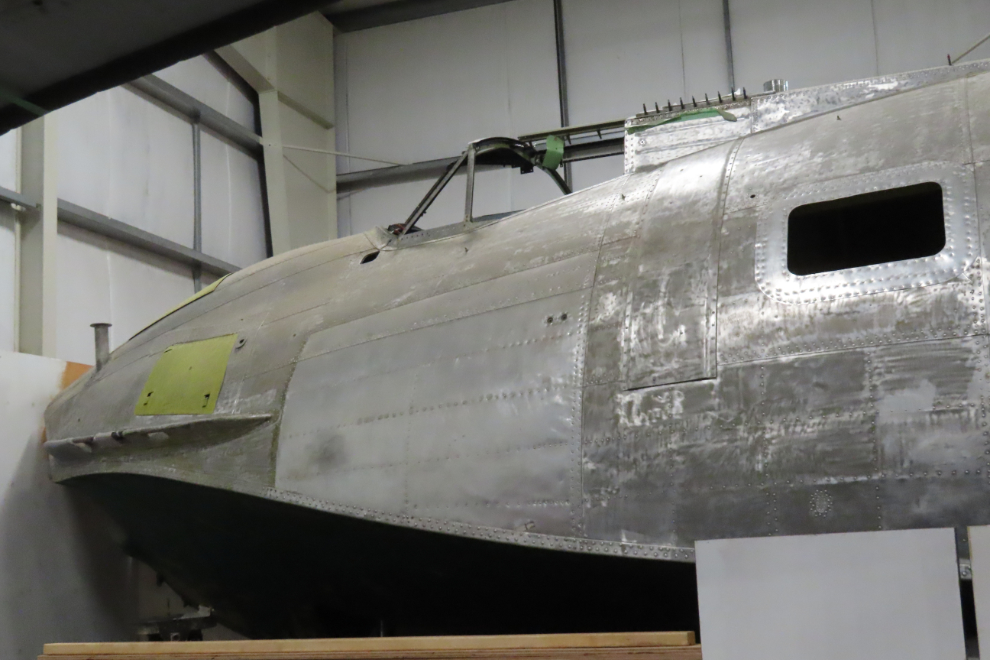
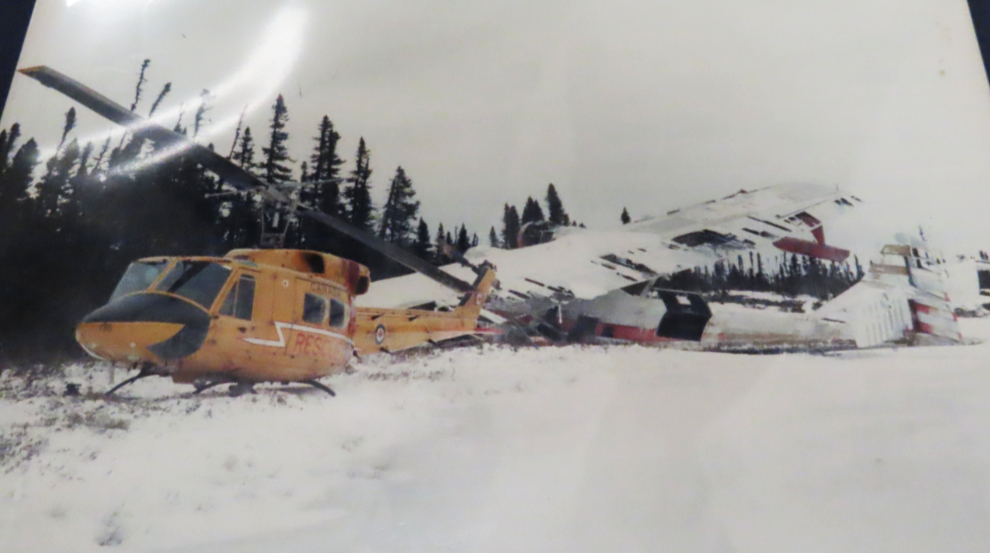
In a back corner is this PBY-5A Catalina/ Canso (Catalina in the USA, Canso in Canada). Built for the US Navy in 1942, it was eventually bought by Eastern Provincial Airways. It crashed in Labrador in 1957, but was recovered by this museum.
This photo was shot during the recovery of the Canso.
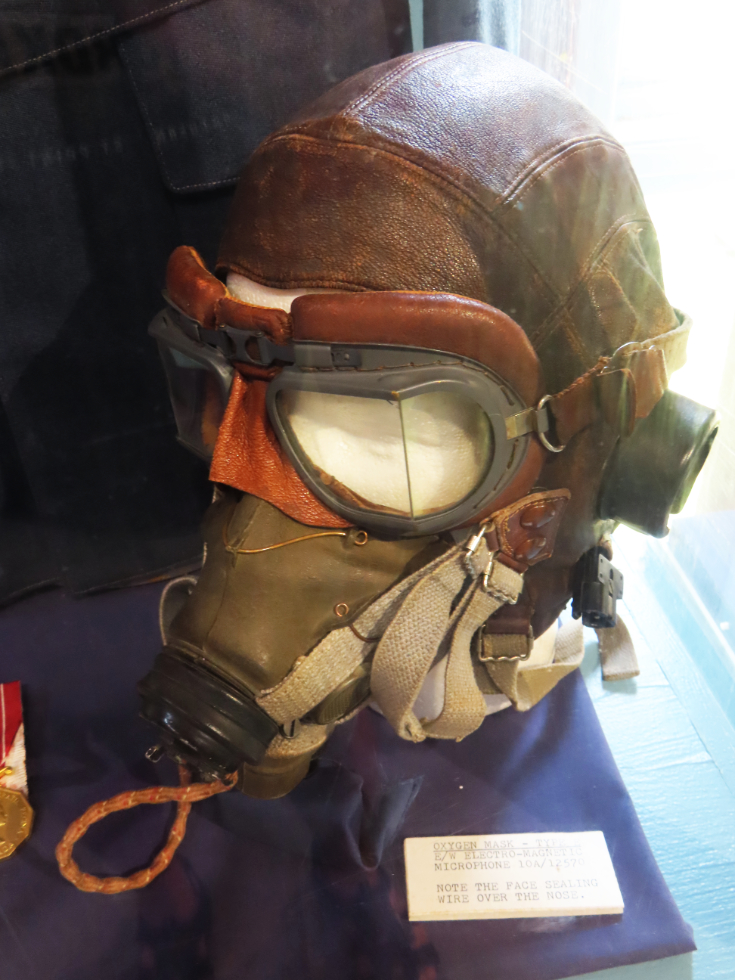
The last photo from inside shows another of the hundreds of smaller artifacts – a Type E oxgen mask with electromagnetic microphone. The sign says “Note the face sealing wire over the nose.”
Before leaving, I went back for a few more photos of the Voodoo. It served with 416 Squadron, based at CFB Chatham, New Brunswick, and at the time of its retirement was painted in a commemorative 416 Squadron scheme to help celebrate the 60th anniversary of the RCAF.
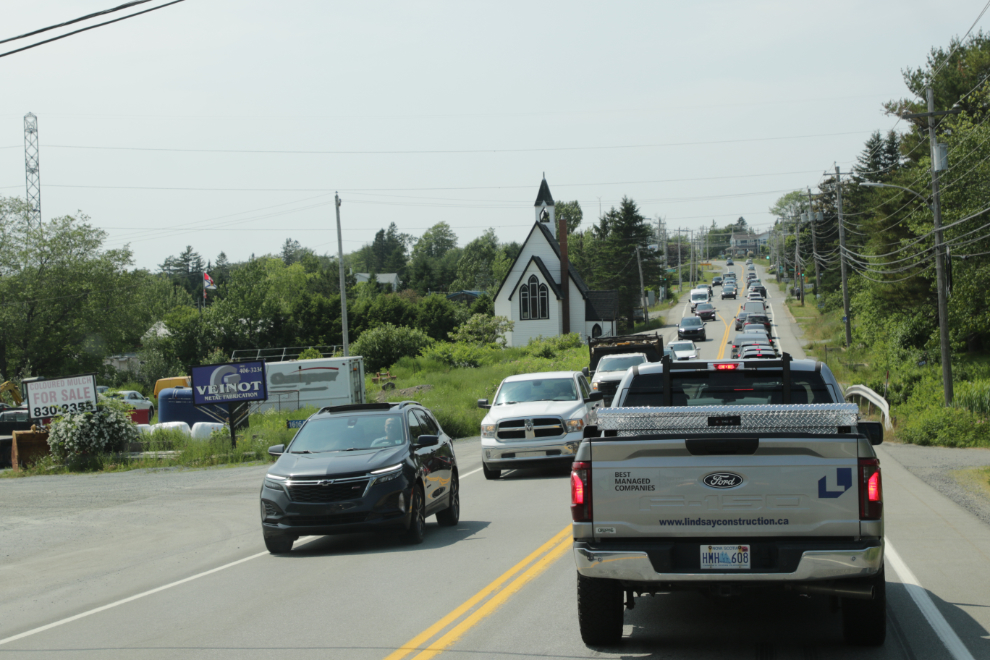
The traffic as we got near the Woodhaven RV Park in Hammonds Plains was gross after weeks of mostly little traffic. This beautiful little church was a welcome distraction. Built in 1890 with a steeply-pitched Gothic Revival design, this church was originally St. Nicholas Anglican Church, but is now the St. Gebriel Ethiopian Orthodox Tewahido Church.
We had originally booked a spot at Laurie Provincial Park, but with the weather forecast calling for 28°C, Cathy wanted electricity for the air conditioner.
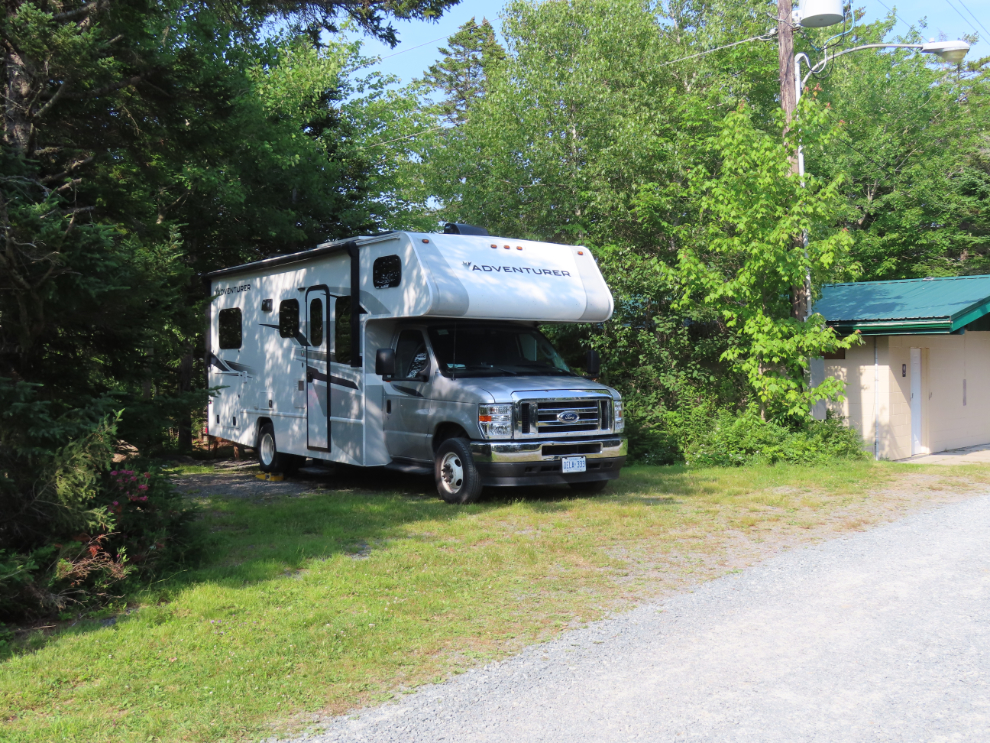
We were soon checked in at Woodhaven and set up in a small site right beside the only washrooms in the entire 70-acre, 200-site park. For some odd reason it was never busy, though.
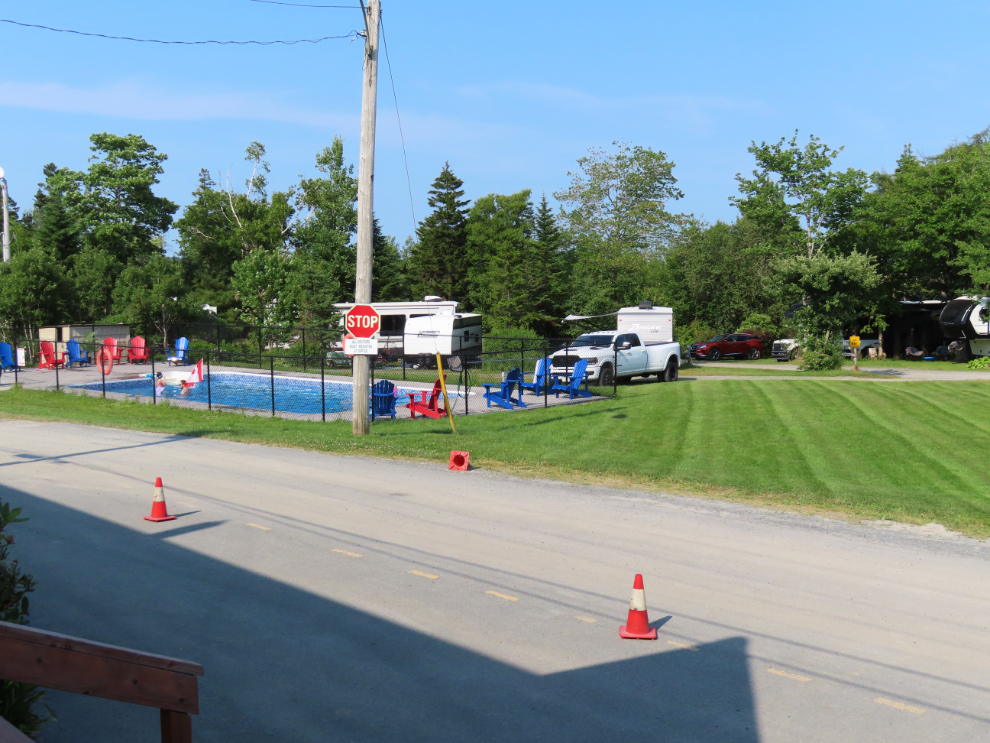
The 20×40-foot pool is very nice, though we didn’t use it.
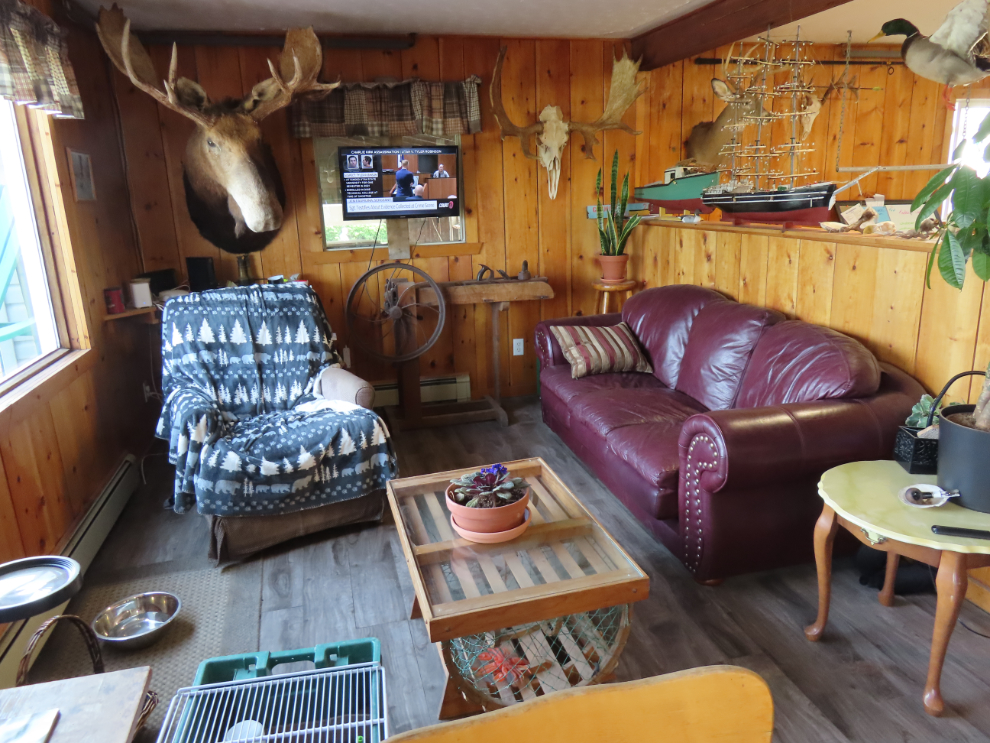
The little lounge is very cozy, though we didn’t use it either.
We did, however use their electricity and our air conditioner and had a comfortable night. Our final full day in the Maritimes had been a good one 🙂 Tomorrow we would fly to Calgary with Porter, on the first two of three flights needed to get home.

About The Author
