Bonavista, Newfoundland – the town and the Cape/lighthouse
On Tuesday, June 23rd, we started the day in Elliston (covered in the last post), then moved on to Bonavista, which was planned to be a two-night stay but became three nights.
We arrived at Bonavista at about 11:00, did a loop around town, then went to the Visitor Centre to try to get oriented and find out the highlights. We got lucky and got a parking spot on the shore right beside it.
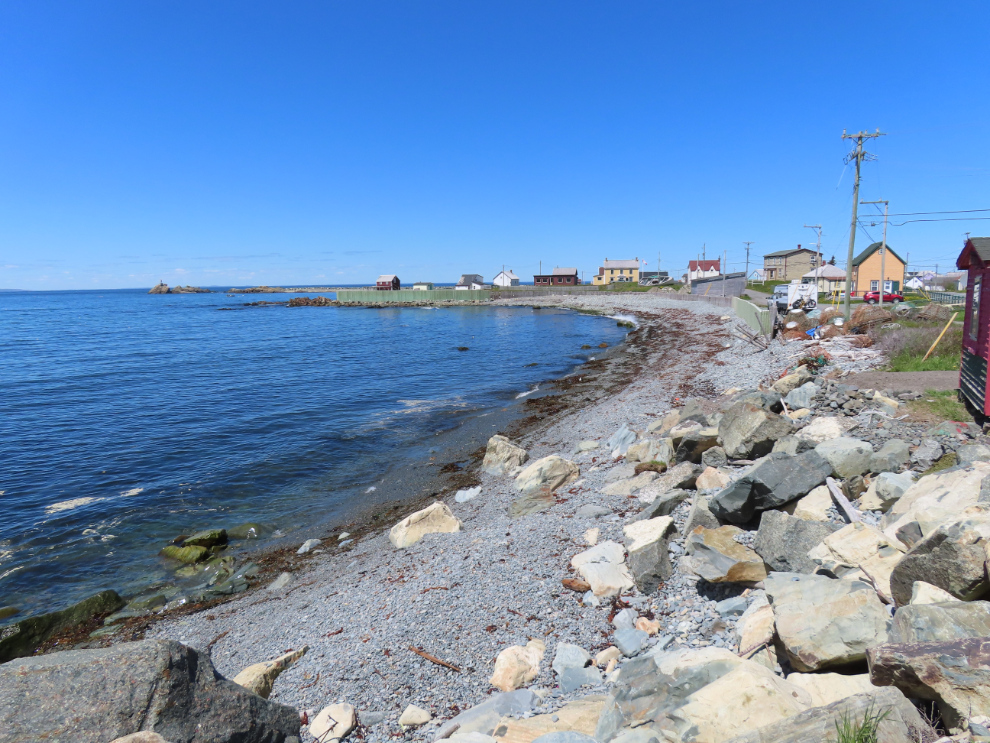
There are photo opportunities everywhere in Bonavista.
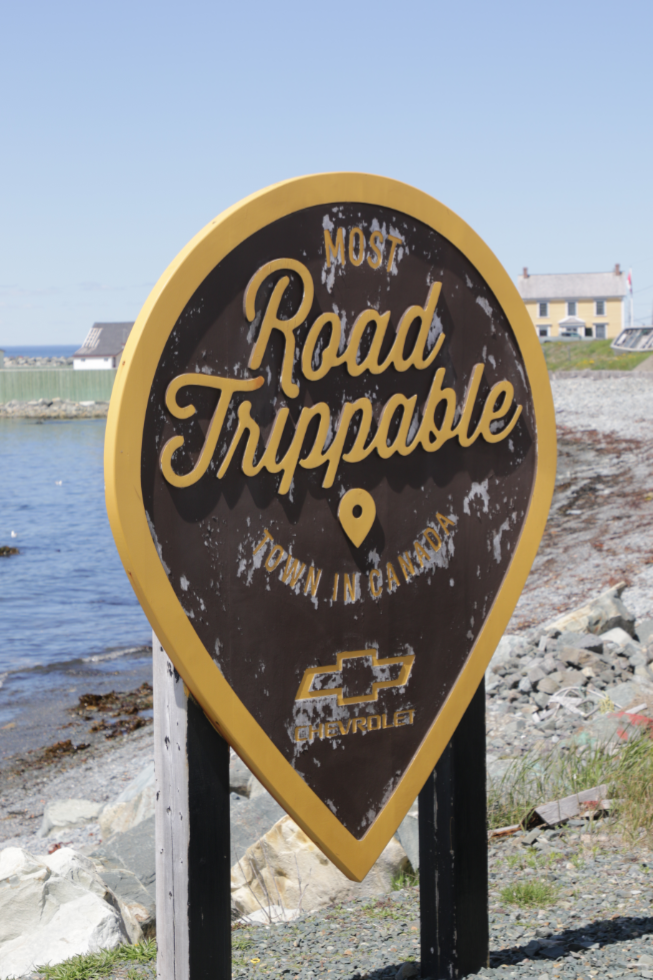
In 2018, Chevrolet asked 12 families to document 12 unforgettable Canadian road trips in an effort to find “The Most Road-Trippable Town in Canada.” Canadians then voted on those trips, and Bonavista was the winner.
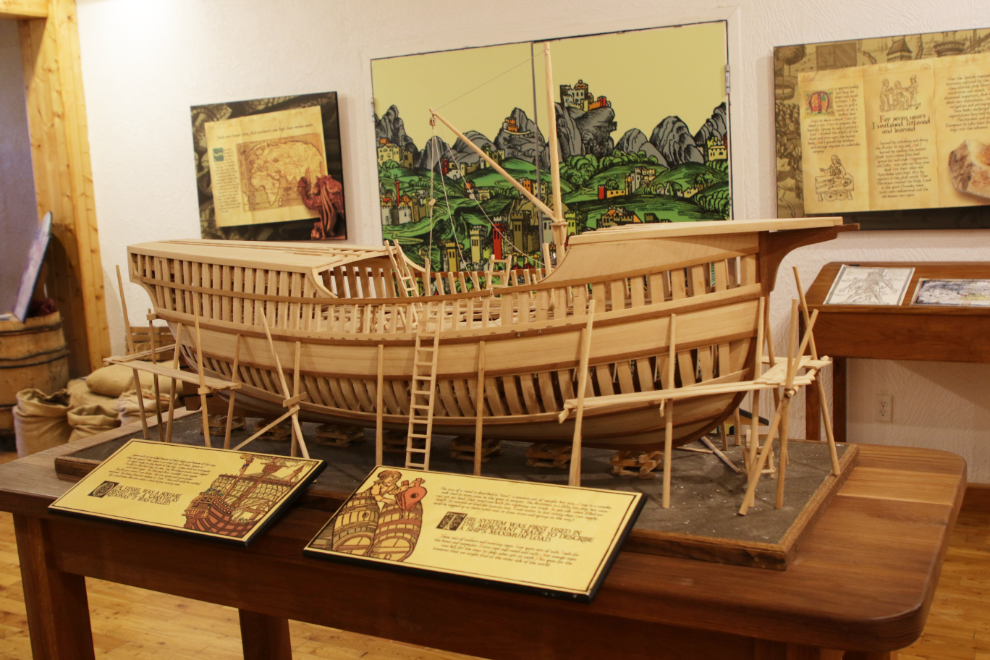
When we went into the Visitor Centre, we were greeted with a question about whether we would like a tour of the Matthew. Having done no research, I had no idea what that meant, but sure, I’m in. Maybe Cathy knew what it was about – I didn’t ask.
The interpretive hall made no sense to me – who was Giovanni Caboto and what did all this have to do with Bonavista??? Cool boat, though.
I finally figured out that Mr. Caboto was John Cabot, the Matthew was his boat, and in 1497, he landed somewhere near here! I probably knew this story well 60 years ago, but I’ll let Parks Canada summarize it: “In early May, 1497, John Cabot (Giovanni Caboto), a Venetian citizen bearing letters patent from Henry VII, sailed from Bristol in the Matthew to seek a western passage to Asia. On June 24, he made land somewhere on the east coast of Canada. Although the sources do not allow unequivocal identification of the site, local tradition records Cape Bonavista as the landfall. From this, the first official English voyage of exploration in the Western Ocean, derived Britain’s subsequent claims in the New World and the beginnings of her overseas empire.”
Today’s Matthew is a full-scale reproduction of the 92-foot-long caravel that carried Caboto and his crew from Bristol to the New World 529 years ago. It is very impressive, and the tour was certainly well worth the time and $7. The only downside is that the boat is housed in a building that’s barely large enough so you don’t get to see the hull or an overall view of it. It’s actually a rather large downside but it’s still worth seeing.
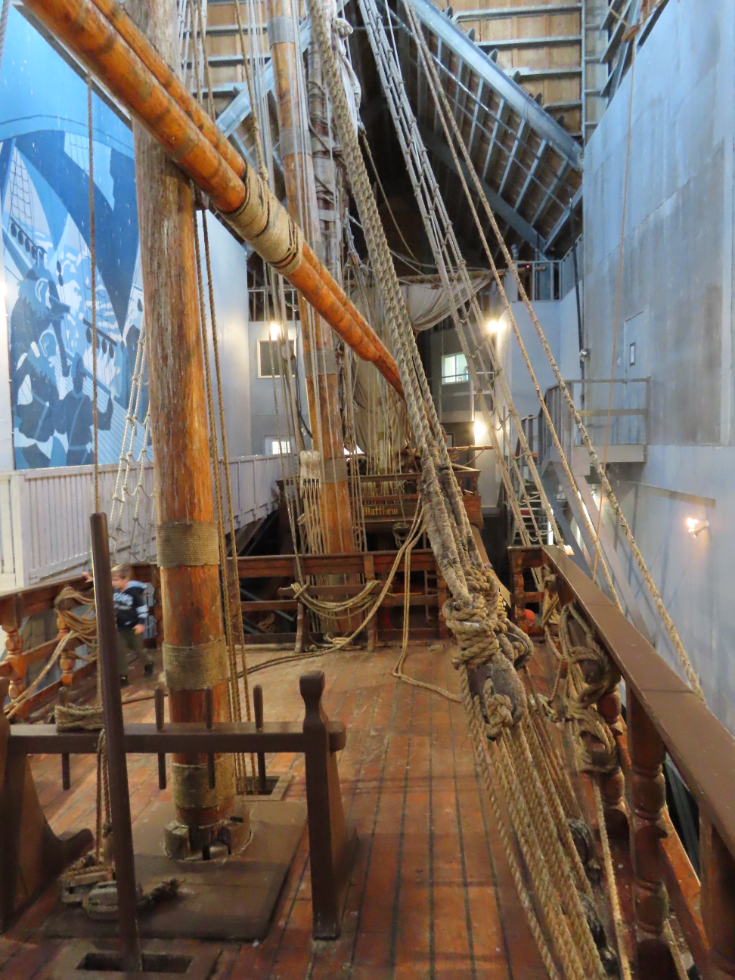
There are actually two replicas of the Matthew. he first was built in 1996 in Bristol, England, by Storms’l Services, having been designed by naval architect Colin Mudie. In 1997 the re-enacted Cabot’s original journey, and was welcomed at Bonavista by Queen Elizabeth II. The replica here, commissioned by the provincial government, was built in 1997–98 by a team of seven shipwrights and four local carpenters.
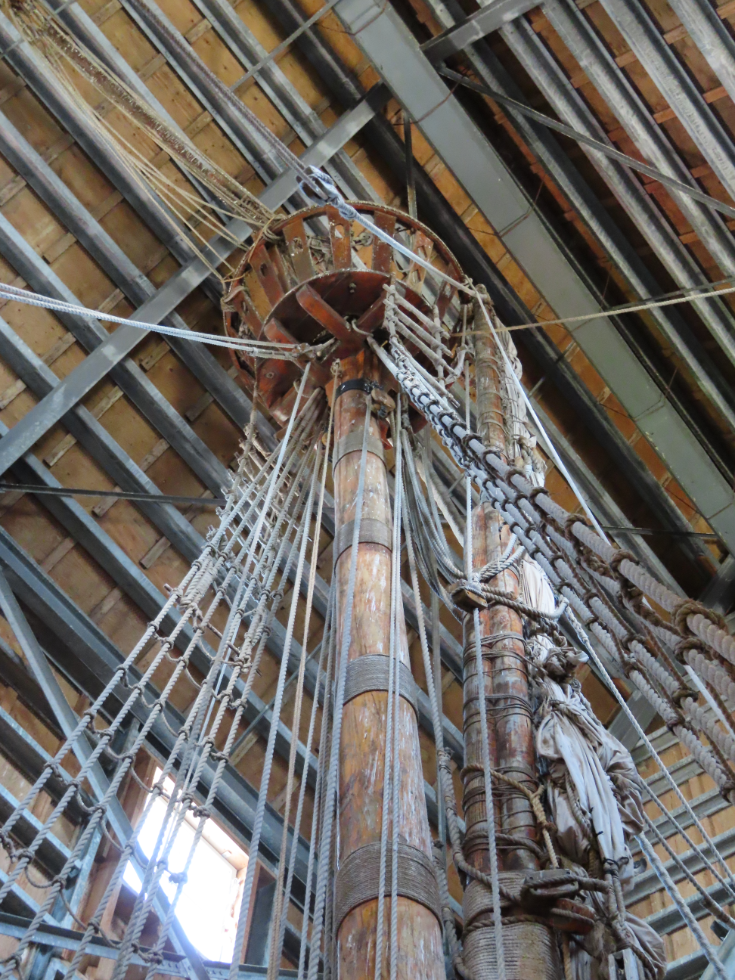
I think our guide said that crowsnest is 53 feet off the deck – that would have been quite a ride on even gently-rolling seas!
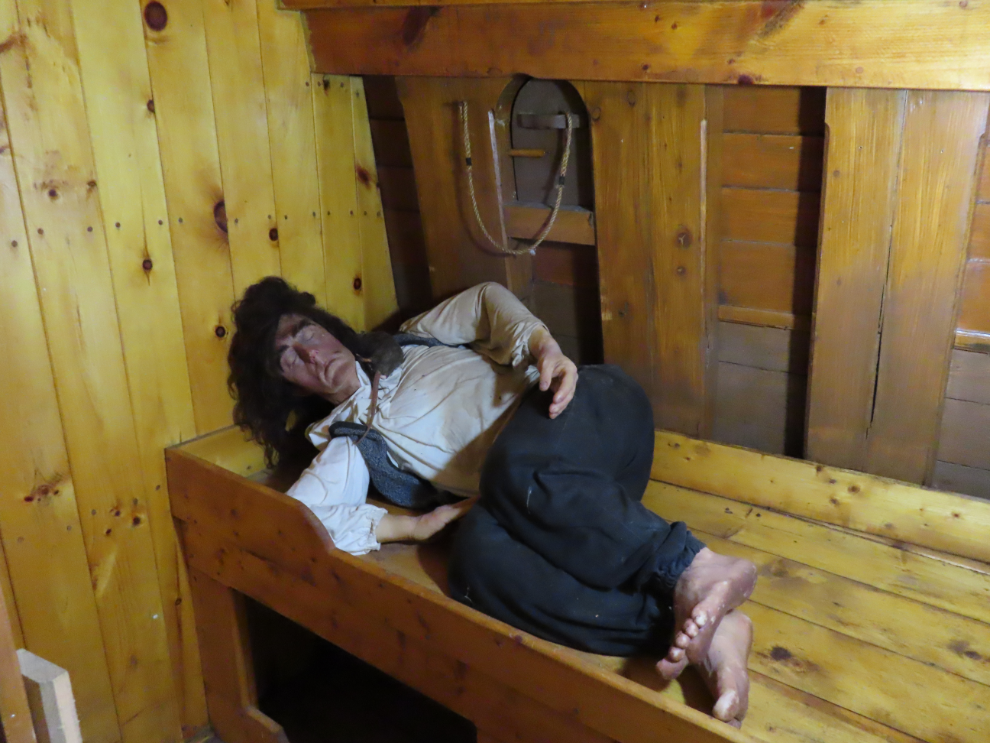
There were 19 crew members on the 1497 voyage, and living conditions were sparse.
The Town of Bonavista offers free camping for RVs at Landfall Municipal Park out at Cape Bonavista, and that was the next place we went. It was perfect, and there was lots of space available. A statue of John Cabot looks over the site, so starting with his story had certainly been the right choice.
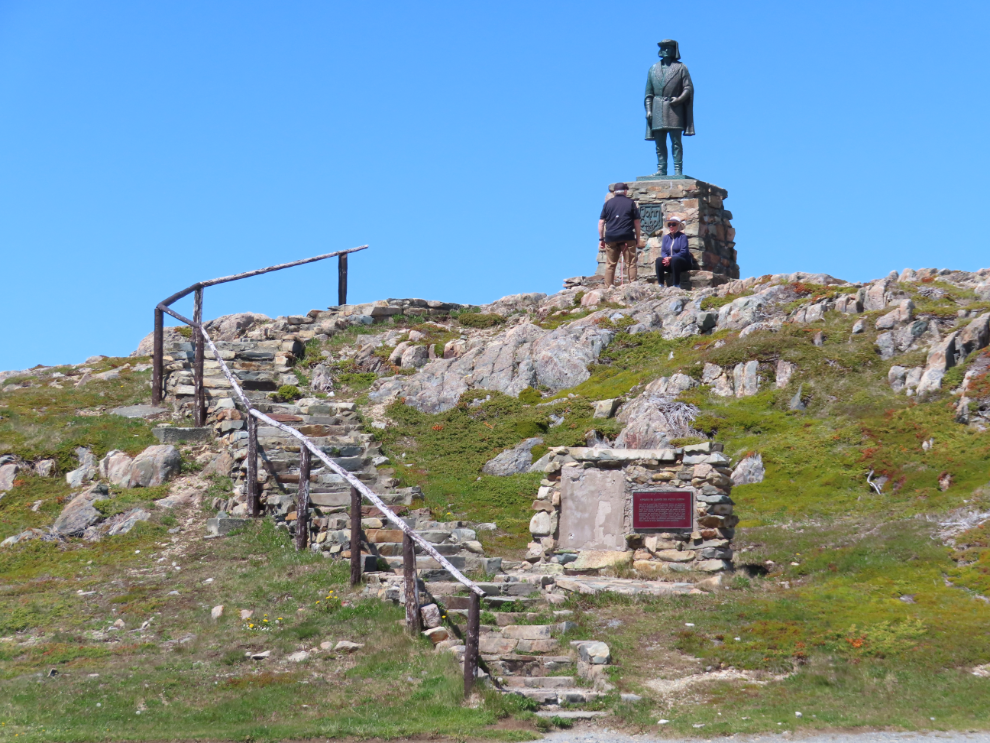
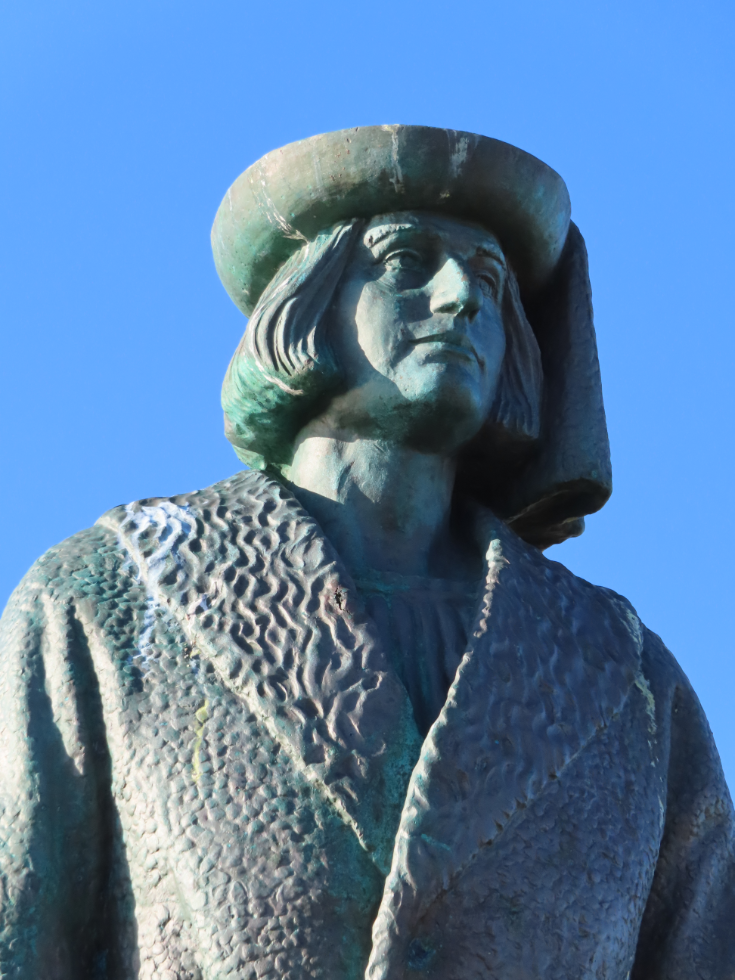
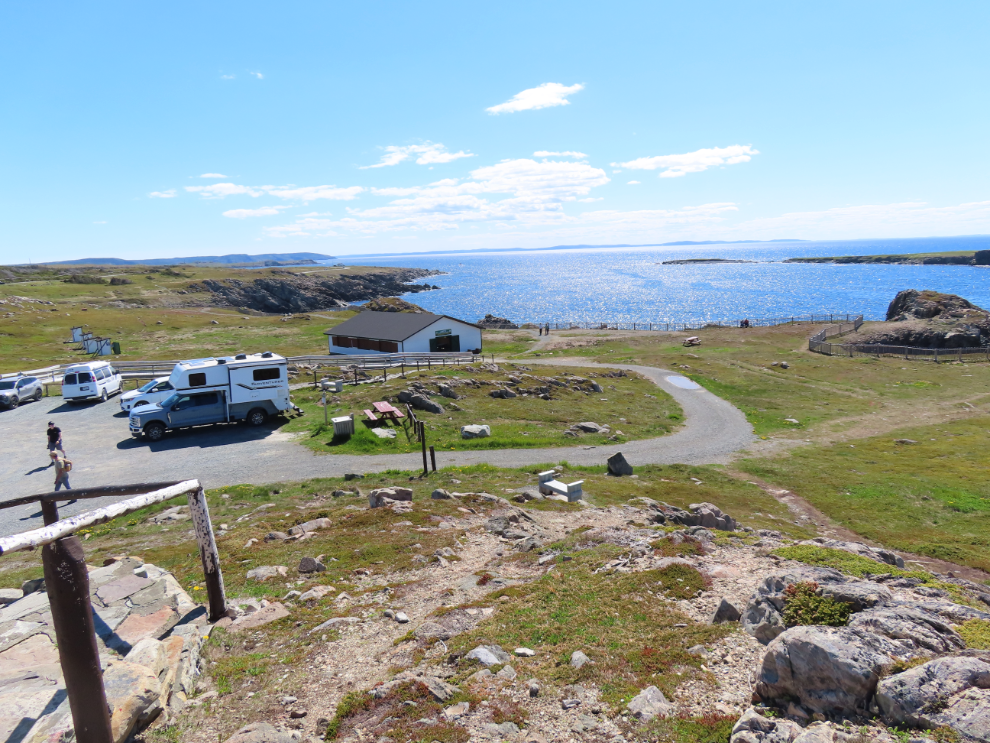
This is the view of the campground and beyond from the statue.
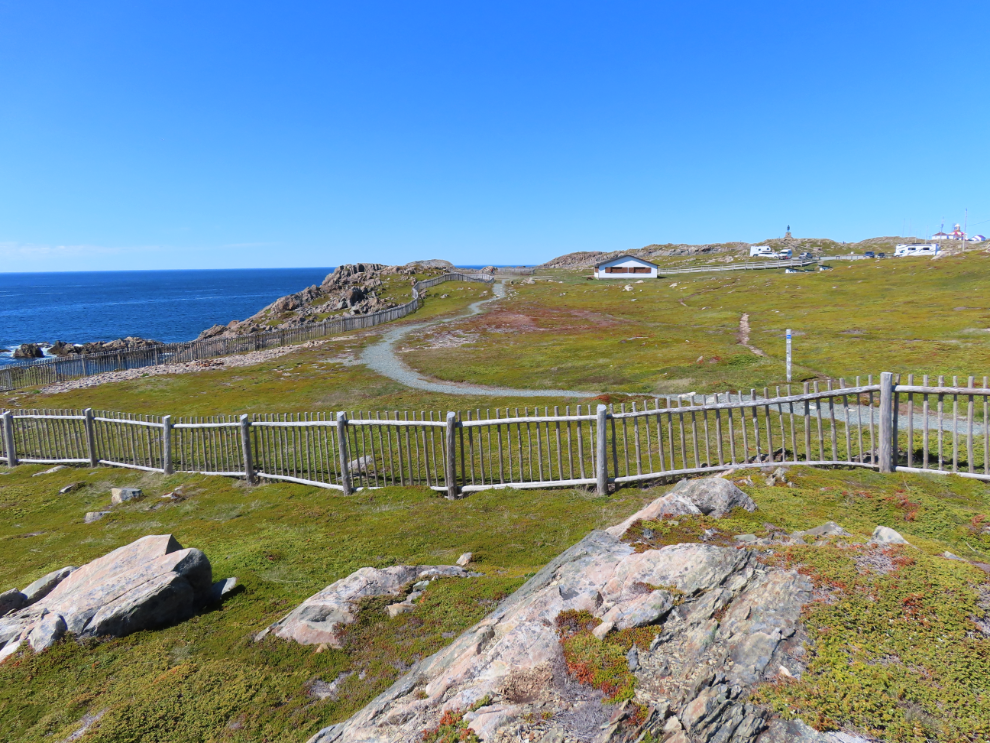
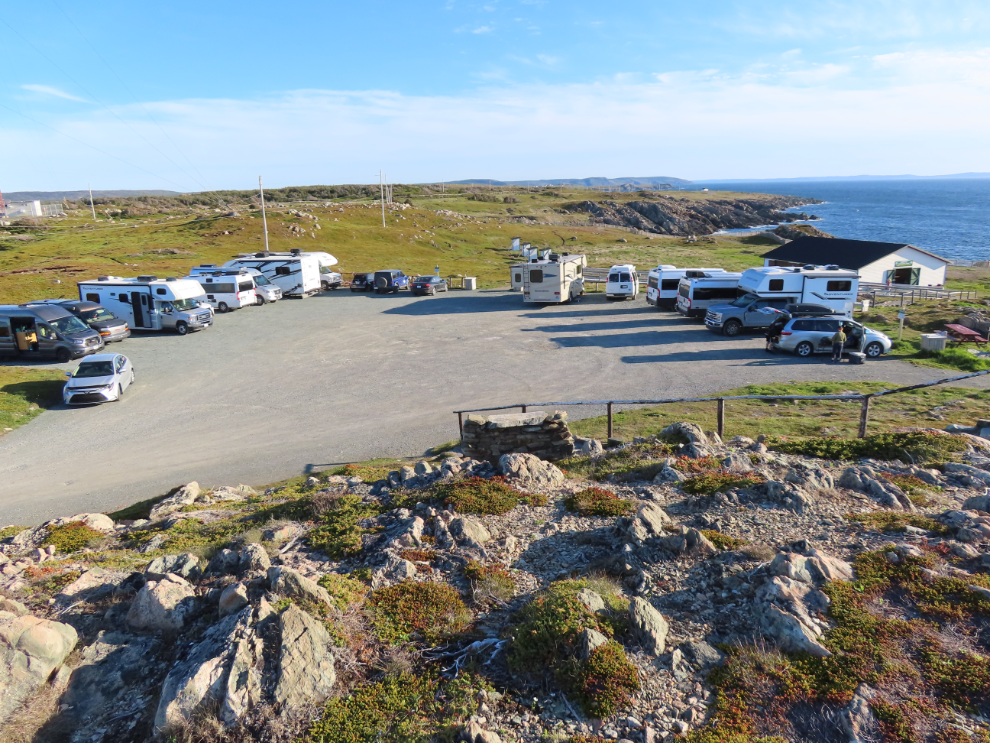
This is the campground from the southern edge of the park. A nice gravel trail runs along the coast – I would check it out soon.
We decided to go for fish and chips at the Little Dairy King a couple of km back down the road, then come back and claim a parking spot for the night. This meal was very good, and will rank well in my province-wide survey 🙂
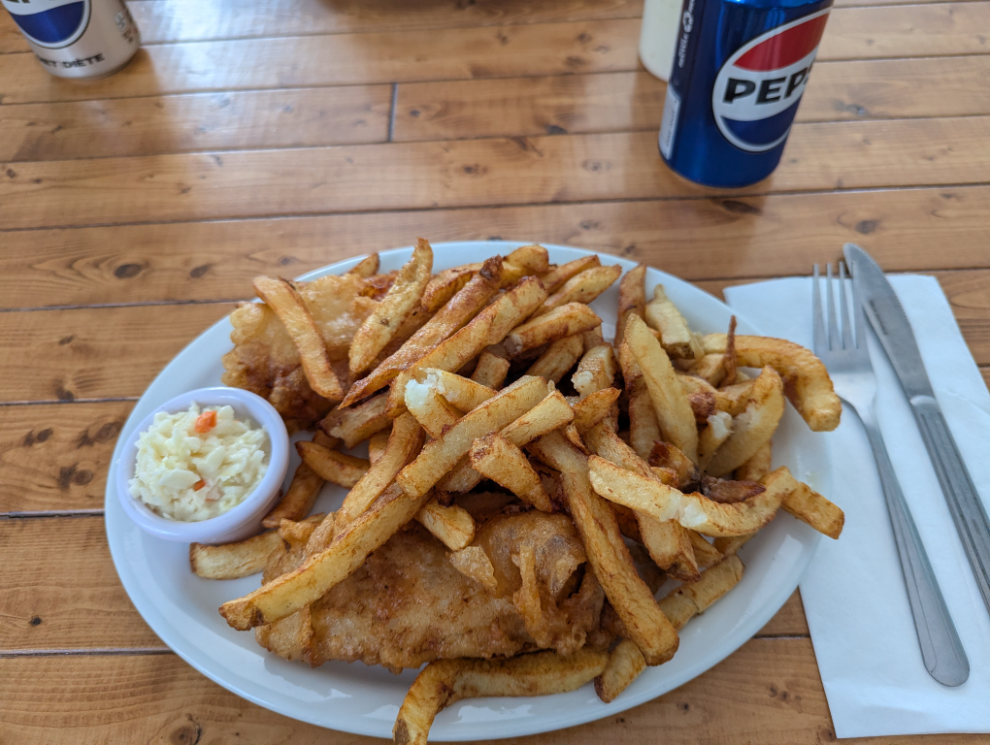
When we got back, a good parking spot was still available. Settled in, I went for a 3.2-km hike down the coastal trail a ways, then up to the Cape Bonavista Lighthouse for an initial look.
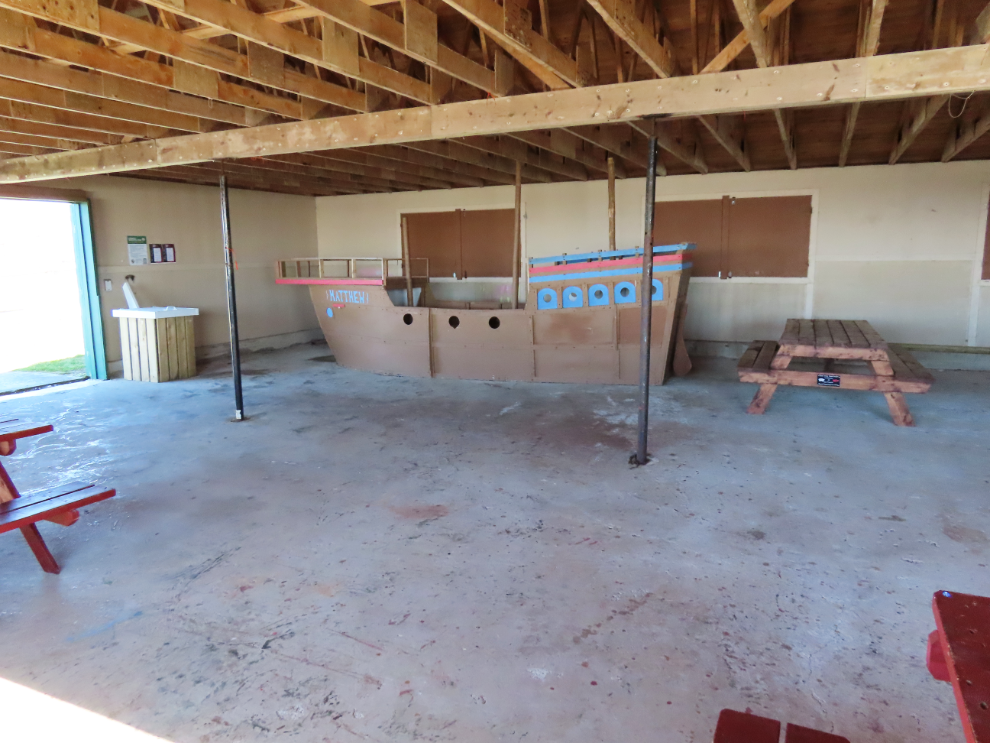
The campground has a very large cookhouse.
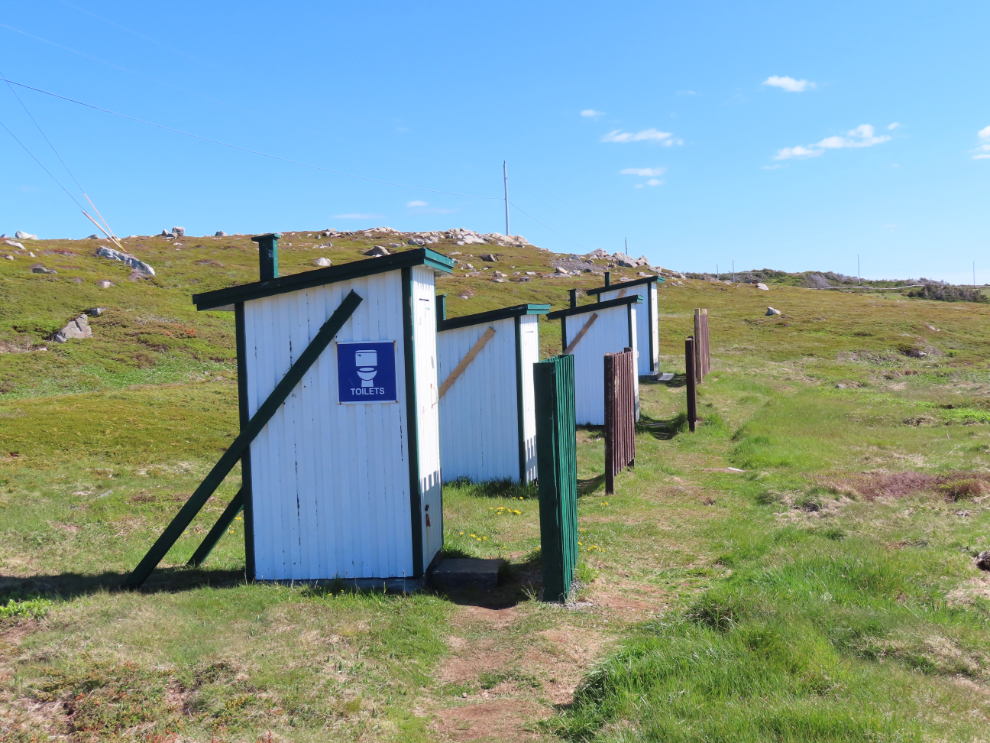
The outhouses are well braced to hopefully prevent the wind from blowing them over!
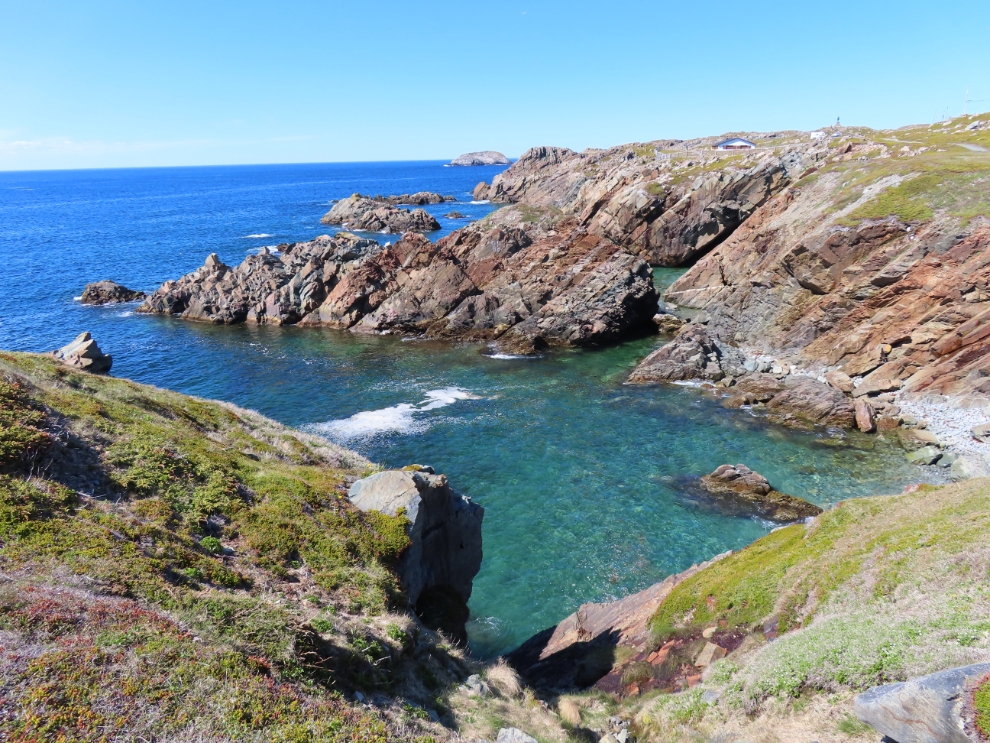
The water here is gorgeous! And very cold! 🙂
Looking back at the trail, the campground, and the lighthouse.
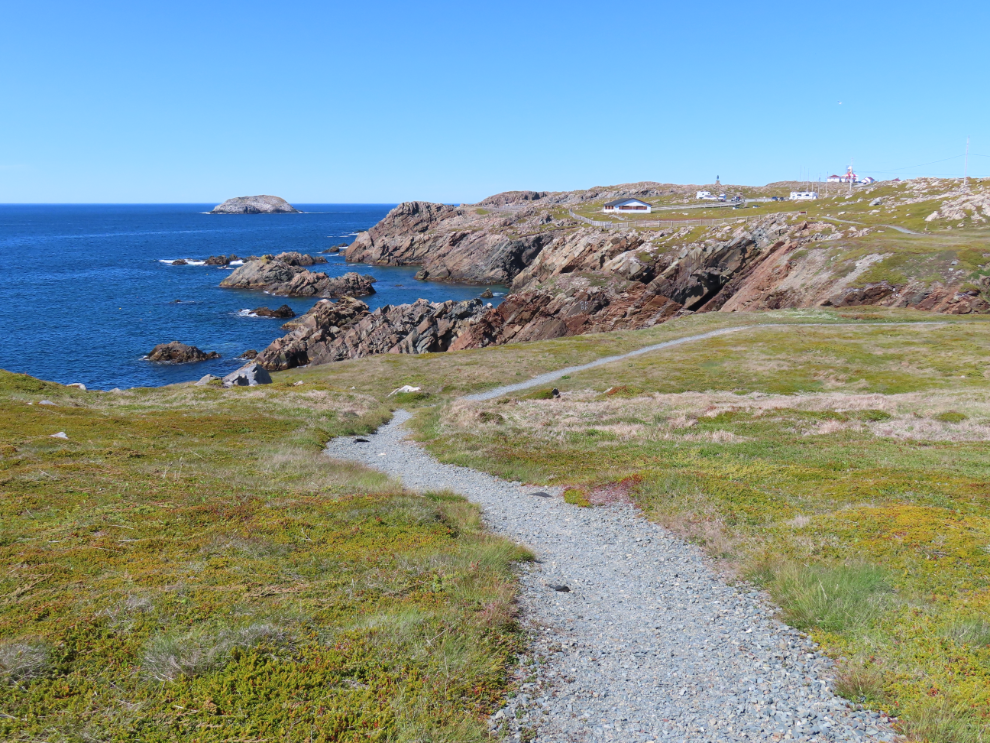
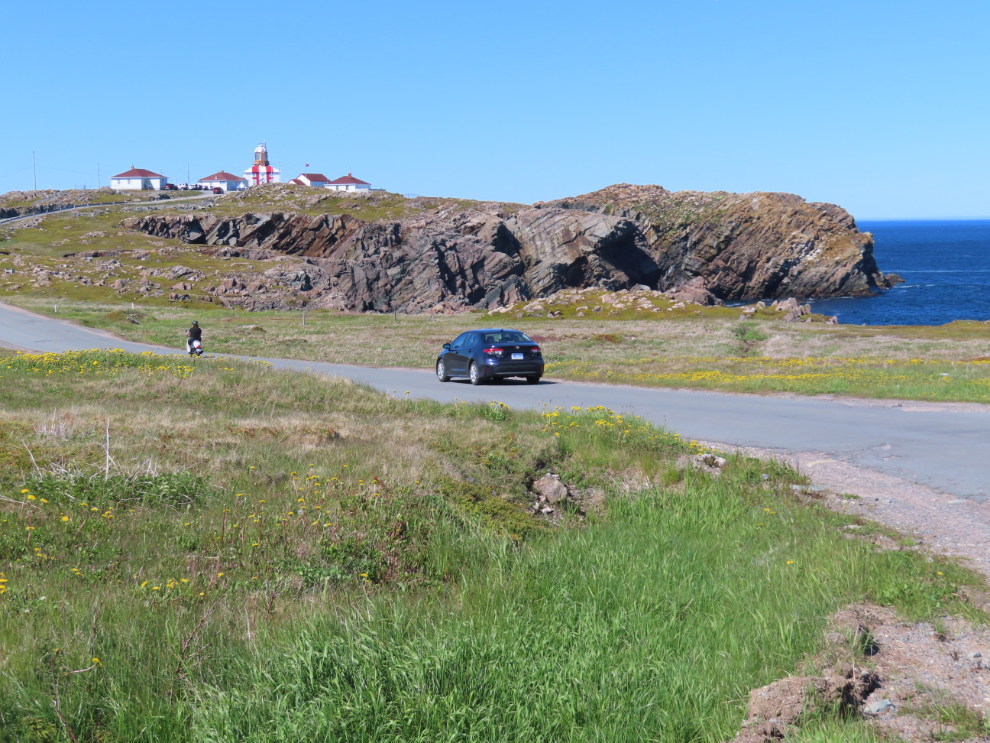
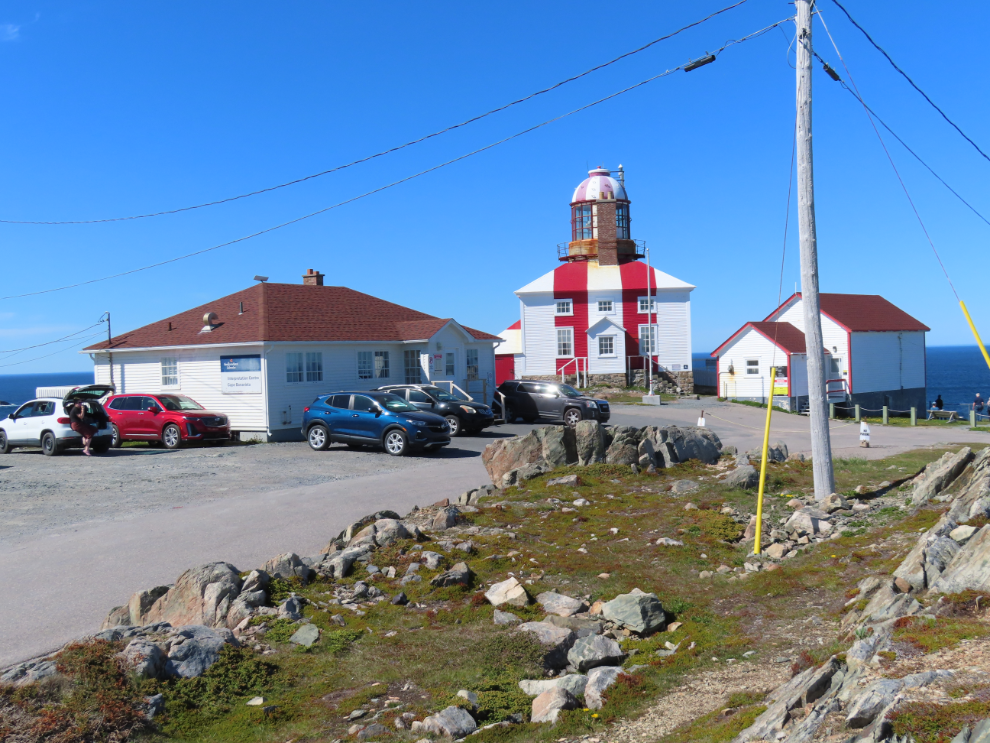
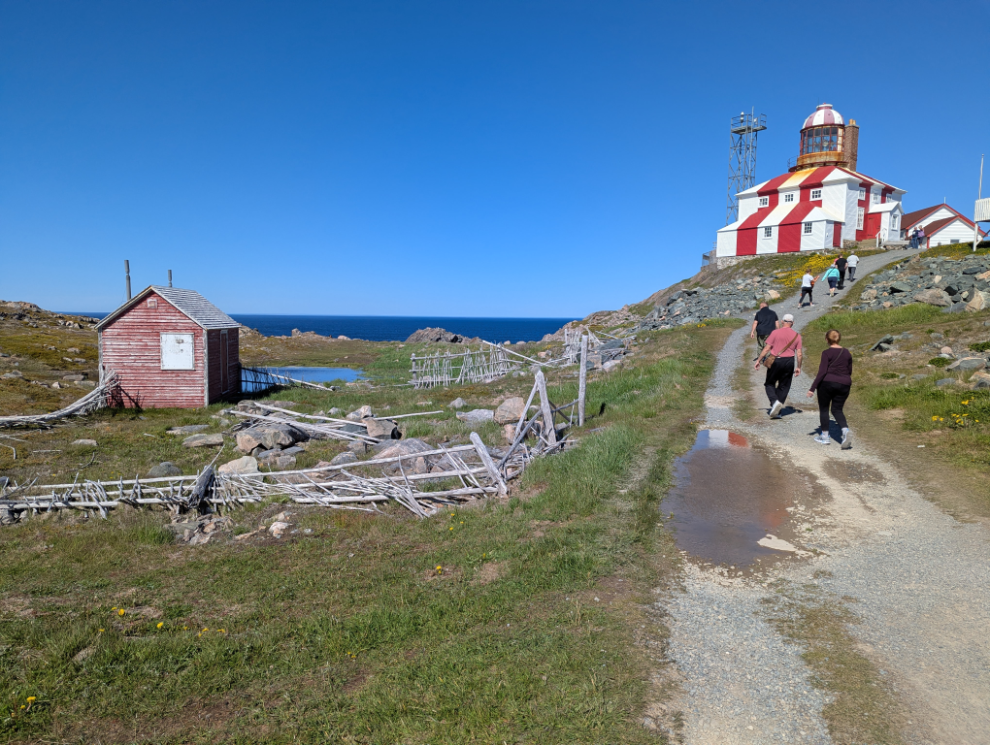
I did a circle tour, walking down the trail, then cutting across to the road and walking back up it. That gives a great view of the lighthouse and associated buildings.
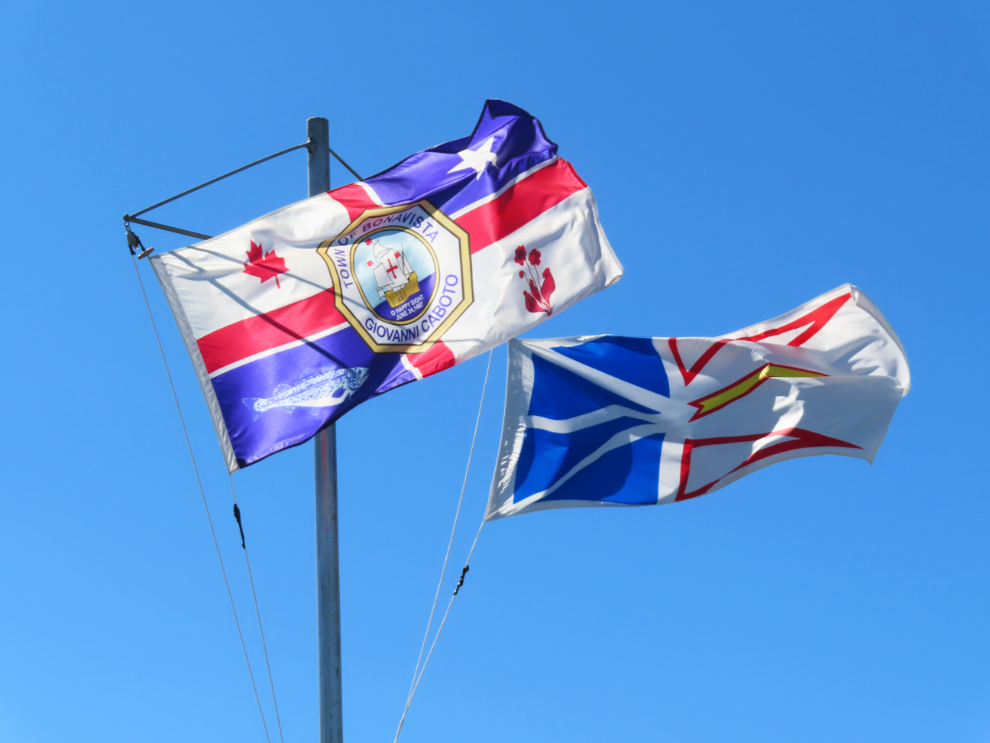
At the middle parking lot – the main parking for lighthouse visitors – the flags of the Town of Bonavista and the province of Newfoundland and Labrador were snapping proudly in the sunshine.
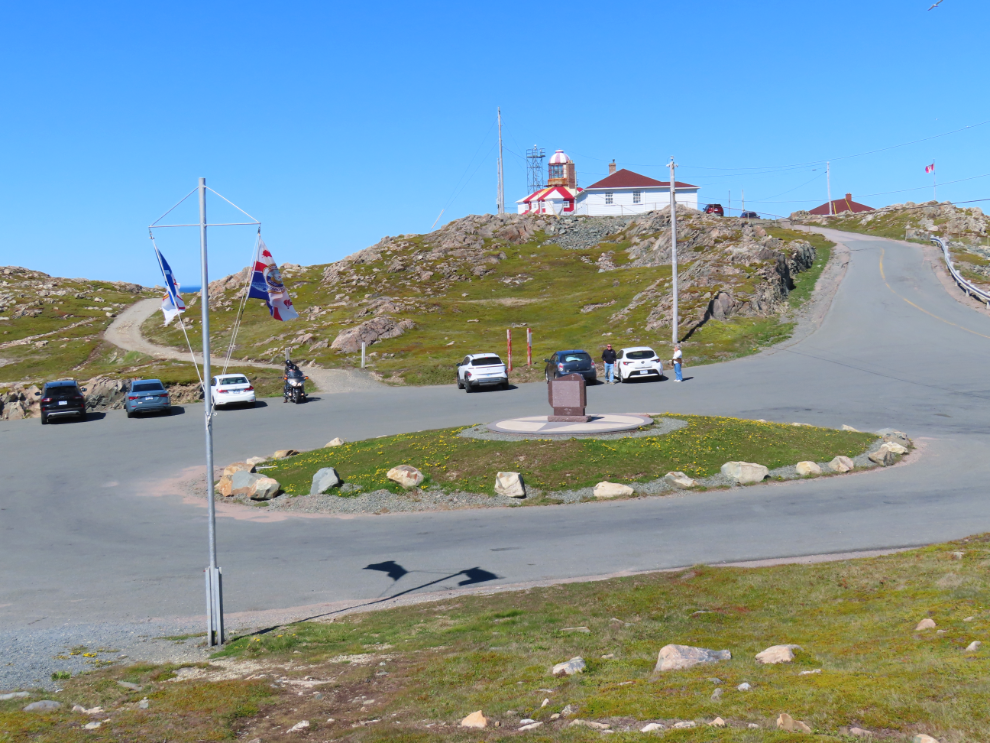
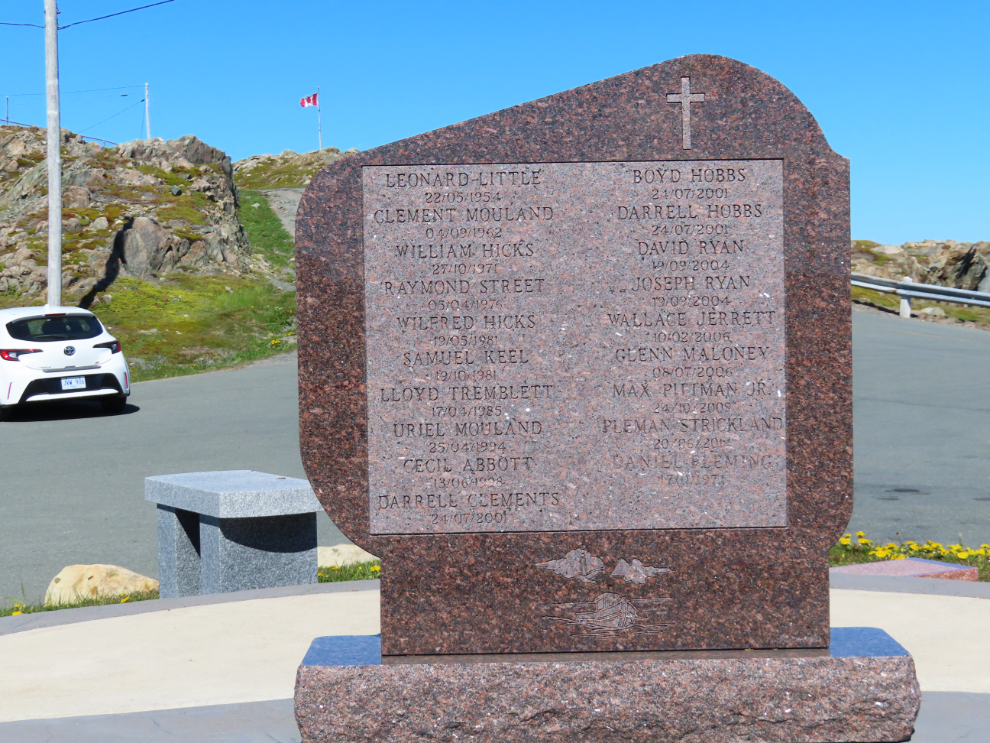
In the centre of the parking lot is the Fisherman’s Memorial, dedicated to men and women who have lost their lives in the fishery. It was dedicated on May 25, 2013.
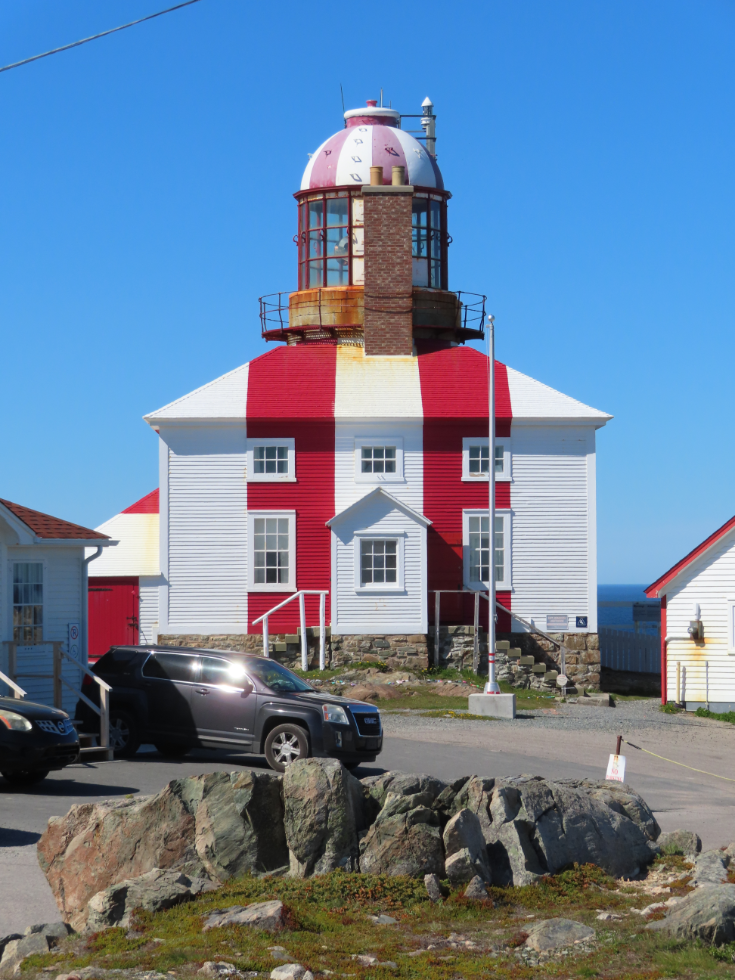
The weather forecast for the next day was calling for clouds and rain, so I spent a lot of time at the lighthouse photographing every angle I could think of.
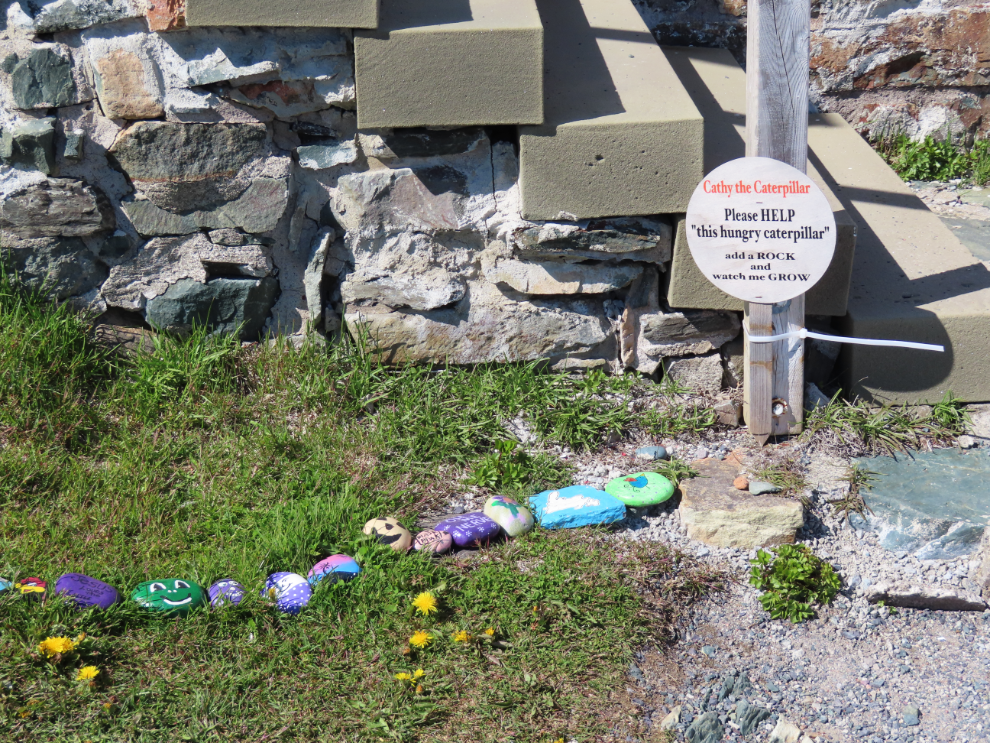
Painting rocks is a fun thing to do for a growing number of people of all ages, and “Cathy the Caterpillar” is growing at the base of the lighthouse 🙂
There is sometimes puffin viewing at Cape Bonavista, but this evening gulls were the only residents of the island.
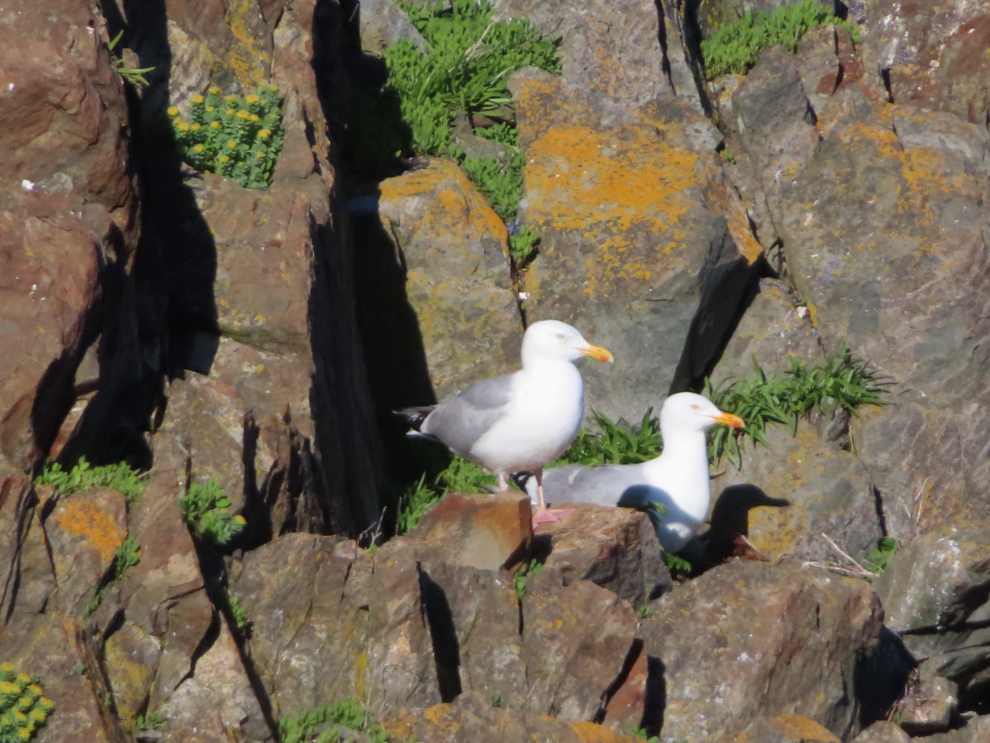
The next photo shows the gull/puffin island fairly well.
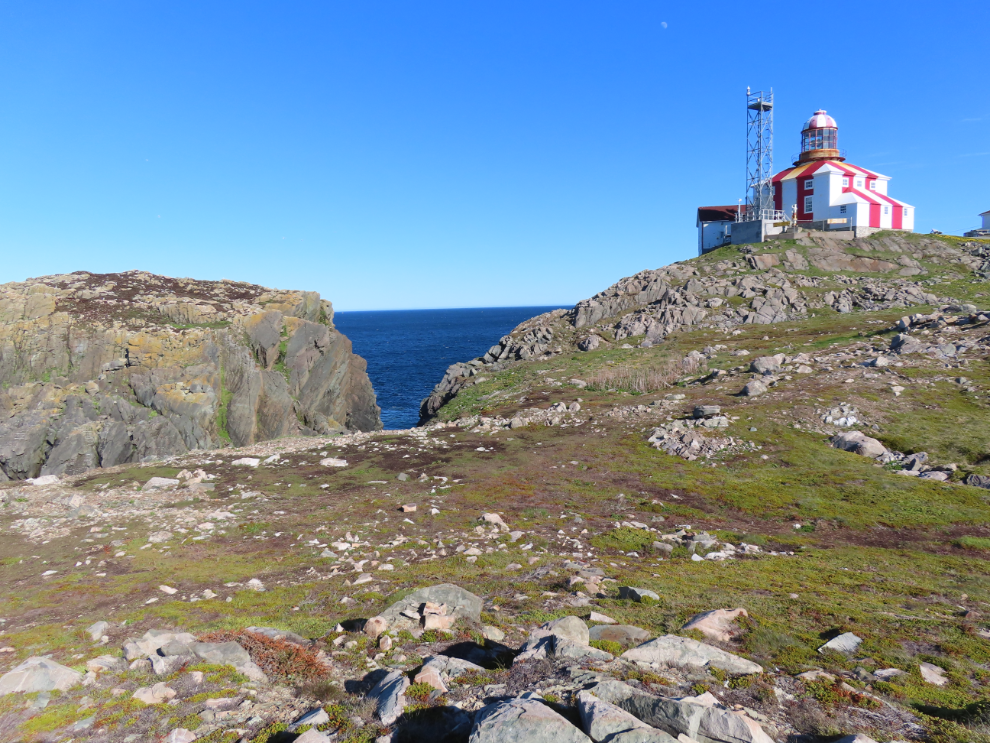
The large reflectors visible in the lighthouse made me look forward to the tour the next day.
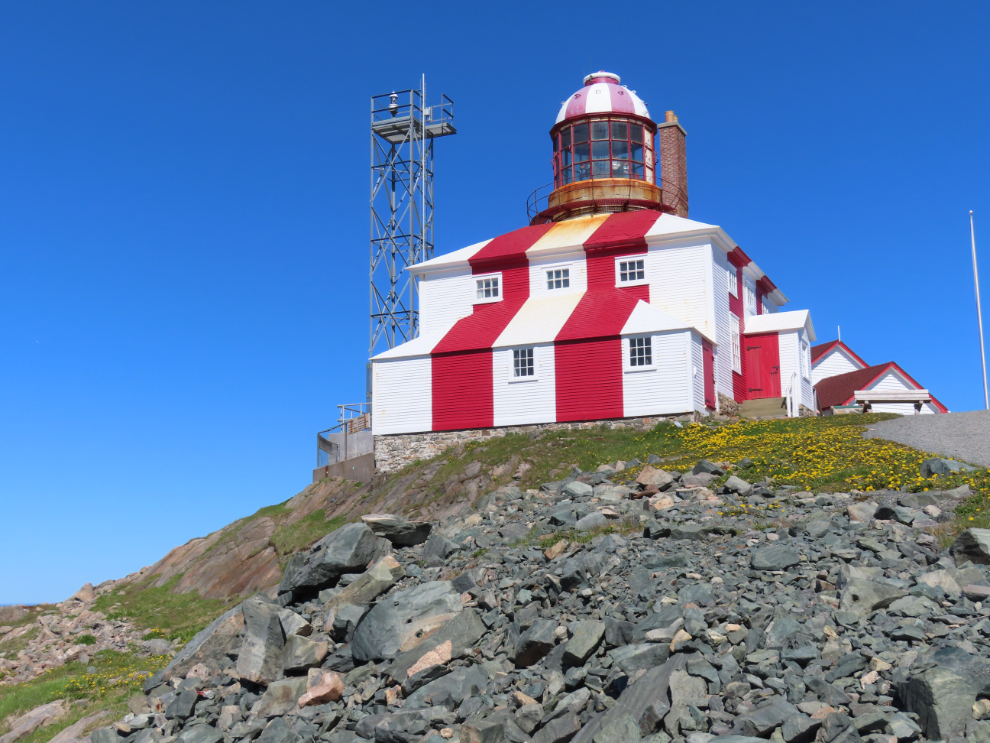
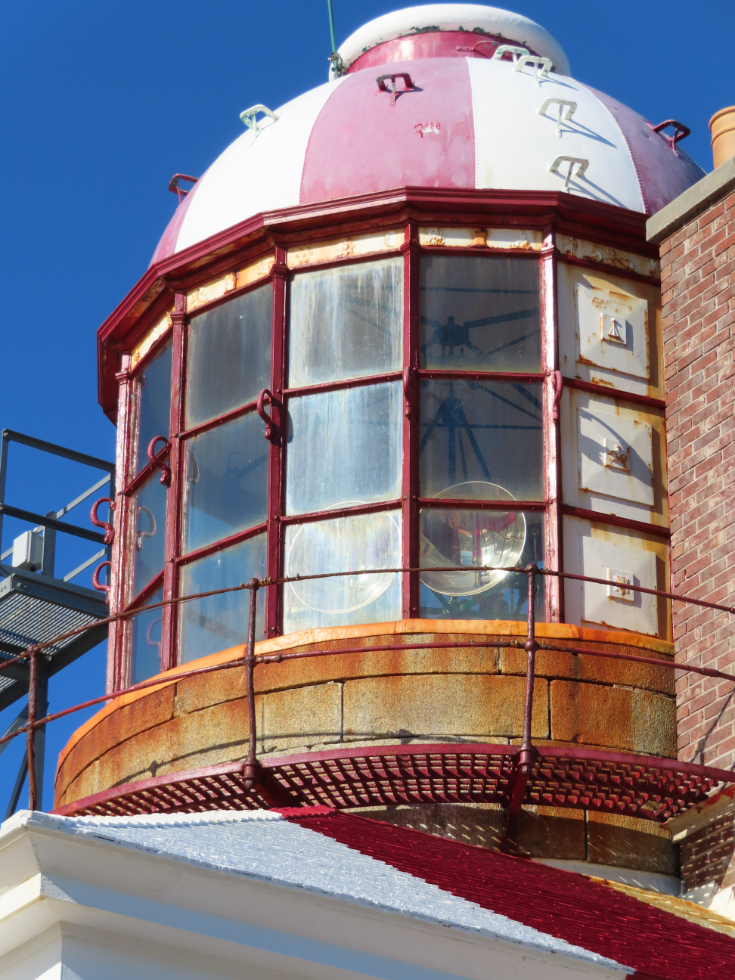
One more lighthouse photo, then I returned to the campground.
7:05 pm – The winds are light, the evening light is lovely, and the parking lot is almost full with all manner of travel vehicles, including people sleeping in their cars. Unlike in the Yukon and Alaska, large motorhomes are uncommon here – neither the roads nor the majority of facilities are friendly to them.
The next day would be a full day of exploring Bonavista then we would probably return here for another night.

About The Author
