A better look at the Cape Spear lighthouses and fort
On Tuesday, June 30th, Day 33 of our trip and the 26th day in Newfoundland, we returned to Cape Spear with the RV, to see the new and old lighthouses and fort in the sunshine. Then we continued on to Ferryland, but I have a lot to show you from both places, so the Ferryland part will be the next post.
Although the morning started off with some fog, it appeared to be clearly rapidly by the time we pulled away from the Pippy Park Campground where we had spent two nights. It’s only 19 km from the park to Cape Spear, but it’s a very slow wandering 19 km. It was quite clear as we approached Cape Spear, but we were shocked at seeing vehicles parked on the shoulder of the road for nearly a kilometer from the parking lot.
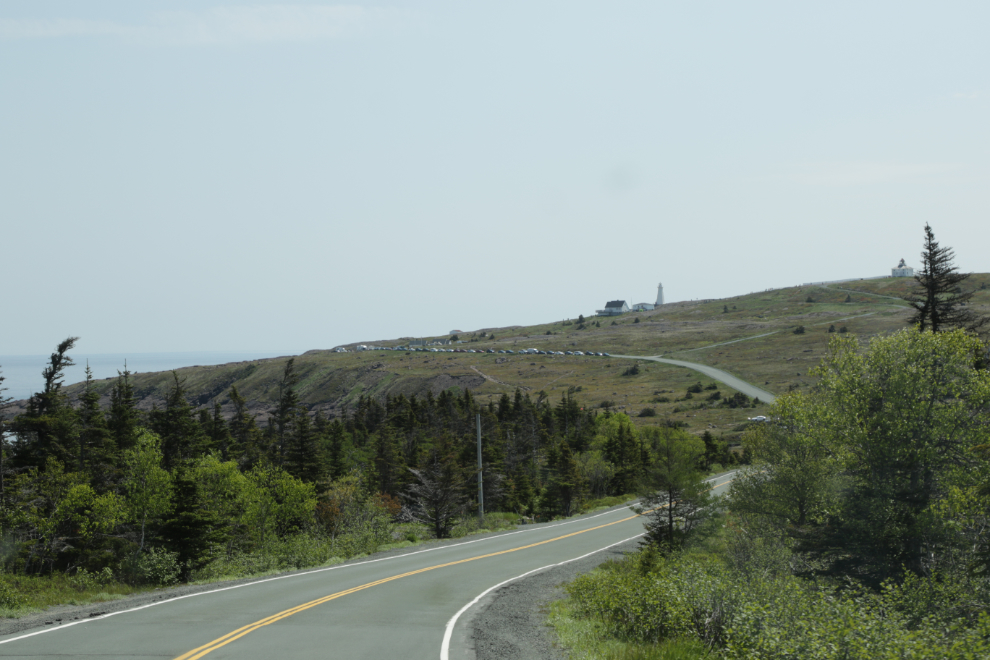
We had no choice but to continue up to the the parking lot, make that loop and hope for something positive to happen, but with little expectation that it would. However, as I was almost finished that loop around the parking lot, I saw a guy getting into his small motorhome. When he saw me positioned to take the spot, he waved. As soon as he backed up out of it, I pulled forward and had just entered the spot when a car came in from the opposite end. No, I was not giving this up – I was there first by a minute or two, to start with. The car quickly gave up, and Cathy and I both breathed sighs of relief. The Weather God and the God of Parking Lots were both on our side! 🙂
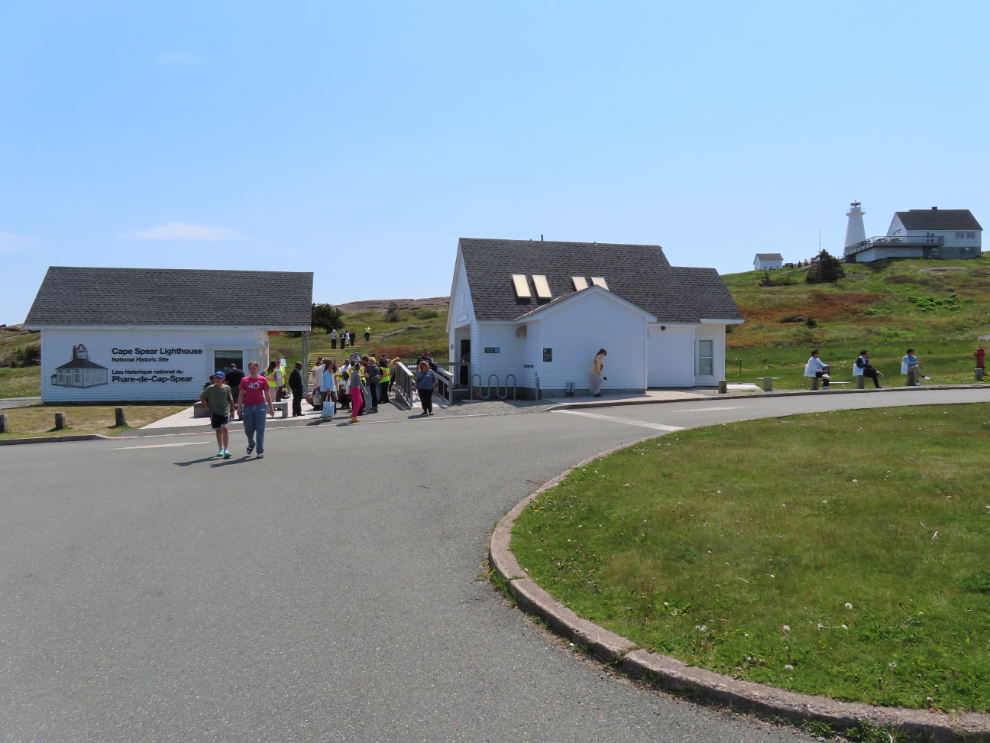
Speaking of gods, there was a huge international Jehovah’s Witness convention going on, with several thousand people attending, and pretty much every attraction had some of their people on tour – at Cape Spear, two busses plus probably many rental cars.
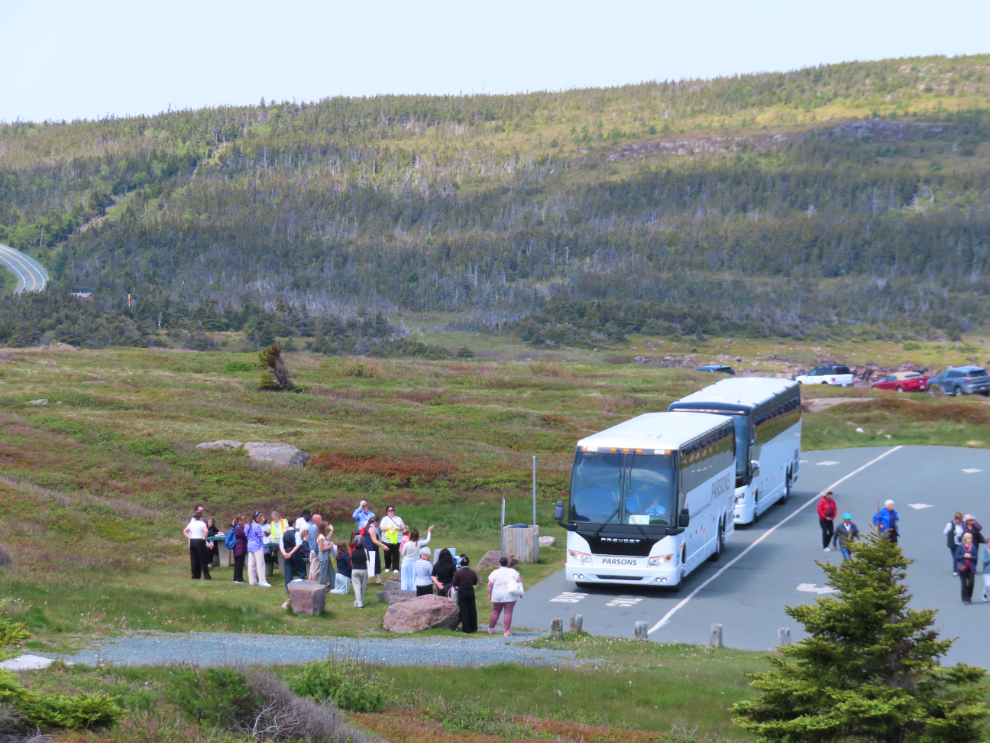
I started off the same way I had the previous day, making a clockwise navigation of the property. Cathy would do her own thing and we’d probably meet at the old lighthouse.
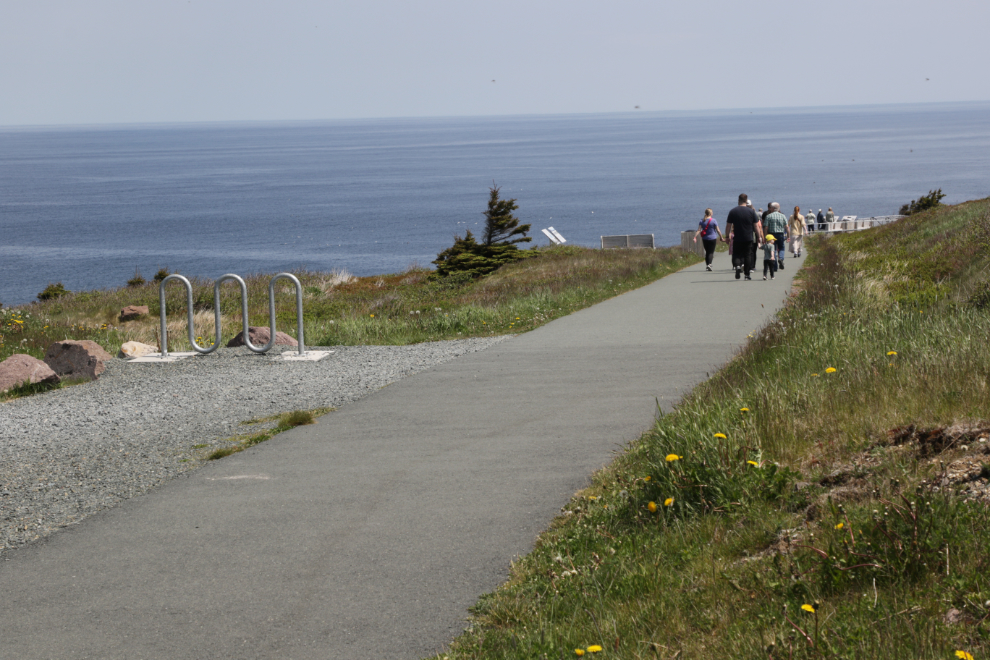
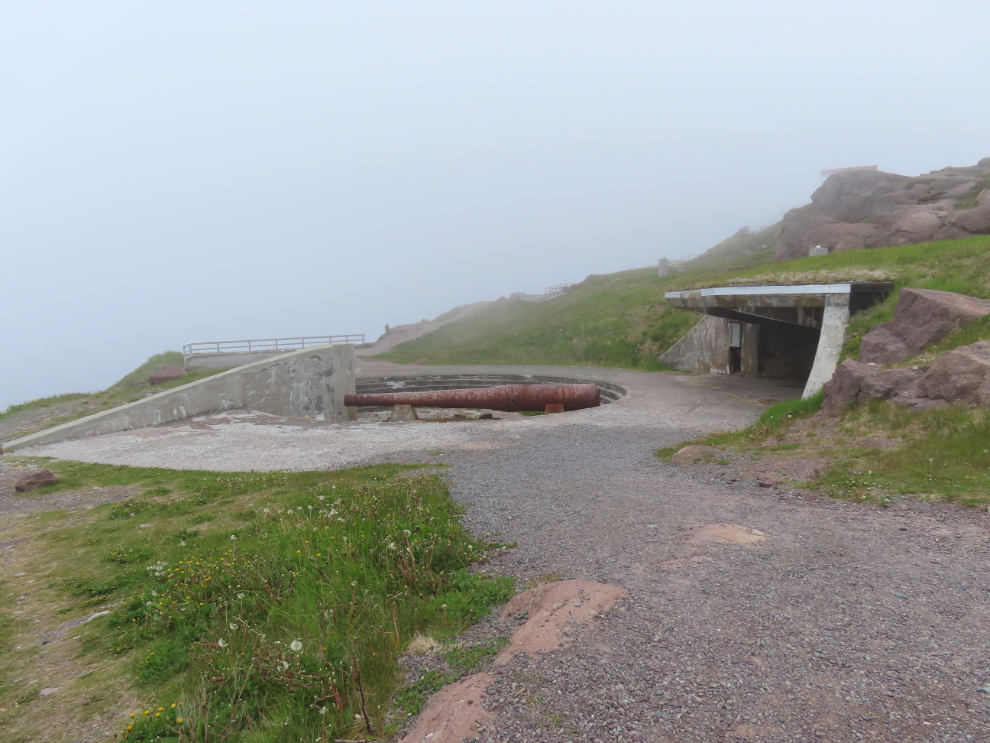
Cape Spear is a National Historic Site so there are plenty of interpretive signs about the site’s history, both natural and man-made. The first of the man-made historic sites I came to were the concrete and steel remains of the World War II fortifications. St. John’s was a critical link between Europe and North America so the harbour needed to be protected, and Cape Spear was a major part of that defence. A battery of two guns and several underground magazines was built at the tip of the Cape, and above ground, dozens of buildings sprang up to serve as barracks, mess halls, and administrative centres. At times, hundreds of soldiers were stationed here, with members of the 103rd Coastal Artillery from Nova Scotia making up the majority.
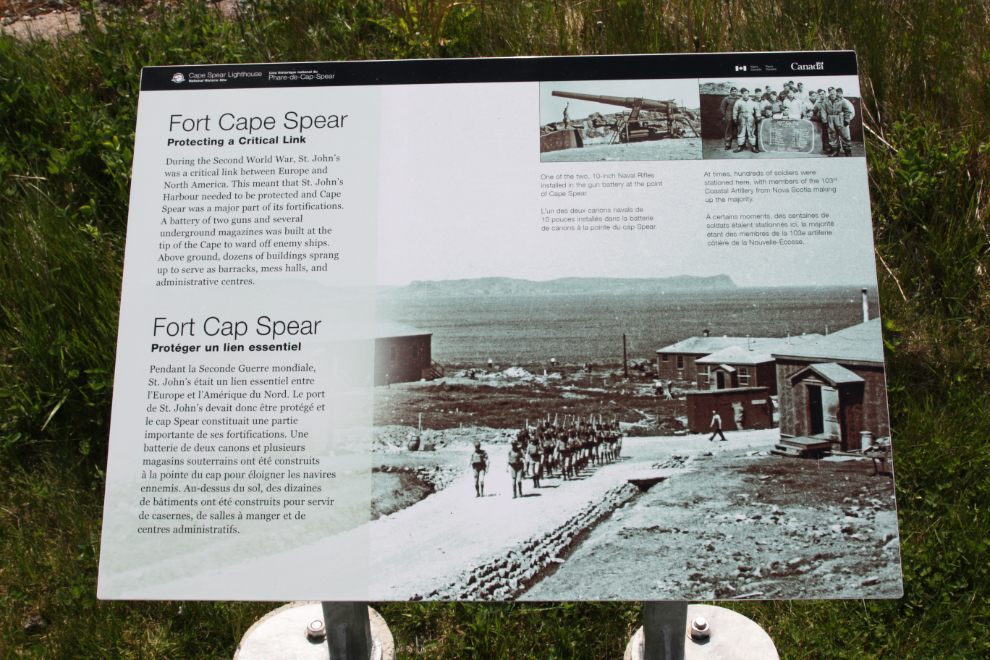
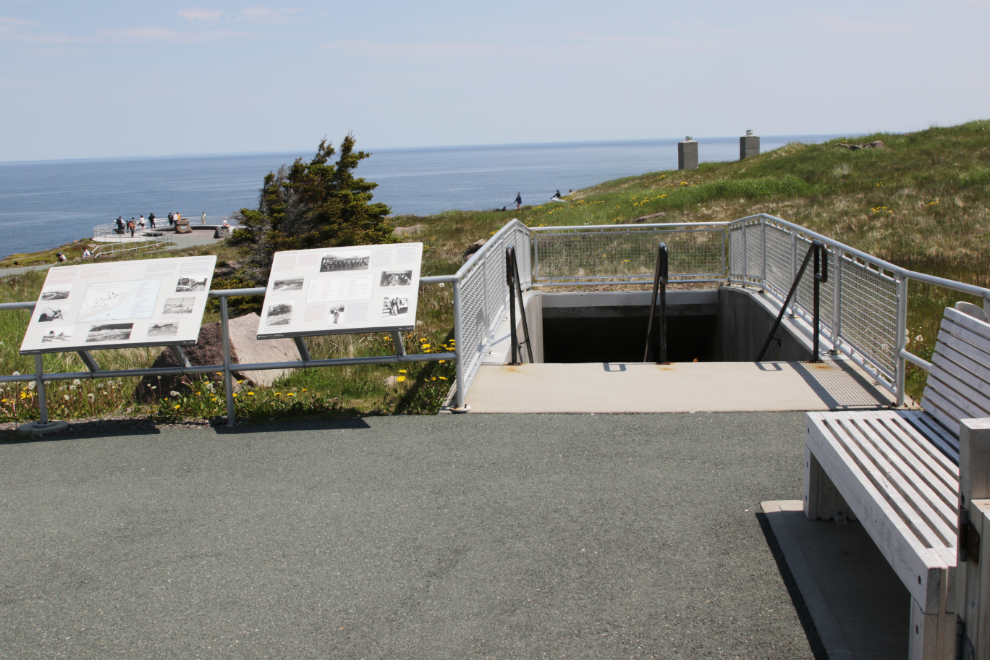
I took several photos of the concrete structures, both above ground and underground, on the foggy visit, and didn’t repeat them this time around.
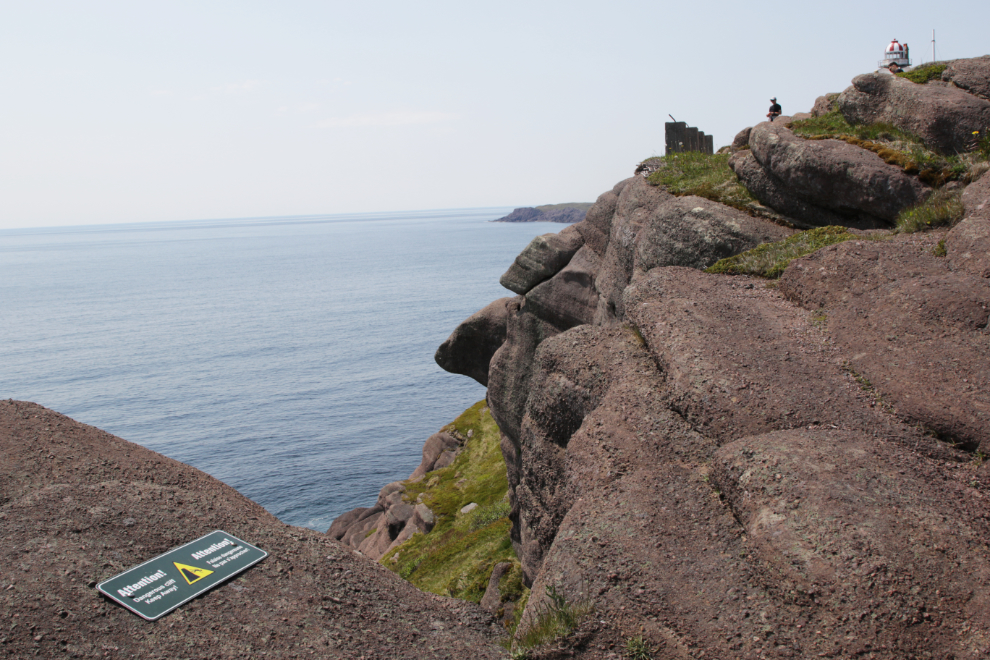
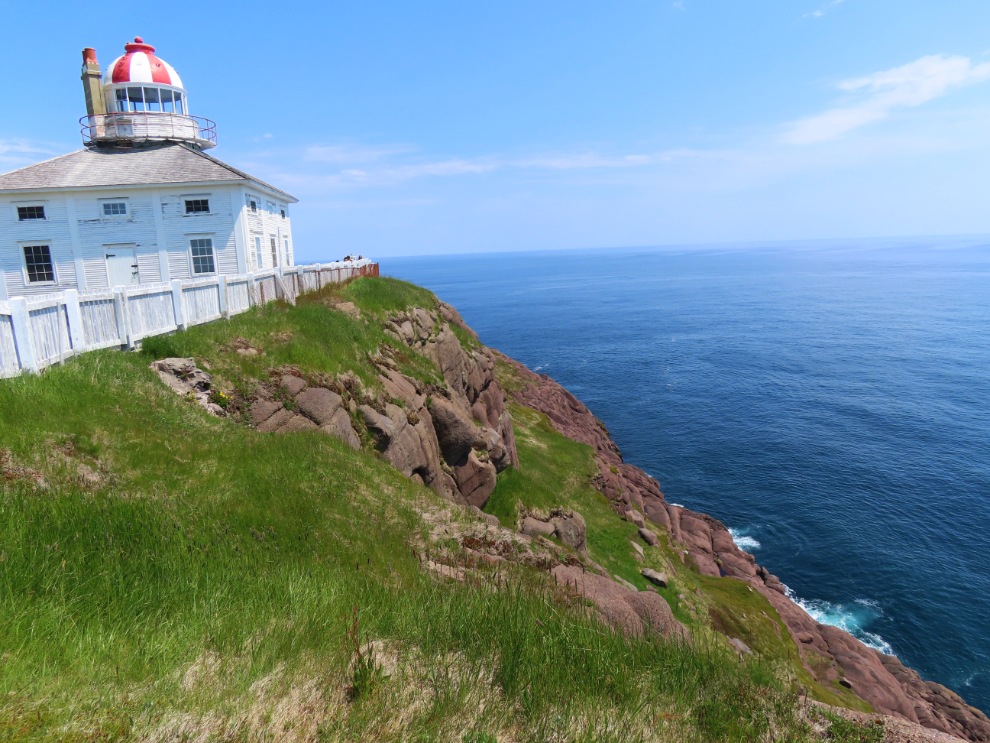
As is often the case with lighthouses in Canada, the cliffs are impressive, and there are lots of warning signs about them.
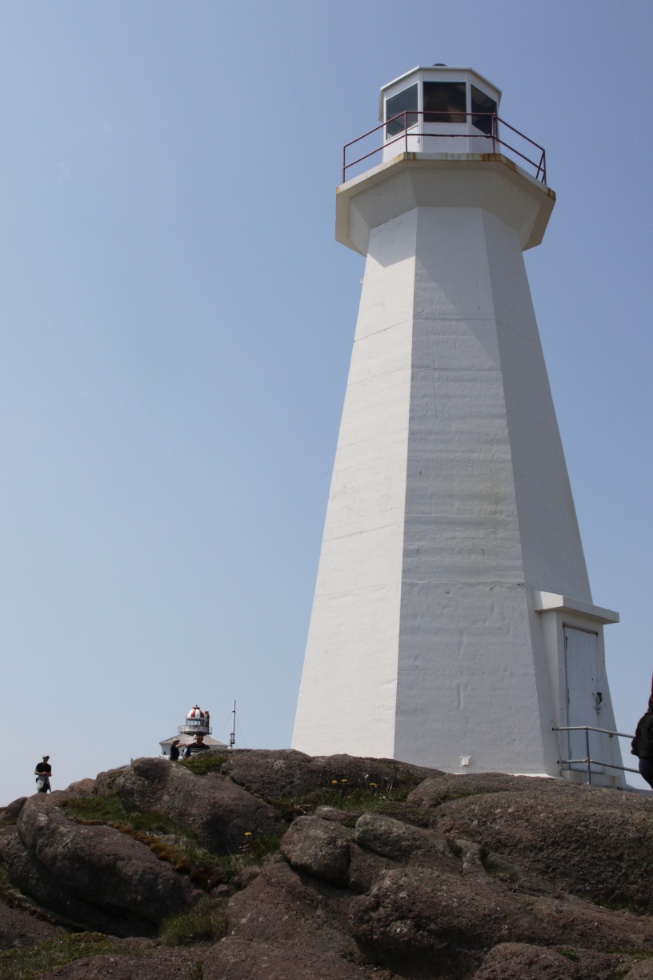
The new lighthouse is the first one you see from this direction.
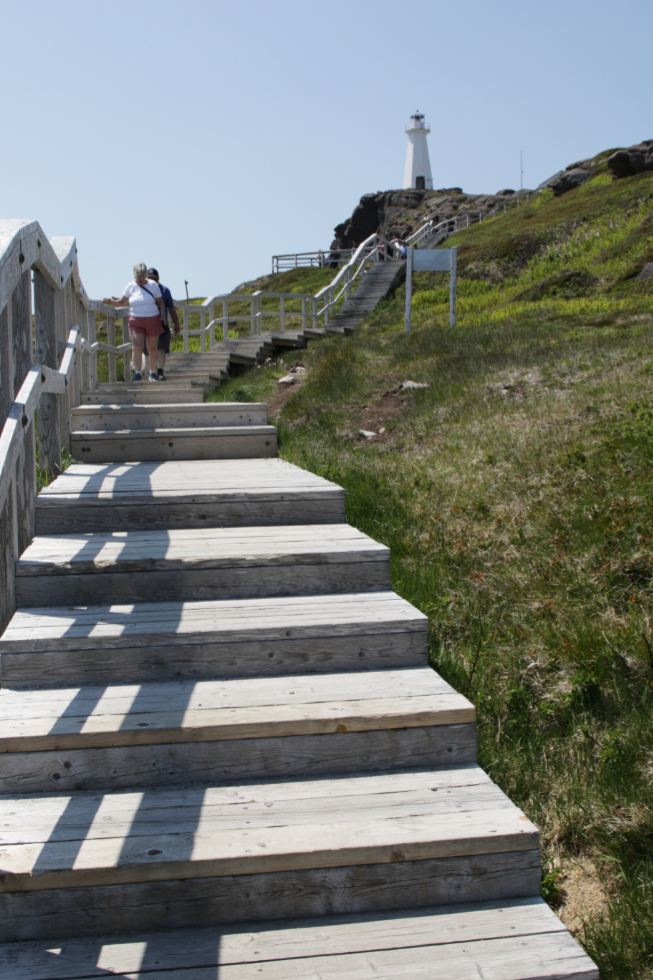
As I mentioned yesterday, this concrete, octagonal structure was built in 1955. It stands 13.7 metres tall, and has the Fresnel lens from the 1835 lighthouse. It still produces three white flashes every fifteen seconds, its signature.
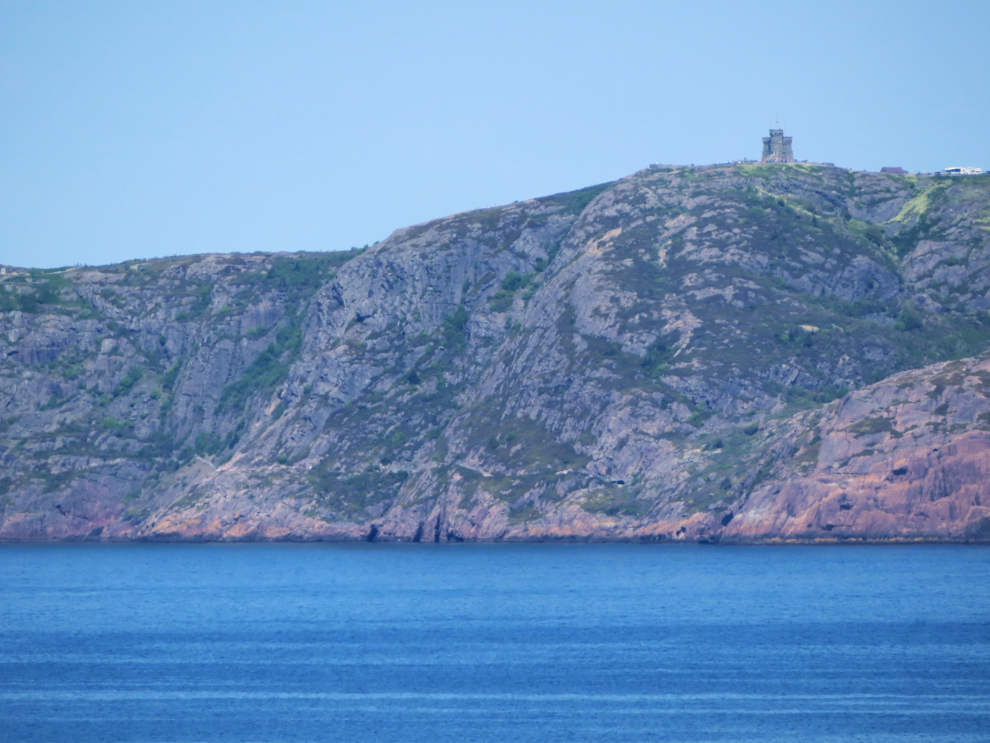
In a straight line, it’s only about 6 km from Cape Spear back to Cabot Tower, so the tower can easily be seen with binoculars or a zoom lens.
Climbing towards the old lighthouse, I realized that at a certain point I’d be at the right elevation to get the brightest light from the operating lighthouse, and was able to capture it 🙂
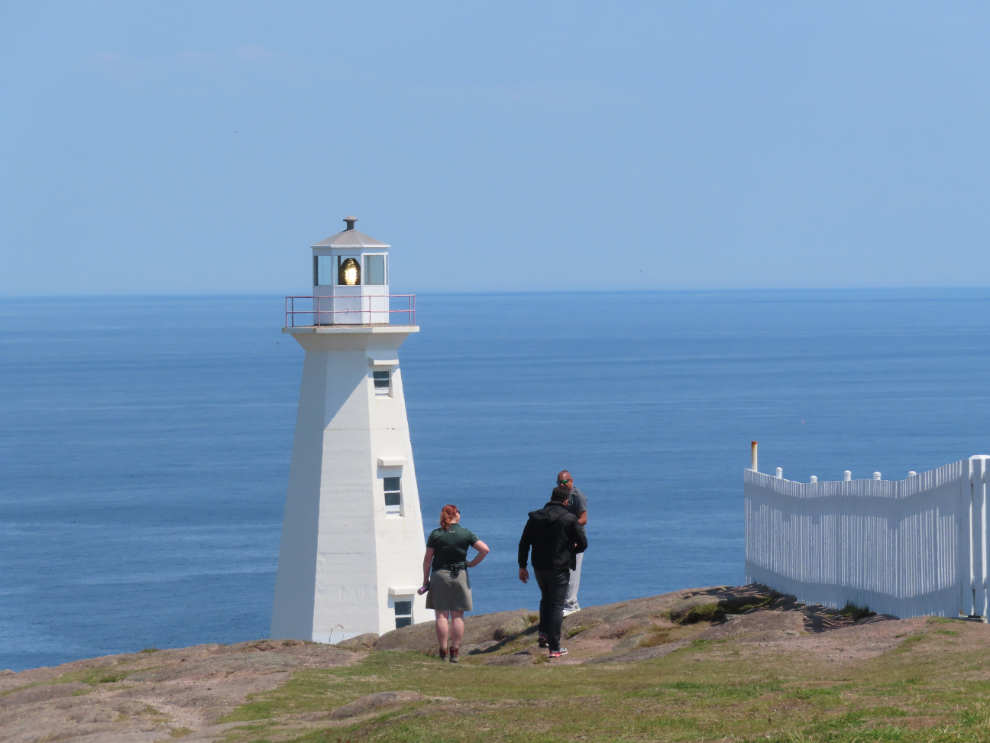
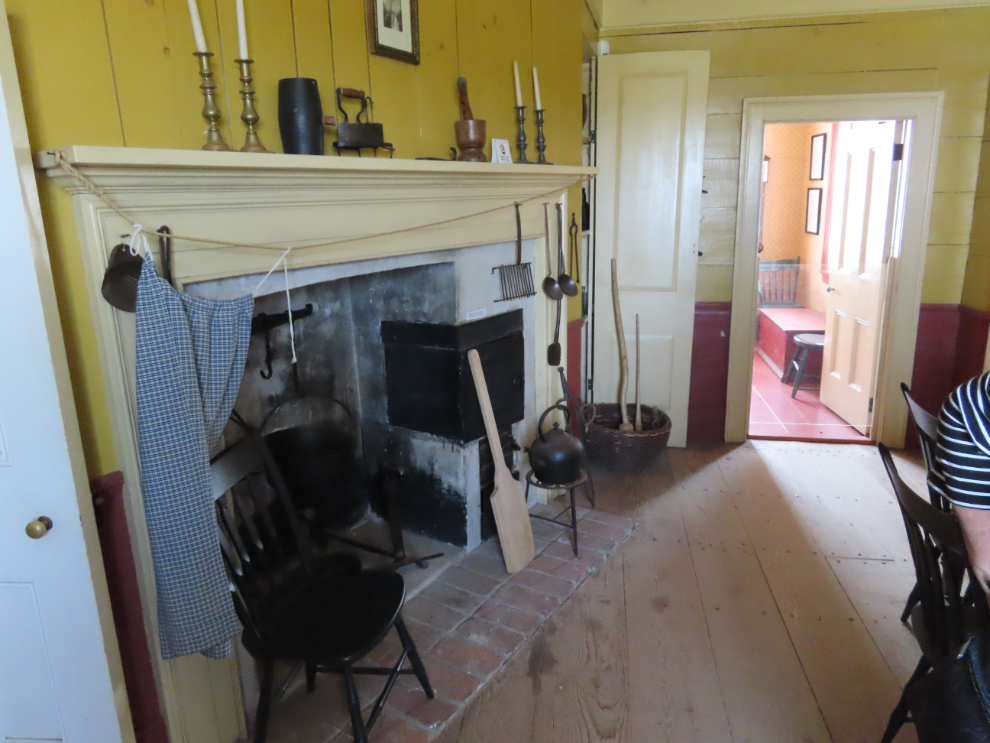
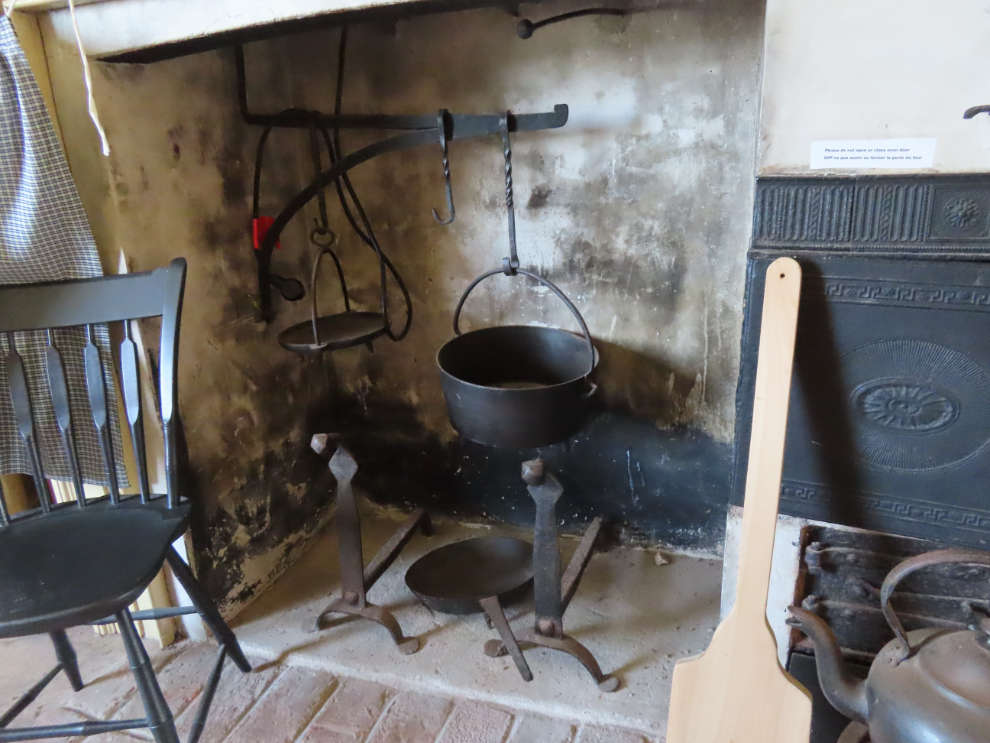
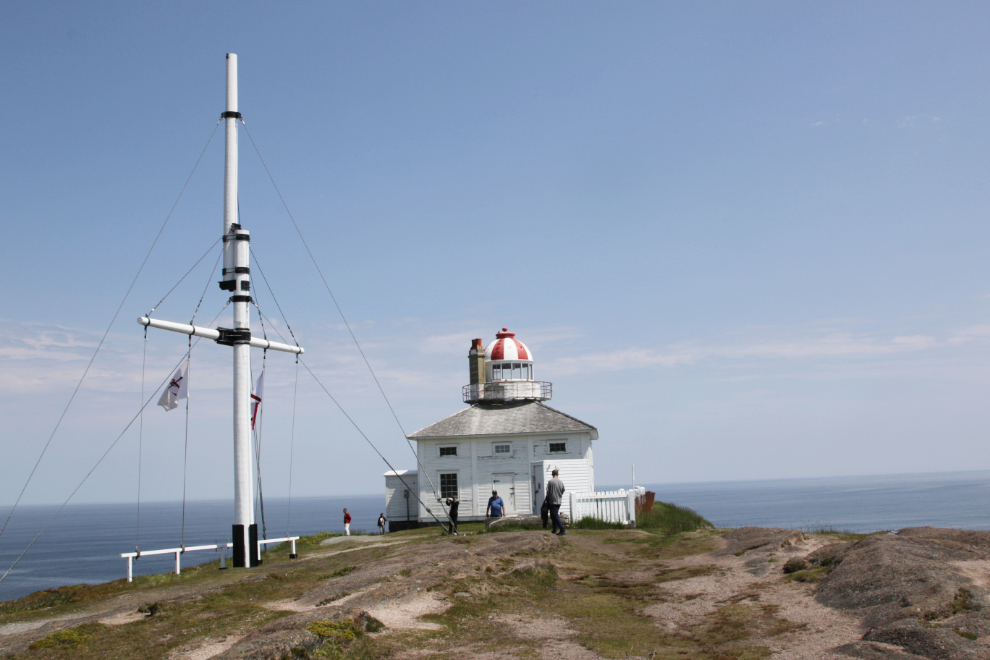
I did meet Cathy at the old lighthouse, and we spent quite a while going through the buildings, which have been restored to their original appearance, and the light keeper’s residence is furnished as it would have looked in 1839.
I always find the kitchens to be particularly interesting. Note the oven built into the wall of the fireplace.
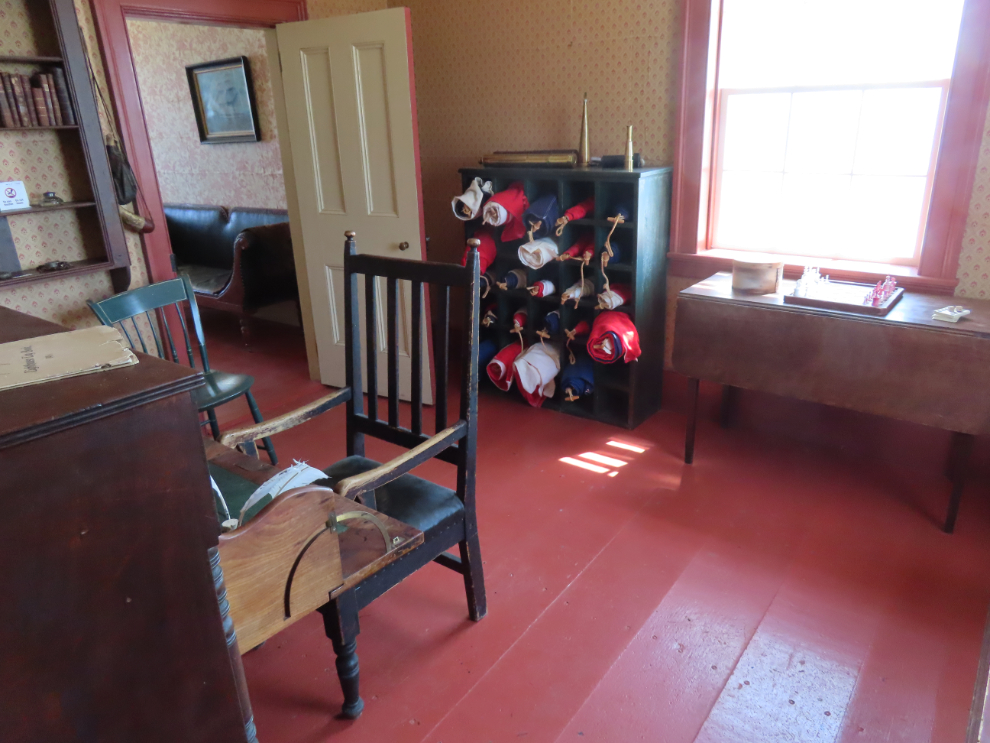
The office, with a rack full of signal flags.
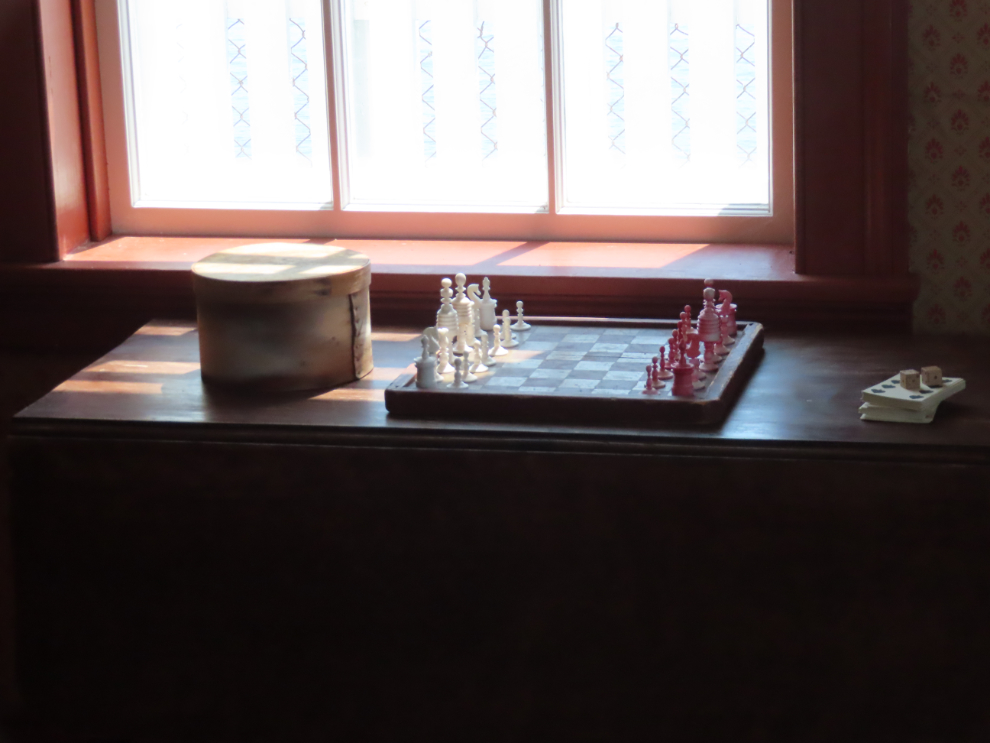
Details are important.
Life on the main floor of the house was as comfortable as possible given the location.
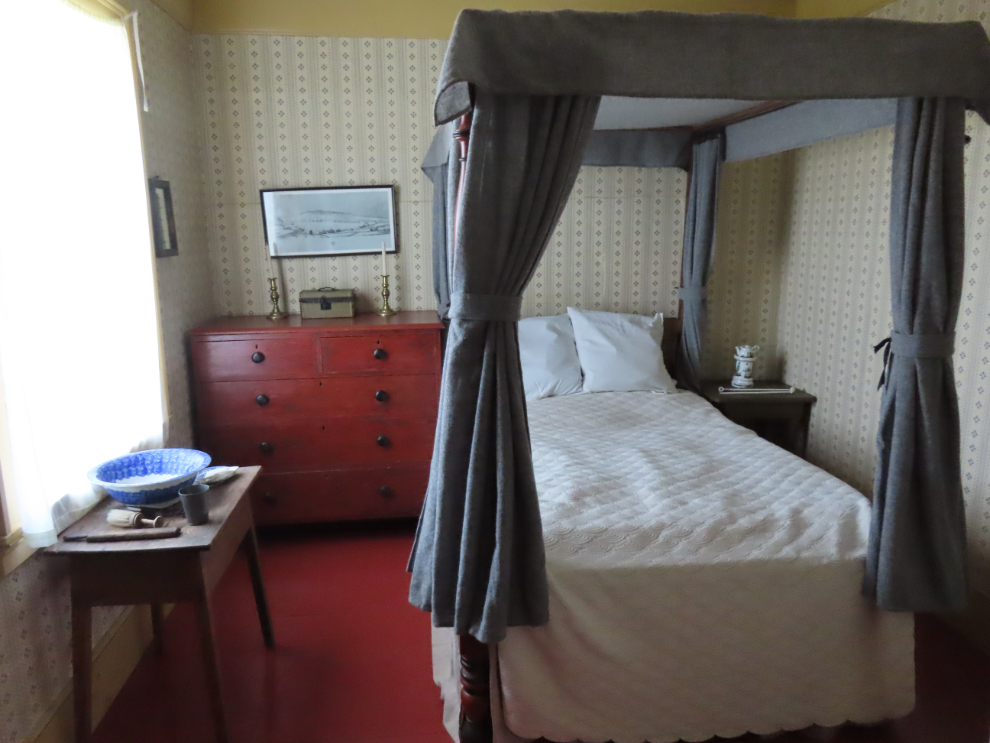
Upstairs, life was much more basic.
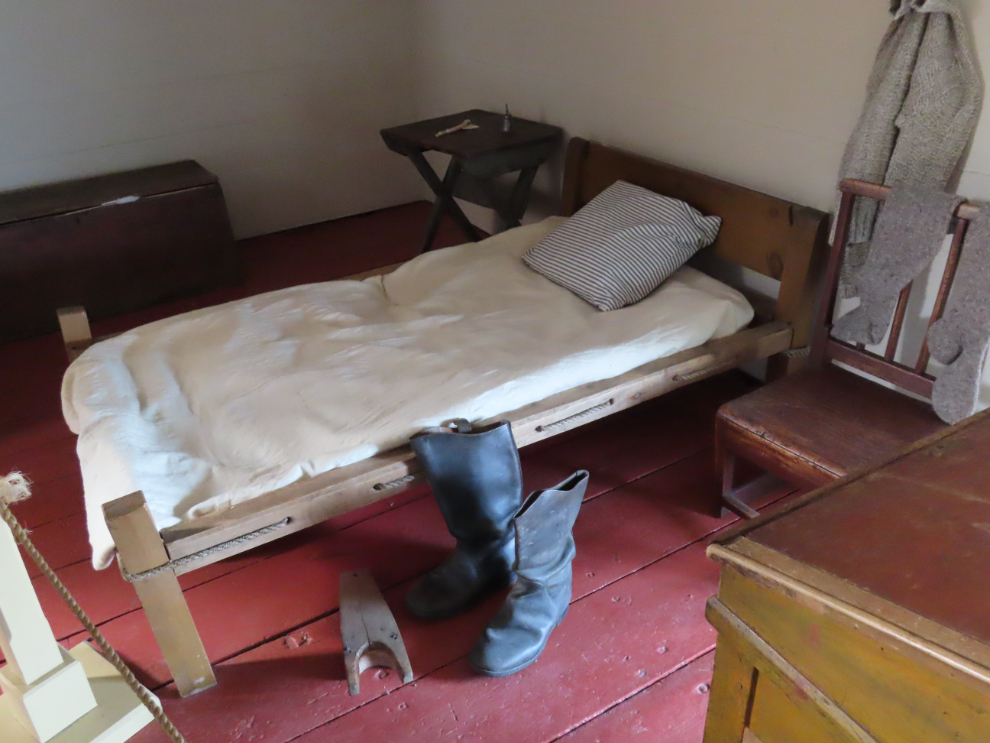
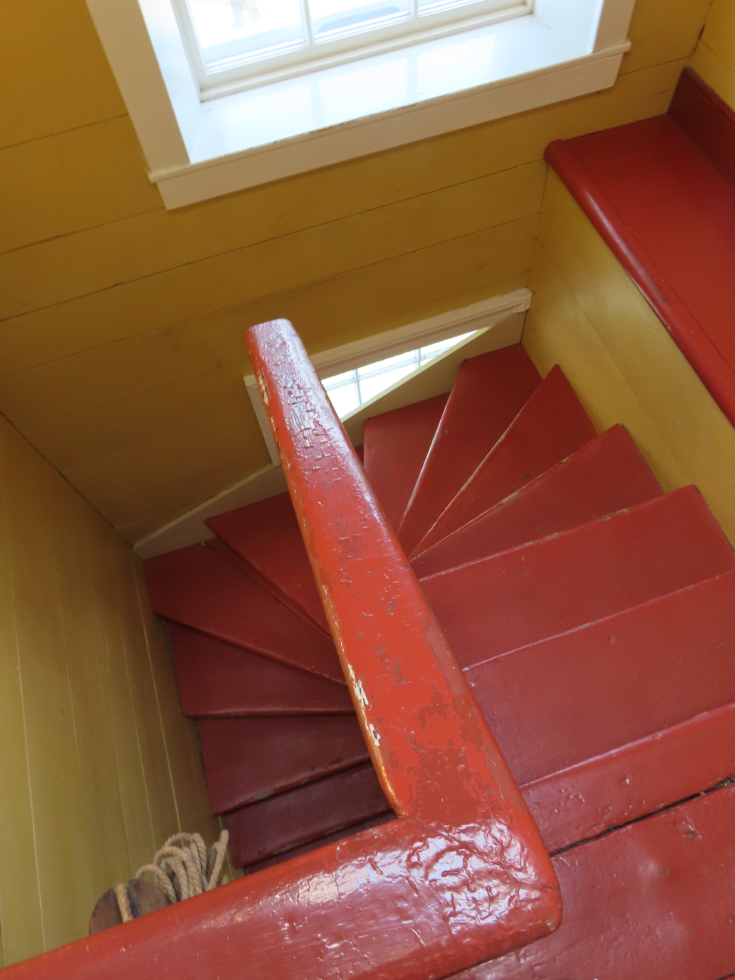
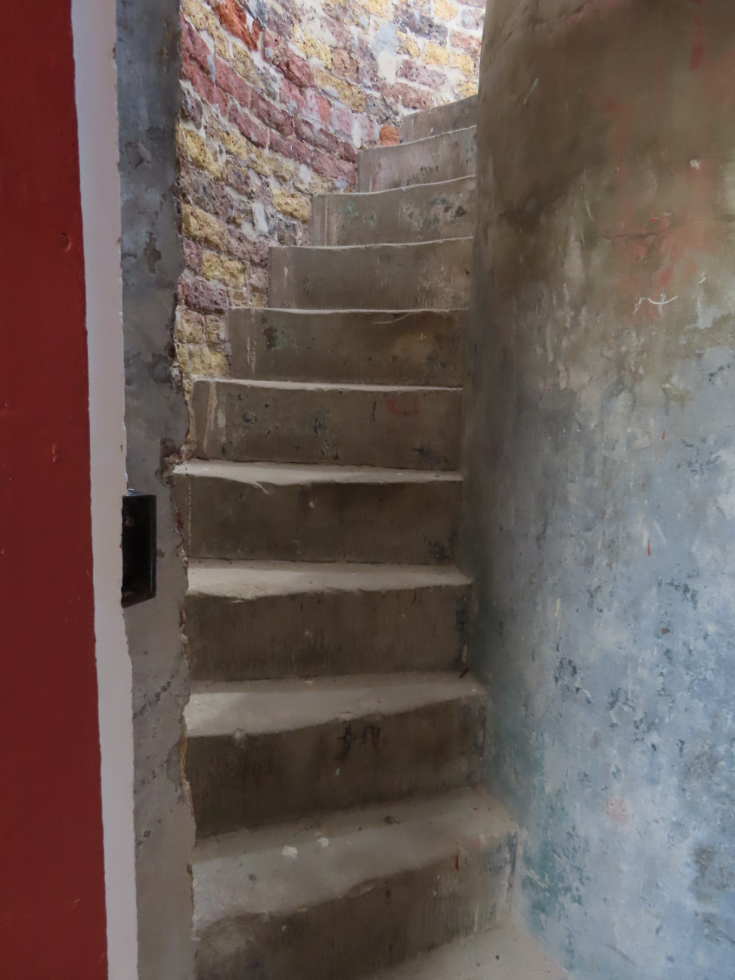
The concrete stairs to the light level of the tower were blocked, but there’s no light up there anymore anyway.
Before going back to the RV, I spent a few minutes making sure I had photos of all the best angles.
And then, having had a particularly good visit to Cape Spear, we headed south, with the exact destination not determined.

About The Author
