An introduction to shinrin yoku (forest bathing)
Yukon Environment held their first “Guided forest bath” the evening of August 4th along the Millennium Trail in Riverdale. Nine people showed up of the 12 who registered, and I think it went very well – well enough to do again, I hope, as it “sold out” (it was free but limited to 12 people). I’ve been practising forest baths for many years, and when I got injured in 2019 had pretty much decided to take a course as an instructor – that plan, as with most of my other plans, got cancelled.
At its most basic, forest bathing is an effort to re-connect with nature. The benefits are well documented, but modern society has moved further and further away from the connection that can improve both your physical and mental health.
In 1990, Yoshifumi Miyazaki, a Japanese physiological anthropologist, began working on guidelines to turn forest bathing into a documented method of therapy, and in 2003 published his work. This forest therapy, or sylvotherapy, is the basis of what we did during our riverside session. I returned to the site the evening of August 5th to take some photos to show you what my experience was like.
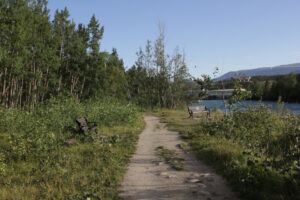
This is where we began – along the Yukon River, on a trail below the main Millennium Trail. We spent about 20 minutes there while the instructor, Amy, explained what forest bathing was about. A main point is that everybody’s experience is unique – there are no expectations, no right or wrong answers.
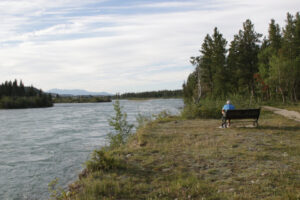
When I first arrived in the Yukon 41 years ago, the ground here looked barren compared to the lush Fraser Valley I had come from. But I very soon realized that you just have to look closer here. There are still complex communities of plants and creatures of all sorts making this place a home. The little piece of ground in front of where I sat, seen in the next photo, had many – small plants huddled together, others more independent, one tiny brave flower, and a few insects, each with a role to play in this community.
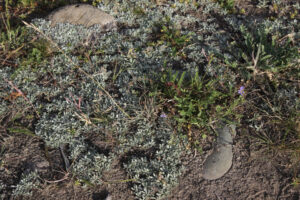
Moving on from that spot to start the forest bathing practice, I noticed the changes in the communities at my feet – this one with wild strawberries as a major resident…
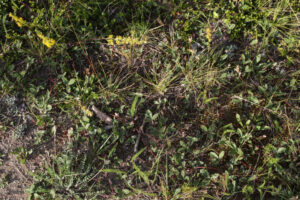
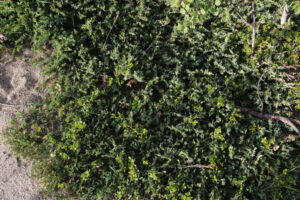
…then one with Kinnikinnick (a.k.a. Bearberry) (Arctostaphylos uva-ursi), which was then overtaken by Creeping juniper (Juniperus horizontalis). The names of the plants may or may not matter to you, either during or after a forest bathing session – it’s only in very recent years that I’ve had the resources to learn them, and though I try to remember them, it doesn’t change my experience.
The forest along the trail in this area is a mixed community of lodgepole pine and aspen, with a few black spruce, with a relatively lush understory – a good place to get introduced to forest bathing except for the car noise inherent in city living.
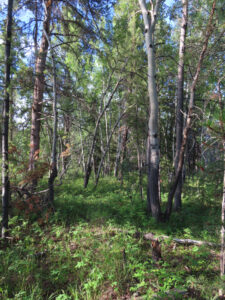
The exercise that I most engaged with is the one I’ll spend the rest of this post telling you about, as it best shows the sort of place forest bathing can take you on a good day. The exercise was to find something in the forest to express well wishes to. After wandering slowly through the forest for a few minutes, looking up and down, I came to a beautiful young lodgepole pine, perhaps 30 years old, which had a message for me.
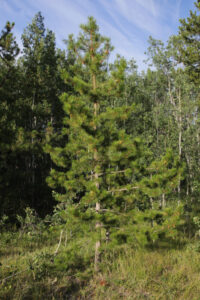
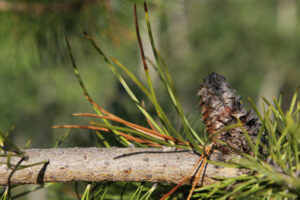
I noticed three cones of different ages, growing close together as if to teach me about them. First a very young female cone.
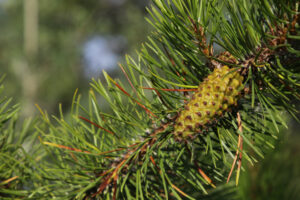
A second-year cone.
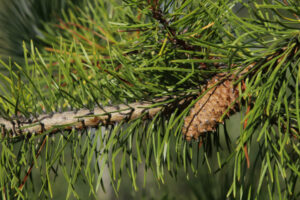
And a cone whose work is done.
This tree then introduced me to great-grandfather, towering over all else just a few meters away.
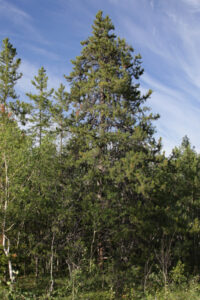
Great-grandfather was a large tree when the main rush of gold stampeders came through what is now Whitehorse 128 years ago. It survived, I believe, because it had so many branches that chopping or sawing it up into useable pieces of wood was simply too difficult – there were plenty of trees that were much easier to cut.
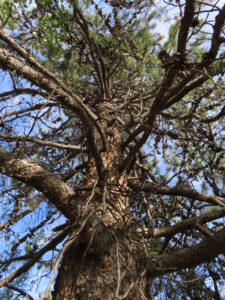
Something then guided me to the tree that would conclude my lesson. This one, perhaps 50-60 years old, had three dead branches that brought me in for a close look.
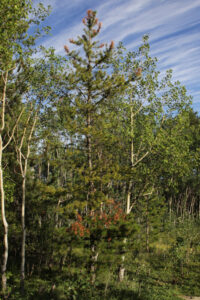
This tree had been attacked by beetles many years ago, but had survived by growing around the damaged section.
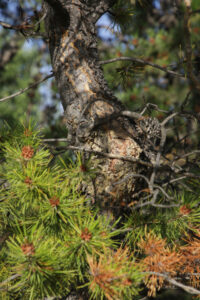
Now, though, the tree is being attacked by beetles again. This is the tree that received my well wishes, hoping that it can survive this new attack.
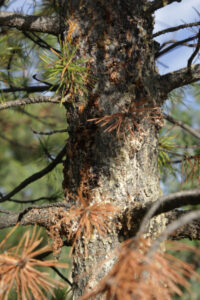
Before leaving, I went back to great-grandfather, to express gratitude that I’m able to have experiences like this.
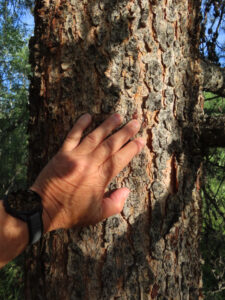
Looking back at all three of the trees I spent time with.
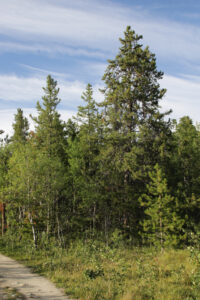
The introduction to forest bathing concluded with a tea ceremony, with hot tea brewed from the Labrador tea plants that are common here. The chat here showed that some of the participants were affected by this experience, and hopefully will continue in some way. The next photo shows the path back to our vehicles.
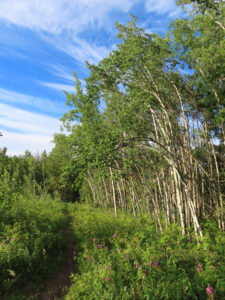
Looking back at the forest, I wondered why these trees were leaning – seeking more light? The nearest ones perhaps leaned too far and then were damaged by the winters’ snow loads.
As well as having a particularly good experience myself during this session, it was interesting to observe how other participants were engaging. The experience of forest bathing can open a person’s eyes to much more than “the forest” – learning to observe tiny details of the plants and creatures and the way they live together can also teach you about the communities than humans create.
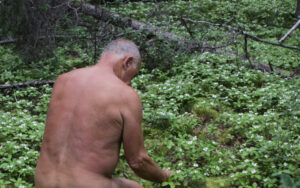
Those people who get into forest bathing probably soon learn that forest bathing is better barefoot when possible. Your skin in your largest largest sensory organ, and the more of it that comes into contact with Nature, the better. The final photo is from my personal session last week, at one of the finest places I’ve found for it – laying face-down in that thick moss and flowers, the smells in particular were amazing.
About The Author

Good day Murrster, forest bathing is the cleansing of the soul, especially barefoot or totally naked, weather permitting of course. I have be retired for a couple of months and forests of Nova Scotia are my therapist for sure, tree hugging, walks and bike riding along the trails are living, your beautiful day to organize and get peoples back to the dirt where is all happens, take care my friend 👍
It’s great to hear that you’ve retired, Paul. The forest paths are so much better to spend time on than the freeways.